
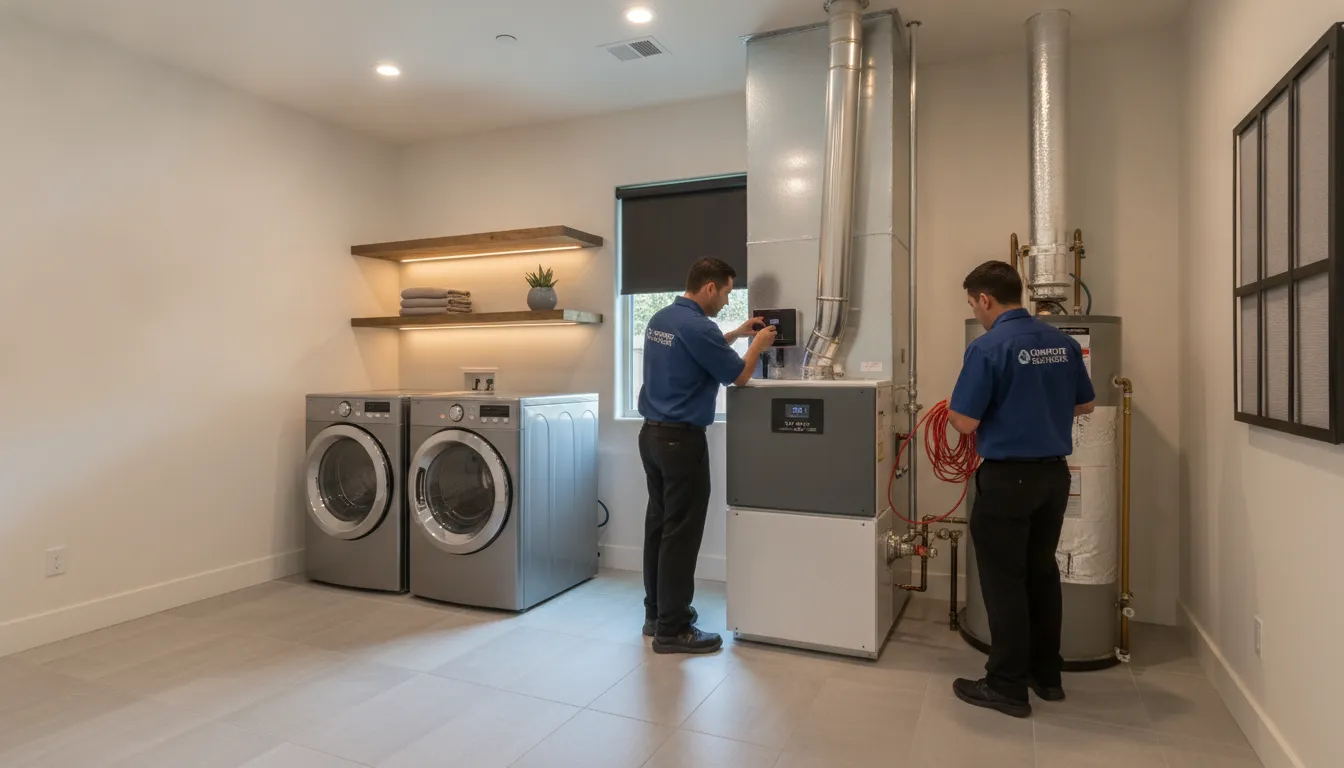
How to choose a furnace for california home starts with weighing high energy costs throughout the year against your specific climate while picking between natural gas and electric models. You must have a pro use a Manual J check to find the right size because oversized units cycle too often and waste money around Sacramento and Livermore. For the best results, you should pick a modern model with an AFUE rating of 90 percent or higher to lower your monthly utility bills and save power. According to Consumer Reports, the quality of your installation is more vital for long-term performance and efficiency than the specific brand name on the new heating unit.
How To Choose A Furnace For California Home: Gas Furnace vs Electric Furnace: Which Is Right for Northern California?
Choosing a new heating system for your Northern California home depends on where you live and your energy goals. Our region has many climates, from the mild air in San Francisco to the cold nights in Sacramento. Most owners here use natural gas, but electric options like heat pumps are becoming more popular. You should think about fuel costs and local weather before you buy.
| Feature | Gas Furnace | Electric Furnace | Heat Pump |
|---|---|---|---|
| Fuel cost (PG&E area) | Lower operating cost | High (PG&E rates) | Moderate |
| Typical AFUE / efficiency | 80% - 98% | 100% (but costly fuel) | 300% - 400% COP |
| Installation cost | Higher (gas line, venting) | Lower | Moderate |
| Best for | Cold inland climates | Mild coastal areas | Moderate climates, dual duty |
| Maintenance needs | Annual, moderate | Low | Annual, moderate |
| Lifespan | 15 - 20 years | 15 - 20 years | 12 - 15 years |
The benefits of natural gas furnaces
Natural gas is the most common fuel for heating homes in the United States. Many people in the Bay Area prefer gas because it heats a house quickly when the air gets cold. Gas furnaces are often more cost-effective than electric models for long-term use. This is because natural gas usually costs less than power for the same amount of heat. If you choose this path, look for a unit with a high AFUE rating of 90% or more. This number tells you how well the furnace turns fuel into heat.
High-efficiency gas models are great for areas like Livermore where winter nights get chilly. These units use less fuel to keep you warm, which helps lower your PG&E bills. Modern gas systems also pollute less than older models. They produce a steady flow of heat that keeps every room at a nice temperature. While they may cost more to install at first, the savings on your monthly bills often make up for the price.
Electric heating and heat pump services
Electric furnaces are another choice, but they work differently than gas models. They are often cheaper to buy and set up. They also do not need gas lines or a vent through your roof. However, PG&E rates in California are some of the highest in the country. Using a standard electric furnace can lead to very high monthly costs during a cold winter. For this reason, most experts suggest looking at other electric tools like heat pumps instead.
A heat pump is a smart choice for many California homes because it handles both heating and cooling. These systems move heat from the outside air into your house instead of making it with a flame. This process works very well in mild climates. You can learn more about how these units work by checking out our heat pump services online. They are a dual-duty tool that keeps you cool in the summer and warm in the winter.
Matching your furnace to your climate
Your local weather should guide your final choice. Coastal areas stay mild for most of the year, so you may not need a big heating system. In those spots, a heat pump or a small electric furnace might be enough. But inland homes face much colder winters. If you live in a place where it freezes at night, a high-efficiency gas furnace is usually the best bet. It keeps you cozy without breaking the bank. Choosing the right fuel source ensures your home stays nice all year long while keeping your energy waste low.
What Size Furnace Does Your Home Actually Need?
Why furnace size matters
Picking the right furnace size is the key step in heating your home. Many people think a big unit will keep them warmer. This is a common myth that can cost you money. In fact, many homes in Northern California have systems that are much larger than they need. An oversized furnace does not work well and can lead to high power bills.
When a furnace is too big, it heats the air fast and then shuts off. This cycle repeats often and is called short cycling. This constant starting and stopping puts a lot of stress on parts like the blower motor. It also wastes gas because the unit never runs long enough to reach its top fuel use. Short cycling creates hot and cold spots, so you never feel truly at ease.
While a big unit is wasteful, a furnace that is too small is also a problem. A small unit will run non-stop to try to meet your thermostat setting. On a cold winter night in Sacramento or the Central Valley, it may never catch up. You will end up with a high power bill and a home that still feels chilly. Finding the middle ground is the key to a happy home and low costs.
The Manual J load calculation
To find the exact size you need, pros use a tool called the Manual J load calculation. This method was set by the Air Conditioning Contractors of America. It is the only way to be sure of your heating needs. According to the U.S. Department of Energy, a load check is vital for any new setup. It helps ensure your system runs well without wasting power.
Our team provides expert furnace installation services to help you find that perfect fit. We do not guess based on your home size alone. A Manual J check looks at many factors beyond square feet. We check the quality of your insulation and the type of windows you have. We also look at the way your home faces the sun and the state of your ductwork.
Climate and home factors
Your place in Northern California also shapes your choice. The Bay Area has mild winters where you may only need a small boost of heat. In contrast, the inland valleys get much colder at night. A home in Modesto needs a different setup than one in Alameda. We know the local climate zones and how they impact your comfort and your heating gear.
Older homes often need a new look at sizing when it is time to replace a unit. If you have added new windows or more insulation, you may need a smaller furnace than before. All of these details change how much heat your home loses. We take the time to re-check these facts during every site visit. This ensures you do not buy more furnace than you need, which saves you money now and in the future.
High-Efficiency Furnace vs Standard: Is the Upgrade Worth It?
Choosing a new furnace means looking at its fuel rating. This is known as the Annual Fuel Utilization Efficiency (AFUE) rating. It tells you how much of the fuel the unit turns into heat. A higher rating means the unit works well and wastes less. This rating is a big factor when you decide how to choose a furnace for california home because it affects your bills.
What AFUE ratings mean
The AFUE rating shows the part of the fuel that becomes heat. For example, a standard unit with an 80% AFUE rating turns 80% of its fuel into heat. The other 20% is waste that leaves through the vent. High-efficiency units have ratings of 90% or more. Top models can reach 95% or 98% AFUE. The U.S. Department of Energy notes that high-efficiency units can cut fuel use. In a 95% AFUE unit, only 5% of the fuel goes to waste.
Today's furnaces also help the earth. They burn less fuel and cause less pollution than old models. They produce heat more steadily as well. This stops the cold spots that are common with old systems. Many new units use two-stage heating. This lets the furnace run at a lower level when it is not very cold outside. This saves fuel and keeps your home at a more even temperature.
Upfront cost and savings
A high-efficiency furnace costs more to buy than a standard one. But it can save you money over time. Since these units use less fuel, your energy bills will be lower. This is very helpful in areas with high utility rates. In many parts of Northern California, PG&E rates make fuel savings a top goal. You may pay more for the unit now, but the savings can pay back that cost in a few years.
Homeowners often find that the extra cost is worth the wait. A high-efficiency unit can last 15 to 20 years with good care. Over those years, the lower fuel costs can add up to thousands of dollars. It also adds value to your home. Many buyers look for efficient systems when they shop for a house. You should talk to a pro about residential HVAC services to find the best fit for your budget.
Smart tools for more savings
You can save even more with smart HVAC controls and tools. These systems let you manage your heat from a phone or tablet. You can set times so the heat only runs when you are home. This stops wasting fuel on an empty house. These tools show how your furnace uses energy. This helps you make smart choices to lower your costs even more.
Using a smart system ensures your furnace runs only when needed. It can also tell you about issues before they become big repairs. Modern tools like Pelican Wireless Systems work well with high-efficiency units. This mix gives you the best control over your home comfort and energy use. It is a smart move for any California home that wants to lower utility bills.
Top Furnace Brands Available in California
Choosing a new furnace for a California home often starts with the brand name. While many firms make high-quality units, some names stand out for their specific strengths. Brands like Carrier, Trane, and Lennox are popular because they offer many models that fit different budgets and home sizes. These firms lead the market in tech and long-term use.
Airteks works with all makes and models to ensure you get the best fit. Whether you want the high efficiency of a Lennox unit or the value of a Goodman furnace, our team can help. We focus on matching the right system to your goals, like lower bills or better warranty paths. You can learn more about our residential furnace services to see how we help with each brand.
Reliability and Tech Leaders
Carrier and Trane are often the top names for steady heat and new tech. Carrier is known for quiet units and parts that help keep heat levels the same. Trane often earns high marks for its tough builds and strong warranty plans. Many pros see these brands as the standard for home heat because they use high-grade parts. These parts can last for many years with the right care.
Surveys from groups like Consumer Reports help find brands that have fewer problems. While these firms lead the way, keep in mind that even the best unit can fail if you do not care for it. We help you look past the name to see how the features of each brand will help your home stay warm.
Efficiency and Value Picks
If you want the best energy savings, Lennox is a top pick for high-efficiency units. Many of their units reach the highest ratings on the market today. For homeowners who want a good system on a tight budget, Goodman and Rheem offer great value. They give you steady heat without the high price of some top names. Brands like Bryant and York also offer a good mix of mid-range features and proven use.
Finding a system that fits your cost and heat needs is a smart move for our local climate. Since our winters are often mild, you may not need the most costly unit to stay warm. We can help you compare brand options to find the best return on your cash. Our goal is to find a unit that works for your home and your wallet.
Why Setup Matters More Than Brand
The brand on the box is key, but the person who sets it up matters more. Data shows that pros find human error or bad setup twice as often as bad parts. A top brand that is set up poorly will work worse than a mid-range unit set up by an expert. If the size is wrong or the ducts are not sealed, the brand name cannot save your comfort.
A furnace needs a precise setup to run at its best. Our skilled team has the tools to set up any brand the right way the first time. We focus on the small details that ensure your new system runs safe and saves you cash. By choosing a team with 29 years of local work, you make sure your new unit works as it should for years to come.
What to Expect During Furnace Installation
Choosing the right system is just the first step. Good setup is the key part of getting a heater that lasts and saves on fuel costs. When you hire experts from the Airteks furnace services page, you make sure your new unit runs at its best from day one. Our team has 29 years of work in Northern California. We know how to meet the needs of homes in the Bay Area and Central Valley.
Planning for the Right Size
The work starts before the tools come out. A top expert will do a load check to find the exact size your home needs. This is a key part of how to choose a furnace for California home comfort. If a unit is too big, it will turn on and off too often. This wastes fuel and wears out parts fast. If it is too small, it will not keep you warm on cold nights.
We use trade rules to check your square footage, walls, and windows. This step makes sure you get the best work for your budget. Once we have the right size, we can often give same-day service to get your new system running fast. We focus on making the switch as easy as we can for you. Our goal is to keep your home warm without high bills.
The Installation Process
Setting up a new furnace is a big job that needs slow and steady steps. Most jobs take one full day to finish. Our team handles every part, from the first safety check to the final test. We focus on clean work and clear updates so you know what is going on in your home. We treat your house with care and keep the work area tidy. We want you to feel good about the work we do.
- Load Check and Sizing. We use the Manual J standard to find the right size for your home. This stops the fuel waste that comes from a unit that is too big.
- Taking Out the Old Furnace. Our team takes out your old system with care. We follow all safety rules for gas lines and wires during this step.
- Area Prep. We clean and prep the space for the new unit. This includes checking the base and making sure there is enough room for air to flow.
- Setting Up the New Unit. We place the new furnace and secure it. Our expert techs make sure the unit is level and stable.
- Hooking Up Lines and Pipes. We hook up the gas, power, and drain lines. We also seal any leaks in the pipes to keep your air clean and warm.
- System Testing and Startup. We run the furnace through a full cycle. This check makes sure that all safety tools and sensors work as they should.
- Final Check. We do one last walk through to make sure everything meets our high standards. This makes sure your system is safe and ready for years of use.
What to Ask Your Installer
You should feel sure about the crew in your home. Before the work starts, ask your team about their plans and their track record. Good experts will be happy to answer your questions. Ask if they are licensed and insured in California. You can also ask how long the job will take and what kind of cleanup they will do. Knowing these facts helps you trust the team in your home.
Ask about the brand of furnace they recommend. While professional installation matters most, a good brand helps too. Ask how to use your new system and how to keep it in good shape. Our team at Airteks is always here to help. We stand behind our work with a 5.0 Google rating and a focus on honest service for every customer.
Frequently Asked Questions
Do California houses have furnaces?
Most California homes use gas forced-air furnaces for heating. While our winters are mild compared to other states, coastal and inland regions still need reliable heat on cold nights. According to Consumer Reports, gas is the most common heating fuel in the country. In Northern California, many homeowners now choose modern heat pumps. These systems provide both cooling and heating, but traditional gas furnaces remain the standard for many local residential properties.
What is the $5,000 rule for furnace repair?
The $5,000 rule is a simple way to decide if you should repair or replace your unit. You multiply the age of your furnace by the cost of the repair. If the total is more than $5,000, it is usually better to buy a new system. For example, a 12-year-old furnace with a $500 repair would equal $6,000. In this case, getting a new, high-efficiency model is often the smarter choice for long-term savings and comfort.
What size house will a 60,000 BTU furnace heat?
A 60,000 BTU furnace typically heats a home between 1,500 and 2,500 square feet. The exact range depends on your local climate zone and how well your house holds heat. In the mild Bay Area, a unit this size can handle a larger space. However, in colder Central Valley areas, you may need more power for the same square footage. We always recommend a Manual J load calculation to find the perfect fit.
How much does it cost to replace a furnace for a 2,000 sq ft house?
Replacing a furnace for a 2,000 square foot home usually costs between $3,000 and $7,000. Your final price depends on the efficiency tier you choose and the difficulty of the work. High-efficiency models with a 90% AFUE rating cost more upfront but save you money on monthly energy bills. Since every home has unique needs, you should get a professional quote to understand the full scope of your heating system replacement.
Ready to Choose the Best Furnace for Your California Home?
Waiting to replace an old furnace often leads to much higher power bills and the risk of a break down on a cold night. You can avoid these big problems by acting right now while you have the time to pick the best unit for your budget. Starting your work today means your family stays warm and safe when the first big cold snap hits Northern California.
Ready to schedule a free consultation? Call (925) 292-0148 to schedule a free consultation for your furnace installation or replacement. Our experts are ready to help. We will help you find the right system and make sure it is set up to run very well for many years to come.
Comments