
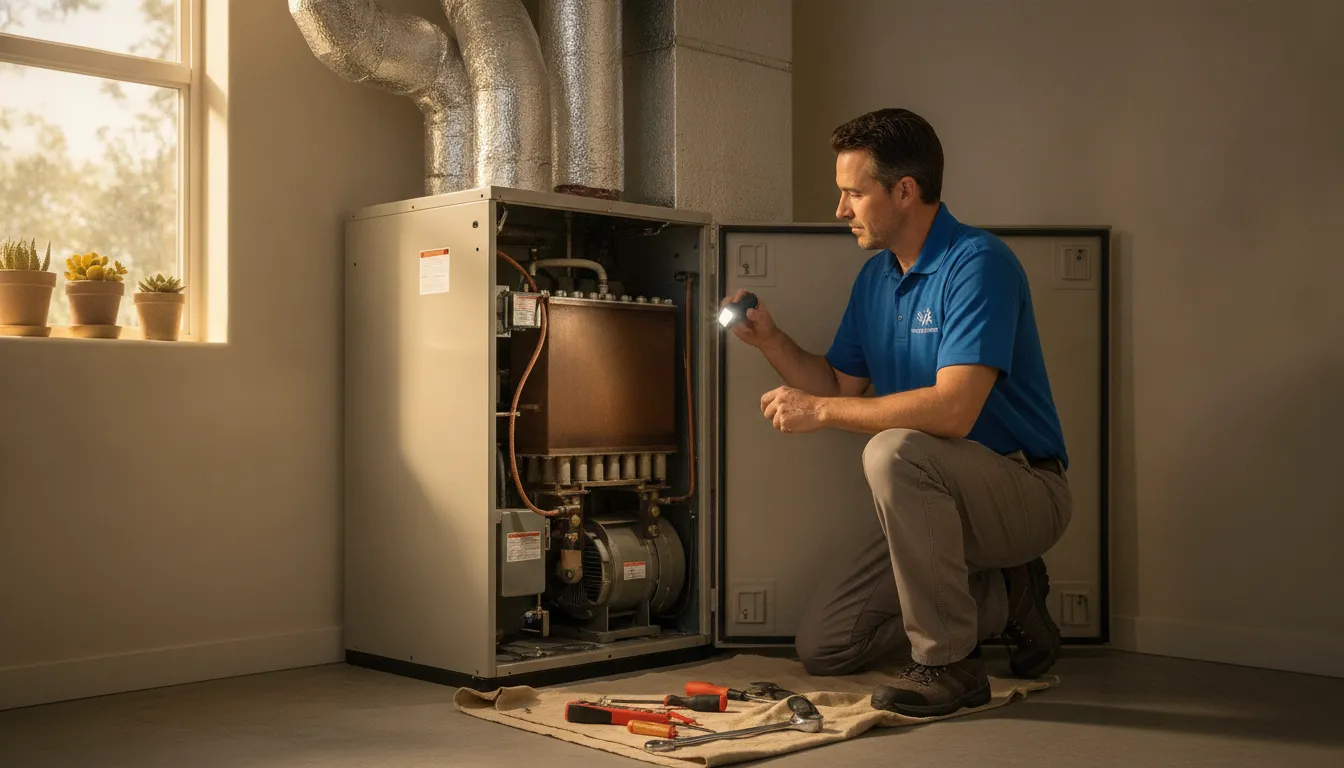
A furnace smell when the heat turns on can be harmless, especially after the system has been off for months. Dust may warm up on internal components and move through the vents during the first heating cycle. The odor should become weaker as the furnace runs. A smell that is strong, persistent, electrical, chemical, or similar to rotten eggs is different and deserves prompt attention. This guide explains what common furnace smells can mean, which checks are reasonable, and when to turn the system off and call for professional help.
Call Airteks at (510) 719-0621 for furnace service in Northern California.
Why Does a Furnace Smell When It Turns On?
The most common reason for a temporary furnace smell is dust that collected while the system was idle. When a furnace starts, heated surfaces and moving air warm that dust and carry the odor into the supply ducts. A similar smell can occur after a long period without heating, after home remodeling, or when dust and pet hair have accumulated around the equipment or in the return-air path.
A normal dust odor usually has a dry, dusty, or slightly musty character. It should fade during the first heating cycle rather than become more intense. You should not see smoke, sparks, or discoloration around the furnace. If the odor returns every time the system starts, stays strong after the first cycle, or changes to a burning-plastic, fuel, or electrical smell, do not assume it is ordinary dust.
What Different Furnace Smells May Mean
Smell alone cannot identify a failed part, but it can help you decide how urgently to stop using the system. The table below is a starting point, not a substitute for a safety inspection.
| What you smell | Possible explanation | What to do |
|---|---|---|
| Dry dust or light mustiness | Dust warming on the furnace or in the duct system after a period of inactivity | Monitor it during a short heating cycle. Replace a dirty filter and arrange service if it does not steadily fade. |
| Burning plastic or hot wiring | An overheating electrical component, wire, motor, or other part | Turn the furnace off. If safe to do so, shut off power at the service switch or breaker and request prompt HVAC service. |
| Oil, fuel, or strong chemical odor | A combustion, exhaust, spill, coating, or component problem that requires diagnosis | Turn the system off and leave the area if the odor is intense or accompanied by symptoms. Call a qualified professional. |
| Rotten eggs or sulfur | A possible natural-gas leak. The odorant added to gas creates this warning smell. | Leave immediately. Do not operate switches or use a phone inside. From a safe location, call 911 or the gas utility. |
| Oily, damp, or musty smell that persists | Moisture, a dirty filter, biological growth, or contamination near the air path | Stop guessing at the cause and schedule an inspection, particularly if anyone has breathing irritation. |
Is a Dusty Furnace Smell Normal?
Often, yes. A brief dusty odor at the beginning of the heating season can be a normal burn-off. That does not mean every smell from a furnace is safe. The useful distinction is whether the odor is mild and steadily fading, or whether it is persistent, worsening, or paired with another warning sign.
Before the heating season, reduce avoidable dust around the system. Keep the area around the furnace clear, use the filter size recommended for the equipment, and replace a loaded filter. Do not put household cleaners, paint, gasoline, paper, or other combustible materials beside a furnace. Do not open sealed combustion areas or attempt to clean burners, wiring, or a heat exchanger yourself.
If a dusty odor is accompanied by visible smoke, unusual noise, a carbon monoxide alarm, headaches, dizziness, nausea, confusion, or unusual fatigue, leave the home and seek emergency help. Carbon monoxide itself has no smell. The CDC furnace safety fact sheet explains that gas- and oil-burning furnaces can produce carbon monoxide, an invisible and odorless gas, and recommends prevention through proper safety practices.
Which Furnace Smells Are a Safety Emergency?
Rotten-egg or sulfur odor
Treat a rotten-egg or sulfur smell as a possible gas leak, even if you are not sure it comes from the furnace. Do not turn lights or appliances on or off, use a match, start a vehicle in an attached garage, or use a phone inside the building. Get everyone, including pets, outside and move away from the building. Once you are a safe distance away, call 911 or the gas utility. PG&E's gas safety guidance gives the same basic direction: leave the area and avoid anything that could create an ignition source.
Burning plastic, rubber, or electrical insulation
Acrid burning-plastic or hot-electrical odors can point to overheating wiring, a motor, a capacitor, or another electrical component. Turn the furnace off at the thermostat. If you can do so without entering smoke or touching hot equipment, disconnect power at the service switch or breaker. Do not keep restarting the furnace to see if the smell disappears. If you see smoke or a fire, leave and call 911.
Exhaust-like or chemical odor
An exhaust-like smell can indicate a venting, combustion, or heat-exchanger concern. A carbon monoxide detector may not alert to every combustion problem immediately, and the absence of an alarm does not make an unusual odor safe. Turn the furnace off, ventilate only if doing so is safe, leave if the odor is strong, and arrange a professional inspection before using the system again.
What Can You Safely Check When a Furnace Smells?
Stay outside the equipment cabinet and keep the check simple. You can note whether the smell began at startup, whether it is present at every vent, whether it is fading, and whether the thermostat shows any error. Look at the filter without reaching into the furnace. If it is visibly loaded, replace it with the correct size and airflow rating. Make sure supply and return grilles are not blocked by furniture, rugs, or storage.
You can also inspect the area around the furnace for stored combustibles, water, soot, or visible damage. Do not remove access panels while the furnace is operating. Do not bypass a safety switch, relight a pilot if you smell gas, adjust gas controls, test wiring, brush burners, or try to locate a leak. Those steps can create a fire, shock, or gas hazard and can hide useful evidence from the technician.
For a furnace that smells only briefly on the first start of the season, monitor whether the odor weakens. If it does not fade, comes back on the next call for heat, or is accompanied by noise or performance changes, stop using the system and arrange a diagnosis. Airteks can also help with residential furnace repair, maintenance, installation, and replacement when a simple filter change does not resolve the concern.
When Should You Call for Furnace Smell Repair?
Request service rather than waiting if the smell lasts beyond the initial burn-off, returns repeatedly, becomes stronger, or occurs with weak airflow, short cycling, unusual sounds, a yellow or unstable flame, soot, moisture, or a carbon monoxide alarm. Call immediately from a safe location for a suspected gas leak, visible smoke, or anyone experiencing possible carbon monoxide symptoms.
A technician can evaluate the filter and airflow, blower motor, electrical connections, burners, venting, combustion, heat exchanger, and other components without asking you to guess at a dangerous repair. Airteks' residential HVAC repair service and HVAC repair information can help you decide what details to share when requesting an appointment. Note the type of smell, when it begins, how long it lasts, whether it changes during the cycle, and whether the furnace is gas, electric, or part of another heating system.
How Airteks Helps With Furnace Smells Across Northern California
Furnace odor questions can come from a single-family home, a rental property, or a larger building with multiple heating zones. Airteks provides heating and cooling service for residential and commercial customers across Northern California, including communities in Alameda County, Contra Costa County, San Joaquin County, Santa Clara County, Napa County, and the Sacramento area. Customers in Livermore, Pleasanton, Walnut Creek, and nearby Bay Area and Central Valley communities can use the Livermore HVAC services page to find a relevant service path.
For a home, the visit may focus on a furnace startup odor, filter and airflow condition, combustion safety, repair, maintenance, or replacement planning. For a commercial property, the equipment, access, operating schedule, and safety requirements can be different. Review Airteks’ commercial HVAC services for the commercial service route. Sharing the building type, system type, odor description, and any recent work helps the service team prepare for the right evaluation. If you are unsure which service fits, the Airteks service map provides another way to review service coverage.
Do not keep operating a furnace that produces a dangerous smell just to wait for a convenient appointment. If you smell gas, leave first and contact the gas utility or emergency services. For non-emergency but persistent furnace odors, a prompt HVAC evaluation is the practical way to protect comfort and identify the cause.
Call Airteks at (510) 719-0621 to discuss a persistent furnace smell.
Frequently Asked Questions
Why does my furnace smell like burning dust when I first turn it on?
Dust can settle on warm furnace components and in the air path while the system is idle. A light dusty smell that steadily fades during the first heating cycle is often normal. Turn the furnace off and arrange service if you see smoke, the smell is strong or persistent, or it returns every time the system starts.
How long should a normal furnace smell last?
There is no single safe time limit for every home, but a normal first-use dust odor should weaken as the furnace operates. It should not grow stronger, produce smoke, or return repeatedly. If the odor does not clearly improve during the initial cycle or is still present the next time heat runs, have the system checked.
Why does my furnace smell like rotten eggs?
Rotten-egg or sulfur odor can indicate natural gas because gas utilities add an odorant to help people detect leaks. Leave the building immediately, avoid switches, flames, and phones inside, and call 911 or the gas utility from a safe location. Do not try to confirm the leak at the furnace.
Can a dirty filter cause a furnace smell?
A loaded filter can restrict airflow and contribute to overheating, dust, and stale odors. Replace it with the correct filter if you can do so safely, but do not treat a filter change as an answer to a burning-plastic, fuel, sulfur, or exhaust odor. Those smells require the furnace to be shut down and evaluated.
Should I run the furnace again to see if the smell goes away?
Only a mild, first-use dusty odor that is already fading should be monitored during a short cycle. Do not restart a system with an electrical, fuel, sulfur, exhaust, smoke, or chemical smell. A qualified HVAC professional can identify the cause without repeated trial runs.
Can an electric furnace smell when it turns on?
Yes. Dust can warm on electric heating elements, and an electric system can also develop motor or wiring problems. Electric heat does not eliminate the need for caution. A hot-plastic or electrical smell, smoke, sparks, or repeated odor is a reason to turn the system off and request service.
What should I do if my carbon monoxide alarm sounds near the furnace?
Leave the building immediately with people and pets and call 911 or the fire department from outside. Do not re-enter until emergency responders say it is safe. After the immediate emergency, arrange professional furnace and venting evaluation before using the system again.
What information should I give an HVAC technician?
Describe the smell in your own words, when it starts, whether it fades, which rooms or vents are affected, the furnace type, filter age, recent remodeling or maintenance, unusual sounds, and any alarm or symptom. Do not investigate inside the cabinet or alter gas or electrical controls to gather more information.
What Is the Next Step for a Furnace Smell?
A brief dusty smell that fades can be monitored, but a persistent or unusual odor should not be ignored. Shut the system down for dangerous smells, leave for a suspected gas leak or carbon monoxide emergency, and contact the appropriate emergency or HVAC professional from a safe location. For a non-emergency evaluation, Airteks can help identify whether the issue is related to maintenance, airflow, electrical components, combustion, venting, repair, or replacement.
Comments