
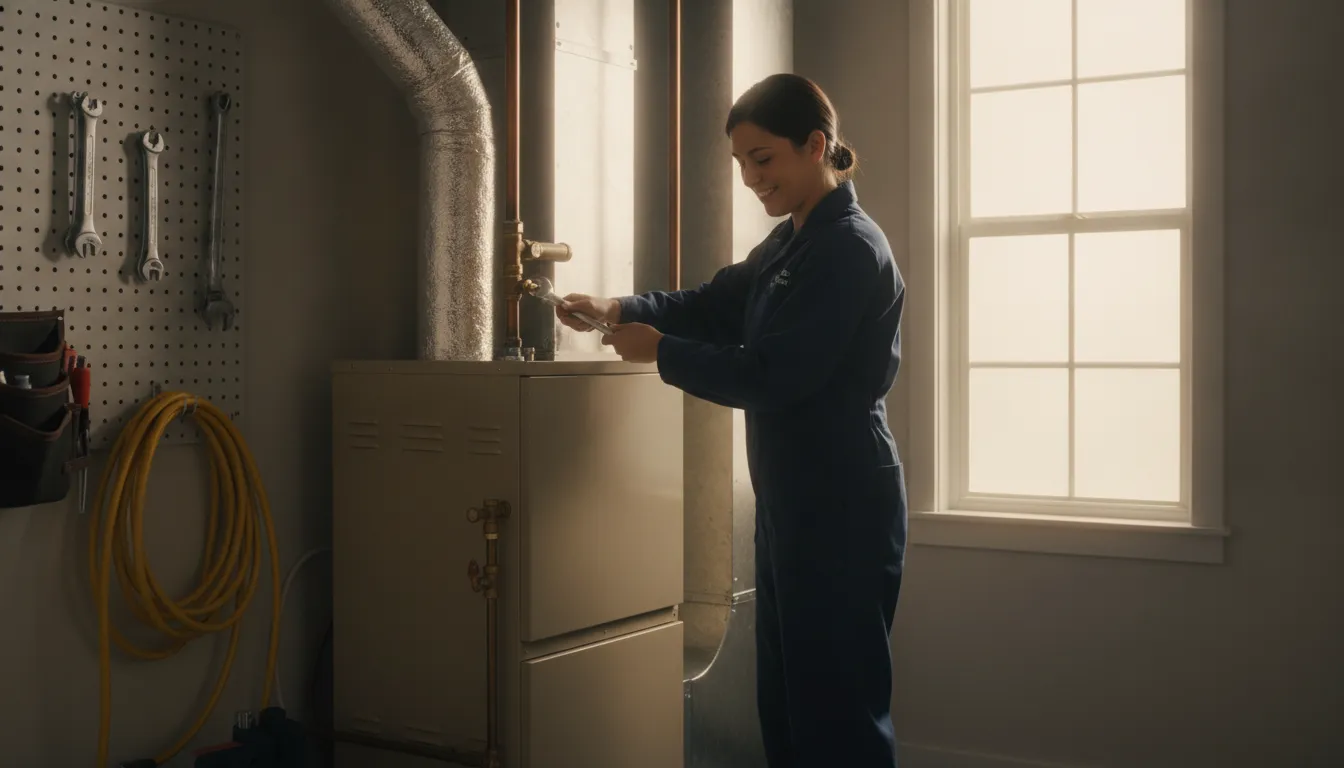
Bay Area homeowners often ask about maintenance after a system starts working harder, cycling unevenly, or pushing up utility bills. The right comparison is not simply the service-call price. It is the cost of keeping equipment reliable, what the technician will inspect, and whether a recurring plan provides meaningful value.
For a standard residential system, hvac maintenance cost bay area tune-up pricing commonly starts around $99 and may reach $150 per unit. Local service rates can vary from roughly $100 to $450 per hour depending on the work. An annual plan may cost more upfront but can add scheduled visits, priority service, and repair discounts.
A professional tune-up should leave you with a clear checklist, an explanation of any recommended repairs, and no pressure to approve unnecessary work. For broader context on HVAC costs, emergency repair, and replacement decisions in the Bay Area, review the related guide. Then compare the typical tune-up price with the scope of service you actually receive.
What Does HVAC Maintenance Cost for a Bay Area Tune-Up?
For a standard residential system, a one-time HVAC tune-up in the Bay Area commonly costs about $99 to $150 per unit. The $99 range is a common entry baseline for a straightforward visit, while the final price depends on what the technician needs to inspect, clean, test, or adjust. These figures are general market ranges, not Airteks pricing, and a written quote should explain exactly what the appointment includes.
One important distinction is the difference between a flat-rate tune-up and hourly service. Bay Area HVAC labor can run roughly $100 to $450 per hour depending on the company, technician, urgency, and scope of work. A basic maintenance appointment may be priced as a package, but troubleshooting, repairs, difficult access, or additional corrective work can add labor beyond the tune-up fee. Ask whether the quoted amount covers the inspection only or includes minor adjustments and testing.
What changes the price of a tune-up?
The number and type of systems are the first major factors. Maintaining one central air conditioner and furnace generally takes less time than servicing multiple systems, a dual-zone setup, or separate equipment for different parts of a larger home. Heat pumps can also require a different checklist because the same equipment provides heating and cooling, including checks of components used in both operating modes.
System age matters as well. Older equipment may need more careful testing, cleaning, and inspection because wear is less predictable and replacement parts can be harder to source. Technical complexity, equipment condition, and age can add approximately 20% to an initial maintenance quote. That does not automatically mean a contractor is overcharging. It means the technician may need more time or may identify a condition that falls outside a basic tune-up.
Accessibility can affect the estimate too. Equipment in a cramped attic, rooftop location, crawlspace, or hard-to-reach mechanical closet may take longer to service than equipment with clear working space. The same applies when a system has accumulated heavy dust, restricted airflow, or neglected components. A reputable contractor should explain these factors before performing chargeable work, rather than surprising you after the visit.
When comparing quotes, look beyond the lowest advertised number. Confirm whether the price is per unit, whether diagnostic fees are separate, and whether the appointment includes a condition report or recommendations. That makes it easier to compare like with like and decide whether a one-time visit or recurring plan fits your equipment and budget.
The next question is what a professional technician actually checks during the visit, from filters and coils to electrical connections, drainage, and safety controls.
What's Included in a Professional HVAC Maintenance Visit?
If you are comparing HVAC maintenance cost, a Bay Area tune-up should include more than a quick visual check. A professional visit is a systematic review of the equipment, controls, airflow, and safety components. The technician should explain what was inspected, identify developing problems, and distinguish necessary repairs from optional improvements.
Airflow, filters, and coils
The visit typically begins with the air filter. The technician inspects its condition and replaces it when needed, although homeowners should usually handle routine replacement between visits. Carrier recommends replacing standard 1-inch filters every 1 to 3 months. While 4-inch media filters may last up to about a year, depending on the home, occupants, and operating conditions. See the Carrier filter maintenance guidance for the equipment-specific details.
Coils are another important part of the checklist. The condenser coil needs to release heat outdoors, so dirt and debris can interfere with heat transfer. The evaporator coil must remain clean enough to support proper airflow and cooling capacity. The EPA's guide to indoor air quality identifies filter changes and coil cleaning as important maintenance tasks for efficiency and equipment life. A technician may also inspect the blower motor, confirm that it operates at the proper speed. And look over accessible ductwork for leaks or insulation problems that can reduce airflow.
Refrigerant, electrical, and thermostat checks
A tune-up should include checking refrigerant levels and looking for signs of a problem. Low refrigerant can reduce performance and may point to a leak, so adding refrigerant without investigating the cause is not a complete solution. The technician should inspect electrical connections, contactors, and related components, then tighten connections where appropriate. This step supports safe operation and can reveal heat damage or wear before a failure occurs.
Thermostat calibration is also part of accurate temperature control. If the thermostat is reading incorrectly or communicating poorly with the system, the equipment may run longer than necessary or leave rooms uncomfortable. These inspection and adjustment tasks are consistent with the maintenance guidance from the U.S. Environmental Protection Agency.
Drainage and safety protection
Cooling equipment removes moisture from indoor air, and that water must exit through the condensate drain. A professional clears the drain and checks the drainage path. The EPA notes that clogged condensate drains can contribute to water damage and mold growth. The technician should also test safety switches and controls designed to shut the system down when conditions become unsafe or could damage equipment.
Finally, moving parts may be lubricated when the equipment design calls for it, and the technician records the system's condition and recommended next steps. The EPA recommends professional HVAC inspection at least once a year for safe, efficient operation. A thorough tune-up costs a fraction of a major repair bill, especially when it catches a failing component before it becomes an emergency.
Single Visit vs Annual Maintenance Plan: Which Is Cheaper?
The lower price at checkout is not always the lower cost over a full year. A one-time tune-up can be a sensible choice when your system is newer. You are preparing to sell the home, or you simply want an inspection before the cooling or heating season. An annual plan may offer better value when you want scheduled care, predictable budgeting, and help avoiding a breakdown during extreme weather.
For context, a typical single residential tune-up is about $99 to $150 per unit. Annual agreements vary much more widely. From roughly $150 for a basic one-visit discount plan to about $1,500 per year for premium coverage with more visits and service benefits. The right comparison is not just the contract price. Check the number of visits, the inspection scope, exclusions, and whether repair discounts apply.
| Cost | Visits per year | Priority service | Repair discounts | System longevity/value |
|---|---|---|---|---|
| About $99-$150 per unit for a typical visit | Usually one | Usually not included | Usually not included | Good for immediate inspection and basic preventive care |
| About $150-$1,500 per year, depending on coverage | One or more, based on the agreement | Often included for emergency scheduling | Often included for repairs or replacement parts | More consistent care, budgeting, and early issue detection |
When a single visit may be the better choice
Choose a one-time visit if you need a limited checkup and are comfortable arranging service again when maintenance is due. It can also make sense if the plan does not provide enough visits to justify its price, or if its promised discounts apply only to selected repairs. Ask for the full tune-up checklist and clarify what happens if the technician finds a problem. A low advertised price may cover an inspection but not diagnostics, repairs, refrigerant, or replacement parts.
When an annual plan can pay for itself
An annual plan is often more practical for older equipment, heavily used systems, rental properties, and homeowners who would rather prevent surprise decisions. Members often receive priority emergency scheduling and discounts on future repair services. Those benefits matter most when a failure occurs during a busy weather period, when waiting for an opening can be more disruptive than the repair itself.
Before signing, compare what an HVAC maintenance plan should include, including visit frequency, seasonal coverage, exclusions, cancellation terms, and the exact repair discount. If predictable costs and fewer breakdown-related emergencies are your priorities, a transparent annual plan is usually the stronger value. If you only need an occasional inspection, pay for the single visit and avoid coverage you will not use.
How Regular Maintenance Prevents Expensive Repairs
A professional tune-up is a relatively small investment compared with the cost of repairing a failed compressor, motor, electrical component, or other major part. During a maintenance visit, a technician can identify wear, restricted airflow, loose connections, or other developing problems while they are still manageable. That gives you the opportunity to plan a repair instead of paying for an emergency response after the system stops working.
The U.S. Environmental Protection Agency notes that a well-maintained air conditioner operates more efficiently and lasts longer. Cleaning coils, checking electrical components, lubricating moving parts, and testing safety controls all reduce the strain placed on the system during demanding heating and cooling cycles. A dirty coil or worn component may not cause an immediate breakdown, but it can make the equipment work harder and accelerate damage over time. Understanding the cost of emergency HVAC repairs in the Bay Area also makes clear why prevention is worth considering before a minor issue becomes a major service call.
Maintenance protects your repair and replacement options
Maintenance does not make an aging system new, and it cannot prevent every failure. It does, however, provide useful information about the equipment's condition. If a repair is estimated at more than about 50% of replacement cost. Or the system is more than 10 to 15 years old, replacement may be the more cost-effective choice. A documented service history helps you make that decision based on the system's condition rather than a rushed recommendation during an outage.
It is also important to review warranty requirements. Many high-efficiency system manufacturers require regular professional maintenance to keep the warranty valid. Skipping recommended inspections can therefore create an avoidable financial risk if a covered component fails. Keep invoices and service records, and ask what maintenance the manufacturer requires for your specific equipment.
For heating equipment, the same preventive approach applies to ignition parts, heat exchangers, burners, airflow, and safety controls. Reviewing the cost of furnace repairs in Northern California can help put an unexpected repair into perspective, but a seasonal inspection is the better time to find concerns and discuss practical options. The cost of a routine tune-up is minor compared with replacing an entire system, especially when maintenance extends useful service life and helps preserve dependable comfort.
Schedule maintenance before the cooling or heating season puts the greatest demand on your equipment. If an unexpected failure does occur, Airteks also offers 24/7 emergency availability as a safety net. Preventive service remains the first line of defense because it gives you more control over timing, cost, and the long-term condition of your HVAC system.
How to Know If You're Overpaying for HVAC Maintenance
A higher maintenance quote is not automatically unreasonable. Bay Area HVAC technicians may bill roughly $100 to $450 per hour, depending on the work involved. And an older or more complex system can add about 20% to the initial price. The important question is whether the quote clearly explains what you are paying for and whether the work matches your equipment's needs.
Look for a clear scope of work
A professional maintenance visit should not be described only as "checking the system." Ask for an itemized checklist before approving the appointment. It should identify the equipment inspected, the tests performed, and any cleaning or adjustments included. Depending on the system, that may include checking filters, coils, electrical connections, thermostat operation, refrigerant levels, blower performance, ductwork, condensate drainage, and safety controls.
Vague language is a reason to ask questions, not an accusation of bad service. A technician should be able to explain what the visit covers and what would be considered additional work. If the checklist is the same for every home, ask how it will be adapted to your system's age, condition, and design.
Watch for unexplained add-ons
Some recommendations may be legitimate, especially when a technician finds a safety concern or a component that needs attention. The red flag is an add-on fee or upsell that appears without a clear explanation of the problem, urgency, and price. Ask whether the recommendation is required now, advisable soon, or simply an optional improvement. You can also ask to see the affected part or receive the test results that support the recommendation.
Do not feel pressured to authorize repairs during a routine tune-up. A trustworthy contractor will explain the finding, provide a written estimate, and give you room to make an informed decision. Comparing the checklist and total price with another qualified provider can help you judge value fairly. You may also find ways to cut your Bay Area energy bill before committing to upgrades that are not clearly connected to your goals.
Be cautious with sight-unseen pricing
A phone estimate can be useful as a starting point, but a firm price quoted without inspecting the system deserves clarification. The technician may not know whether access is difficult, the equipment is unusually configured, or a prior repair has affected the visit. Request a written quote that separates the maintenance charge from optional repairs, replacement parts, diagnostic fees, and future recommendations.
Before work begins, confirm the total, payment terms, and what happens if the technician discovers a separate issue. That simple conversation makes an HVAC maintenance cost Bay Area tune-up quote easier to compare and helps ensure the price reflects real work rather than surprises.
How to Schedule HVAC Maintenance With Airteks
Scheduling maintenance should be straightforward. Airteks helps homeowners and commercial customers across the Bay Area, Central Valley. And Sacramento arrange the right level of service without turning a routine tune-up into a confusing sales process. Follow these steps to get started.
- Call or request a quote. Contact Airteks at (510) 719-0621 to schedule HVAC maintenance or request a quote. You can reach the team for routine planning, or use Airteks's 24/7 emergency availability when an urgent heating or cooling problem cannot wait. Same-day response capability may be available when the situation and scheduling area allow.
- Share your system details and concerns. Tell the representative whether you need air conditioner, furnace, heat pump, or broader HVAC maintenance. Helpful details include the system type, approximate age, recent repair history, unusual sounds or odors, uneven temperatures, rising utility costs, and the last time the equipment was serviced. These details help the team prepare for the visit and focus on the issues that matter most to you.
- Choose a one-time tune-up or annual plan. Airteks can help you compare a single maintenance visit with a planned annual arrangement. A one-time tune-up can make sense for a recently purchased home. A system that has not been checked recently, or a customer who wants to begin with an inspection. An annual plan may be a better fit when you want a recurring schedule, priority emergency response, and a longer-term maintenance relationship. Ask what each option includes so you can make an informed choice.
- Meet with a technician for a full checklist. An Airteks technician will inspect the equipment and assess its operating condition, rather than relying on a quick visual glance. Airteks technicians are EPA-certified and factory-trained, with experience working on major HVAC makes and models. Depending on the system, the visit may include checking filters, coils, electrical connections. Thermostat operation, refrigerant-related components, airflow, safety controls, condensate drainage, and other parts that affect dependable performance.
- Review a clear report and recommendation. After the inspection, you should know what was checked, what condition the system is in, and whether any follow-up work is worth considering. Airteks focuses on clear communication and honest recommendations, so you can distinguish between a necessary repair, a useful improvement, and an item that can wait. If you need service beyond a tune-up, explore our local HVAC service areas to see how Airteks supports customers throughout the region.
Call (510) 719-0621 to schedule HVAC maintenance or get a clear upfront quote from Airteks.
Frequently Asked Questions
How much does an HVAC tune-up cost in the Bay Area?
A residential tune-up generally costs about $99 to $150 per unit, although the final price depends on the equipment, system condition, access, and scope of work. Older or more complex systems can add roughly 20% to an initial quote. Ask for the checklist and any separate repair or parts charges before approving work.
How often should I schedule HVAC maintenance?
Plan on professional maintenance at least once a year. The EPA recommends annual air conditioning care to help ensure safe, efficient operation. Many homeowners schedule cooling maintenance before summer and heating maintenance before colder weather, while heavily used systems may benefit from more frequent attention.
What does a professional HVAC maintenance visit include?
A technician typically checks the filter, coils, thermostat, refrigerant, blower motor, electrical connections, ductwork, and safety controls. The visit should also include clearing the condensate drain because a clogged drain can contribute to water damage and mold growth. Filter replacement may be recommended separately based on its size and condition.
Is an annual maintenance plan cheaper than a single visit?
It can be, especially if you need multiple visits or expect repairs. Annual plans may range from about $150 for a basic one-visit agreement to $1,500 for premium coverage, depending on the services included. Some plans also provide priority scheduling and discounts on repairs. Compare the number of visits, included tasks, exclusions, and repair discounts rather than choosing on price alone.
Ready to schedule your HVAC maintenance?
Regular maintenance can help you understand your system's condition and plan service with greater confidence. Airteks can review your needs, explain the recommended work, and provide a clear, upfront quote for your Bay Area home. To schedule HVAC maintenance or discuss your options, call (510) 719-0621.
Comments