
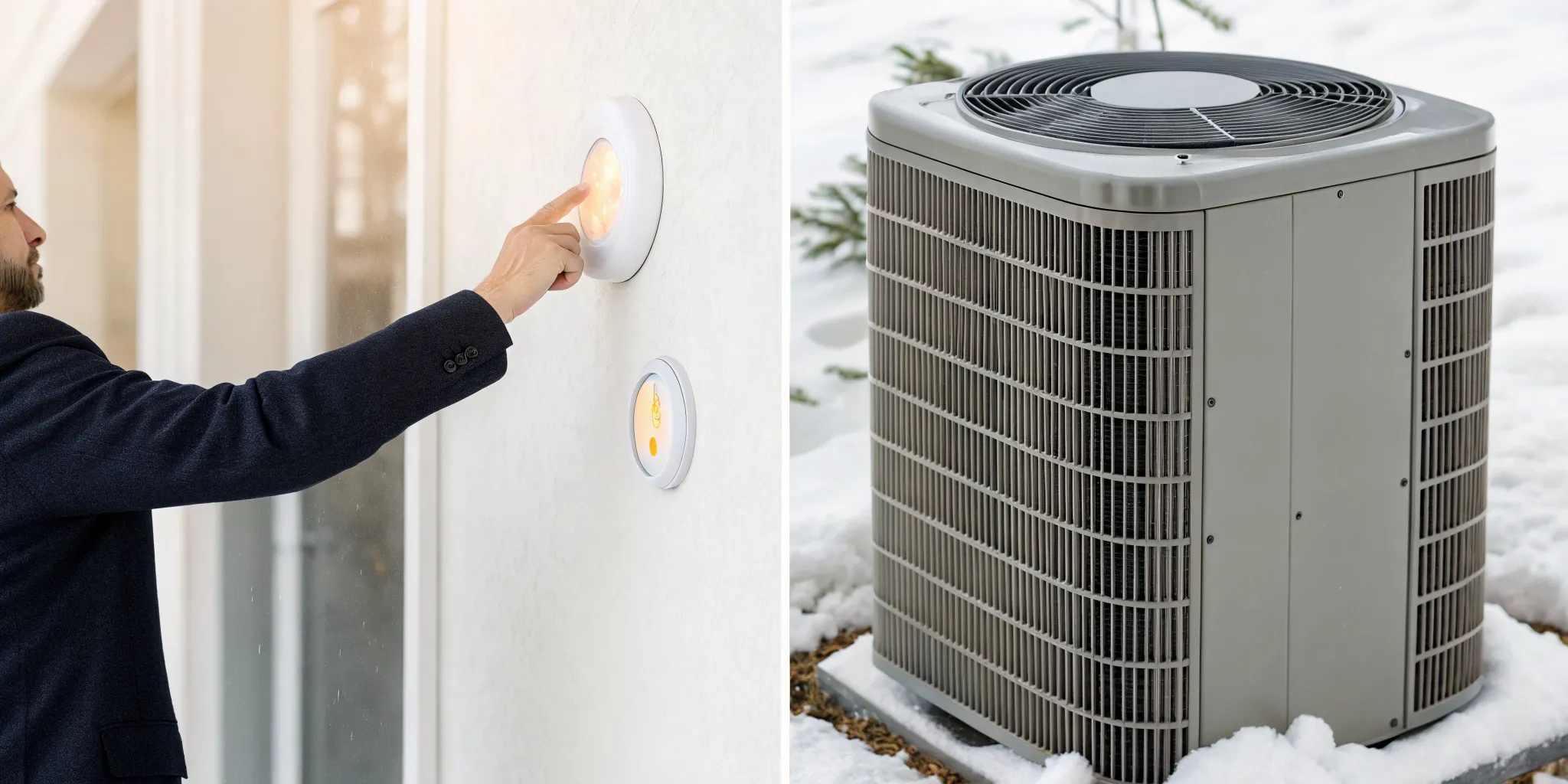
If you’ve recently switched from a traditional furnace to a heat pump, the air coming from your vents might feel surprisingly lukewarm. This often leads homeowners to believe their system is broken, but that’s usually not the case. Furnaces create intense heat by burning fuel, while heat pumps work by efficiently moving heat from the outdoors into your home, resulting in a milder airflow. However, there’s a clear difference between normal, warm air and genuinely cold air. If you’re dealing with a heat pump not blowing hot air at all, it signals a real problem. This article will help you distinguish between normal operation and a malfunction, covering the key signs that indicate your system needs attention.
Key Takeaways
- Check the basics before you call: Simple issues are often the culprit. Make sure your thermostat is set to “Heat,” change your air filter if it’s dirty, and clear any debris from around your outdoor unit.
- Don’t mistake mild air for a problem: Heat pumps produce gentler, lukewarm air (usually 90°F to 105°F), which is different from a furnace’s intense heat. As long as your home is comfortable, your system is likely working correctly.
- Know when to call a technician: Some problems require an expert for safety and to avoid bigger issues. Call a professional if your circuit breaker repeatedly trips, you hear loud grinding or hissing sounds, or the outdoor unit is encased in thick ice.
Why Isn’t My Heat Pump Blowing Hot Air?
When you’re counting on your heat pump for warmth, getting a blast of cool air instead can be frustrating. The good news is that the cause is often a simple issue you can identify and sometimes even fix yourself. From a quick settings adjustment to a dirty filter, several common culprits could be preventing your system from delivering the cozy air you expect.
Understanding what might be wrong is the first step toward getting your home comfortable again. Your heat pump works by transferring heat from the outdoors inside, and any interruption in that process can affect its performance. Below, we’ll walk through the most frequent reasons your heat pump isn’t blowing hot air, helping you figure out what’s happening with your system. Some problems have easy solutions, while others will require professional heat pump services.
A Dirty Filter Is Blocking Airflow
One of the most common reasons for a heat pump malfunction is a dirty air filter. When the filter gets clogged with dust and debris, it severely restricts airflow. This forces your system to work much harder to circulate air, which can lead to overheating and cause it to shut down as a safety measure. In some cases, the reduced airflow over the indoor coil can even cause it to freeze up, completely stopping the heating process. Checking and changing your air filter is a simple, effective first step in troubleshooting your heating problem and should be done regularly to keep your system running smoothly.
Your Thermostat Is Set Incorrectly
It might sound too simple, but an incorrect thermostat setting is a frequent cause of heating issues. Before you assume the worst, take a moment to check your thermostat. Make sure it’s set to “Heat” mode, not “Cool” or “Fan Only.” The fan-only setting will circulate air without heating or cooling it, which can make the air feel cool as it moves across your skin. Also, ensure the temperature is set a few degrees higher than the current room temperature to signal the system to turn on. A quick adjustment here could be all you need to get the warm air flowing again.
You’re Low on Refrigerant
Refrigerant is the substance that allows your heat pump to absorb heat from the outside and release it inside your home. If your system develops a leak, the refrigerant level will drop, and it won’t be able to transfer heat effectively. This often results in lukewarm or cool air coming from your vents. A hissing sound near the unit can be a telltale sign of a leak. Handling refrigerant requires special certification, so if you suspect a leak, it’s crucial to contact a professional to find and repair the leak and recharge the system safely.
The Outdoor Unit Is Frozen
It’s normal for a light layer of frost to form on your outdoor unit, especially in cold, damp weather. Your heat pump has a built-in defrost cycle to melt this frost periodically. However, if you see a thick layer of ice encasing the unit, you have a bigger problem. This can happen if the unit is dirty, the defrost cycle is malfunctioning, or airflow is blocked by leaves or snow. A frozen outdoor unit cannot absorb heat from the air, which means it has no heat to send inside your home.
A Reversing Valve or Electrical Part Has Failed
The reversing valve is a critical component that switches the flow of refrigerant to change your system from cooling to heating mode. If this valve gets stuck or fails, your heat pump might be trapped in cooling mode, which is why it’s only blowing cold air even when the thermostat is set to heat. Other electrical failures, like a bad capacitor or control board, can also prevent the heating cycle from starting. Diagnosing and replacing these parts is a complex job that should always be left to a qualified HVAC technician.
Leaky Ducts or an Old System Is to Blame
Sometimes the heat pump is working fine, but the warm air is getting lost on its way to you. Leaky or poorly insulated ductwork can allow a significant amount of heat to escape into your attic or crawlspace before it ever reaches your rooms. This can result in weak airflow or air that feels lukewarm by the time it comes out of the vents. Similarly, an older heat pump may simply be losing its efficiency and struggling to keep up, especially in colder weather. If your energy bills are climbing and your home isn’t comfortable, it might be time for a professional inspection of your entire residential HVAC system.
What Temperature Should My Heat Pump Blow?
It’s a common question we get, especially from homeowners new to heat pumps: “Why isn’t the air coming out of my vents hot?” If you’re used to a traditional furnace, the air from a heat pump can feel surprisingly lukewarm. This often leads people to think their system is broken, but that’s usually not the case. A heat pump operates differently than a furnace, and understanding the normal temperature of the air it produces can save you a lot of worry. Instead of creating intense heat by burning fuel, a heat pump works by moving existing heat from the outside air into your home. This process is incredibly efficient, but it results in a milder airflow.
The air coming from your vents should feel warm, but it won’t have that blast of heat you might expect. The temperature can also change depending on how cold it is outside. During a serious cold snap, your system might even use a backup heat source to keep up. So, how can you tell if the temperature is normal or a sign of a problem? We’ll walk through what to expect, why the air feels cooler, how weather affects performance, and how to check if your system needs a professional look. Knowing these details will help you feel confident about your home’s heating.
Why Heat Pump Air Can Feel Cooler Than a Furnace
The main reason heat pump air feels different is because of how it works. A furnace creates heat by burning fuel, producing air that can be well over 120°F. A heat pump, on the other hand, doesn’t create heat; it moves it. This process is incredibly efficient, but the air it delivers is milder, typically blowing at a temperature between 90°F and 105°F. Since our average body temperature is around 98.6°F, air that is 95°F can feel cool to the touch. So, if the air feels warm but not scorching hot, your heat pump is likely doing its job perfectly.
How Cold Weather Affects Performance
Your heat pump’s performance is directly tied to the outdoor temperature. It’s designed to pull heat from the outside air, and it does this very effectively in mild-to-cool weather. However, once the temperature outside drops to around 25°F to 30°F, there is much less heat available in the air for the unit to capture. Your system has to work harder to warm your home, and its efficiency drops. To handle this, most heat pumps have a backup heat source, often called auxiliary or emergency heat. This is usually a set of electric resistance coils that kick in to help out. This is a normal part of its operation during a cold snap.
How to Know If the Air Temperature Is a Real Problem
If you’re still concerned the air is too cold, you can do a simple test. Don’t just rely on how it feels on your skin. Instead, use a probe-style cooking thermometer to get an accurate reading. Place it directly in the airflow at a vent and see what the temperature is. If it’s consistently in that 90°F to 105°F range, things are probably fine. If the reading is much lower, or if the air feels genuinely cold, you might have an issue. Listen for hissing sounds near the unit or look for ice on the outdoor coils, as these can point to a refrigerant leak. If you notice these signs, it’s best to contact a professional for a diagnosis.
What to Check Before You Call for Help
When your heat pump stops blowing warm air, it’s easy to assume the worst. But before you panic and schedule a service call, there are several simple things you can check on your own. Often, the problem is a minor issue you can fix in just a few minutes, saving you both time and money. Walking through these DIY steps can help you identify the root cause or, at the very least, gather useful information for a technician if you do need professional help.
Think of this as your first line of defense. From a simple thermostat mistake to a clogged air filter, many common heat pump problems have straightforward solutions. We’ll walk through eight checks you can perform safely. If you go through this list and your system is still on the fritz, you’ll know it’s time to contact a professional for a diagnosis.
1. Check Your Thermostat Settings
It might sound too simple, but an incorrect thermostat setting is one of the most common reasons a heat pump isn’t heating. Someone in your home may have accidentally changed it. Before you do anything else, take a close look at your thermostat.
Make sure it’s set to “Heat” mode. If it’s on “Cool,” it will blow cold air, and if it’s only on “Fan,” it will just circulate room-temperature air. Also, double-check that it’s not set to “Emergency Heat,” which can sometimes prevent the heat pump’s outdoor compressor from running properly. Ensure the temperature is set several degrees higher than the current room temperature to signal the system to turn on.
2. Inspect Your Air Filter
Your heat pump’s air filter is essential for maintaining good airflow and system efficiency. When it gets clogged with dust, pet dander, and other debris, it can cause a whole host of problems. A dirty filter forces your system to work much harder to pull in air, which can severely reduce its ability to heat your home effectively.
Check your air filter and see if it’s dirty. If you can’t see light through it, it’s definitely time for a change. A clogged filter is a simple fix that can make a huge difference in performance. Swapping it out for a clean one might be all you need to get the warm air flowing again.
3. Clear Debris From the Outdoor Unit
Your heat pump works by absorbing heat from the outside air and transferring it inside. For it to do this job, the outdoor unit needs to be able to breathe. Take a walk outside and inspect the unit for any obstructions. Things like fallen leaves, grass clippings, dirt, and snow can pile up against the unit and block the coil.
This blockage prevents the system from absorbing heat, which means it can’t warm your home. Gently clear away any yard debris, making sure there are at least two feet of clearance around the entire unit. This simple step is a key part of routine residential HVAC maintenance.
4. Look for Ice on the Outdoor Unit
It’s normal for a thin layer of frost to form on the outdoor unit, especially in cold, damp weather. Your heat pump has a built-in defrost cycle to melt it. However, if you see the unit covered in a thick layer of ice, you have a problem. This can happen if the unit is very dirty or if there’s an issue preventing the defrost cycle from working.
When the outdoor unit freezes up, it can’t transfer heat properly. If you notice significant ice buildup, you can try turning the system off and gently pouring lukewarm water over it to melt the ice. If it freezes up again quickly, it’s a sign of a deeper issue that needs a technician’s attention.
5. Listen for Hissing or Look for Leaks
Your heat pump uses refrigerant to move heat between the indoor and outdoor units. If there’s a leak in the refrigerant lines, the system won’t have enough of this crucial substance to work correctly. A hissing sound coming from either the indoor or outdoor unit is a common sign of a refrigerant leak.
You might also notice oily residue around the connections on the unit. If a heat pump doesn’t have enough refrigerant, it simply can’t move heat effectively, resulting in lukewarm or cool air. Refrigerant is a hazardous material, so if you suspect a leak, turn off your system and call a professional right away.
6. Check for Leaky Ductwork
Your heat pump could be working perfectly, but if the warm air is escaping through leaky ducts before it reaches your rooms, you’ll still feel cold. Leaky ductwork is a major source of energy loss in many homes. If you’ve noticed weak airflow from your vents along with rising energy bills, your ducts might be the problem.
You can do a quick visual inspection of any accessible ductwork in your attic, crawlspace, or basement. Look for disconnected sections, tears, or holes. While you can seal small, accessible leaks with mastic sealant or metal-backed tape, widespread duct issues will require professional repair to ensure your heat pump heats effectively.
7. Try Resetting Your System
Sometimes, all an electronic system needs is a good old-fashioned reset. A minor electrical fault or a tripped sensor can cause your heat pump to stop working correctly, and a reset can clear the error. It’s a simple troubleshooting step that can sometimes get your system back up and running.
To do this, first turn your thermostat to the “Off” position. Then, find the circuit breakers for your indoor and outdoor units in your home’s electrical panel. Turn both breakers off, wait about a minute, and then turn them back on. Finally, set your thermostat back to “Heat” and see if it starts working.
8. Consider Your System’s Age
If you’ve tried everything else and your heat pump is still struggling, it might be time to consider its age. The average lifespan of a heat pump is about 12 to 15 years. As systems get older, they become less efficient and more prone to breakdowns.
If your heat pump is in that age range and you find yourself paying for frequent and expensive repairs, it may be more cost-effective to replace it. A new, high-efficiency system will not only be more reliable but will also lower your energy bills. If you think it might be time for an upgrade, we can provide an honest recommendation for your home or commercial property.
When to Call an HVAC Technician
You’ve done the basic checks, but your heat pump is still acting up. While I’m all for a good DIY fix, some problems are best left to the professionals. Trying to tackle complex electrical or mechanical issues on your own can be unsafe and often leads to bigger, more expensive problems. If you notice any of the following signs, it’s time to put down the tools and call for expert heating system repair. A trained technician has the right equipment to diagnose the issue correctly and get your system running safely again. It’s about knowing when to call for help to protect your investment and your home’s comfort. These professionals can spot issues that aren’t obvious and have the specialized tools to fix them right the first time, saving you from future headaches and potentially costly follow-up repairs.
You Suspect a Refrigerant Leak
If your heat pump is low on refrigerant, it almost always means there’s a leak. You might hear a faint hissing sound near the unit or notice that the coils are covered in ice, even when it’s not that cold outside. Handling refrigerant requires a special certification, so this is definitely not a DIY job. A qualified technician can find the source of the leak, repair it properly, and recharge the system to the manufacturer’s exact specifications. This ensures your heat pump operates efficiently and safely.
The Circuit Breaker Keeps Tripping
A circuit breaker that trips once might just be a fluke. But if you reset the breaker and it immediately trips again, stop what you’re doing. This is a clear sign of a serious electrical problem within your HVAC system, such as a short circuit or a failing motor. Continuing to reset it can damage the unit and even create a fire hazard. For your safety, turn off the system and contact a professional to troubleshoot the electrical fault.
The Unit Won’t Defrost Properly
It’s normal for a light layer of frost to form on your outdoor unit, which the system’s defrost cycle typically melts away. However, if the unit is completely encased in a thick layer of ice, something is wrong. This could point to a problem with the defrost control board, low refrigerant levels, or restricted airflow that you can’t fix on your own. A frozen unit can’t transfer heat effectively, forcing it to work much harder. An HVAC pro can diagnose why the defrost cycle isn’t working and resolve the underlying issue.
You Hear Grinding or Banging Noises
Your heat pump should operate with a gentle hum. Loud, sudden, or unusual noises are a cry for help. Squealing or grinding sounds often indicate a problem with a motor bearing, while banging or clanking could mean a part has come loose or broken inside the unit. If you hear any of these alarming sounds, turn your system off immediately to prevent catastrophic failure. These are serious mechanical issues that require urgent residential services from a qualified technician.
Your Energy Bills Are Unusually High
Take a look at your recent utility bills. If they’ve shot up without a clear reason, your heat pump could be the culprit. When a system is struggling with an internal problem, it has to run longer and harder to heat your home, causing a spike in energy consumption. This inefficiency could be caused by anything from a refrigerant leak to a failing component. A professional tune-up can identify what’s causing the strain and restore your system’s performance, saving you money in the long run.
Keep Your Heat Pump Working Efficiently All Year
A little proactive care for your heat pump can make a huge difference in its performance and lifespan. By staying on top of a few simple tasks, you can help prevent unexpected breakdowns, keep your energy bills in check, and ensure your home stays comfortable no matter the season. These maintenance steps are straightforward and will help you get the most out of your system. Think of it as a small investment of your time that pays off with reliable heating and cooling all year long. Taking these steps helps your equipment run smoothly and gives you peace of mind, knowing you’re doing your part to protect your investment.
Change Your Air Filter Regularly
One of the most common culprits behind heating problems is a dirty air filter. When your filter gets clogged with dust and debris, it restricts airflow, forcing your heat pump to work much harder to circulate air. This strain can reduce efficiency and even cause the system to overheat or freeze up. To prevent this, check your air filter every month. If it looks dirty, replace it. A good rule of thumb is to change it at least every three months to keep air moving freely and protect your equipment from unnecessary wear and tear.
Keep the Outdoor Unit Free of Debris
Your outdoor heat pump unit needs plenty of room to breathe. For it to work correctly, air must be able to flow freely around it. Take a walk outside and check for any obstructions. Clear away fallen leaves, grass clippings, twigs, or any other debris that has collected around the unit. It’s important to maintain at least two feet of clear space on all sides. During the winter, make sure snow and ice don’t build up on or around the unit, as this can also block airflow and hinder its performance.
Schedule Annual Professional Maintenance
While DIY checks are helpful, nothing replaces a professional tune-up. Scheduling annual maintenance is the single best thing you can do to ensure your heat pump runs efficiently for years to come. During a service visit, a technician will clean internal components, check refrigerant levels, test electrical connections, and identify small issues before they turn into major repairs. We recommend scheduling a tune-up every fall and spring to prepare your system for the heating and cooling seasons. Our residential services include comprehensive maintenance to keep your system in top shape.
Pay Attention to Your System’s Performance
You know your home best, so pay attention to how your heat pump normally operates. It’s worth noting that the air from a heat pump often feels lukewarm compared to a furnace, but as long as your home is reaching the temperature on your thermostat, it’s likely working as it should. However, if you notice new or unusual sounds, your system cycling on and off more frequently, or a sudden jump in your energy bills, it could be a sign of an underlying problem. If something feels off, it’s always a good idea to contact us for a professional diagnosis.
Need Heat Pump Repair in the Bay Area, Central Valley, or Sacramento?
If you’ve worked your way through the DIY checklist and your heat pump is still giving you the cold shoulder, it’s time to call in a professional. While simple fixes can sometimes do the trick, persistent problems often point to something deeper that requires an expert eye. Issues like a refrigerant leak or an electrical fault aren’t just complex; they can also be hazardous to fix without the right training and tools.
A qualified technician can safely handle refrigerants and diagnose tricky electrical issues that might be causing your system to fail. Trying to tackle these problems yourself can lead to bigger, more expensive repairs down the road. Instead of guessing, let an expert pinpoint the exact cause and get it fixed right the first time. This not only ensures your system runs efficiently but also gives you peace of mind.
At Airteks, we know how frustrating it is when your heating system can’t keep up. Our team of experienced technicians provides honest, straightforward solutions to get your home comfortable again. If you’re in the Bay Area, Central Valley, or Sacramento, you can count on us for dependable heat pump services. Don’t spend another day shivering; contact us to schedule an appointment and we’ll get your heat pump running perfectly.
Frequently Asked Questions
Why does the air from my heat pump feel lukewarm? This is completely normal and one of the biggest differences between a heat pump and a traditional furnace. A furnace burns fuel to create intense heat, while a heat pump transfers existing heat from the outdoors. This process results in a gentler, milder warmth, usually between 90°F and 105°F. Since this is close to your body temperature, the moving air can feel cool to the touch. As long as your room is reaching the temperature you set on the thermostat, your system is doing its job correctly.
What are the first two things I should check if my heat pump stops heating? Before you worry about a major problem, always start with the simplest solutions. First, check your thermostat to make sure it is set to “Heat” mode and that the temperature is set a few degrees higher than the current room temperature. It’s surprisingly easy for settings to get changed by accident. Second, inspect your air filter. A dirty, clogged filter can choke your system’s airflow and prevent it from heating effectively, so see if it needs to be replaced.
Is it normal for my outdoor unit to be covered in ice? A thin layer of frost on the outdoor unit is normal, especially on cold and humid days. Your heat pump has a defrost cycle designed to melt this away periodically. However, if your unit is encased in a thick block of ice, that signals a problem. This heavy icing prevents the unit from absorbing heat and could be caused by a dirty coil, a malfunctioning defrost system, or low refrigerant. If you see significant ice buildup, it’s a good idea to call a technician.
How do I know if a problem is serious enough to call a professional? You should call a professional if you’ve tried the simple DIY checks (like checking the thermostat and filter) and the issue continues. Definitely call for help if you notice any serious warning signs. These include a circuit breaker that keeps tripping, loud grinding or banging noises coming from the unit, or a hissing sound that could indicate a refrigerant leak. These symptoms point to complex mechanical or electrical problems that require an expert for a safe and proper repair.
How often should I have my heat pump professionally serviced? To keep your heat pump running reliably and efficiently, you should schedule professional maintenance once a year. The best time for this is in the fall, just before you start relying on it for heating. During a tune-up, a technician will clean and inspect the entire system, check refrigerant levels, and catch small issues before they become expensive breakdowns. This annual service is the most effective way to extend the life of your equipment and keep your energy bills down.
Comments