
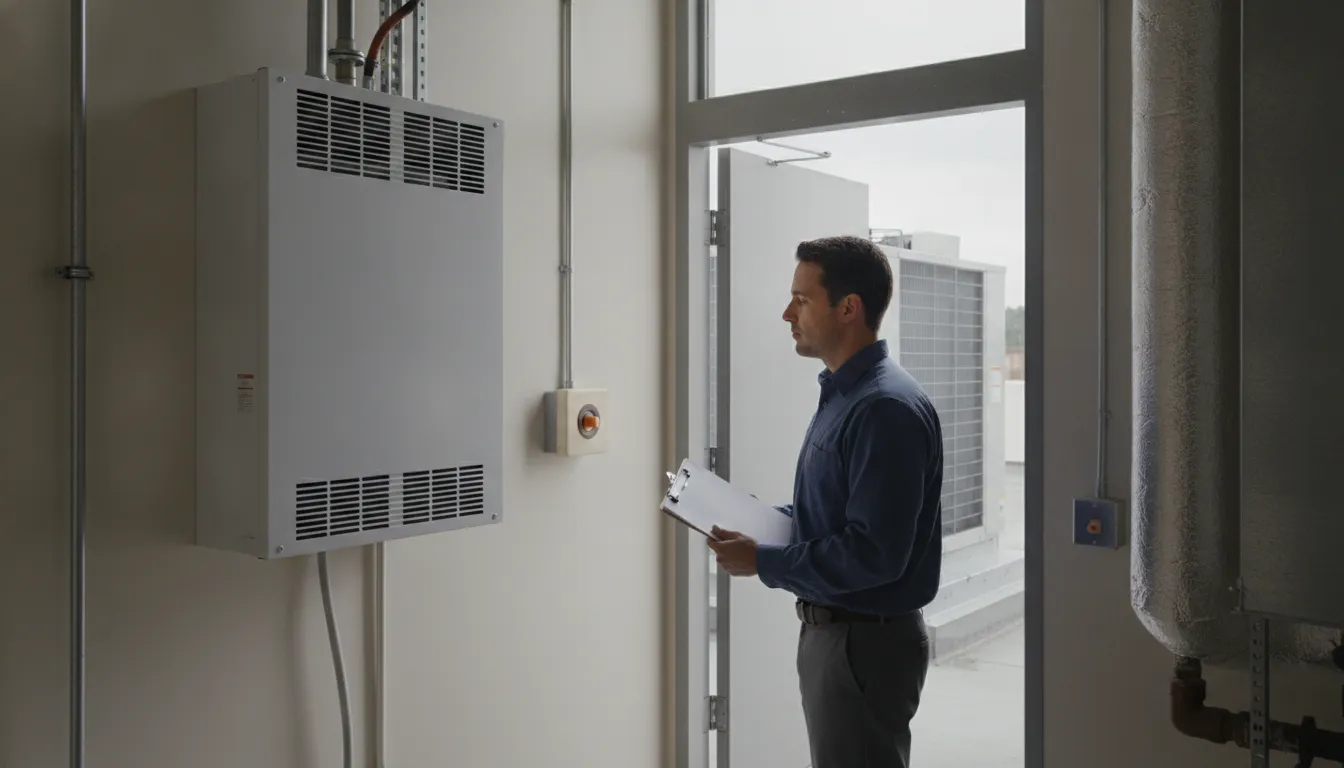
Facility teams in Northern California can start VRF HVAC troubleshooting with a few safe observations, but complex system faults need qualified service. Variable refrigerant flow systems coordinate indoor units with shared outdoor equipment, piping, and controls. A symptom in one area may have more than one possible cause. Record what changed, what is affected, and when the problem occurs before resetting equipment.
Call Airteks at (510) 719-0621
Which VRF HVAC troubleshooting Northern California symptoms should a facility team document first?
Start by describing the effect on occupants and operations rather than guessing at a failed component. A useful first report notes whether one room, several indoor units, or the whole building is affected. Include the time symptoms began, whether they are continuous or intermittent, and any recent changes to schedules, occupancy, controls, or equipment.
Common symptoms worth recording include:
- An indoor unit does not respond to a normal user command.
- A zone is warmer or cooler than its setpoint, or temperature drifts over time.
- Airflow seems weak or stops, or an indoor unit makes an unusual sound.
- A controller displays a warning or error code.
- Several zones change performance at once, or the system cycles in an unexpected pattern.
- A unit operates at unusual times or appears to switch between modes without an obvious schedule change.
- Condensation, water, frost, or other visible conditions appear near an indoor unit or equipment area.
Write down what occupants noticed and what the facility team observed separately. For example, “conference room felt warm at 10:15” is more useful at intake than “the compressor failed.” Note open doors, unusual occupancy, or extra sunlight. These details may help a technician compare a comfort complaint with the system’s normal operating pattern.
These observations are not a diagnosis. Similar symptoms can come from a control setting, a local indoor-unit issue, shared equipment, or a broader system condition. Avoid telling occupants that a particular part has failed until a technician has assessed it.
What safe checks come first in VRF HVAC troubleshooting Northern California?
Keep checks to normal user controls and visible conditions. Confirm that the affected unit has power through its ordinary interface, review the setpoint and operating mode, and check whether a schedule or occupancy setting may explain the behavior. If the system is managed centrally, ask the person responsible for controls whether a recent schedule or setting change was made.
Look for obvious blocked supply or return grilles and make sure furniture, stored items, temporary partitions, or construction materials are not obstructing airflow. If filters are accessible and your facility procedure allows staff to inspect them, note whether they appear loaded; follow the equipment instructions and site safety policy. Do not remove panels or reach into equipment. A visible condition can be documented without turning a routine observation into an equipment repair.
Check nearby spaces, not just the room where the complaint began. If neighboring zones are normal, record that fact. If several spaces changed together, list each one and the time relationship. A simple floor plan marked with affected and unaffected areas can be useful, especially when unit labels are difficult to match to controller names.
Do not open electrical compartments, handle refrigerant, bypass safeties, or repeatedly reset a fault. A reset can erase useful information or allow a problem to recur without resolving it. If there is a burning smell, smoke, water near electrical equipment, or another immediate safety concern, keep people clear and follow your facility emergency procedures. Contact emergency services when appropriate.
How can you tell a local zone issue from a system-wide concern?
Map symptoms to the building before deciding how urgent the service request is. If one indoor unit has a problem while neighboring zones operate normally, report it as localized. If multiple units become affected together, or the issue follows a shared schedule or operating change, report the wider pattern. This distinction helps a technician plan the assessment without assuming a cause.
| Observed pattern. | What to record. | Useful next step. |
|---|---|---|
| One zone is uncomfortable. | Room, unit identifier, setpoint, mode, and start time. | Check normal controls and visible obstructions. Request assessment if it persists. |
| Several zones change together. | Affected areas, shared timing, schedule changes, and messages. | Escalate as a broader system symptom. Share the timeline. |
| A warning or code appears. | Exact code, controller location, and whether it returns. | Photograph or transcribe it. Do not reset it repeatedly. |
| Noise, odor, leak, or visible damage. | Location, time, severity, and any safety concern. | Keep people clear as needed. Contact a qualified service provider. |
| Comfort varies by time of day. | Schedule, occupancy, weather exposure, and mode. | Compare the pattern with controls and hours. Do not assume a failed part. |
For commercial facilities, it is also useful to compare the issue with occupancy and operating hours. A zone that is unoccupied or intentionally scheduled differently may not indicate equipment failure. Consult the building operator or controls administrator before changing schedules, especially when multiple areas share a control strategy.
Do not use the table as a substitute for testing. It is an intake tool that helps organize observations. A system-wide pattern can still have a control or communication cause, and a local complaint can still require an inspection of shared equipment. The value is in giving the technician an accurate map of the symptom.
Consider a practical example. If three offices become warm within minutes of one another after a schedule adjustment, record their locations, the change time, and the controller message. Then ask the controls administrator to confirm the intended operating hours. If only one office drifts while nearby rooms remain comfortable, note that contrast rather than changing settings across the building. The technician can then start with a defined pattern instead of an unverified theory.
What can weather and building use change?
Northern California facilities can experience different heating and cooling demands over the course of a day and across the year. Sun exposure, outdoor temperature, open doors, meeting-room occupancy, process loads, and neighboring construction can all change a zone’s comfort conditions. Record these circumstances when they are noticeable, but do not assume they explain a recurring fault.
Intermittent symptoms deserve a timeline. Note whether a complaint appears during morning startup, after a schedule change, during peak occupancy, or near the end of the workday. If the condition disappears before a technician arrives, the record may be the best evidence of the original pattern. Include photos of controller messages and, when permitted by site policy, photos of accessible visible conditions.
Facilities teams should also separate a comfort complaint from a safety concern. A mildly uncomfortable room may allow time for coordinated service. Smoke, a burning smell, water near electrical equipment, or a damaged component needs immediate attention under the site’s safety procedures.
When collecting temperature information, use the same method and location each time. A reading near a supply outlet may not represent the occupied part of the room. One handheld reading may not explain a complaint that occurs only during a particular hour. Record the instrument or display used, the reading time, and whether doors or windows were open. Consistent notes are more useful than a collection of unlabelled numbers.
When should you stop checking and request service?
Request professional help when a fault persists after basic user-level checks, an error code returns, several zones are affected, or the system has an unusual odor, noise, or visible leak. A service assessment is also appropriate when comfort problems disrupt business operations or when staff cannot confidently identify a normal control setting.
VRF equipment combines indoor units, outdoor equipment, refrigerant piping, electrical components, and controls. Diagnosing refrigerant or electrical problems requires appropriate training and tools. Do not attempt repairs, pressure checks, wiring changes, or refrigerant work as a facilities-side troubleshooting step. Do not assume that adding refrigerant, replacing a sensor, or changing a control board is the correct response without a qualified assessment.
Urgent conditions should be handled under the facility’s emergency plan. Keep occupants away from unsafe areas, protect sensitive operations when that can be done safely, and give the service provider a clear description of the immediate risk. Airteks offers commercial HVAC services for businesses and facilities across Northern California. The company’s commercial air conditioning information is another relevant starting point when cooling performance is part of the concern.
For planned upkeep that may help identify developing concerns, see the information on commercial planned maintenance. Maintenance does not guarantee that failures will be prevented, but an established service history can help teams understand system condition and recurring issues.
What information should go in a Northern California VRF service request?
A concise, complete request saves time during intake and gives the technician useful context. Include the building address and best site contact, the affected areas and unit labels, when the problem started, and whether it is constant or intermittent. Add controller messages exactly as shown and note any action taken so far.
- System or equipment identifiers available to your team, without opening equipment.
- Which indoor units or spaces are affected and which appear normal.
- Temperature or comfort observations, plus current settings and operating mode.
- Warning codes, photos of the display, and the time they appeared.
- Recent changes to occupancy, schedules, controls, construction, or power.
- Any operational impact, access requirements, and site safety instructions.
- The preferred contact person and the best window for access.
- Prior work orders or service notes related to the same symptom, if available.
Use consistent terms in the request. “Unit 3 in the west corridor” is better than “the office AC,” particularly when a building has many indoor units. Include the controller name and the equipment label if both are available. If a code is displayed, copy it exactly rather than translating it into a suspected diagnosis.
Do not send passwords or sensitive access credentials in an ordinary service message. If remote access or controls coordination is needed, arrange it through the facility’s approved process. Airteks’ contact page is a straightforward way to begin a service discussion.
How should you prepare for the technician’s visit?
Assign one person to meet the technician and provide access to affected areas and relevant equipment locations. Gather controller notes, prior service records, and available equipment schedules. Let occupants know what areas may be inspected, and flag restricted rooms, security procedures, or work-hour constraints in advance.
Confirm that the service team can reach the equipment without moving hazards or entering a restricted area unexpectedly. If roof, mechanical-room, or lift access is required, explain the site process before the appointment. Do not ask staff to remove guards, panels, or other barriers simply to make equipment easier to reach.
Share what the building team already observed without filtering it into a presumed diagnosis. If the condition changes before the visit, update the timeline. When the problem is intermittent, the time and circumstances of each occurrence can be more useful than a single snapshot.
Facilities that manage several systems may also find it helpful to keep basic equipment and service details together. Airteks’ commercial service area information can help determine whether to make an inquiry about service coverage. Before anyone opens refrigerant circuits, review the EPA Section 608 refrigerant-handling rules, which explain why refrigerant work belongs with certified technicians, not with a facilities-side check.
Before the visit, prepare a one-minute handoff note. Include the main symptom, first and latest occurrence, affected areas, visible messages, safety concerns, and steps already taken. Keep a copy with the work order. This is especially helpful when the person who reports the issue is not the person available to meet the technician.
- Write the main symptom in one sentence, then the first and latest time it happened.
- List each affected room or unit, plus any controller message copied exactly as shown.
- Note safety concerns, access limits, and the steps already taken.
- Leave the note with the work order so the person on site can hand it over.
How can you reduce repeat VRF troubleshooting?
After service, ask for a plain-language summary of the observed condition, work completed, and any follow-up recommended. Keep the report with the equipment records. Track whether the same zone or fault returns, when it happens, and whether it coincides with a schedule or occupancy change.
Use consistent room and unit labels across work orders, control screens, and facility records. Make sure staff know which settings they may adjust and which changes require approval from the controls administrator. This avoids unnecessary setting changes and gives service providers a clearer baseline.
Build a short post-service review into the facility routine. Confirm that the original symptom was addressed, identify any temporary operating instructions, and assign an owner for recommended follow-up. If a repair was deferred, record the reason and the condition that would make the issue more urgent. This creates a practical decision trail without promising that every future fault can be predicted.
For broader commercial system planning, Airteks’ overview of commercial HVAC systems provides a relevant starting point. Facilities considering heating-related service can also review the company’s commercial heating information. The right response depends on the equipment, site conditions, and service findings. A record of what happened is more useful than a blanket assumption about replacement or repair.
When a fault recurs, compare the new event with the previous work order instead of starting a fresh description from memory. Note whether it is the same area, controller message, time window, and operating condition. If an earlier recommendation remains open, include that status and identify who is responsible for the next decision. A concise history can clarify whether the present request concerns a repeat symptom, a new issue, or an incomplete follow-up.
Which Northern California counties should a VRF service request cover?
Airteks serves residential and commercial customers across Northern California, including the Bay Area, the Central Valley, and Sacramento. For a VRF service request, name the county and city along with the building address so the team can plan access and travel. Coverage commonly includes Alameda County, Contra Costa County, San Joaquin County, Santa Clara County, and Napa County, plus cities such as Livermore, Pleasanton, Walnut Creek, and Sacramento.
A county note does not diagnose the equipment. It tells the dispatcher where the indoor units, outdoor equipment, and site contact are located, and whether roof, mechanical-room, or after-hours access applies. If the same symptom appears at more than one site, list each address separately rather than treating every location as one system.
This guide stays with troubleshooting and the service request. It does not compare VRF with rooftop equipment or recommend a system type. Facilities choosing between those options can read the separate VRF vs rooftop HVAC Northern California comparison. Return here for intake steps once a VRF system is already in the building.
Urgent HVAC issues can be reported at any hour. Say whether people are still in the affected area, whether operations are interrupted, and whether there is smoke, a burning smell, water near electrical equipment, or another immediate safety concern. For non-urgent comfort complaints, the same county and access details still help the technician arrive prepared.
Call Airteks at (510) 719-0621
Frequently Asked Questions
Can facility staff reset a VRF system?
Follow the manufacturer’s normal user instructions and your site procedures, but avoid repeated resets or clearing a warning before recording it. If a fault returns, request a professional assessment.
Does one uncomfortable room mean the entire VRF system has failed?
No. A single affected zone can have a local cause, while several zones changing together may point to a broader issue. A technician needs to evaluate the system before identifying the cause.
What should I do if the controller shows an error code?
Record the exact code, controller location, and time. A clear photo can help. Do not guess at the meaning or repeatedly clear the message; share it with the service provider.
Can I inspect VRF refrigerant lines or electrical components?
Facility staff should not open equipment or handle refrigerant or electrical components as a troubleshooting task. Keep observations to accessible user controls and visible conditions, then contact a qualified HVAC provider.
What if the problem stops before the technician arrives?
Keep the service request if the symptom was significant or has returned before. Share the timeline, affected zones, controller messages, and conditions when it occurred. An intermittent issue can still provide useful information for assessment.
A careful symptom log and a clear service request help your team move from uncertainty to a useful assessment without taking unsafe steps.
Comments