
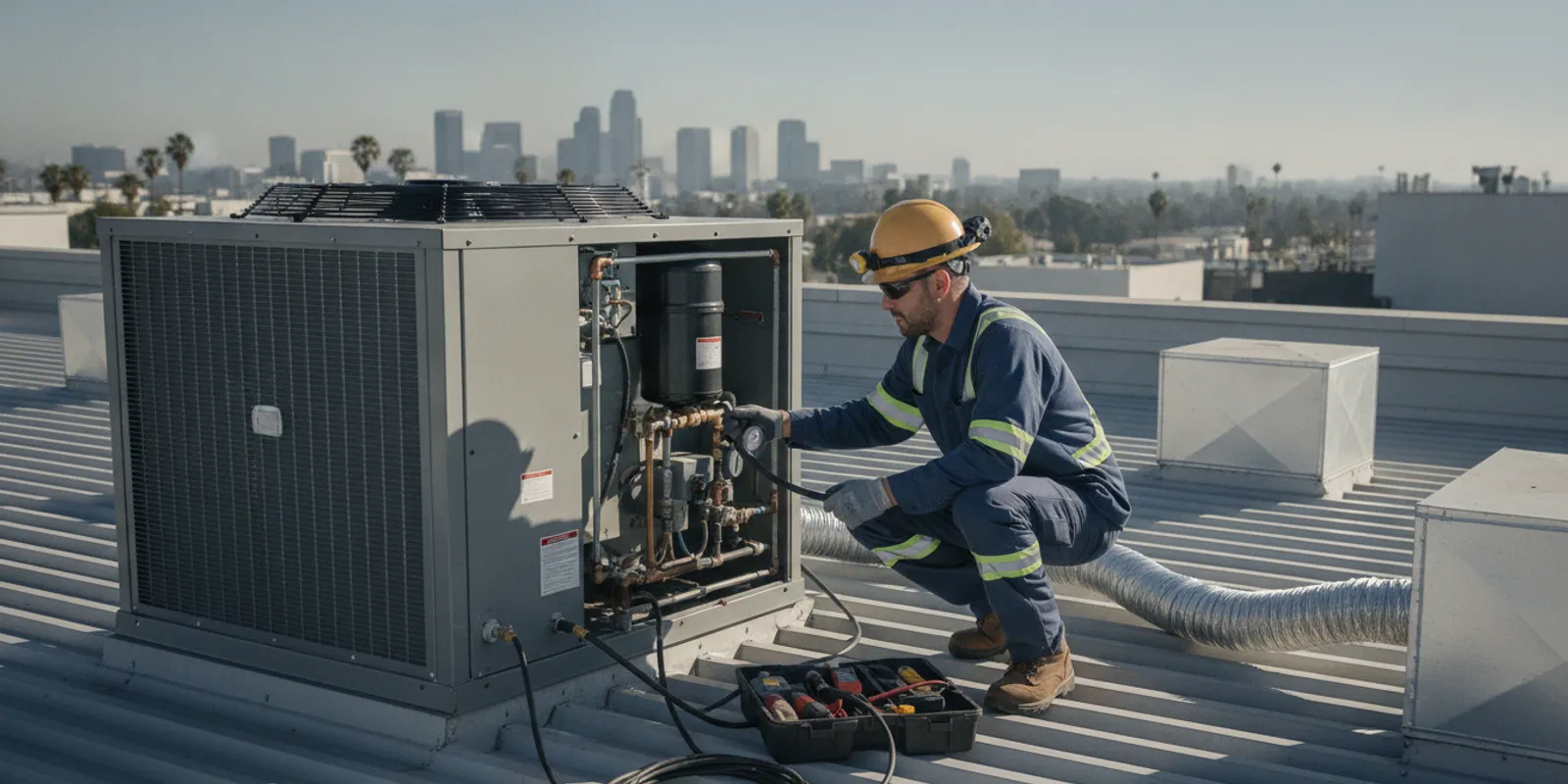
When a cooling system fails at a business, the next step is not always obvious. This ac repair commercial guide explains what facility teams can check safely, what information helps a technician, and how to plan the visit so the repair can move forward with fewer delays.
Contact Airteks to discuss commercial AC service
What should a business do first when its air conditioning has a problem?
Start by protecting people, equipment, and business operations. If the space is becoming uncomfortably warm, move people away from unusually hot areas when practical and follow your facility's health and safety procedures. For sensitive equipment, follow the equipment maker's temperature guidance and your organization's continuity plan. Do not open electrical panels or attempt repairs unless you are qualified and authorized to do so.
Next, identify the scope. Is one room warm, one floor affected, or the whole building? Is the system running but not cooling, cycling on and off, making an unusual sound, or not starting? Record the time symptoms began and whether they change during the day. These observations help distinguish a localized airflow concern from a wider system issue without requiring you to diagnose the cause.
If it is safe and within your role, check the thermostat's mode and setpoint, note any displayed alert, and confirm that the relevant area has not been intentionally placed on a different schedule. A building may have several zones, so one thermostat reading will not represent every area. Do not repeatedly reset equipment or change control settings if you are unsure how those actions affect other occupants or spaces.
For an urgent HVAC issue, Airteks states that it offers 24/7 emergency availability. Contact the service provider to explain the situation and confirm the appropriate response for your building. Keep your own site safety and escalation procedures in effect while arranging service.
Which safe checks can a building contact make?
A building contact can collect useful observations without taking equipment apart. Walk the affected areas and compare them with areas that are operating normally. Check whether supply air is present at accessible grilles, whether doors or windows have been left open, and whether a room's use or occupancy has changed. Note unusual odors, visible water, or a tripped breaker only if it can be observed safely without opening equipment or electrical enclosures.
- Thermostat or control: Write down the displayed mode, setpoint, temperature, schedule, and any alert. Photographing the display can preserve details that may disappear.
- Air movement: Note whether airflow seems absent, weak, or normal at a few accessible supply outlets. Do not remove grilles or reach into ducts.
- Sound and timing: Describe what the sound is like, where it seems to come from, and when it occurs. Note whether the unit starts and stops frequently.
- Visible conditions: Record any water near equipment, unusual frost, or visible damage from a safe distance. Avoid touching refrigerant lines or wet electrical areas.
- Recent changes: Record construction, control changes, schedule changes, power interruptions, or a change in occupancy that occurred before the problem.
These checks are for reporting, not for deciding which part has failed. Commercial systems can combine rooftop or indoor equipment, controls, ventilation, and multiple zones. A symptom in one area may have a cause elsewhere. A qualified technician can inspect and test the system before recommending a repair.
What information should you have ready before requesting commercial AC repair?
A concise service request saves time. Provide the building address, the best site contact, access instructions, and the hours when a technician can enter the affected areas. If the property has a loading dock, roof-access procedure, escort requirement, sign-in process, or security restrictions, mention those before the visit. Confirm who can approve work and who should receive updates.
Describe the affected area and the business impact in plain terms. For example: “The second-floor west offices are warm after 1 p.m.; the conference rooms are cooling normally.” Add when the issue began, whether it is constant, and what you observed at the thermostat and supply outlets. A specific description is more useful than a guess about a failed component.
Gather records if they are readily available. Useful items can include the equipment make and model, prior service notes, control-system details, filter-change records, warranty information, and any recent renovation or maintenance documents. Do not delay a service request to locate every document. Tell the technician what you have and what remains unavailable.
For a property with several units or locations, label the equipment and affected zones using the names your staff already use. A simple list such as “Unit A serves reception and offices 1–4” can reduce confusion. If your facility has a building automation or wireless control system, identify who has authorized access and who can explain schedules or recent changes. Airteks provides commercial HVAC services and can discuss the service needs of business properties.
What happens during a commercial AC repair visit?
The technician will need to understand the reported symptoms, inspect relevant equipment, and carry out appropriate testing. The exact steps depend on the system and the reported problem. A visit may include reviewing controls and operating conditions, checking accessible components, and tracing whether the issue affects one zone or multiple parts of the building. Some findings require additional testing or access before a repair recommendation is clear.
Commercial cooling equipment may serve a single room, a group of zones, or most of a building. The system can include outdoor equipment, indoor air-handling components, ductwork, thermostats or networked controls, and ventilation. Which parts matter depends on the installed design. A cool or warm room is a symptom, not proof that a specific component has failed. Share any system diagrams or equipment labels you have, but do not assume that equipment names or control settings tell the whole story.
It can also help to separate the immediate service need from longer-term building planning. The immediate question is how to assess and address the current loss of cooling. Separate questions may include whether the controls match the building's current schedule, whether the equipment serves newly changed spaces, or whether a broader project is being considered. Raising these as context is useful, but avoid treating a repair visit as a substitute for a separate system-design review when the scope is larger.
Before work begins, identify the person authorized to approve a repair and the preferred way to communicate findings. Ask the technician to explain the observed problem, the proposed work, what is included, and whether any additional diagnosis or parts may be needed. Request that any limits or dependencies be stated plainly, such as restricted access, unavailable equipment records, or an issue that cannot be confirmed until another condition is reproduced.
Some service visits resolve a fault during the initial appointment; others establish what additional work is required. Parts availability, building access, equipment condition, system complexity, and the need for further testing can affect timing. Avoid assuming that a particular repair duration applies before the equipment has been assessed. Airteks offers commercial HVAC repair for businesses seeking an evaluation and service plan.
How can you prepare the building for a technician?
Preparing access is one of the most useful things a facility team can do. Arrange any roof access, mechanical-room entry, badges, escorts, keys, parking, or sign-in steps in advance. Tell the technician about restricted areas and required protective equipment. If the unit serves a tenant space, coordinate entry with the tenant and let affected occupants know that a service visit is planned.
Clear reasonable access to thermostats, air-handling equipment, mechanical rooms, and the route to the equipment. Do not move heavy equipment or disturb a work area unless you are authorized to do so. If ceiling tiles, storage, or furniture limit access, tell the service coordinator early. Take care to preserve safe paths and keep staff away from active work areas during the visit.
For multi-zone buildings, have a contact available who knows which areas are affected and can help the technician compare them with normally operating areas. If the site uses scheduled temperature setbacks, explain the normal schedule. A system that behaves differently overnight or on weekends may reflect a schedule rather than a continuous equipment failure, so the timing matters.
How should a business prioritize repairs and compare the next steps?
Prioritize based on safety, operational impact, and the technician's findings, not solely on which symptom is most noticeable. A problem affecting a critical room or many occupants may call for faster coordination than one isolated to a low-use space. Follow applicable workplace and equipment procedures, and do not rely on temporary measures that could create a safety issue or damage equipment.
Ask for clear options when more than one path is appropriate. Depending on the findings, the next step may be a repair, further diagnosis, a control adjustment, or a discussion about the condition of older equipment. These are not interchangeable choices; the technician should explain the evidence and relevant tradeoffs for this particular system. A repair recommendation is not a promise that unrelated components will not need attention later.
| Situation | Useful preparation | Question to ask |
|---|---|---|
| One zone is warm | Identify the zone, thermostat, schedule, and nearby areas that cool normally. | What tests can establish whether the cause is local or shared with other zones? |
| Several areas are affected | List each affected area, when symptoms began, and whether all zones changed at once. | What parts of the system should be assessed to understand the broader impact? |
| Cooling is intermittent | Record start and stop times, conditions when it occurs, and any control alerts. | What observations or access will help reproduce the issue? |
| A repair has been recommended | Identify the approver and share relevant service and equipment records. | What work is included, what may require a separate step, and how will completion be checked? |
| Work affects business operations | Plan access, occupant communication, and any site-specific safety requirements. | What areas or operating periods may be affected while work is underway? |
For a larger facility or a portfolio, maintenance planning can help staff track recurring concerns and service history. Airteks describes HVAC maintenance services; ask what type of maintenance approach fits your equipment and operational needs rather than assuming every building requires the same plan. For projects where the equipment layout or performance needs are part of a broader change, review the building requirements with a qualified professional and learn about commercial HVAC system design.
What should you ask before approving work?
Ask for a plain-language explanation of the finding and how it relates to the reported symptom. Confirm the scope, the work area, any parts involved, and the expected sequence. Clarify whether the quoted work covers diagnosis, repair, testing after the repair, and any follow-up. Ask what is not included so that there are no surprises about further work that may be recommended.
For a business, also confirm logistics: who will be onsite, whether equipment must be shut down, whether the work may affect occupied spaces, and whether staff need to provide access at a specific time. If the building has multiple decision-makers, document who authorized the work and who should receive the completion summary. Keep the final recommendation and service record with the equipment history.
Cost depends on the specific problem, equipment, parts and labor required, access, and whether further diagnosis is needed. Without an inspection and scope, a general online figure may not reflect a particular commercial system. Ask for a written description of the proposed work and any known variables. Airteks offers free estimates as a standing offer, so businesses can contact the team about their service needs.
How can you reduce repeat disruptions after the repair?
After service, ask what was found, what was done, and whether the technician recommends monitoring or a follow-up. Note the date, affected equipment, reported symptom, and any next action. Share the information with the person who manages schedules and building records. If occupants report that the problem continues, record when and where it occurs rather than repeatedly changing settings.
A regular maintenance process can help a facility keep service records organized and identify concerns that should be reviewed. The right tasks and timing depend on equipment, building use, and manufacturer guidance. Keep filters, controls, and access arrangements in a planned workflow that fits the site, and have qualified personnel perform work that requires technical skill. Airteks serves commercial properties across Northern California; its commercial service areas page can help businesses check coverage.
Businesses may also consult the U.S. Environmental Protection Agency for general information on environmental programs related to refrigerants. Refrigerant work is not a do-it-yourself task; leave diagnosis and service to qualified HVAC professionals, and follow applicable rules and site procedures.
Call Airteks at (510) 719-0621
Frequently Asked Questions
Can staff troubleshoot a commercial AC system before calling for service?
Staff can record thermostat information, note affected areas, and observe accessible vents and visible conditions from a safe position. They should not open electrical panels, dismantle equipment, handle refrigerant lines, or attempt repairs unless specifically qualified and authorized. Share observations with the service provider so a technician can investigate.
What should I do if only one part of the building is warm?
Record the affected rooms, nearby areas that are cooling normally, thermostat readings, schedules, and when the difference occurs. A single zone's symptoms do not by themselves identify the cause. Provide the comparison to the technician and make the relevant access available.
How quickly can a commercial AC repair be completed?
Timing depends on the equipment, the problem, access, testing, and whether parts or further work are needed. A technician can give a more meaningful expectation after assessing the system and explaining the scope. Share operating hours and access constraints when scheduling.
What information should a business keep after the visit?
Keep the service date, equipment identification, reported symptoms, findings, work performed, and any recommended follow-up. Record who approved the work and who received the update. These details help the next facility contact understand the system's service history.
Clear observations, safe access, and a defined approval process help a commercial AC service visit begin with the information the technician needs. Contact Airteks to discuss your building's cooling concern and the appropriate next step.
Comments