
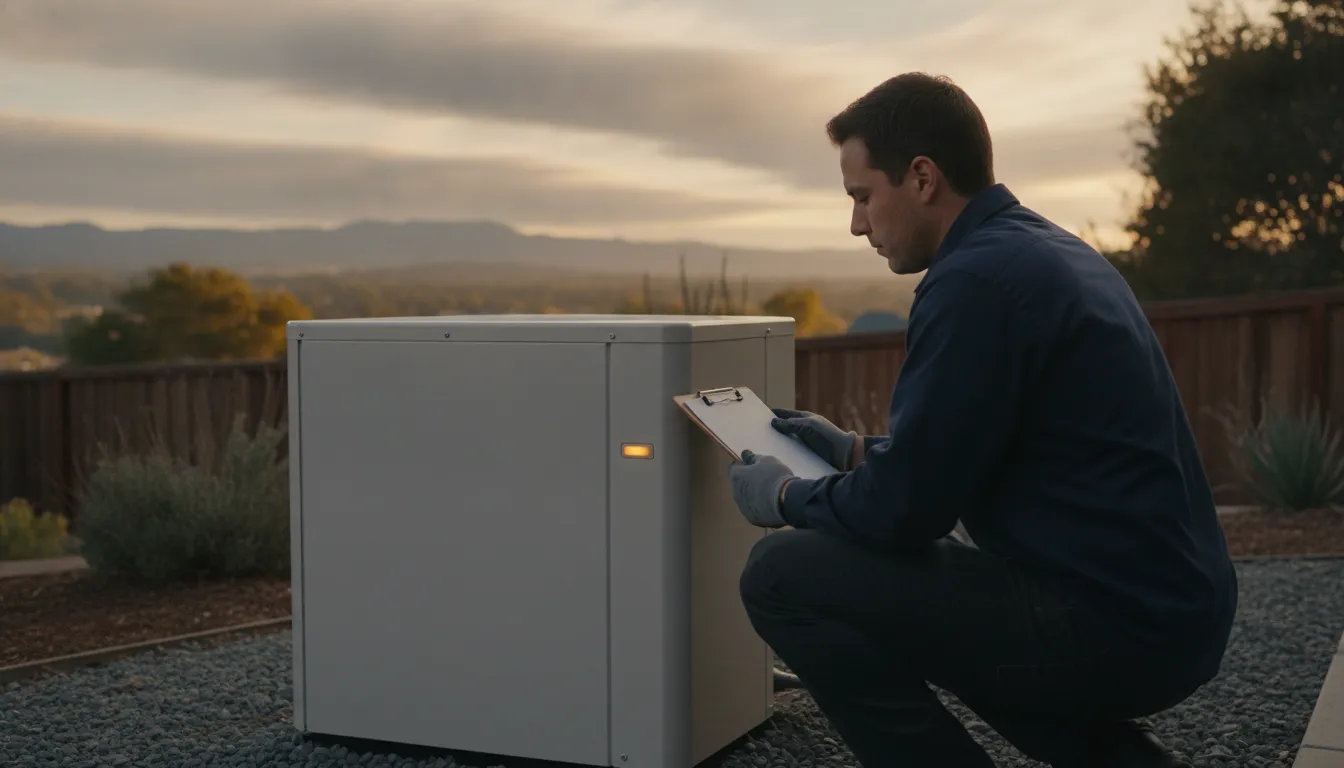
When a heat pump stops heating or cooling, the useful first step is not a repair. A careful look at the thermostat, the filter, and the outdoor unit often tells you whether the system needs a simple reset or a technician. This guide shows how to fix a heat pump problem only as far as a homeowner can go safely, then when to stop and call.
Call Airteks at (510) 719-0621
Airteks is a full-service heating and cooling contractor for homes and businesses across Northern California. From the Livermore shop, crews handle heat pump repair, inspection, maintenance, and replacement for Bay Area, Central Valley, and Sacramento-area homes. The point of these checks is a clearer service call, not a do-it-yourself repair. When the checks point to a real fault, heat pump repair help is the service to book.
What Fix a Heat Pump Checks Can and Cannot Do
A heat pump moves heat instead of making it by burning fuel. In heating mode it pulls heat from outdoor air and delivers it indoors. In cooling mode it reverses that path. That is why the same outdoor unit can leave a home cold in January or warm in July. And why one failed part can show up as either problem.
Safe checks stay outside the electrical cabinet and the refrigerant circuit. You can read the thermostat, confirm power at the breaker if you already know that panel, look at the filter, and note ice, noise, or a stopped fan. You should not open panels, pull wires, add refrigerant, or keep resetting a breaker that trips again.
The U.S. Department of Energy's home energy checklist tells owners to clean or replace heat pump filters and to schedule professional maintenance each year. That public guidance matches what a technician wants to hear before rolling a truck: what the system is doing, and what you already ruled out.
If the only complaint is that the supply air feels mild rather than hot, read the separate note on a heat pump not blowing hot air. Mild air can be normal. No air, ice, a dead outdoor unit, or a house that will not hold temperature is a different problem, and that is the one this page covers.
Safe Checks Before You Try to Fix a Heat Pump
Work through the list once, then write down what you see. Repeating the same reset rarely helps, and it can hide the clue a technician needs. None of these steps asks you to remove a service panel.
- Set the thermostat to heat or cool, not auto, and set the fan to auto. Give the system several minutes. A heat pump often pauses between modes.
- Check that the setpoint is at least a few degrees away from the room temperature. A dead display or a blank screen means fresh batteries or a power issue, not a failed compressor.
- Look at the air filter. If it is packed with dust, replace it with the same size and put the panel back on. A clogged filter is one of the few homeowner fixes that is both safe and useful.
- Walk to the outdoor unit. Clear leaves, grass, and stored items so air can move through the coil. Do not spray the coil with a pressure washer.
- Watch the fan for one full minute. Note whether it spins, hums and stays still, or never starts. Also note any ice on the coil or on the line set.
- Listen once. A soft whoosh is normal. Grinding, screeching, or a sharp hiss is a stop sign.
- If the indoor air handler has a float switch in the drain pan and you can see standing water without opening an electrical section. Say so when you call. Do not shop-vac a live unit.
Write the time, the outdoor temperature, and whether the problem is whole-house or only a few rooms. That short log saves diagnostic time. It also keeps you from describing a one-time blip as a failed system, or the reverse.
Heating Failures Versus Cooling Failures
The same machine fails in different ways by season. In heating season across Livermore, Pleasanton, Walnut Creek, and the Sacramento valley, complaints are usually lukewarm air or short cycling. Another common one is an outdoor coil still sheeted in ice after defrost should have cleared it. A brief frost on a cold morning can be normal. A block of ice that stays through the day is not.
In cooling season the pattern flips. The outdoor unit may run while the house stays warm, the indoor coil may freeze. Or water may show up at the air handler because the condensate drain is blocked. Bay Area evenings cool off fast, so a system that cannot keep up on a 95-degree afternoon in San Joaquin County may look fine at 8 p.m. Tell the dispatcher what the house did at the hottest hour, not only what it is doing when you call.
Auxiliary heat is another source of confusion. Many heat pumps use electric backup strips on the coldest nights. If those strips run for hours, the house may feel warm while the utility bill jumps. That is a performance problem worth a visit, not a reason to shut the system off overnight. Central Valley winter nights and Delta wind can both push a heat pump onto backup heat more often than a mild Livermore afternoon.
Smell matters too, but only as a clue. A dusty smell at the first cold start is common. A burning smell, a gas smell near a dual-fuel furnace, or a hot-plastic smell means turn the system off at the thermostat and call. Do not hunt for the source inside the cabinet.
What to Tell the Technician
A good repair visit starts with a plain description. Skip the guess about which part failed. Technicians would rather hear the sequence.
| What you noticed | What to write down | Why it matters |
|---|---|---|
| No heat or no cooling. | Mode, setpoint, and how long the unit ran. | Separates a thermostat mix-up from a dead system. |
| Outdoor unit silent. | Whether the fan tried to start, and any breaker trip. | Points to power, a capacitor, or a safety lockout. |
| Ice on the outdoor coil. | Time of day and whether ice melted on its own. | Distinguishes normal defrost from a stuck system. |
| Ice on the indoor coil or weak airflow. | Filter condition and rooms that are worse. | Flags airflow, a drain, or low refrigerant. |
| Water at the air handler. | Where the water sits and whether the pan is full. | A blocked drain can shut the system down on purpose. |
| New noise. | Grinding, hissing, or buzzing, and when it started. | Noise plus a failed start is a same-day call. |
| Short cycling. | How many minutes on, and how many off. | Repeated starts wear the compressor. |
| Backup heat running. | Whether the emergency-heat light stays on. | The house can be warm while the heat pump is not. |
Age and service history help, if you know them. A system installed in the last few years with a new noise is a different visit from a 15-year-old unit that has never had a maintenance check. If you have the model number from the outdoor data plate, read it from outside the unit. Do not remove the panel to find a sticker.
Airteks quotes and estimates come after that diagnosis, not from a symptom alone. If you want the cost side of the decision, the cost to fix heat pump guide covers repair versus replacement without guessing a price from the curb. This page stays on the checks that make that visit accurate.
When to Stop and Call for Repair
Stop the homeowner checks and call when any of these show up. They are not filter problems, and pushing past them can damage the compressor or create an electrical hazard.
- The breaker trips more than once.
- You smell burning, scorched insulation, or gas near a dual-fuel furnace.
- The outdoor fan hums but does not spin, or the unit vibrates hard.
- Ice remains after the system has been off long enough to thaw, or ice is forming on the lines in mild weather.
- The indoor coil is frozen or water is overflowing the drain pan.
- The house cannot hold temperature and someone in the home is at risk from heat or cold.
- Refrigerant oil is visible on the lines, or you hear a sharp hiss that was not there before.
Refrigerant work is not a homeowner task. Federal rules under Section 608 limit who may handle refrigerant, and opening the system without the right tools vents refrigerant and can ruin the compressor. If you suspect a leak, leave the panels on and describe the ice, the hiss, or the oil stain.
Emergency service is available when the failure cannot wait for the next business day. Office hours for scheduling run from 6:00 AM to 5:00 PM every day, and an urgent no-heat or no-cool call should say so up front. For the broader repair menu beyond heat pumps, the residential HVAC repairs page lists heating, cooling, and airflow work the same crews handle.
Heat Pump Symptoms Across Northern California
Airteks serves homes from the Livermore office across Alameda County, Contra Costa County. San Joaquin County, Santa Clara County, and Napa County, plus Sacramento and the wider Central Valley. The safe checks are the same in each county. The weather that triggers the call is not.
Bay Area and the East Bay
Livermore, Pleasanton, and Dublin see hot afternoons and cool nights. A heat pump that is a little low on airflow may keep up until a string of days above 95 degrees, then fall behind. Walnut Creek and the rest of Contra Costa County add more tree cover, so outdoor coils collect leaves and seed pods. Clearing debris is fair. Bending the fins with a tool is not. If the outdoor unit sits in a side yard with stored bins, move the bins before you call so the technician can reach the service side.
Coastal influence in parts of Alameda County and Santa Clara County means long mild swings rather than hard freezes. Owners sometimes read a normal defrost puff of steam as smoke. Steam that clears in a minute during a cold start is common. Smoke, or steam that smells burnt, is a call. Napa County homes on the valley floor see the same pattern, with more agricultural dust on outdoor coils by late summer.
Sacramento and the Central Valley
Sacramento, Elk Grove, and the valley cities around Stockton and Manteca run heat pumps harder in summer. Restricted return air shows up as a frozen indoor coil even when the outdoor unit looks clean. Winter nights are colder than the inner Bay Area. So auxiliary heat runs longer and a failed reversing valve or a stuck defrost board shows up as a house that never quite catches the setpoint.
San Joaquin County and the rest of the Central Valley also see more dust on filters. A filter you changed in spring may be loaded by August. That is still a homeowner check. If a new filter does not restore airflow within a normal cycle. Stop and book the visit rather than trying a second filter size or pulling the blower door.
Wherever you are in the service area, repair, maintenance, or a replacement conversation comes after the inspection, not before these checks. Local pages such as HVAC services in Livermore and HVAC services in Sacramento describe the same company in those cities, including after-hours response when a no-heat or no-cool call cannot wait.
After the Repair Visit
Once the system is running, ask what failed and what you should watch for a week. A repaired capacitor, a cleared drain, or a contactor replacement should show a steady cycle, not another lockout the same evening. If the technician recommends maintenance rather than another part, that usually means the failure came from airflow. A dirty coil, or a drain, and those problems return when the cause stays.
Keep the filter on a schedule you will actually follow. Many homes in this region do well with a check every one to three months, sooner if there are pets or a nearby dirt lot. Leave the outdoor unit clear by a couple of feet, and do not box it in with a new fence or storage shed. Those two habits prevent a large share of the no-air and icing calls that start this checklist.
If the repair quote and the age of the equipment both point toward replacement, treat that as a separate decision. Installation sizing, duct condition, and electrical capacity are not things to settle from a troubleshooting guide. Airteks can inspect and quote that work after the current failure is understood, so you are not replacing a system that only needed a drain cleared.
Dual-fuel homes, which pair a heat pump with a gas furnace, need one extra note. If the furnace is the source of the smell or the no-heat call, do not treat it as a heat pump fan problem. Say which unit tried to run. The dispatcher can send the right parts and avoid a second trip.
Call Airteks at (510) 719-0621
Frequently Asked Questions
Can I fix a heat pump myself?
You can fix a heat pump only at the edges: thermostat mode, a dirty filter. Debris around the outdoor unit, and a clear note of what the system is doing. Opening panels, adding refrigerant, or forcing a tripped breaker back on is technician work.
Why does my heat pump run but the house stays uncomfortable?
Running is not the same as heating or cooling. A stuck reversing valve, low airflow, ice, or backup heat that never hands off can leave the equipment on while the rooms lag. Write down the mode and how long it ran, then call.
Is ice on the outdoor unit an emergency?
Light frost that clears after a defrost cycle is normal in cold weather. A solid coat of ice, ice on the lines in mild weather. Or ice that returns right away is a reason to shut the system off at the thermostat and schedule service.
What should I do before calling Airteks?
Check the thermostat, the filter, and the outdoor clearance. Note any noise, water, ice, or a breaker that tripped. Then call with that list. You do not need a diagnosis, and you should not take the unit apart to find one.
Do you service heat pumps outside Livermore?
Yes. Airteks serves residential heat pumps across the Bay Area, the Central Valley, and the Sacramento area, including Alameda, Contra Costa, San Joaquin, Santa Clara, and Napa counties. Say your city when you call so the nearest crew can be scheduled.
Comments