
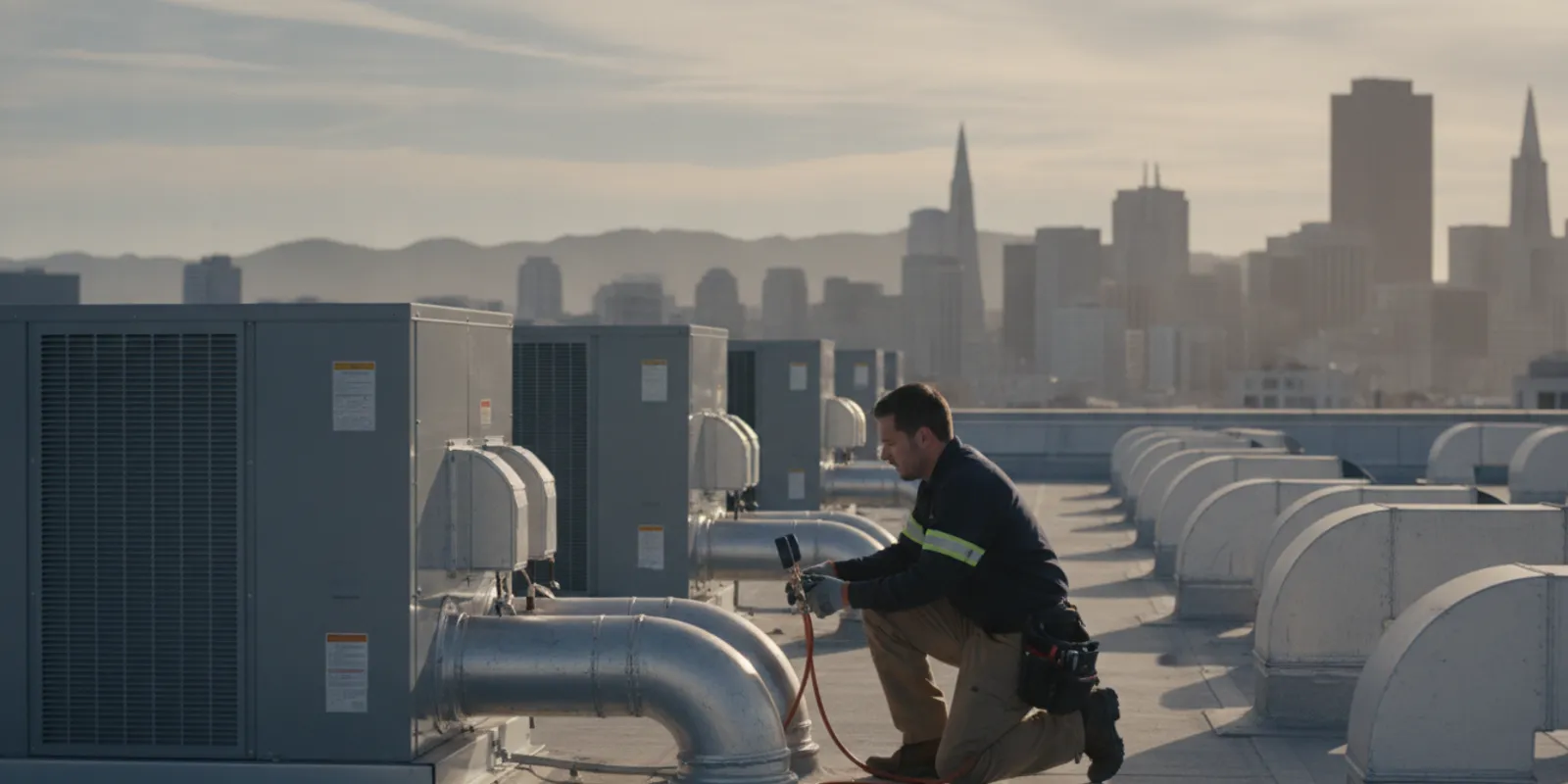
What is a heat pump? It is a heating and cooling system that moves heat from one place to another. In cooling mode, it moves indoor heat outdoors; in heating mode, it gathers heat from outdoor air and moves it inside. For a commercial building, the useful question is not only how the equipment works, but whether its capacity, controls, and distribution suit the building’s schedules and spaces.
Talk with Airteks about your building
Call Airteks at (510) 719-0621 to discuss your HVAC needs.
What is a heat pump, in plain language?
A heat pump is a refrigeration-based system that can provide both heating and cooling. Rather than creating heat by burning fuel or using electric resistance as its main heating method, it uses a refrigerant circuit and mechanical components to transfer heat. The same basic equipment changes operating mode depending on whether the building needs cooling or heating.
That two-way function is what distinguishes a heat pump from a cooling-only air conditioner. Many air conditioners already move heat out of a building, but a heat pump can reverse the refrigerant flow so heat can be moved indoors when outdoor conditions call for heating. The exact system arrangement varies. Some installations serve a single zone, while others are designed as part of a larger commercial HVAC system.
For a business, this does not mean every heat pump is a drop-in replacement for existing equipment. The building’s size, use, ductwork, electrical service, ventilation needs, operating hours, and existing heating plant all matter. A system designed for a small office area is not automatically suited to a school, retail space, or multi-zone commercial property.
How does a heat pump provide heating and cooling?
In cooling mode, indoor air passes over a coil containing refrigerant. The refrigerant absorbs heat from the air, and the system carries that heat to an outdoor coil, where it is released. The cooled air is then circulated through the area served by the system. Fans move the air, while controls regulate operation in response to the thermostat or building control system.
In heating mode, a reversing valve changes the refrigerant’s path. The outdoor coil collects heat from the outside air, and the refrigerant carries it indoors. The indoor coil releases that heat into the building. Even when outdoor air feels cold, it contains heat energy; how effectively a particular model can gather and transfer it depends on the equipment and outdoor conditions.
A commercial installation may also include supplemental heat, multiple indoor units, zone controls, or connections to other building systems. Those details are not identical across all heat pumps. A contractor needs to understand how the building is used and what equipment is already present before recommending a configuration.
| Building need or condition | What the heat pump does | What a facility team should review |
|---|---|---|
| Cooling demand | Moves indoor heat outdoors and circulates cooled air. | Cooling capacity, zones served, airflow, and occupied hours. |
| Heating demand | Reverses operation to move outdoor heat indoors. | Heating performance for local conditions and any supplemental heat. |
| Several areas with different schedules | A suitable system design may allow separate zones or control strategies. | Room use, control requirements, and compatibility with existing distribution. |
| Existing commercial equipment | May be integrated into a broader heating and cooling plan, depending on design. | Equipment condition, electrical capacity, ventilation, and project phasing. |
What types of heat pumps might a commercial building use?
Air-source heat pumps exchange heat with outdoor air. They are a common system category and come in different configurations and capacities. Commercial applications can include packaged equipment or systems with indoor and outdoor components, depending on the building’s needs and layout.
Ducted systems deliver conditioned air through ducts. Ductless systems use indoor units in the spaces they serve, rather than relying on the same duct arrangement. A building may use a single-zone configuration or several zones. The right choice depends on the number of areas, how they are occupied, distribution constraints, and desired control.
Some commercial properties use heat pumps alongside other equipment instead of replacing everything at once. A project may involve a new system for a particular area, an equipment replacement, or a broader design that coordinates heating, cooling, ventilation, and controls. Airteks provides commercial heat pump services for businesses considering these needs.
Other heat pump categories use different heat sources, such as the ground. Availability and practicality depend on site conditions and project scope. It is better to start with a clear description of the building and its goals than to assume one technology will suit every property.
What should a facility team assess before considering one?
Begin with the building’s operating profile. Note when different areas are occupied, which spaces have special temperature needs, and whether heating or cooling complaints occur at particular times. A system that suits an office with a predictable daytime schedule may not be appropriate without adjustment for a facility with extended or irregular hours.
- Building use: List the main activities in each area, occupancy patterns, and any spaces that need separate control.
- Existing equipment: Record the type, approximate age, known issues, and areas served by current heating and cooling equipment.
- Air distribution: Identify the ducts, vents, and controls in place, along with rooms that are consistently uncomfortable.
- Electrical and mechanical constraints: Gather available information on service capacity, equipment locations, access, and any project restrictions.
- Ventilation: Separate the need for outdoor air and ventilation from heating and cooling. A heat pump conditions air; it does not by itself answer every ventilation requirement.
- Project priorities: Decide whether the immediate goal is repair, replacement, comfort in a problem area, equipment modernization, or long-term planning.
These notes help make a first conversation more useful. They do not replace a site assessment or equipment design. If a building has several systems, unusual operating hours, or areas with different requirements, share those details early so they can be considered in the proposed approach.
How does a heat pump fit with a commercial HVAC system?
Commercial HVAC is a whole-building issue. Equipment must work with the building’s air distribution, ventilation, controls, and operating schedule. A heat pump may address heating and cooling in its served zones, but other parts of the system may still need attention. For example, a controls issue or airflow problem can affect comfort even when the main equipment is operating.
Controls matter because businesses often have varied schedules and spaces. A facility team should understand which areas each thermostat or controller serves, who can adjust setpoints, and how after-hours operation is handled. If a building uses centralized controls, ask whether the proposed equipment can work with the existing arrangement or whether controls changes are part of the project.
For a multi-zone property, the design should account for how spaces interact. A conference room used occasionally, an occupied office, and a storage area may not need the same schedule. Mapping those uses can help a contractor evaluate zoning and avoid treating the building as a single uniform space.
Airteks works on commercial systems as well as residential heating and cooling. Facility teams can review the company’s commercial HVAC services and HVAC maintenance options when planning repairs, ongoing care, or system work. Maintenance can help teams keep track of system condition, but the appropriate tasks and intervals depend on the equipment and its use.
What information helps when comparing options?
Compare complete proposals rather than looking at equipment labels alone. A useful proposal should make clear what area the system serves, what equipment and controls are included, what work is needed to connect it to the building, and what assumptions affect the scope. Ask how the proposal addresses ventilation and existing equipment, not just heating and cooling capacity.
- Which rooms, floors, or zones will the system serve?
- What heating and cooling conditions were used to select the equipment?
- Will existing ducts or controls be reused, modified, or replaced?
- Is supplemental heat part of the design, and under what conditions would it operate?
- What electrical, structural, or access work is included or excluded?
- How will the work be phased to limit disruption to occupants and business operations?
- What start-up checks and owner orientation are included after installation?
- What maintenance does the manufacturer or contractor recommend for this equipment?
Ask the contractor to explain unfamiliar terms in plain language. If proposals use different assumptions, have those differences clarified before comparing them. A lower equipment price alone does not show whether the system serves the same areas or includes the same supporting work.
When might a commercial heat pump discussion be useful?
A conversation may be useful when an existing system is nearing replacement, when a building has recurring comfort problems, or when a business is planning renovations or changes in how spaces are used. It can also help when facility staff need to understand whether a heat pump could fit into a larger modernization plan.
Start with the problem rather than a predetermined product. Describe what is not working, when it occurs, which spaces are affected, and any relevant equipment history. If there are maintenance records, recent repair notes, or controls information, have them available. A contractor can then determine what further inspection or system information is needed.
Airteks serves commercial and residential customers across Northern California, including the Bay Area, Central Valley, and Sacramento region. Its commercial service areas provide more detail on coverage. Businesses in Livermore, Pleasanton, Walnut Creek, Sacramento, and surrounding communities can also use the contact page to start a discussion.
For a broader view of available building services, review the commercial services overview. If your question concerns a system already in operation, describe the symptoms and timing; that can help distinguish a repair request from a planning conversation.
Call Airteks at (510) 719-0621 to discuss commercial heating and cooling needs.
What should teams know about efficiency and operating conditions?
Heat pumps transfer heat, but that description alone does not tell a building owner how much energy a particular system will use. Performance depends on the selected equipment, the outdoor conditions, the building load, controls, installation, and maintenance. A system that is correctly sized and configured for the actual spaces may behave differently from one chosen without a clear understanding of the building.
When reviewing product information, ask which efficiency ratings apply to the specific model and operating mode. Ratings can help compare equipment under defined test conditions, but they are not a direct promise of a building’s utility use. Occupancy, thermostat settings, weather, building envelope, and operating hours all affect consumption. Ask the contractor to explain what assumptions are being used and whether the expected operating conditions resemble those of your property.
The U.S. Department of Energy provides general information about energy and heating and cooling technologies. Use general resources to understand terminology, then rely on equipment documentation and a site-specific assessment for decisions about a commercial property. Product information cannot substitute for checking the building’s electrical service, distribution, ventilation, controls, and practical installation constraints.
Operating habits also matter. Staff should know how to use the controls and whom to contact if a system behaves unexpectedly. Avoid making frequent, large thermostat adjustments as a substitute for investigating persistent comfort problems. If one zone is too warm while another is comfortable, record the locations and times rather than changing several settings at once. This gives a technician a clearer picture of the issue.
Maintenance should follow the equipment manufacturer’s instructions and the needs of the building. Keep service records, note recurring alarms or faults, and report unusual noises, airflow changes, or temperature swings. A consistent record can help a facility team spot repeat issues and plan work around business operations. It also gives a contractor useful background before recommending repairs or a replacement strategy.
Frequently Asked Questions
Does a heat pump provide both heating and cooling?
Yes. A heat pump can move heat out of a building for cooling and reverse its operation to move heat indoors for heating. The system configuration and performance depend on the equipment and the building conditions.
Is a heat pump the same as an air conditioner?
They use related principles to move heat during cooling. A heat pump can also reverse the refrigerant cycle to provide heating, while a cooling-only air conditioner is not designed to provide that heating function.
Can a heat pump serve an entire commercial building?
It depends on the building, the system design, and the areas that need service. Some systems serve a limited zone, while other designs address broader needs. A contractor should assess capacity, distribution, ventilation, controls, and existing equipment before determining scope.
Does installing a heat pump address ventilation?
Not automatically. Heating and cooling equipment conditions air, while ventilation involves bringing in and managing outdoor air. The building’s ventilation requirements and existing equipment should be considered as part of the overall HVAC review.
What should I prepare before asking about commercial heat pump services?
Prepare the building address, areas served, operating schedule, existing equipment information, and a concise description of the issue or project goal. Maintenance history, comfort complaints, and control details can also help guide the discussion.
Explore commercial heat pump services
A heat pump may be one part of a practical commercial HVAC plan, but the right approach depends on the building and how it operates. Start with the facility’s needs and get the system evaluated before deciding on equipment.
Comments