
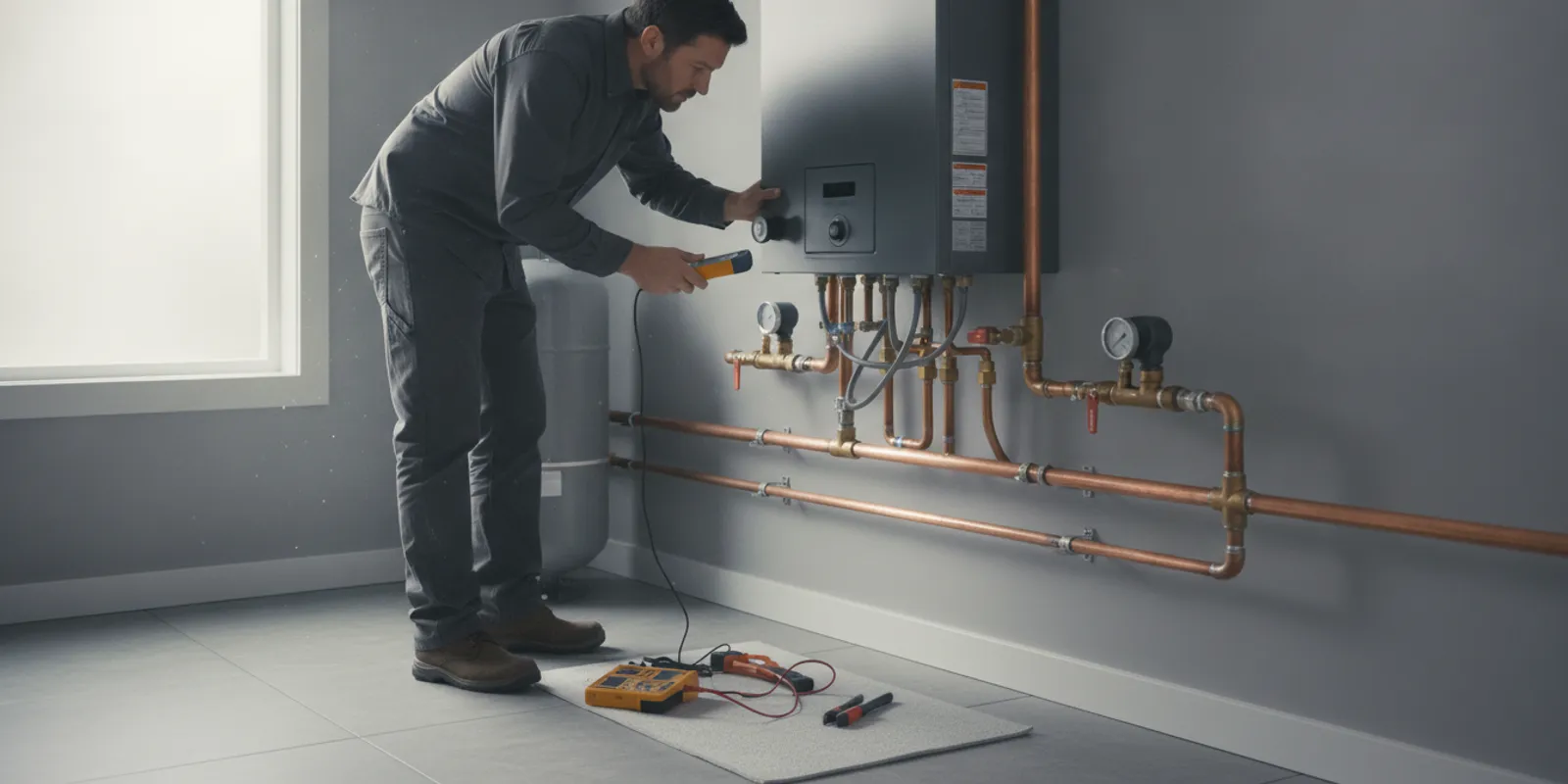
If you searched for “can you.repair a leaking boiler,” the short answer is often yes—but the leak’s source and the boiler’s condition determine what repair is appropriate. Water may come from a valve, pipe connection, pump, pressure relief line, or the boiler itself. Stop and assess the situation safely rather than tightening parts or opening the boiler cabinet. A qualified technician can find the source and explain whether repair is practical.
Call (510) 719-0621 to discuss a boiler leak
What should you do first when you find a boiler leak?
Protect people and property first. Keep clear of hot water, steam, electrical equipment, and any water that has reached wiring or outlets. Do not touch wet electrical components. If water is spreading, use a safe route to move people away and contact a qualified HVAC professional. For an urgent HVAC issue, Airteks offers 24/7 emergency availability.
If you smell gas, hear a gas leak, or suspect carbon monoxide, leave the building and contact the appropriate emergency service or utility from a safe location. Do not try to locate or repair a gas leak yourself. If a carbon monoxide alarm sounds, follow its instructions and get everyone outside.
When it is safe to do so, note where the water appears and whether it is a drip, steady stream, or puddle. A photo from a safe distance may help explain the situation when you call. Avoid placing a hand near a suspected leak: hot water or steam can cause burns, and a small visible drip may not show the full extent of the problem.
- Keep children, pets, and other occupants away from the boiler and wet area.
- Do not remove panels, operate unfamiliar valves, or attempt a temporary patch.
- If you already know the normal, safe shutoff procedure for your system, follow the manufacturer’s instructions. Do not force a stuck valve.
- Write down when you first noticed the leak, whether the heating still works, and any changes in noises or pressure readings.
A leak does not always mean the boiler must be replaced. It does mean the equipment should be checked, especially if water is near electrical parts, the boiler is making unusual sounds, or the leak is increasing.
Where can boiler water leaks come from?
A boiler is part of a connected heating system. The visible water may come from a nearby pipe, fitting, control, or drain rather than from the main boiler body. Pinpointing the source takes more than looking at the wettest spot because water can travel along a pipe or panel before dripping.
| Possible source | What you might notice | What a technician may check |
|---|---|---|
| Pipe, fitting, or valve | Moisture at a joint or a drip beneath a connection | Connection condition, valve operation, corrosion, and water path |
| Pump or circulation component | Water around the pump or nearby fittings; heating may be uneven | Seals, connections, component condition, and circulation |
| Pressure relief discharge | Water at a discharge pipe or recurring discharge | System pressure, the relief device, and related controls |
| Air vent or expansion-related component | Intermittent dampness near a vent or connected vessel | System condition, component function, and installation |
| Boiler casing or heat exchanger area | Water seems to come from inside or beneath the boiler | Internal condition, corrosion, and whether repair is feasible |
This table is a guide to observations, not a do-it-yourself diagnosis. Several different faults can create similar symptoms. For example, water at a discharge pipe does not by itself prove the relief valve is faulty; a technician needs to investigate why water is leaving the system and verify the boiler’s condition.
Can a leaking boiler be repaired?
In many cases, yes. If the leak is traced to a serviceable valve, fitting, connection, pump component, or other replaceable part, a technician may be able to repair or replace that component. The technician should also look for the reason it failed. Replacing a part without addressing a related pressure, corrosion, or system issue may leave the underlying problem unresolved.
Repair may be less practical when the boiler’s main body or heat exchanger is leaking, when corrosion is extensive, when a needed part is unavailable, or when the same system has repeated failures. The age and service history of the equipment, condition of connected components, repair scope, and expected future needs all matter. A small leak is not enough information to promise a repair or determine that replacement is necessary.
Ask the technician to show you the source of the leak, describe the repair in plain language, and explain any other condition that affects the recommendation. If there are repair and replacement paths, request a clear comparison of what each option addresses. A dependable recommendation should connect the proposed work to the observed fault rather than treating every leak as the same problem.
For heating diagnosis and repair, see Airteks’ boiler repair service information. Airteks provides heating and cooling service for residential and commercial properties across Northern California.
What signs mean you should call a professional?
Call for professional help when you cannot identify the source, the leak continues, or water is near electrical components. Do not wait for the boiler to stop working. Continued moisture can damage nearby materials and equipment, while a pressure or combustion problem may require attention beyond the visible water.
- Water keeps returning: Repeated drops, a growing puddle, or moisture after you have dried the area signals an active problem.
- The leak is near electrical parts: Do not touch the boiler, switch, or wiring if the area is wet. Keep back and call for help.
- There is steam, unusual noise, or a strong change in operation: These symptoms need qualified assessment, not trial-and-error adjustments.
- The boiler is losing pressure or heating inconsistently: A visible leak may be related to a larger system issue.
- You see corrosion or damage: Rust, mineral deposits, or deteriorated surfaces can make the source difficult to identify and may indicate a longer-running leak.
If you are unsure whether the situation is urgent, describe the symptoms and location when you call. For background on boiler and pressure-vessel safety, consult the National Board of Boiler and Pressure Vessel Inspectors. Its materials are a resource for safety information; they do not replace an on-site diagnosis of your equipment.
What happens during a boiler leak inspection?
A technician will start by asking what you have observed: when the leak began, whether it changes when the heating runs, and whether the system has had recent repairs or recurring pressure issues. Sharing these details helps focus the visit. If safe, show where water collects, but do not remove covers to expose a suspected source.
Next, the technician examines the boiler and visible system connections. The inspection may include tracing the water path, checking the relevant valves and components, reviewing system pressure and controls, and looking for corrosion or signs of a longer-running leak. The specific checks depend on the equipment and symptoms. A technician should explain any limits on what can be confirmed without additional testing.
After identifying the likely cause, expect an explanation of:
- Where the leak originates and what evidence supports that diagnosis.
- Whether the source is a repairable part, a connection, or damage to the boiler itself.
- What work is recommended and whether a related condition also needs attention.
- Whether the system can be operated safely while awaiting repair, if that question applies.
- What follow-up observation or maintenance may help reduce the chance of a repeat issue.
Ask questions before authorizing work. If the source is not yet clear, ask what further inspection is needed. You can also request that the technician distinguish immediate safety concerns from recommended repairs that can be planned. For broader heating options and support, review Airteks’ heating services.
Should you repair or replace a leaking boiler?
The decision depends on the diagnosed fault, the condition of the boiler, and the needs of the property. A repair may make sense when the leak comes from an accessible, replaceable component and the rest of the equipment is in suitable condition. Replacement may be worth discussing if the boiler body is compromised, corrosion is widespread, failures keep recurring, or the system no longer fits the building’s needs.
Compare recommendations using the same questions. What exactly is leaking? What work is included? Does the proposal address the cause, not just the visible water? What other wear or concerns were found? What would the technician monitor after the repair? If considering replacement, ask how the recommended system will be selected for the building and what installation work is included.
For a home, comfort needs, existing distribution, and the condition of the rest of the heating system are useful context. A business or property manager may also need to consider which areas depend on the boiler, scheduling access, and how to plan work around building operations. For commercial properties, Airteks provides commercial HVAC service, including heating solutions.
There is no reliable way to choose between repair and replacement from a photo or a single symptom alone. A written explanation of the diagnosed fault and the options makes it easier to compare next steps without guessing.
Do not use age alone as a repair rule. Two boilers of the same age can be in different condition because their service history, operating demands, water conditions, and prior repairs differ. Ask the technician to explain how the observed condition affects the recommendation. If replacement is proposed, ask whether the leak itself requires replacement or whether other system concerns are part of the decision.
When comparing estimates, check that you understand the scope rather than comparing only a bottom-line figure. Confirm which parts and labor are included, whether any additional work may be identified after inspection, and what testing or cleanup follows the repair. Ask how soon the work can be completed and whether there are safe interim steps for your particular system. The answers should be specific to the diagnosis; a general promise cannot establish that a leaking boiler is safe or repaired.
What can affect the repair process?
The work required depends on the leak’s location and how accessible the component is. A visible connection may be straightforward to inspect, while water inside the boiler casing can require further diagnostic work. Corrosion, older or unavailable parts, and damage to connected equipment can also change the scope. That is why a technician may need to inspect the system before providing a final recommendation.
For a home, arrange access to the utility area and share any known system history. For a commercial building, coordinate access to the mechanical room and let the technician know which spaces rely on the boiler. If the building has operating or occupancy constraints, mention them early so the work can be discussed in context. Do not make changes to the boiler controls or isolate parts of the system on your own to prepare for a visit.
After repair, ask what the technician checked and what changes you should watch for. If moisture returns, note when it happens and contact the service provider rather than repeatedly wiping it away or tightening fittings. A clear follow-up plan helps occupants or building staff report a recurrence promptly.
How can you prepare for a repair visit?
A few practical details can make the visit more focused. Gather the boiler make and model if the label is safely accessible, and note any recent service or changes in performance. Do not climb, reach behind hot equipment, or remove a cover to find a label. Tell the technician if the leak appears only during heating, if it is constant, and whether you have observed a pressure change.
Clear a safe path to the boiler and move stored items away from the damp area if you can do so without approaching hot surfaces or electrical equipment. For a business, arrange access to the mechanical room and identify a building contact who can describe the heating system and any affected areas. Keep people away from the leak until it has been assessed.
Airteks serves residential and commercial clients across Northern California, including the Bay Area, Central Valley, and Sacramento region. Find more information about residential HVAC services or use the contact page to discuss a service request.
Call (510) 719-0621 to arrange boiler leak service
Frequently Asked Questions
Can I keep using a boiler that is leaking?
Do not assume it is safe to continue operating. The risk depends on the source and severity of the leak, the boiler’s condition, and whether water is near electrical components. Keep clear of unsafe areas and ask a qualified technician what to do for your specific system.
Is a small boiler leak an emergency?
A slow drip still needs attention because it can signal a component fault or a developing problem. A leak that grows, reaches electrical equipment, includes steam, or occurs alongside unusual operation calls for prompt professional guidance. If there is a gas odor or a carbon monoxide alarm, leave and contact emergency services or the utility from a safe location.
Can I tighten a fitting or seal the leak myself?
It is safer not to adjust boiler fittings, valves, or pressure-related components unless a qualified professional has specifically instructed you for your system. Hot water, pressure, electricity, and combustion equipment can create hazards. A temporary patch may also hide the source without correcting it.
Does water at the relief pipe mean the valve needs replacing?
Not necessarily. Water at a discharge pipe is a symptom, and the cause needs to be checked. A technician can examine the valve and related system conditions before recommending work.
What information should I give the technician?
Describe when the leak started, where water appears, how quickly it collects, whether the heating is affected, and any unusual sounds or pressure changes. Mention previous repairs and share a photo taken from a safe distance if useful.
What is the next step?
A boiler leak can often be repaired, but a safe, lasting solution starts with identifying the source and checking the condition of the whole system. Keep away from hazards, note what you observe, and have a qualified HVAC professional explain the repair options for your boiler.
Comments