
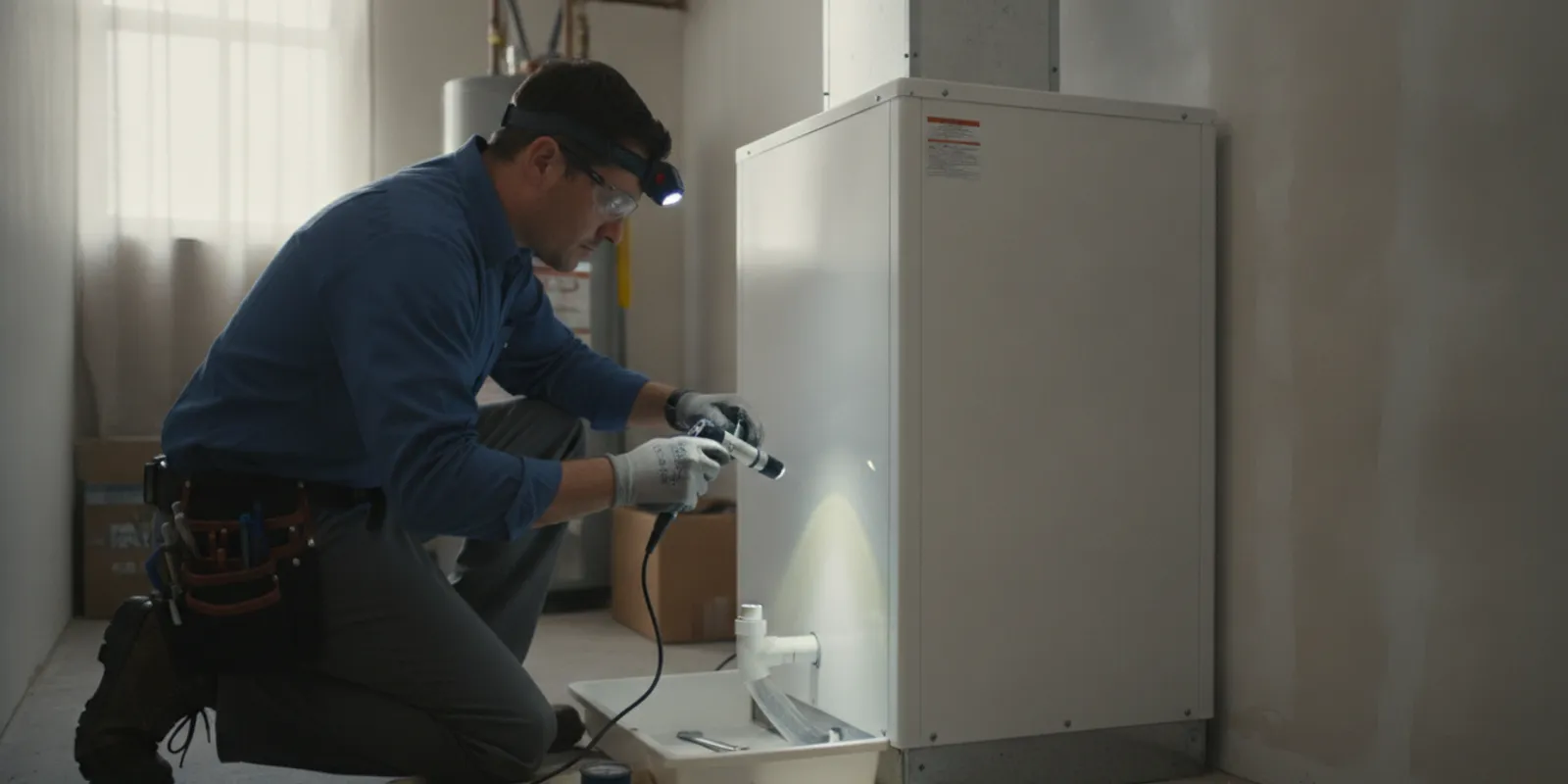
AC unit condensate line maintenance for landlords begins with understanding what the drain does, what tenants may notice, and which observations are safe to make. During cooling, moisture from indoor air collects at the system’s evaporator coil and should drain away through a pan and line. A drainage problem can leave water near equipment or elsewhere in the property. This guide is about recognizing and managing a concern, not attempting a repair without the right training.
Call (510) 719-0621 to discuss HVAC service
What does an AC condensate line do?
As warm indoor air passes over a cold evaporator coil, moisture condenses on the coil. A condensate pan catches the water, and a drain route carries it away from the equipment. Depending on the system and installation, drainage may rely on gravity or a condensate pump. The Air Conditioning Contractors of America describes both approaches in its guide to HVAC condensate.
The line is easy to overlook because it generally works in the background. For a landlord, however, a drainage problem may affect cooling, interrupt a tenant’s routine, or create water concerns around floors, ceilings, walls, and equipment. System designs vary, so do not assume that every visible pipe has the same function or outlet. If you are unsure what a component is, leave it alone and ask a qualified technician.
What signs should a landlord look for?
During a routine property visit, make a visual check only when the equipment area is accessible and safe. Possible warning signs include:
- Water on the floor or around the indoor air handler or furnace cabinet.
- A damp ceiling, wall, or closet near the HVAC equipment.
- Dripping from an unexpected place or a condensate pump that appears to run continuously.
- A musty odor or visible moisture close to the equipment.
- A cooling system that shuts down or does not behave as the tenant expects.
These signs do not prove that a condensate line is blocked. A leak can have another cause, and safety switches or pumps may affect what a tenant notices. Ask when the symptom began, whether it occurs while cooling, and whether it is worsening. Request photographs taken from a safe distance. Do not ask a tenant to open the equipment, touch wiring, or reach into a cabinet.
How can a landlord gather useful information?
Good notes help separate an isolated observation from a recurring issue and make a service request clearer. Ask the tenant for the date and approximate time, the room and exact location of moisture, whether the air conditioner was running, and whether the condition changed after the system stopped. Ask whether the water is a small damp spot, a drip, or spreading across a surface. A photo can help show location and extent, but the tenant should not move panels or put themselves near wet electrical parts to take it.
Record the equipment location and any model information that is visible without removing a cover. Note whether the property has a pump if that is already known, but do not require the tenant to identify one. If the same report has occurred before, include earlier dates and what was done. A technician can use that history to consider whether symptoms recur under similar operating conditions.
For example, a report of a single damp mark after a cooling cycle is different from water spreading under an indoor unit while it is running. Neither description identifies the cause, but the second signals a more immediate water concern. In both cases, precise observations are more useful than telling the technician that the line is definitely clogged.
What can landlords safely check?
Limit checks to external, accessible observations. Start by confirming the tenant’s report and whether the thermostat is set to cooling. Do not move heavy panels, reach into the unit, or touch wet electrical components. Do not pour cleaners, bleach, or other chemicals into a line unless equipment instructions or a qualified technician specifically directs it.
- Look for visible water. Check the floor and nearby surfaces without touching wet equipment.
- Review documentation. Find the model or installation records and look for instructions relating to the drain or pump.
- Observe an outlet only if it is readily accessible. A dry outlet by itself does not establish a blockage; drainage depends on system design and operating conditions.
- Document the symptom. Record date, place, system behavior, and safe photographs.
- Arrange qualified help if water is accumulating or the cause is unclear. If there is a safety concern, keep people away and seek professional guidance.
Never remove electrical covers, work on a pump, or use tools to clear a line unless you are qualified and manufacturer instructions allow it. A landlord’s first responsibility is to notice, communicate, and arrange appropriate help, not to diagnose internal equipment. Airteks’ HVAC maintenance information and preventative maintenance overview offer context for planning system care.
How should landlords respond to a suspected blockage?
When water is visible, contact the tenant promptly to understand the location and extent. Arrange reasonable protection for nearby belongings and surfaces if it can be done safely. If water is close to electrical equipment, keep people away and contact a qualified professional rather than touching the equipment. Follow the property’s procedures for water incidents, and document the steps taken.
When requesting service, provide the property address, equipment location, symptoms, start time, and whether the system was cooling. Mention water extent, any affected surfaces, repeat reports, and whether a condensate pump is known to be present. If you have photos, share them through an appropriate channel. Explain any immediate safety concern so the provider can understand the situation before the visit.
A useful service request avoids guessing at the fix. Instead of saying only “the drain is clogged,” say “the tenant reported a wet patch beneath the indoor unit on Tuesday evening while cooling was on; the mark was larger on Wednesday morning.” That description gives a technician observable facts without narrowing the diagnosis prematurely.
How can landlords plan for recurring drainage concerns?
No single cleaning method or schedule fits every system. Use the manufacturer’s guidance and ask a technician what care is appropriate for the specific installation. During service, the technician can assess the drain path, pan, pump if present, and related components. Avoid applying universal online instructions when the equipment arrangement is unknown.
Build a simple record for each property or system. Useful fields include the service date, reported symptom, location, observed operating conditions, findings explained by the technician, work performed, and any recommended follow-up. Keep tenant reports attached to the same history. A short record can make a pattern visible when a problem appears intermittently or returns after a prior visit.
- Tell tenants how to report a leak or cooling concern and what information to include.
- Keep access to indoor equipment clear for inspection and service.
- Save equipment manuals and service notes where the property manager can find them.
- Share repeat symptoms with the technician instead of treating every report as unrelated.
- After service, monitor the area only as advised and report a return of symptoms.
For a portfolio, compare records across units without assuming identical equipment has identical drainage layouts. A repeated report in one unit may warrant a closer assessment of that system, while separate reports in different buildings may have unrelated causes. Airteks provides further HVAC system maintenance guidance for routine planning.
What should a landlord compare when arranging service?
Focus on what was observed, what the inspection will cover, and what the technician found. A quote should reflect the actual system and findings, not just the phrase “clogged drain.” Ask whether the proposed work addresses the drain route, pan, pump, or another identified issue, and whether any water damage needs a separate property repair. Distinguish HVAC work from building repairs so each item has a clear scope.
| Observed situation | Practical next step | Details to record or clarify |
|---|---|---|
| No visible water; routine planning | Follow equipment guidance and discuss care at the next service visit. | System location, service history, and recommended maintenance. |
| Intermittent dampness or unexplained drip | Arrange assessment and monitor only as advised. | When it happens, where moisture appears, and whether cooling is operating. |
| Active leak near indoor equipment | Protect the area safely and request prompt HVAC guidance. | Water extent, equipment location, and safe photos. |
| Water near electrical equipment or significant damage | Keep people away and follow property safety procedures while arranging qualified help. | Immediate risk, affected area, and actions already taken. |
This table is a response aid, not a diagnosis. The right action depends on the equipment and the amount and location of water. Ask the technician to explain what was inspected, what evidence supports the proposed work, and whether monitoring or follow-up is recommended. If the water source is not HVAC-related, the property may need a separate assessment.
How should landlords prepare tenants and properties?
Set a clear reporting process before a problem occurs. Tenants should know whom to contact, what details to provide, and not to open HVAC equipment or handle wiring. A simple message template can ask for the time the issue began, room location, whether cooling was running, a description of the water, and a safe photo. Include an instruction to keep away from wet electrical equipment and to report spreading water promptly.
Property managers can also make service visits more efficient by confirming access arrangements, identifying the indoor unit, and clearing stored items from around it when safe. Keep pets and occupants away from the work area as needed. If a building has multiple systems, identify which area or tenant reported the symptom; otherwise, a technician may need extra time to locate the right equipment.
For a multi-unit property, record which system serves which unit or zone if that information is available. Do not assume that a central system, a shared drain, or a pump serves only one space. When the layout is unclear, let the technician map the equipment and drain route. Accurate building records can make later reports easier to interpret.
How can landlords handle a report from first message to follow-up?
A consistent sequence keeps a small, unclear report from becoming a confusing service history. First, acknowledge the tenant’s message and ask for the few details that change the response: where the water is, whether it is spreading, whether it is near electrical equipment, and whether cooling was operating. Do not delay action to complete a checklist when there is an immediate safety concern. If the situation appears stable, gather the remaining information and arrange access.
- Classify the observation, not the cause. Write “water under the air handler” rather than “blocked condensate drain.” The first is an observation; the second is an unverified diagnosis.
- Set a clear next step. Tell the tenant whether you are arranging an inspection, need a safe photo, or are following the property’s water-incident process. Avoid promising a repair outcome before the system is assessed.
- Prepare access. Confirm the appointment window, entry instructions, location of the equipment, and whether stored items can be moved safely. Let the technician know about pets or access limits.
- Close the loop. After the visit, record the technician’s explanation and any follow-up instructions. Ask the tenant to report whether the moisture returns, including the date and location.
Consider two example reports. In the first, a tenant notices a small mark that is dry by the time the landlord visits. Record when it appeared, whether cooling was on, and whether it recurs; do not infer that the system is fine solely because the spot dried. In the second, water is actively spreading beneath the indoor unit. Prioritize keeping people clear of wet electrical equipment, follow property procedures, and contact a qualified professional promptly. The immediate response differs, but in both cases the record should separate what was seen from what a technician later determined.
This sequence is useful for owners who manage one rental as well as those coordinating several properties. A shared log can include property and unit, reporter, time first noticed, water location and extent, operating conditions, actions taken, service date, findings, and follow-up status. Keep tenant contact information and photos in the property’s normal secure records rather than circulating them unnecessarily. A concise, dated history helps a technician see whether an issue is new, intermittent, or recurring after prior work.
When should landlords call an HVAC professional?
Arrange professional service when water appears near indoor equipment, a leak returns, a tenant reports repeated shutdowns, or the cause is uncertain. Seek prompt help when water is spreading or near electrical components. Do not delay to test a suspected clog yourself. A qualified technician can inspect the system safely and explain the findings and options.
Airteks serves residential and commercial clients across Northern California. Landlords can review residential HVAC services or learn about commercial HVAC services for properties with building-wide equipment. Its service areas page provides additional coverage information. To request help, share the symptoms and equipment location rather than assuming a particular cause.
Call (510) 719-0621 to discuss an HVAC concern
Frequently Asked Questions
Can a landlord clear an AC condensate line without a technician?
Keep checks to safe, accessible observations consistent with equipment instructions. Avoid opening equipment, handling electrical parts, or adding chemicals without specific guidance. If water is leaking or the cause is unclear, arrange professional service.
Does every air conditioner have a condensate pump?
No. Some systems drain by gravity, while others use a pump when the layout requires one. The installed equipment and drain arrangement determine what is present.
Should tenants keep using an AC when water is leaking?
Tenants should report the leak promptly and avoid wet equipment or electrical parts. Whether to stop using the system depends on the situation; get qualified guidance, especially if water is near electrical components or spreading.
What information should a tenant send the landlord?
Ask for the time the concern began, where water is visible, whether cooling was running, and photos taken from a safe distance. Tenants should not remove panels or attempt repairs.
Clear communication, safe observation, and timely service help landlords manage condensate concerns before they become harder to address. Follow equipment guidance and consult a qualified HVAC professional when drainage problems appear.
Comments