
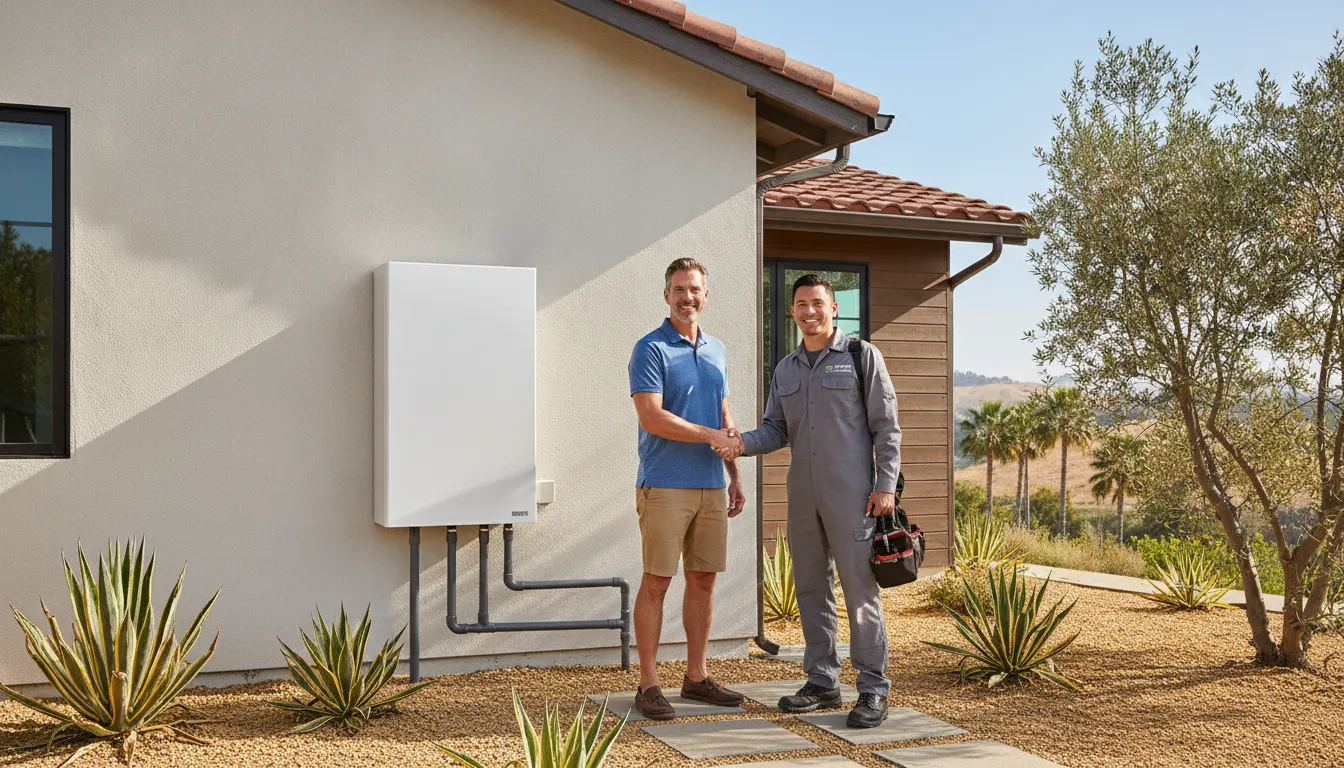
California HVAC rebates and tax credits for 2024 combine federal Inflation Reduction Act incentives with state and utility programs. Homeowners can claim up to $2,000 per year through the federal 25C tax credit for heat pumps, plus up to $2,000 more from TECH Clean California rebates. Income-qualified households may add up to $8,000 through HEEHRA. Most programs require ENERGY STAR certified equipment and a licensed, program-approved contractor.
California HVAC Rebates Tax Credits 2024: Federal Tax Credits for HVAC Upgrades Under the Inflation Reduction Act
The federal 25C tax credit, created by the Inflation Reduction Act, covers 30 percent of the cost of qualifying energy-efficient HVAC equipment installed in your primary residence. Unlike a rebate that reduces your upfront cost at the register, this credit reduces the amount of federal income tax you owe when you file your return. The program runs through December 31, 2032, giving California homeowners nearly a decade to plan and execute upgrades.
Most of our clients in the Bay Area want to know exactly how much they can save. The credit applies to multiple equipment types up to an annual cap of $3,200 total for all qualifying home energy improvements. This makes it one of the most generous federal incentives currently available for residential efficiency upgrades.
Maximum savings for heat pumps and air conditioners
Heat pumps qualify for the largest individual credit: 30 percent of the installed cost, up to $2,000 per year. This is a substantial contribution toward the new HVAC system cost in Northern California, where full installations can run $8,000 to $15,000 depending on system size and complexity. Heat pumps are particularly effective in California's mild climate, where they deliver year-round heating and cooling from a single high-efficiency unit.
Central air conditioners qualify for a credit of 30 percent of cost up to $600. Gas, propane, and oil furnaces receive the same $600 cap. The full list of qualifying equipment includes:
- Heat pumps and heat pump water heaters: 30 percent of cost, up to $2,000
- Central air conditioners: 30 percent of cost, up to $600
- Gas, propane, or oil furnaces: 30 percent of cost, up to $600
- Boilers: 30 percent of cost, up to $600
- Advanced main air circulating fans: 30 percent of cost, up to $50
Annual caps and multi-year planning
The $3,200 annual cap includes the heat pump credit plus up to $1,200 for other qualifying improvements such as windows, doors, insulation, and electrical panel upgrades. Because the credit resets each calendar year through 2032, you can maximize your total savings by staging upgrades across multiple years. For example, install a heat pump this year for the full $2,000 credit, then upgrade your attic insulation next year and claim additional credits. This strategy lets homeowners capture far more than the single-year cap.
How to claim your federal HVAC tax credits
Claiming the credit requires filing IRS Form 5695 with your annual tax return. You will need the manufacturer's ENERGY STAR certification statement for each piece of equipment, the dated sales receipt, and proof of installation. These credits are non-refundable, meaning they can reduce your tax liability to zero but will not generate a refund beyond that. If you owe $1,500 in taxes and qualify for a $2,000 credit. Your tax bill drops to zero, but you do not receive the remaining $500 as a payment. Work with a tax professional to confirm your eligibility before making purchasing decisions.
Do California state rebates for HVAC still have funds available?
California offers two primary state-level rebate programs for heat pumps: TECH Clean California and HEEHRA (High-Efficiency Electric Home Rebate Act). Both have seen extremely high demand, and understanding their current funding status is critical before planning a project.
TECH Clean California offered $1,000 to $2,000 per home for heat pump retrofits but stopped accepting new HVAC rebate applications as of November 2025. HEEHRA provides up to $8,000 for low-income households but its first phase is fully reserved; a waitlist remains open for Northern California homeowners. Neither program guarantees immediate funding.
TECH Clean California: $1,000 to $2,000 for Heat Pumps
The TECH Clean California program was designed to accelerate the transition away from gas furnaces to electric heat pumps. It offered a $1,000 rebate per heat pump unit installed in existing single-family homes, with most households eligible for up to two units for a total of $2,000. The program required the unit to be ENERGY STAR certified and installed by a participating contractor. New construction did not qualify. As of November 2025, TECH Clean California stopped accepting new HVAC rebate applications. The state periodically allocates additional funding, so checking current status before starting your project is essential.
HEEHRA Phase I: Up to $8,000 for Income-Qualified Homes
HEEHRA offers significantly larger rebates for households earning below certain income thresholds. If your household income is less than 80 percent of the area median income (AMI), you could receive up to $8,000 for a new heat pump. Households earning between 80 percent and 150 percent of AMI qualify for up to $4,000. These HEEHRA rebates are administered by the California Energy Commission and require income verification as part of the application process.
As of February 2026, the first phase of HEEHRA funds for single-family homes is fully reserved statewide. However, a waitlist remains open for Northern California homeowners, including residents of Alameda, Contra Costa, Sacramento, Santa Clara, and Napa counties. Joining the waitlist early is the best way to secure funding when the next allocation opens.
How to Qualify for California HVAC Rebates
Eligibility requires using a TECH-certified contractor who has completed additional HEEHRA training. The equipment must be ENERGY STAR certified and, for most programs, must be a two-stage or variable-capacity model , single-stage units typically do not qualify. At Airteks, our factory-certified technicians provide heat pump installation services that meet these requirements. We handle the documentation and application process so you know your installation is eligible for any available funds. Income verification documents such as tax returns or pay stubs are required for HEEHRA applications.
PG&E and Utility HVAC Rebate Programs for Northern California
Beyond federal and state incentives, approximately 20 utility companies across California offer their own rebates for energy-efficient HVAC equipment. These programs typically provide between $100 and $3,000 per household and can be stacked with both federal tax credits and state rebates. Understanding your local utility's offerings can significantly reduce your out-of-pocket costs.
PG&E's Golden State Rebates program offers instant coupons for qualifying HVAC equipment including smart thermostats and heat pumps. The DSIRE database tracks all active utility rebates by zip code. Local rebates can be combined with the federal 25C tax credit and state HEEHRA/TECH programs for maximum savings.
PG&E Golden State Rebates
PG&E customers can access instant savings through the Golden State Rebates program, which provides coupons for ENERGY STAR certified equipment at the point of purchase. These instant discounts apply to smart thermostats, heat pump water heaters, and select HVAC equipment. Unlike tax credits that require filing paperwork months later, these coupons reduce your cost immediately, making it easier to purchase the best energy efficient air conditioner for your home without waiting for a rebate check in the mail. Your contractor can apply these coupons directly during the purchasing process.
Finding Local Programs with DSIRE
With more than 20 utility companies offering different rebate structures and amounts, tracking every available program manually is impractical. The DSIRE database maintained by the NC Clean Energy Technology Center tracks all clean energy incentives by zip code, including utility, state, and federal programs. Enter your zip code to see exactly which rebates apply to your property. Many smaller municipal utilities in the Central Valley and Sacramento region offer additional incentives for summer cooling upgrades that are not widely advertised.
Stacking Local and Federal Savings
The most effective savings strategy combines utility rebates with federal tax credits. Local rebates reduce your upfront cost, while the federal tax credit covers 30 percent of the remaining expense when you file your taxes. Most local programs permit this stacking arrangement, and a qualified HVAC contractor can help you identify which combinations apply to your specific home and utility provider.
| Program Name | Rebate Type | Maximum Savings |
|---|---|---|
| PG&E Golden State Rebates | Instant Coupon | Up to $1,000 |
| Local Utility Rebate (varies) | Cash Back | $100 to $3,000 |
| Federal 25C Tax Credit | Tax Credit (30 percent) | Up to $2,000 per year |
| TECH Clean California | State Rebate (currently reserved) | Up to $2,000 |
| HEEHRA (income-qualified) | State Rebate (waitlist open) | Up to $8,000 |
How to Claim HVAC Rebates and Credits: Step-by-Step
Claiming your full savings requires following a specific sequence of steps. Because different programs have different deadlines, documentation requirements, and funding availability, working through this process methodically ensures you leave no money on the table.
To claim HVAC incentives, start by hiring a TECH-certified contractor, verify your equipment meets ENERGY STAR requirements, complete income documentation for HEEHRA if applicable. File IRS Form 5695 with your tax return, and keep all receipts and certification labels for at least three years. Utility rebates are typically applied at the point of sale by your contractor.
Preparing for federal tax credits
Filing for the federal tax credit requires IRS Form 5695, which you submit with your annual tax return. The form calculates your credit based on the installed cost of qualifying equipment. Keep the manufacturer's ENERGY STAR certification label, the dated invoice showing equipment model numbers and installation labor, and proof of payment. Adding smart thermostat savings to your upgrade can further reduce your monthly energy bills while you wait for tax credit processing. The credit resets each calendar year, so multiple upgrades planned across different tax years maximize your total benefit.
Applying for state rebates
State rebate programs like TECH Clean California and HEEHRA follow a different process than federal tax credits. Your contractor typically handles the application submission through the program's secure portal, filing it immediately upon completion of installation to lock in funding. Eligibility requires verifying that your project is a retrofit in an existing home and that the equipment meets program efficiency standards. Many state rebates are paid directly to the contractor, reducing your invoice total immediately rather than requiring you to wait for reimbursement.
As of early 2026, HEEHRA funds are fully reserved for new applications, but Northern California homeowners can join the waitlist for state rebates managed by the California Energy Commission. Joining the waitlist does not guarantee funding, but it positions you for the next allocation round.
Documents you will need
Organize these documents before starting any application:
- ENERGY STAR certification label from each piece of equipment
- Dated installation invoice with equipment model numbers and serial numbers
- Proof of payment (credit card statement, canceled check, or financing agreement)
- Household income documentation for HEEHRA applications (tax returns, pay stubs)
- Contractor's license and certification documentation
- Signed contract outlining all work performed
Most programs require claims to be submitted within 60 to 90 days of installation. Missing this window can forfeit thousands of dollars in potential savings. Keep all documentation in a secure location for at least three years, as both the IRS and state program administrators may audit claims.
- Hire a certified contractor. Choose a TECH-certified and HEEHRA-trained installer. At Airteks, our heat pump installation experts handle all program-specific documentation and ensure your system meets every eligibility requirement.
- Select qualifying equipment. Confirm your new heat pump, furnace, or air conditioner carries ENERGY STAR certification and meets the efficiency requirements for each program you plan to use.
- Complete income verification. For HEEHRA, gather tax returns or pay stubs demonstrating your household income. This step determines whether you qualify for the full $8,000 rebate or the reduced $4,000 tier.
- Submit state applications. Your contractor submits TECH or HEEHRA forms through the program portal upon completing installation. Timing is critical when programs have limited funding.
- File federal tax forms. Include IRS Form 5695 with your annual tax return. Your tax professional can verify the calculations and confirm you claim the correct amount based on your specific installation costs.
- Maintain records. Store all paperwork for at least three years. Program audits can occur long after installation, and missing documentation can result in clawback of claimed incentives.
How much can you save by stacking federal and state HVAC incentives?
The maximum combined savings for a California homeowner depends on household income, chosen equipment, timing, and program availability. Understanding realistic expectations prevents disappointment and helps you plan effectively.
A median-income household installing a qualifying heat pump can combine the $2,000 federal 25C credit with local utility rebates of $500 to $3,000 for total savings of $2,500 to $5,000. Low-income households earning below 80 percent of AMI can stack the same federal credit with the $8,000 HEEHRA rebate. Reaching $10,000 in combined incentives, though HEEHRA currently operates on a waitlist in Northern California.
Heat Pumps Offer the Largest Combined Savings
Heat pumps consistently deliver the highest total incentives because they qualify simultaneously for federal, state, and utility programs. Under the Energy Efficient Home Improvement Credit, a heat pump earns 30 percent of installed cost up to $2,000. Income-qualified homeowners can add up to $8,000 from HEEHRA, and local utility rebates add another $500 to $3,000 depending on the provider. The total for a low-income household can approach $13,000 when all programs are available. Although the $10,000 figure commonly cited requires low-income HEEHRA qualification and is not available to all homeowners. Standard-income households should expect combined savings in the $2,500 to $5,000 range.
Federal Tax Credits for Other HVAC Systems
If a heat pump is not the right fit for your home, central air conditioners and gas furnaces still qualify for federal tax credits. Each option earns 30 percent of installed cost up to $600. The $3,200 total annual cap applies across all improvements. Geothermal heat pumps qualify for a separate 30 percent credit with no upper dollar limit, making them an attractive option for larger properties. These uncapped geothermal credits do not count against the $3,200 annual limit for other HVAC work.
How to Boost Your Savings Through Stacking
Stacking , combining federal, state, and utility incentives on a single project , is the most effective way to maximize your return. Many California utility providers offer extra rebates for equipment with high SEER2 ratings. Working with a contractor like Airteks who understands Pelican Wireless Systems and smart HVAC controls can also unlock additional energy savings through reduced monthly operating costs. The payback period for a high-efficiency system drops significantly when every available incentive is applied correctly.
Which HVAC system has the highest rebate in California?
Heat pumps offer the highest total incentives. Combined federal and state savings can reach up to $10,000 for low-income households with HEEHRA qualification. Standard-income homeowners typically see $2,500 to $5,000 in combined savings from federal and utility programs.
Can I combine federal tax credits with local utility rebates?
Yes. Federal tax credits, state rebates, and local utility incentives can all be stacked on the same project. This stacking approach substantially reduces your net investment in a high-efficiency HVAC system. Your contractor should verify that each program allows stacking before you proceed.
Frequently Asked Questions
Can I combine federal tax credits with California state rebates?
Yes. Federal tax credits under the 25C program can be combined with California state rebates and local utility incentives. Most state and utility programs explicitly permit stacking with federal credits. Meaning you can claim 30 percent of your equipment cost on your taxes while also receiving direct rebate payments from TECH Clean California or HEEHRA. This stacking approach typically reduces the net cost of a high-efficiency heat pump by 30 to 50 percent depending on household income and available utility incentives.
How many times can I claim the federal HVAC tax credit?
The federal tax credit resets every calendar year through 2032. According to ENERGY STAR, you can claim up to $3,200 per year for qualifying home energy improvements. If you install a heat pump this year and a new electric panel or attic insulation next year. Both qualify independently as long as each year's installation meets the program requirements. This annual reset allows homeowners to plan multi-year upgrade schedules that maximize their total credit.
What should I do if a California rebate program is fully reserved?
If a program like HEEHRA or TECH Clean California is fully reserved, join the waitlist immediately. The California Energy Commission maintains a waitlist for Northern California single-family homes. Funding allocations change periodically, and new spots may open as previously reserved funds are released. While on the waitlist, pursue utility rebates from your local provider, which often have separate funding pools. An experienced contractor can help you identify every available incentive and submit documentation promptly when new funding opens.
Do I need a specific type of contractor to get these rebates?
Yes. State rebate programs require installations by TECH-certified contractors who have completed additional HEEHRA training. Utility rebate programs may have their own approved contractor lists. Using an unqualified installer can disqualify your project from thousands of dollars in incentives. Airteks maintains TECH certification and HEEHRA training, and our factory-certified technicians ensure every AC installation and furnace replacement meets program requirements.
Is there a deadline for claiming these HVAC incentives?
The federal 25C tax credit runs through December 31, 2032, providing long-term planning flexibility. However, state rebates and utility incentives operate on limited funding cycles that can close without notice. As noted by the Clean Energy Connection, state programs like HEEHRA and TECH Clean California have already exhausted their initial allocations. The best strategy is to begin your project as soon as possible while federal credits are guaranteed and before state programs reopen with potentially higher demand.
Ready to claim your California HVAC rebates and tax credits?
Waiting to upgrade your heating and cooling system could cost you hundreds in lost energy savings and missed incentives. Many state programs have limited funding, and federal tax credits are best used early in the calendar year to align with your tax filing schedule. Our team at Airteks helps you navigate the entire process , from selecting qualifying equipment to completing the required documentation. So you capture every dollar available for your new energy-efficient system.
Ready to get started? Call (925) 292-0148 today to schedule a free consultation or request a quote for qualifying HVAC upgrades. Our certified technicians serve homeowners throughout Livermore, Pleasanton, Walnut Creek, Sacramento, and all of Northern California.
Comments