
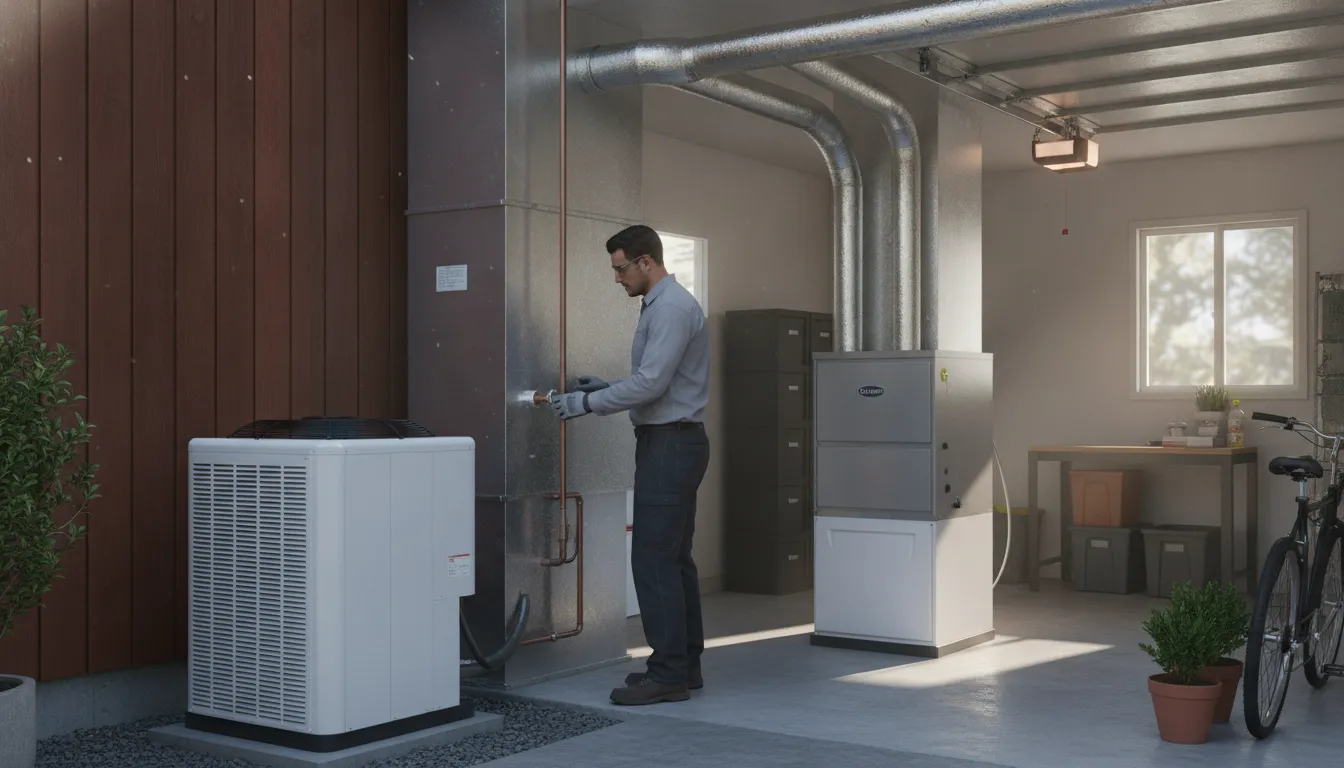
Average Cost of a New HVAC System Replacement in Northern California
A complete HVAC replacement typically includes a new furnace (or air handler), a new air conditioner or heat pump, and all necessary installation labor. In Northern California, you'll find these typical cost ranges for standard installations in 2026.- Complete split system (gas furnace + central AC): $12,000 to $22,000.
- Heat pump system (year-round heating and cooling): $14,000 to $25,000.
- Ductless mini-split system (multi-zone): $10,000 to $20,000.
- New ductwork replacement (if needed): add $2,000 to $6,000.
What's Included in an HVAC System Installation Quote?
When you receive a quote from a reputable contractor like Airteks, it covers far more than just the equipment sitting in your yard. Understanding each line item helps you compare bids fairly and avoid surprises. The table below shows what a typical $14,000 to $22,000 Northern California installation quote covers.| Component | Cost Range | What It Covers |
|---|---|---|
| Equipment (furnace + AC or heat pump) | $6,000 to $9,000 | The largest single expense. Brand, efficiency tier, and capacity (tons) determine the price. |
| Installation labor | $3,000 to $5,000 | Load calculations, refrigerant handling, gas line connections, electrical wiring, and code compliance. |
| Ductwork modifications | $0 to $6,000 | Repairs, resizing, or full replacement if existing ducts are undersized or leaky. |
| Permits and inspections | $500 to $1,000 | California building code permits and final inspection by local jurisdiction. |
| Smart thermostat | $200 to $600 | Programmable or Wi-Fi thermostat with energy-saving scheduling features. |
| Old system disposal | $300 to $700 | Refrigerant recovery (federally required), equipment removal, and haul-away. |
| Miscellaneous materials | $300 to $700 | Line sets, drain pans, electrical disconnects, pads, and sheet metal work. |
How Home Size and Layout Affect HVAC Replacement Cost
The size of your home is the single biggest factor in determining what size system you need, and therefore what you will pay. Homes under 1,500 square feet typically need a 2 to 3-ton system. Expect costs toward the lower end of the ranges above. Smaller homes also tend to have simpler duct layouts, keeping labor costs down. Homes between 1,500 and 2,500 square feet represent the sweet spot for standard single-family homes in the Bay Area, Central Valley, and Sacramento region. A 3 to 4-ton system is typical, and costs cluster around the midpoints of the ranges. Homes over 2,500 square feet require 4 to 5-ton systems or even zoned setups with multiple units. Costs climb quickly at this tier. Multi-story homes add complexity, especially if the existing ductwork cannot handle the load distribution or if zoning dampers are needed. Ductless systems are an excellent alternative for homes without existing ductwork, additions, converted garages, or older homes where installing new ducts would be prohibitively expensive. A multi-zone mini-split system provides independent temperature control in each room or zone. While the equipment cost per zone is higher than a traditional split system, you save on the ductwork entirely. In Northern California, where homes range from 1920s bungalows in Oakland and Berkeley to modern tract homes in Livermore and Elk Grove. The layout matters as much as the square footage. An experienced contractor performs a Manual J load calculation to determine the correct system size for your specific home. Trusting "rule of thumb" sizing often leads to oversized equipment that short-cycles, wastes energy, and leaves some rooms uncomfortable.High-Efficiency vs Standard Systems: Is the Price Premium Worth It?
Every HVAC system carries an efficiency rating. For furnaces, it is AFUE (Annual Fuel Utilization Efficiency). For air conditioners and heat pumps, it is SEER2 (Seasonal Energy Efficiency Ratio 2) for cooling and HSPF2 (Heating Seasonal Performance Factor) for heating. Standard-efficiency systems typically offer around 80% AFUE and 14-16 SEER2. These are the most budget-friendly upfront and still comply with current California energy code minimums. However, they consume more energy over their lifetime. High-efficiency systems deliver 95-98% AFUE and 18-24+ SEER2. The upfront premium ranges from $2,000 to $5,000 over a standard system. That premium is typically recovered through lower utility bills within 3 to 7 years, depending on your climate and usage. For Northern California homeowners, the math often favors high-efficiency equipment. Here is why:- Mixed climate. The Bay Area and Central Valley experience both hot summers and cold winters. A high-efficiency heat pump or gas furnace pays back faster when used year-round.
- California energy rates. Electricity and natural gas rates in PG&E territory are among the highest in the country. Every percentage point of efficiency improvement translates directly into dollar savings on your monthly bill.
- Rebate eligibility. Many California rebate programs require minimum efficiency thresholds. A standard system may not qualify.
- Home value. High-efficiency HVAC is a selling point in California's competitive real estate market. Future buyers recognize the upgrade.
- Heat pump incentives. California's push toward electrification includes substantial rebates for heat pump installations. They are increasingly cost-competitive with gas furnace systems when incentives are applied.
California Rebates and Tax Credits That Lower Your Replacement Cost
Multiple incentive programs can significantly reduce your out-of-pocket cost for a new HVAC system in Northern California. Federal tax credits (Inflation Reduction Act). Through 2032, homeowners can claim a federal tax credit of up to $2,000 for qualifying high-efficiency heat pumps, and up to $600 for qualifying furnaces and air conditioners. These are non-refundable tax credits, meaning they reduce the tax you owe dollar-for-dollar. California TECH Clean California rebates. This statewide program offers rebates for heat pump space and water heating installations. Eligible homeowners can receive rebates of $1,000 to $4,000 depending on income level and the type of equipment installed. The program specifically targets homes switching from gas to electric heat pumps. Bay Area regional incentives. BayREN (Bay Area Regional Energy Network) provides rebates for single-family and multi-family energy upgrades, including HVAC improvements. Amounts vary by county and project scope. Alameda County, Contra Costa County, and Sacramento County all have active programs. Utility rebates. PG&E offers rebates through its Energy Savings Assistance Program and various demand-response programs. SMUD customers in the Sacramento area may receive additional incentives for heat pump installations. Check with your specific utility provider for current offerings. Local government programs. Some cities in the Bay Area and Central Valley offer additional incentives for HVAC upgrades. Especially when paired with solar, battery storage, or whole-home electrification projects. Livermore, Pleasanton, and Walnut Creek have been active in this space. A qualified HVAC contractor can help you identify which programs apply to your project. Airteks stays current on California incentive programs and includes eligible rebate information in every quote.Is It Time to Replace or Repair Your HVAC System?
If your current system is more than 15 years old, requires frequent repairs, or is struggling to keep your home comfortable, replacement is likely the better long-term investment. A general guideline: if a repair costs more than 50% of the price of a new system, replacement makes more financial sense. Older systems also operate at much lower efficiency than modern equipment. A 10-year-old system running at 10 SEER costs significantly more to operate than a new 18 SEER system. Over a summer in the Central Valley, that difference can be hundreds of dollars. Airteks provides honest assessments of your current system, with no pressure to replace if a simple repair will get you through another season. Our technicians explain what is working, what is failing, and what your options are so you can make an informed decision.Frequently Asked Questions About HVAC Replacement Costs in Northern California
How much does a new HVAC system cost in Northern California?
The total new HVAC system cost in Northern California typically ranges from $12,000 to $22,000 for a complete split system replacement in 2026. Heat pump systems run $14,000 to $25,000 or more, while ductless mini-split systems for multi-zone homes fall between $10,000 and $20,000. These ranges include equipment, labor, permits, and standard installation for a typical single-family home.
What factors affect the cost of an HVAC system replacement?
The main cost drivers include your home's square footage, the type and efficiency rating of the system you choose. The condition of your existing ductwork, local labor rates in your area, and whether any electrical upgrades are needed.
How much does it cost to replace HVAC ductwork?
A full ductwork replacement or significant modification typically adds $2,000 to $6,000 to your total project cost. Older homes in the Bay Area and Sacramento often need at least partial duct updates when installing a new system.
Is it worth upgrading to a heat pump system in California?
Yes, for most Northern California homeowners. Heat pumps provide both heating and cooling efficiently, and California's moderate climate means they perform well year-round. Combined with state and federal rebates that can total $2,000 to $4,000 or more. The upfront cost premium over a gas furnace system is often recovered within a few years through energy savings.
What are the average labor costs for HVAC installation?
Professional installation labor typically accounts for $3,000 to $5,000 of your total HVAC replacement cost. This covers load calculations, equipment setup, refrigerant charging, electrical connections, gas line hookups, and system testing and commissioning.
How much is an average HVAC replacement in the Bay Area?
In the Bay Area, homeowners typically pay between $14,000 and $22,000 for a complete HVAC system replacement in 2026. Labor rates and permit fees in cities like Livermore, Pleasanton, and Walnut Creek tend to be higher than in other parts of the state. This pushes the Bay Area range toward the upper end of statewide averages.
Comments