
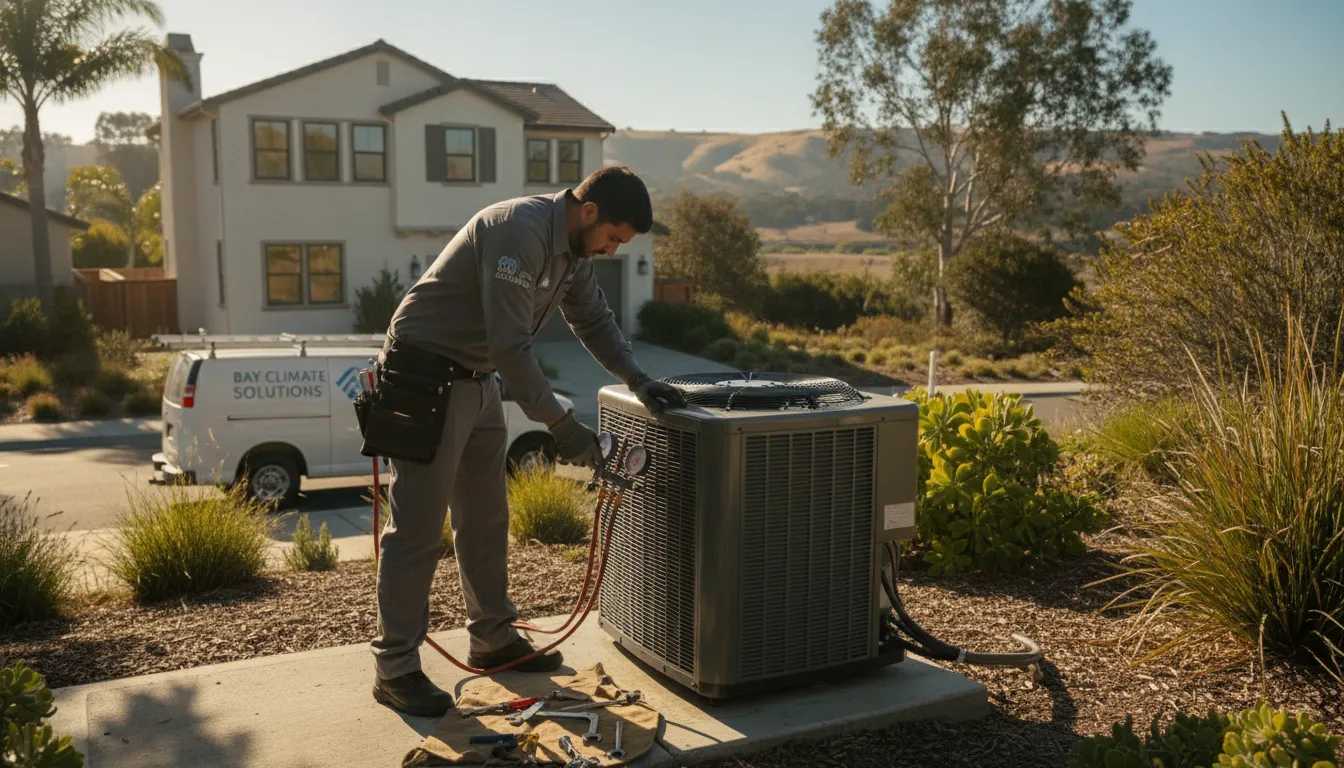
Standard hvac costs emergency repair bay area services depend on the failure type, system size, and the parts needed to fix the problem. While some companies charge more for late-night or weekend calls, elite contractors use flat rates to keep prices fair. Most local owners pay for a checkup fee plus the cost of labor and new parts. According to industry data, emergency HVAC repair pricing is often based on the specific mechanical issue rather than just the time of day. You should always ask for a quote before a pro starts work on your heating or cooling system. This clarity helps you plan for the bill. It also helps you decide if a repair is better than a full system replacement for your home or business.
Understanding Standard HVAC Costs and hvac costs emergency repair bay area
Owners in Northern California face a wide range of weather that impacts home ease costs. In the Bay Area, a standard home HVAC swap or setup often falls between $8,000 and $15,000. This price range covers the cost of the main unit, expert labor, and needed local permits. While many factors shift the final bill, most local jobs stay within this bracket for single-family homes. Knowing these hvac costs emergency repair bay area helps you plan for new gear and sudden system failures.
Factors that drive setup prices
The total price of a new heating and cooling system depends on the type of gear you pick. A standard air unit and furnace set is often the base choice, but many people now opt for new heat pumps. These units handle both heating and cooling in one system. While the first buy might be higher, they often save money over time. You should also think about the hard work of the job. Say, houses in dense cities like San Francisco may need crane lifts to place units on roofs.
At Airteks, we think clear and honest costs are best for every client. Since 1997, our team has focused on giving upfront quotes without hidden fees. We look at the age of your current ductwork and the power needs of new models. If your home needs a new power panel to support a big unit, that will raise your budget. We help you find a middle ground between the start price and the long-term value of the system.
Power use and local zones
New HVAC units must meet strict rules for power use. The Department of Energy sets new power rules for all central air systems and heat pumps. These rules use the SEER2 rating to track how much power a unit uses to cool a space. Higher SEER2 numbers mean the unit saves more power, which can lower your bills. In the hot local zones of the East Bay and Central Valley, a high-saving unit is often a smart move to fight summer heat.
Local zones play a huge role in picking the right system. A home in Livermore or Walnut Creek faces much higher heat than a home near the coast. If you live in a hot zone, you need a unit that can work hard without breaking. On the other hand, homes in cooler zones might put heating first. We use our deep knowledge of local weather to suggest the best HVAC installation costs and budgeting plans for your own town.
Finding the right size with BTU rules
Getting the size of your HVAC system right is the most vital step in the process. We use a standard rule of 20 BTUs for every square foot of living space to find the base power you need. A unit that is too small will run all day, leading to high bills and early wear. If a system is too big, it will turn on and off too fast. This keeps the air humid and wears out the parts. Finding the sweet spot is key to a long-lasting system.
An expert check is the best way to confirm these needs. This check looks at your home's windows, padding, and roof type. Our team uses these facts to ensure your new unit fits your home's heat needs. You can find more AC repair costs and replacement advice on our blog to see how sizing affects your ease. We want to make sure your system works well for years, not just during the first season.
When Is an HVAC Repair Considered an Emergency?
Most heating and cooling issues can wait for a standard service call. But some problems create fast risks to your health and safety. Knowing when to call for fast help can stop small issues from turning into big disasters. In the Bay Area, where weather can shift quickly, a broken system is often more than just a nuisance. It can be a crisis that needs a fast fix to keep your home or business running. We aim to reach our clients quickly to ensure they stay safe in their own space.
Safety Hazards and Immediate Risks
Safety is the main reason to treat a repair as a top need. If you smell gas or a rotten egg odor, you may have a leak in your line. This is a severe fire and explosion risk. You should leave the building right away and call for help. Also, a burning smell or sparks coming from your unit point to power failure. These issues can lead to home fires if you do not act fast. For expert help on these types of failures, you can check our AC repair costs and replacement advice page.
Carbon monoxide is another major danger that needs a quick response. This gas has no smell or color, but it can be deadly to people and pets. If your CO detector sounds, turn off your furnace and open windows at once. A cracked heat exchanger often causes these leaks. The Department of Energy sets strict rules for system safety and efficiency. But old or damaged units can still fail and put your family at risk. Any signs of fire or gas mean you need a pro at your door right now.
Extreme Weather and Health
Weather plays a huge role in defining an urgent repair. In Northern California, outdoor heat often rises above 95 degrees during the summer months. For older people or young kids, staying in a hot house for even a few hours can be bad. Heat stroke is a real threat when your air conditioner stops working in the sun. Also, when winter nights drop below 40 degrees, a failed heater can lead to frozen pipes or health issues. If your indoor climate puts someone at risk, it is time for a 24/7 dispatch.
You should also consider HVAC installation costs and budgeting if your old system fails every time the weather gets tough. A system that breaks down in peak heat or cold often costs more to maintain over time. Our team can help you decide if a quick fix or a new unit is the best path for your home. We focus on giving you the facts so you can make a smart choice for your budget.
Commercial and Critical Cooling Failures
For businesses, a broken HVAC system often means lost money and upset workers. A retail store without cooling loses customers fast. But the biggest risk is often in tech rooms where heat builds up quickly. Server rooms need constant cooling to prevent hardware from melting down or shutting off. If a cooling unit fails in a data center, the hardware damage can cost thousands of dollars. We provide specialized commercial services to handle these high-stakes systems.
Modern systems must meet capacity rules for commercial package air conditioners to keep buildings safe. Any failure in a critical cooling zone is a top priority for our crew. We know that every minute of downtime can hurt your bottom line. That is why we offer around the clock help for our business clients. Our techs arrive ready to solve the issue and get your doors back open for business.
- Check for signs of fire, gas leaks, or water floods from the unit to see if you need to leave.
- Shut down the unit at the switch to stop more power or tool damage while you wait for help.
- Leave the room if you smell gas or see smoke to keep everyone safe from harm.
- Call for help so a pro can come to your site at any time of day or night.
- Ask for the total service call fee and get a clear quote for the work needed to fix the unit.
At Airteks, we know that hvac costs emergency repair bay area needs are stressful for any owner. That is why our owner, Jerry Bohland, ensures we have real people answering our phones 24/7. We typically arrive within one to three hours for true emergencies to get your system back online. We work on all makes and models to provide the best service possible in Northern California. You can count on us for honest advice and fair, clear pricing for every job we do.
Does Emergency Repair Cost More Than Standard HVAC Service?
Heating and cooling problems often hit at the worst times. You might wake up to a cold house or come home to a hot office. When these issues happen late at night or on weekends, you need help fast. For most people, the first big question is how much more they will pay for a quick fix. At Airteks, we have seen every kind of fix since we started in 1997. We know that AC repair costs and replacement advice help you plan for these shocks.
Service fees and testing costs
Every repair starts with a service call fee. This fee covers the cost of sending a pro to your door. It also pays for the time they spend to find why the unit broke. A standard service call in the Bay Area often runs between $49 and $149. This price is for visits during normal work hours. If you need a tech right away, you will likely see a higher rate.
Emergency calls often add 50% to 100% to the base service fee. This jump pays for the cost of keeping techs ready to roll 24 hours a day. While the higher fee can feel steep, it ensures someone is there when your safety is at risk. A gas leak or a failed heater on a cold night is a true crisis. We put these calls first to keep you and your home safe from harm.
Why emergency labor rates change
The labor rate for an urgent job is often higher than a set one. Techs work after hours, on weekends, and during holidays to keep your air flowing. These pros need fair pay for giving up their own time. In the Bay Area, labor for a fast fix can be much more than a standard job. But the final price is not just about the clock.
The cost also depends on how the unit failed and how big it is. A small fix like a new part is much cheaper than a large piece like a motor. Modern units must also follow strict rules. The Department of Energy sets energy standards for all new air units and heat pumps. Techs must know these rules to fix your system the right way without breaking the law or voiding your bond.
Upfront quotes and clear pricing
Some people fear that urgent calls lead to hidden fees. They worry that a tech will add extra costs once the work starts. We believe in clear, honest talk about price. Our team gives you a full quote before any tools touch your unit. You will know the exact cost of the service call and the parts needed to fix the problem. This helps you make a choice that fits your budget.
When a repair is too costly, we give you an honest view. Sometimes, the best move is to stop fixing an old unit and buy a new one. We look at the age of your system and the cost of the fix to help you decide. Our goal is to give you the best value, whether that is a quick repair or a full system change. Since we serve all makes and models, we can find the right path for any HVAC need.
Our techs arrive in trucks that are full of parts. This helps us fix most issues on the spot. If we can finish the job in one trip, you save time and money. Waiting for parts during a heat wave can lead to lost money for shops or lost sleep for people. By fixing the unit fast, we help you avoid more damage to your home or office. This speed is one reason why the cost of urgent service is a smart spend for many clients.
How Much Does Emergency HVAC Repair Cost?
When your heating or cooling system fails, you need a quick fix to stay safe. In the San Francisco Bay Area, emergency HVAC repair costs depend on the part that broke and how fast you need help. Most teams offer 24/7 care to handle system failures or safety risks. You can expect to pay more for after-hours work than for a standard call. We give you a clear price for every visit to help you make the best choice for your home.
Breaking Down Urgent Service Fees
Most HVAC repairs during normal hours fall into a set price range. But when a unit dies on a holiday or late at night, costs can rise due to the fast response. Technicians often arrive with fully stocked trucks to fix most problems on the spot. This saves time and helps prevent more damage to your gear. Honest teams will give you a clear quote before they start any work. This honesty is key when you face a sudden bill for a quick fix.
Business clients often face higher costs because their systems are big and complex. A failed rooftop unit or a warm server room can lead to lost cash fast. For these reasons, emergency teams put high-impact calls at the top of the list to keep local firms running. Whether you need a simple part or a major fix, the cost reflects the skill and tools needed to help you. We aim to give you the best value while keeping your system in top shape.
Price Comparison for Common Repairs
It is helpful to know the price gap between standard and urgent repairs. Minor fixes like a new capacitor are common and often cost less. But major tasks like a new blower motor or fixing a large leak can be more costly. Before you agree to a big repair, you should check if a new unit is a better deal. You can find more AC repair costs and replacement advice on our site to help you decide.
| Repair Type | Standard Price | Emergency Price |
|---|---|---|
| Capacitor or Relay | $120 - $230 | $200 - $350 |
| Refrigerant Recharge | $150 - $490 | $250 - $650 |
| Refrigerant Leak Repair | $150 - $1,200 | $300 - $1,500 |
| Duct Repair | $50 - $90 | $80 - $150 |
| Blower Motor Replacement | $450 - $900 | $650 - $1,200 |
California Rules for Refrigerant Leaks
If your system is low on refrigerant, you might think a quick top-off is enough. But in California, strict rules stop simple quick-fix plans. You must find and fix the leak first to stop harmful gases from getting out. These rules help protect the air and keep systems running well. Technicians must follow these laws whenever they fix a leaking unit. This work may cost more at first, but it saves your system from more stress later on.
Newer HVAC systems must also follow energy conservation standards from the Department of Energy. These rules focus on how well a unit uses power to cool or heat a space. If your old system leaks often, it might fail to meet these new marks. A modern unit will often save you 20 to 35 percent on your power bills. We can help you see if a repair is worth the cost or if it is time for a new, efficient unit.
Repair vs. Replacement: Navigating the HVAC Decision Process
Choosing between a fix and a new system can be hard. When you face high AC repair costs and replacement advice, you need a clear plan. Airteks owner Jerry Bohland says honest advice is key to making the best choice for your home or shop. We help you look at the age of your unit and the total cost of the work.
Using the $5,000 Rule
One common way to choose is the $5,000 Rule. You take the age of your HVAC unit and multiply it by the repair cost. If the total is more than $5,000, you should think about a new system. For example, if a 10-year-old unit needs a $600 fix, the total is $6,000. In this case, buying a new unit is often the better choice. This rule helps you see if a fix is worth the price in the long run.
This rule works well for most hvac costs emergency repair bay area needs. It stops you from putting money into a system that is near the end of its life. Older units often break down more often. By replacing them early, you can avoid the stress of more failures during a heat wave or a cold snap. This keeps your home safe and comfortable all year long.
The 50% Replacement Cost Limit
Another helpful guide is the 50% rule. If the repair bill is more than half the cost of a new system, you should replace it. This is true even if the unit is not old. A large repair now may not fix other parts that are about to fail. Spending too much on an old unit can be a waste of your money. We always give you a full quote so you can see the true value of each path.
Choosing to replace can save you from future risks. New units come with a full warranty. This gives you peace of mind that repairs will not cost you more soon. Plus, new systems meet the latest energy rules set by the Department of Energy. These rules ensure that new systems use less power and work better than models from ten years ago.
Long-Term Power Savings
Modern systems offer more than just a new warranty. They also help you save on your monthly bills. For instance, Pelican Wireless systems can help you cut energy use by 20-35%. These smart controls let you manage your heat and air from any place. This means you only pay for the comfort you need when you are there.
You can set the heat to drop when the shop is closed. You can also turn on the air right before you get home. This control stops you from wasting power on an empty building. It is a smart way to lower your monthly costs. High energy prices in the Bay Area make this a big factor. A more efficient unit can pay for itself over time.
When you face an emergency, it is easy to just pick the fastest fix. But taking a moment to look at the long-term gains can save you thousands of dollars. Jerry Bohland and the Airteks team are here to show you the best path for your budget and comfort.
How Can I Prepare for Unexpected HVAC Repair Costs in the Bay Area?
Sudden HVAC issues cause a lot of stress for local people. Being ready for high hvac costs emergency repair bay area needs keeps your home cozy and your budget safe. By taking easy steps now, you can avoid the panic of a system failure. Being ready helps you track your money and keeps your family safe all year long.
Schedule Yearly Care Visits
One of the best ways to be ready is to book a tune-up twice a year. These visits cost about $50 to $90, which is much less than a big repair. A tech will look for old parts and clean the unit to keep it running well. This small cost acts like safety for your system. It lets you find small issues before they turn into big, pricey problems that need a fast fix.
During a tune-up, a tech checks your filters, coils, and wires. This care helps your unit work with less effort and lowers your power bills. This lowers the risk of a break in peak summer or winter. You can read more about HVAC installation costs and budgeting to see how long-term care pays off.
- Clean coils to help air flow
- Check for leaks in the lines
- Test the control for truth
- Inspect wires for signs of wear
Build Trust with a Local Pro
Do not wait for a fast fix to find an HVAC expert. Airteks has served the Bay Area since 1997. We work on all makes and models to give you the best help. When you have a go-to pro, you can get help faster when things go wrong. A good firm will provide upfront, clear pricing so you will not have to guess about the cost of a repair.
We pride ourselves on giving clear paths so you can choose what is best for your home. A trusted pro gives honest tips on fixing or replacing units. This can save you thousands of dollars and give you peace of mind during a crisis.
Focus on System Savings and Safety
Old HVAC systems often cost more to run and break down more often. New SEER2 metrics from the Department of Energy ensure units use less power to keep you cozy. If your unit is more than ten years old, it may be time to look at AC repair costs and replacement advice. New tech can stop the need for many high-cost repairs.
Safety is another reason to stay on top of care. Bad systems can lead to gas leaks or carbon monoxide risks in your home. A pro check tests safety parts to protect your family and avoid high costs later. Taking small steps today leads to big savings over time.
Step-by-Step: Planning Your HVAC Replacement
Planning for a new HVAC system is a big step for your home or business. Most people start this work during a breakdown or when they face high AC repair costs and replacement advice. While a sudden failure is hard, you should not rush the choice. A good plan helps you find the right size and power level for your needs. This is key to keep your bills low and your air fresh. You want a unit that lasts a long time and works well in the Bay Area heat. If you need a quick fix, you can still check for hvac costs emergency repair bay area options while you plan.
Check Your Current Setup
Before you buy new gear, look at your ducts and wires. Old ducts often leak air and make your new unit work too hard. Duct repairs usually cost between $50 and $90 per section. Fixing these leaks first will save you money in the long run. You also need to know if your power panel can handle the new load. If you wait for a talk on HVAC installation costs and budgeting, you might miss these steps. A solid setup makes sure your new unit runs at its best from day one.
Find the Right Size and Power
Never guess on the size of your unit. A system that is too big will turn on and off too much. This wastes power and does not remove damp air well. A unit that is too small will run all day and wear out fast. Ask for a Manual J load check to find the perfect fit for your rooms. You also must pick a SEER rating for your new gear. Standard units are 14 to 16 SEER. If you live in a hot zone, look for 18 to 20+ SEER to save on cash. The Department of Energy sets rules for these systems to help people save money and power each year.
- Check your ducts for leaks or holes and get price quotes for any needed fixes.
- Hire a pro to run a Manual J load check to find the exact size your space needs.
- Pick a SEER power target based on your local weather and your savings goal.
- Check if you need to upgrade your power panel to support new high-heat gear.
- Gather at least three full quotes that show both the unit price and the work fees.
Compare Your Price Quotes
When you get quotes, look at more than just the bottom line. Check the brand, the service plan, and the work terms. Some units for business use have different rules than home systems. Make sure the quote covers all parts and fees to take away your old unit. This prevents surprise costs later. At Airteks, we give clear rates and honest tips to help you plan. You can call us at (925) 292-0148 to start your free estimate today. Our team is ready to help you find the best path for your home.
Frequently Asked Questions
How long does an emergency HVAC repair take to complete?
Most expert repair teams in the Bay Area aim to arrive in one to three hours for true emergencies. Once on-site, fully-stocked service trucks help pros fix most issues in a single visit. Total repair time depends on the part needed and the system size. As seen at Bay HVAC Masters, wait times can change based on weather and call volume, but companies rank urgent safety risks first.
What are the signs of an HVAC emergency?
Call for emergency help if you smell gas or burning odors coming from your vents. Other major signs include complete system failure during extreme heat or cold and carbon monoxide alarm sounds. Unusual noises or water leaks also mean you need a pro right away. As noted by industry experts, these events pose safety risks that need fast action to stop property damage or health issues.
Does emergency HVAC service cover all system makes and models?
Yes, expert teams like Airteks have the skills to repair all makes and models of heating and cooling units. This includes home central air systems, heat pumps, and complex commercial refrigeration equipment. Pros use top tools to find problems fast and give honest advice on the best fix. A one-stop shop ensures that any type of HVAC unit can be fixed no matter its age or brand.
Are there extra fees for after-hours HVAC repair?
Many companies charge a higher labor rate or a special diagnostic fee for calls made late at night or on weekends. These costs cover the fast response and the pro's time outside of normal office hours. While some firms offer flat rates, others add a fee for holidays and urgent service. As seen at Bay Area Climate Control, top teams always share the total fee upfront before they send a pro to your door.
Ready to schedule a free consultation or emergency HVAC service?
Delaying a small repair often leads to more damage and much higher utility bills over time. Acting now helps you avoid a total system breakdown during a sudden Bay Area heat wave or a cold winter night. You will get a safe, efficient home and the peace of mind that comes with expert care from our local team. Waiting can turn a simple fix into a very costly replacement that takes days to finish. Our team is ready to help you keep your home comfortable and your costs low by fixing issues before they get worse. We offer fast service to make sure you do not have to deal with a broken heater or air conditioner for long.
Ready to schedule a free consultation or emergency HVAC service? Call (925) 292-0148 to talk to an HVAC expert.
Comments