
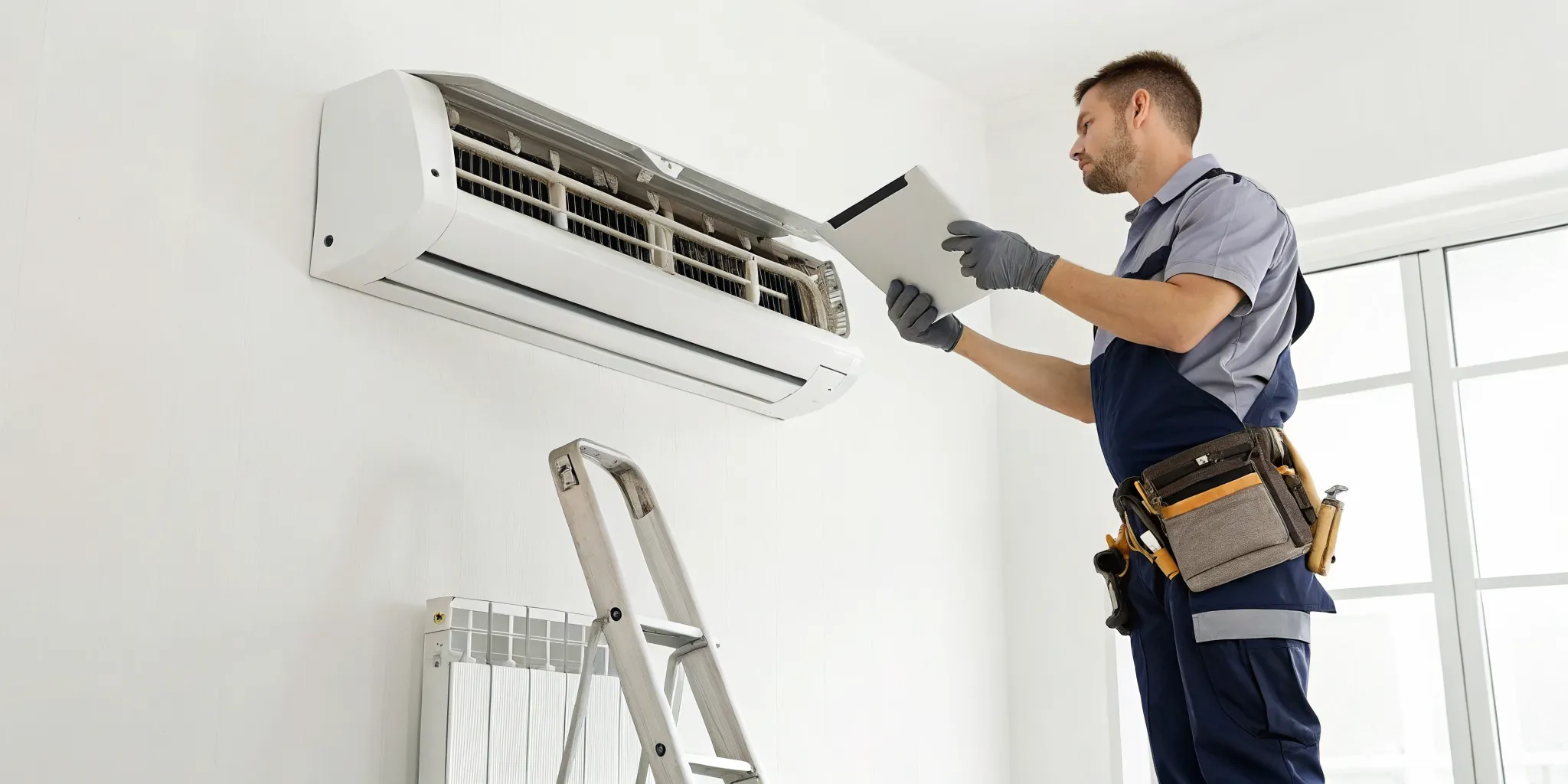
A major repair estimate often forces you into a tough decision: should you fix your current air conditioner or is it time to replace it? The answer hinges on understanding the numbers. Before you can weigh your options, you need a clear picture of how much does AC repair cost for your specific problem. A small, inexpensive fix on a newer unit is an easy choice. But when you’re looking at a bill for thousands of dollars on an older system, the math gets more complicated. We’ll explore the costs of fixing specific parts to help you use guidelines like the 50% rule and make the best financial decision for your household.
Key Takeaways
- Know What Goes Into a Quote: The cost of an AC repair isn't one-size-fits-all; it depends on the specific part that failed, your unit's age, and even your location, which is why a simple capacitor fix is much cheaper than a full compressor replacement.
- Use the 50% Rule to Decide: If a repair quote is more than half the cost of a new AC unit, it's usually time to consider a replacement, especially for systems over 10 years old or those that use the outdated R-22 refrigerant.
- Be Proactive to Save Money: The best way to control repair costs is through prevention. Scheduling yearly maintenance, changing your air filters, and fixing small problems early can help you avoid expensive emergency breakdowns.
How Much Does AC Repair Cost?
Let’s get straight to it: when your air conditioner stops working on a hot day, the first thing you want to know is how much it will cost to fix. The honest answer is, it depends. The final price tag for an AC repair can vary widely based on what’s wrong, the parts needed, and even the time of day you call. But you don’t have to go in blind. Understanding the typical costs and what goes into them can help you feel more prepared. We’ll break down the common price ranges and fees so you know what to expect when you get a quote.
Price Ranges for Common Repairs
Most simple AC repairs, like fixing a faulty capacitor or clearing a clogged drain line, will fall into a predictable range. Generally, you can expect to pay between $150 and $650 for many common fixes. This covers the most frequent issues that technicians see. However, if the problem is more severe, the cost will go up. Major repairs involving critical components like the compressor or evaporator coil can be significantly more expensive, sometimes running into the thousands. The wide range in HVAC repair costs reflects the difference between a quick fix and a complex part replacement.
Understanding Service Call & Emergency Fees
Before any work begins, most HVAC companies charge a service call fee, sometimes called a trip charge. This fee typically ranges from $50 to $200 and covers the technician's time and travel to diagnose the problem. In many cases, if you decide to move forward with the repair, this fee is applied toward the total cost of the service. It’s also important to know that emergency calls come at a premium. If you need a repair on a weekend, holiday, or late at night, expect to pay a higher hourly rate, sometimes double or triple the standard charge. Planning for these initial fees helps avoid surprises on your final bill.
Bay Area vs. National Repair Costs
Where you live plays a big role in what you’ll pay for an AC repair. National averages are a good starting point, but costs in the Bay Area, Central Valley, and Sacramento are often higher. This is due to the higher cost of living, which affects everything from fuel and parts to local labor rates. So, while a repair might cost a certain amount in another part of the country, you should anticipate that prices here will be on the upper end of that scale. When you get a quote for our residential services, you can be confident that the pricing is transparent and competitive for our region, reflecting the quality and expertise required to get the job done right.
What Factors Influence Your AC Repair Bill?
When your air conditioner stops working, the first question on your mind is likely, "How much will this cost me?" The truth is, there’s no single answer. The final price on your repair bill depends on several key variables, from the age of your unit to the time of day you call for help. Understanding these factors can help you make sense of your repair estimate and feel more confident about the work being done. It’s not about finding the cheapest fix, but about getting the best value for your home and budget. Below, we’ll walk through the main elements that determine the cost of an AC repair, so you know exactly what to expect.
Your Unit's Age and Condition
Think of your AC unit like a car: as it gets older, repairs can become more frequent and more expensive. If your system is over 10 years old, a seemingly small issue might be a symptom of a larger, more critical failure. Parts naturally wear down over time, and what starts as a minor fix can quickly turn into a major expense. An older unit may also be less efficient, costing you more on your energy bills each month. That’s why it’s important to weigh the cost of a repair against the age of your system. Pouring money into an aging unit isn't always the most economical choice in the long run.
The Type and Complexity of the Repair
Not all repairs are created equal. Replacing a simple component like a capacitor or fuse is a relatively quick and inexpensive job. However, fixing a major part like the compressor or evaporator coil is a different story. These are some of the most complex and costly repairs because the parts themselves are expensive and the labor is intensive. A technician needs specialized skills and more time to complete these jobs correctly. The average central air conditioning repair cost can range from a couple of hundred dollars to several thousand, largely depending on which part has failed and how difficult it is to replace.
Your Location and Local Labor Rates
Where you live plays a significant role in your final repair bill. Labor rates for skilled technicians vary from one city to another, often influenced by the local cost of living and doing business. For example, repair costs in a major metropolitan area like the Bay Area are typically higher than in a smaller town. This difference reflects higher overhead costs for the company, including wages, insurance, and fuel. When you get an estimate, you’re paying for a technician’s time and expertise, and those rates are shaped by the local economy. At Airteks, we provide clear, upfront pricing for all our residential services across Northern California.
Warranty Status and Parts Availability
Before you schedule a repair, it’s always a good idea to check if your AC unit is still under warranty. A manufacturer’s warranty often covers the cost of the replacement part itself, which can save you a significant amount of money. Keep in mind that most warranties do not cover the labor required to install the new part, so you will still be responsible for that portion of the bill. Another factor is parts availability. If your unit is an older or less common model, finding the right replacement part can be challenging and more expensive, which can affect the total cost and timeline of the repair.
The Time of Year
The timing of your AC breakdown can have a big impact on the cost. If your system fails during a scorching heatwave, on a weekend, or in the middle of the night, you’ll likely need emergency service. These after-hours calls almost always come with a higher price tag to cover the technician's overtime pay. HVAC companies are busiest during extreme weather, and demand for service skyrockets. This is why scheduling regular HVAC maintenance is so valuable. A routine check-up can catch small problems before they turn into major, inconvenient, and expensive emergencies.
How Much to Fix Specific AC Parts?
When your air conditioner suddenly stops working on a hot day, the first question that probably pops into your head is, "How much is this going to cost?" The answer really depends on which part of the system has failed. An AC unit is a complex machine with many interconnected components, and the price of a repair can range from a minor inconvenience to a major investment. Getting familiar with the potential costs for different parts can help you budget for the repair and feel more confident when you talk to a technician.
Think of it like taking your car to the mechanic. Replacing a fuse is a quick and easy job, but replacing the engine is a different story. The same principle applies to your HVAC system. Understanding the function of each part and its general repair cost demystifies the process. It allows you to have a more informed conversation about your options and ensures you know what you’re paying for. Let's break down some of the most common AC repairs and their typical price ranges so you have a better idea of what to expect before you make the call for a professional repair.
Capacitors and Fuses
Capacitors and fuses are small electrical parts that are essential for starting your AC and keeping it running smoothly. A faulty capacitor is one of the most common reasons for an AC unit to stop working, especially on a hot day when it's working overtime. Luckily, this is one of the more affordable fixes. A professional can typically replace a capacitor or fuse quickly, preventing a chain reaction of more serious electrical problems. Think of it as a small repair that saves you from a much bigger headache down the line.
The Compressor
The compressor is often considered the heart of your air conditioning system. It’s a powerful pump that circulates refrigerant between the indoor and outdoor units to cool your home. Because it’s such a critical and complex component, a compressor replacement is one of the most expensive AC repairs you can face. This significant cost is exactly why we always stress the importance of routine service. Keeping your system in top shape with regular HVAC maintenance is the best way to protect the compressor and help it last as long as possible.
Evaporator and Condenser Coils
Your AC has two sets of coils that are essential for the heat exchange process that cools your home. The evaporator coil, located in the indoor unit, absorbs heat from your air. The condenser coil, in the outdoor unit, releases that heat outside. Over time, these delicate aluminum coils can corrode or get damaged, leading to refrigerant leaks. Replacing either of these coils is a labor-intensive job that involves significant costs for both the parts and the service time, making it a pricier repair.
Refrigerant Leaks and Recharges
Refrigerant is the special substance that allows your AC to absorb heat and cool the air. If your system has a leak, it won’t just stop cooling efficiently; the low refrigerant level can also cause serious damage to the compressor. A technician will need to find and fix the leak before recharging the system with the correct amount of refrigerant. The cost for this service can vary widely because it depends on the type of refrigerant your unit uses and how much is needed. Simply adding more refrigerant without fixing the leak is only a temporary fix that doesn't solve the underlying problem.
Fan Motors
Your air conditioner has two fans: one inside (the blower) that circulates cool air through your home, and one outside that helps release heat from the condenser coil. If either of these fan motors fails, your system can’t move air properly and may overheat or freeze up. Replacing a fan motor is a mid-range repair in terms of cost. While it’s not as expensive as replacing a compressor, it’s a repair you’ll want to get done quickly to restore your home’s comfort and prevent further damage to the system.
Thermostats and Circuit Boards
The thermostat is your direct link to the HVAC system, while the circuit board is the electronic brain that controls all its operations. If your AC is acting erratically, turning on and off randomly, or won't turn on at all, the issue could be one of these components. A thermostat replacement can be a simple fix, with costs varying based on whether you choose a basic model or a smart thermostat with more features. A new circuit board can also solve a lot of frustrating electrical issues and get your system running reliably again.
Drain Lines and Pans
As your AC cools the air, it pulls moisture out of it in the form of condensation. The drain line and pan are responsible for safely collecting and removing that water from your home. If the drain line gets clogged with algae or debris, water can back up and overflow the drain pan, potentially causing serious water damage to your ceilings, walls, or floors. Clearing a clog is usually a simple, low-cost fix. Replacing a cracked drain pan is also a relatively inexpensive repair that prevents a much bigger, messier problem.
Should You Repair or Replace Your AC Unit?
Deciding whether to fix your current air conditioner or invest in a new one is a major decision. On one hand, a repair can be a quick, less expensive fix. On the other, a new unit could save you money and headaches in the long run. There isn't a single right answer for everyone, but by looking at a few key factors like cost, age, and efficiency, you can make a confident choice for your home or business. Let's walk through the things you should consider to figure out the best path forward.
What Is the 50% Rule?
A great starting point for this decision is the 50% rule. It’s a simple guideline: if the cost of a repair is more than half the cost of a brand-new air conditioning unit, replacement is usually the more economical option. For example, if a new system costs around $7,000 and your repair is quoted at $4,000, you’re already spending a large chunk of money on a unit that will likely have more issues down the road. Applying that repair money toward a full air conditioning replacement gets you a reliable, efficient system with a fresh warranty, which is often a smarter long-term investment.
How SEER Ratings Affect Your Decision
Think of a SEER (Seasonal Energy Efficiency Ratio) rating like a car's MPG; the higher the number, the more efficient your AC is. Older units, even those from just a decade ago, often have SEER ratings between 10 and 13. Modern systems can have ratings of 20 or higher, and they use 30-50% less energy to cool your space. While a new unit is a significant upfront cost, the monthly savings on your electricity bill can be substantial. Upgrading can help offset the initial price over time, making it a financially savvy move that also reduces your energy consumption.
Dealing with an R-22 Refrigerant Unit
If your air conditioner was manufactured before 2010, it likely uses a refrigerant called R-22, or Freon. Due to environmental concerns, R-22 has been phased out of production, which means it's now incredibly expensive and difficult to find. A simple refrigerant leak, which might have been a straightforward fix years ago, is now a major expense, with R-22 costs sometimes exceeding $200 per pound. If your technician tells you that your system uses R-22, sinking money into a repair is often not worth it. It’s a strong signal that it’s time to contact us about upgrading to a modern, compliant system.
Telltale Signs You Need a Replacement
Sometimes your AC gives you clear hints that it’s nearing the end of its life. If you find yourself nodding along to this list, a replacement is likely on the horizon. Consider replacing your unit if it's more than 10-15 years old, as this is the typical lifespan for most systems. Also, if you’re constantly calling for repairs or have spent over $1,500 in the last year alone, you're probably better off putting that money toward a new unit. Other signs include a sudden and sustained increase in your energy bills or if your system simply can't keep your home cool during those hot summer days.
When to Choose Repair Over Replacement
Of course, replacement isn't always the answer. If your air conditioner is relatively new (under 10 years old) and has been well-maintained, a repair is often the right call. This is especially true if the issue is minor, like a faulty capacitor, a blown fuse, or a clogged drain line. These types of air conditioning repairs are typically inexpensive and can get your system running smoothly again without the major expense of a full replacement. As long as the repair cost is well under the 50% rule and your unit is still running efficiently, fixing it is a perfectly reasonable choice.
How to Save Money on AC Repairs
An unexpected AC repair bill can throw a wrench in anyone’s budget. The good news is that you have more control over these costs than you might think. By taking a few proactive steps, you can prevent many common issues, reduce the severity of problems that do pop up, and make sure you’re getting a fair price for any work you need done. Think of it as simple preventative care for one of your home’s most important systems.
Schedule Regular Maintenance
The single best way to avoid expensive, surprise repairs is to schedule regular professional maintenance. Setting up a tune-up for your AC can keep it running efficiently and help a technician spot potential issues before they turn into catastrophic failures. During a maintenance visit, a pro will clean the coils, check refrigerant levels, test electrical components, and make sure the whole system is in good working order. This small investment each year can save you hundreds, or even thousands, on a future emergency AC repair.
Change Your Air Filters
This is one of the easiest and most effective DIY tasks you can do for your HVAC system. A dirty, clogged air filter forces your AC to work much harder to circulate cool air, putting unnecessary strain on its components. Regularly changing your air filters can improve efficiency and reduce the wear on your system, which helps prevent costly repairs down the road. Check your filter once a month and replace it when it looks dirty, or at least every three months. It’s a five-minute job that has a huge impact on your system’s health and your energy bills.
Fix Small Problems Early
Have you noticed your AC making a strange noise, or is one room not getting as cool as it used to? Don't ignore these little warning signs. Small issues can quickly snowball into major, expensive ones, especially in an older unit. A rattling sound might just be a loose part that’s easy to fix now, but if left alone, it could damage the entire system. Addressing minor problems promptly is much more affordable than waiting for a complete breakdown on the hottest day of the year. If something seems off, it’s always best to contact a professional to get it checked out.
Check Your Warranty First
Before you approve any repair work, take a moment to find your AC unit’s warranty information. If your system is still under warranty, the manufacturer might cover the cost of expensive parts like a compressor or condenser coil. You will likely still have to pay for the technician's labor, but having the parts covered can save you a significant amount of money. Most manufacturers have a website where you can look up your warranty status using the unit’s serial number. It’s always worth a quick search.
Get a Second Opinion
If you’re facing a major repair with a hefty price tag, it’s completely reasonable to get a second opinion. Another qualified technician may diagnose the problem differently or offer a more competitive price for the same job. While you don’t want to delay urgent repairs, taking an extra day to get another quote for a non-emergency issue can give you peace of mind and ensure you’re getting a fair deal. A trustworthy company will understand your desire to be a savvy consumer and will provide a clear, detailed estimate for you to compare.
When to Call a Professional
While it’s tempting to roll up your sleeves and tackle an AC problem yourself, some jobs are best left to the experts. Knowing when to put down the tools and pick up the phone is key to avoiding a bigger, more expensive headache. Certain repairs are not only complex but can also be dangerous if you don’t have the right training and equipment. Handling electrical components or chemical refrigerants poses serious risks. Plus, a well-intentioned but incorrect fix can cause more damage to your system or even void your manufacturer’s warranty. Think of calling a professional not as giving up, but as making a smart, strategic decision to protect your home and your investment.
Repairs You Shouldn't DIY
It’s one thing to change your air filter, but it’s another entirely to start tinkering with your AC unit’s internal parts. If your air conditioner is more than a decade old, what seems like a minor hiccup could be a sign of a much larger problem that a DIY fix won't solve. Complex systems like central air conditioners have intricate electrical wiring and components that require specialized knowledge. Attempting to fix refrigerant leaks, for example, is illegal without proper certification and can be harmful to you and the environment. Other hands-off repairs include replacing the compressor, capacitors, or circuit board. These tasks involve high-voltage electricity and are best handled by a trained technician who can perform the residential services safely and correctly.
How to Choose a Local HVAC Contractor
Once you’ve decided to call for backup, finding the right person for the job is the next step. Hiring a qualified local HVAC company ensures your system is repaired correctly and, just as importantly, preserves your manufacturer's warranty. A local contractor will also be familiar with the specific climate needs and building codes in your area. When vetting companies, look for one that is licensed, bonded, and insured. Check online reviews and ask for upfront, transparent pricing. Professional HVAC repair costs can vary, so getting a clear estimate helps you avoid surprises. If you’re looking for an honest recommendation and quality workmanship in the Bay Area, feel free to contact us for an assessment.
Frequently Asked Questions
Why can’t I get a single price for an AC repair over the phone? Think of it like calling a mechanic and asking how much it costs to fix a "weird noise" in your car. Without seeing it, they can't give you an accurate price. The same goes for your AC. The final cost depends entirely on what the technician finds during their diagnosis. A simple fix like a new fuse is much different from a complex job like replacing the compressor. The price is determined by the specific part needed, the time it takes to do the work, and your location.
My AC is over 10 years old but the repair seems minor. Should I still fix it? This is a tough spot to be in, but it's smart to think about the long-term picture. If your system uses the outdated R-22 refrigerant, even a small leak can become a very expensive repair. It's also worth considering the 50% rule: if the repair costs half as much as a new unit, replacement is often the better investment. Pouring money into an aging system can feel like a losing battle, so weighing the repair cost against the age and efficiency of your unit is key.
What’s the single most effective way to avoid a huge repair bill? Hands down, the best thing you can do is schedule regular professional maintenance. An annual tune-up is your best defense against unexpected breakdowns. During a service visit, a technician can clean essential parts, test components, and spot small issues before they turn into system-wide failures. This proactive step keeps your AC running efficiently and can save you a significant amount of money and stress down the road.
If a repair is needed, what does the total cost include besides the broken part? Your final bill covers more than just the new component. It includes the service call fee, which pays for the technician's travel time and expertise in diagnosing the problem. It also covers the skilled labor required to perform the repair correctly and safely. Finally, local market rates play a role; the cost of doing business in the Bay Area, for example, will be different from other regions, and that's reflected in the pricing.
Is it okay to just add more refrigerant if my AC isn't cooling well? No, this is a common misconception that can lead to bigger problems. Your air conditioner is a closed system, so if it's low on refrigerant, it means there is a leak somewhere. Simply topping it off without fixing the leak is like putting air in a tire with a nail in it; it’s a temporary fix at best. Continuing to run the system with a leak can cause severe, and very expensive, damage to the compressor. The correct approach is to have a professional find and repair the leak first.
Comments