
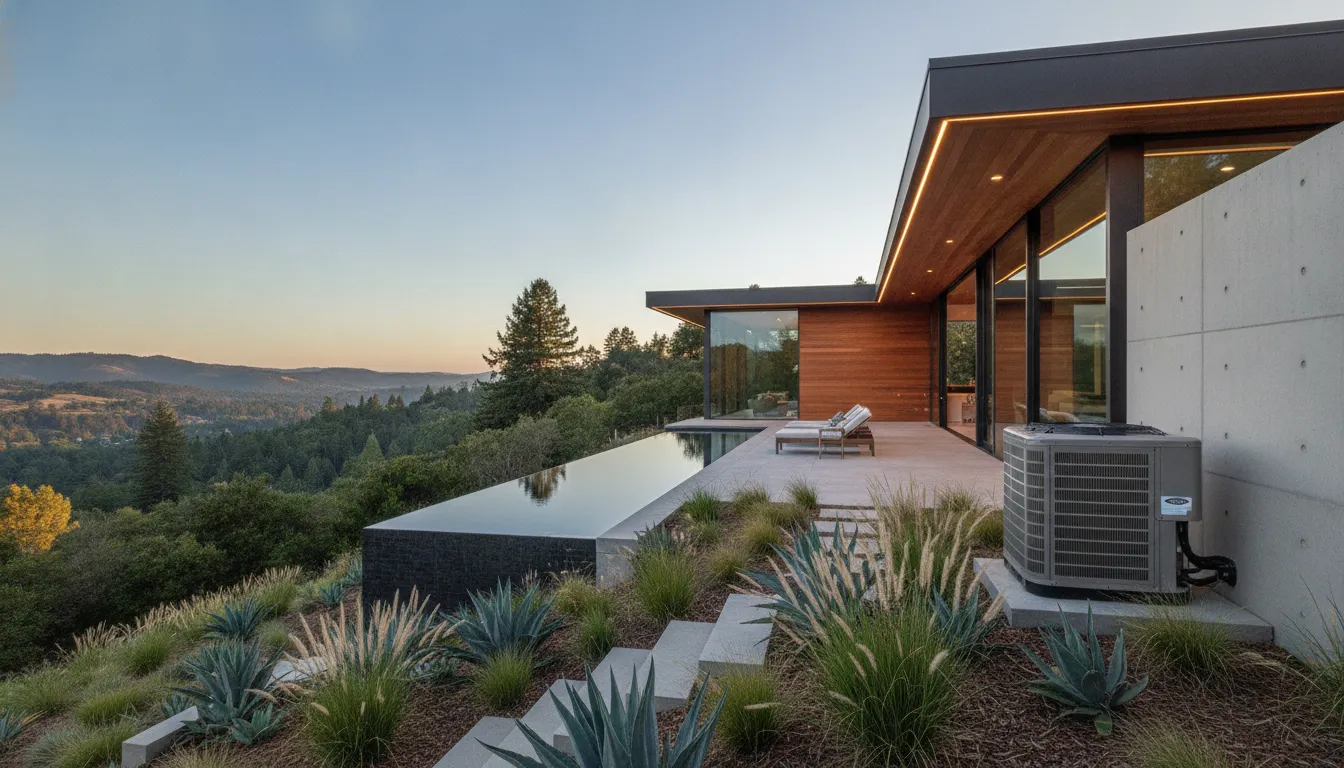
What Is a Residential HVAC System?
A residential HVAC system controls temperature, airflow, and indoor air conditions. HVAC stands for heating, ventilation, and air conditioning. A typical system may include a furnace or heat pump for heating, an air conditioner or heat pump for cooling, ductwork, filters, a blower, and a thermostat.
Heating and cooling
A furnace creates heat, while a heat pump transfers heat between the inside and outside of your home. An air conditioner removes heat from indoor air and releases it outdoors. Some homeowners use separate heating and cooling equipment, while others choose a heat pump that can provide both.
Ventilation, filtration, and airflow
Ducts move conditioned air to rooms and return indoor air to the system. Filters help capture particles before air circulates again. A dirty filter, blocked return, leaking duct, or failing blower can reduce airflow and make the system work harder. If rooms feel uneven, odors persist, or airflow drops, schedule an inspection rather than guessing at the cause.
For residential service options, visit Airteks residential HVAC services. If your system is not heating or cooling correctly, review residential HVAC repair.
How the controls work together
Your thermostat signals the system to heat or cool. The equipment then conditions air, and the blower and ductwork distribute it. Correct sizing, clean components, sound ductwork, and a properly calibrated thermostat all affect comfort and operating cost.
Which HVAC System Is Best for a Northern California Home?
There is no single best system for every Northern California home. The right choice depends on existing ductwork, available electrical or gas service, insulation, room layout, noise preferences, budget, and the climate where you live.
| System | Often fits | Planning considerations |
|---|---|---|
| Central split system | Homes with usable ductwork | Inspect ducts, returns, airflow, and equipment sizing before replacement. |
| Ductless mini-split | Homes or additions without convenient ductwork | Plan indoor-unit locations, outdoor-unit placement, and room-by-room comfort. |
| Heat pump | Homeowners seeking one system for heating and cooling | Review electrical service, comfort preferences, backup heat needs, and local climate. |
| Furnace and air conditioner | Homes suited to separate gas or electric heating and central cooling | Match the equipment to the home and verify safe, efficient operation. |
Central split systems
Central systems can provide whole-home conditioning when ductwork is properly designed and maintained. Before replacing an older unit, have the ducts, return air, insulation, and equipment size evaluated. Installing a new outdoor unit without addressing restricted airflow or leaking ducts may leave comfort problems unresolved.
Ductless mini-splits
Ductless systems can be useful for additions, rooms without ducts, or homeowners who want more zone control. The design should account for the number and placement of indoor units, outdoor clearances, drainage, controls, and the comfort needs of each zone.
Heat pumps
Heat pumps move heat rather than creating it directly. In the right home, one system can provide both heating and cooling. A professional should evaluate the home's envelope, electrical service, distribution system, and comfort expectations before recommending a heat pump. Learn more about Airteks residential heat-pump services.
Furnace and air conditioner combinations
A furnace paired with a central air conditioner remains a practical option for many homes. The equipment should be matched as a system, sized for the home, and installed with attention to combustion safety, refrigerant requirements, airflow, and controls.
How Does Northern California Climate Affect HVAC Choices?
Northern California includes coastal, Bay Area, inland, Central Valley, and Sacramento climates. A home near the coast may have different cooling and humidity needs from a home in Livermore or Sacramento. Climate is one input in the design, not a substitute for a home-specific evaluation.
Coastal Bay Area homes
Milder coastal conditions may reduce the need for extended cooling compared with hotter inland areas, but homes still need reliable heating, ventilation, and moisture management. Window exposure, insulation, duct condition, and room layout remain important.
Inland and Central Valley homes
Inland homes can experience long periods of high summer heat. Equipment selection should account for the home's cooling load, airflow, insulation, shade, windows, and ductwork. A larger unit is not automatically better. Oversized equipment may cycle too quickly, while undersized equipment may struggle to reach the thermostat setting.
Why load calculations and duct condition matter
A professional load calculation helps estimate the heating and cooling capacity a specific home needs. An evaluation should also consider insulation, air leakage, windows, orientation, ductwork, and the condition of existing equipment. This process supports a better installation decision than choosing equipment from square footage alone.
Should You Repair or Replace Your HVAC System?
Repair may make sense when the system is otherwise reliable, the problem is identified, and the repair restores safe operation. Replacement may be worth discussing when breakdowns are recurring, comfort remains uneven, parts are difficult to source, or the equipment no longer fits the home's needs. Age alone should not decide the outcome.
Ask a qualified HVAC professional to inspect the system and explain the options. Request a written estimate that separates diagnosis, repair, replacement equipment, installation work, and any recommended duct or electrical improvements. Airteks provides residential repair and replacement guidance without relying on a one-size-fits-all price.
What Happens During HVAC Installation?
A quality installation starts with an evaluation of the home and the existing system. The contractor should confirm the equipment selection, capacity, duct and return-air requirements, electrical or fuel connections, drainage, controls, clearances, and local code requirements.
After installation, the system should be tested for safe operation, airflow, temperature response, refrigerant or combustion-related requirements as applicable, thermostat operation, and unusual noise. Ask which maintenance steps are recommended and keep the equipment documentation and warranty information in a safe place. See residential HVAC installation services for the service pathway.
How Can You Maintain an HVAC System Year-Round?
Maintenance reduces avoidable strain and helps identify problems before a peak-season failure. The exact schedule depends on the system, household conditions, manufacturer guidance, and how heavily the equipment is used.
- Check the filter regularly and replace it according to the manufacturer's guidance and household conditions.
- Keep supply vents and return grilles open and clear.
- Keep the outdoor unit area free of leaves, stored items, and other obstructions.
- Schedule a professional cooling check before the hottest part of the year.
- Schedule a professional heating check before the main heating season.
- Pay attention to new noises, odors, weak airflow, short cycling, or rooms that no longer reach the set temperature.
- Keep service records and review both manufacturer and installer warranty terms.
Airteks can help homeowners plan recurring care through residential HVAC maintenance. For local coverage, review the Northern California service area map.
Frequently Asked Questions
How often should a homeowner schedule HVAC maintenance?
Many homeowners schedule one professional check before the cooling season and another before the heating season. Your contractor may recommend a different schedule based on equipment type, usage, manufacturer guidance, indoor air conditions, and the home's location.
How do I know whether my HVAC system needs repair?
Call for an evaluation when the system stops heating or cooling, airflow changes, rooms become uneven, the system cycles unusually, or new odors and noises appear. Turn off equipment that presents a safety concern and contact a qualified professional.
How do I choose the right HVAC size?
Equipment size should be based on a home-specific load calculation, not square footage alone. Insulation, windows, orientation, ductwork, air leakage, local climate, and desired indoor conditions all affect the result.
Are heat pumps a good choice for Northern California homes?
Heat pumps can be a good fit for some Northern California homes because they can provide heating and cooling. A professional should review the home, electrical service, distribution system, backup-heat needs, and comfort goals before making a recommendation.
Where does Airteks provide residential HVAC service?
Airteks serves homeowners across Northern California, including the Bay Area, Central Valley, and Sacramento region, with service areas that include Livermore, Pleasanton, Walnut Creek, Alameda County, Contra Costa County, San Joaquin County, Santa Clara County, and Napa County. Confirm availability for your specific address when you call.
How can I request residential HVAC service?
Contact Airteks online or call (925) 292-0148 to discuss repair, installation, replacement, maintenance, or heat-pump service.
Plan Your Home HVAC Service
Whether your home needs a repair, a replacement discussion, a new installation, or seasonal maintenance, a professional evaluation can help you choose the next step with better information.
Call Airteks at (925) 292-0148 to schedule dependable residential HVAC service in Northern California.
Comments