
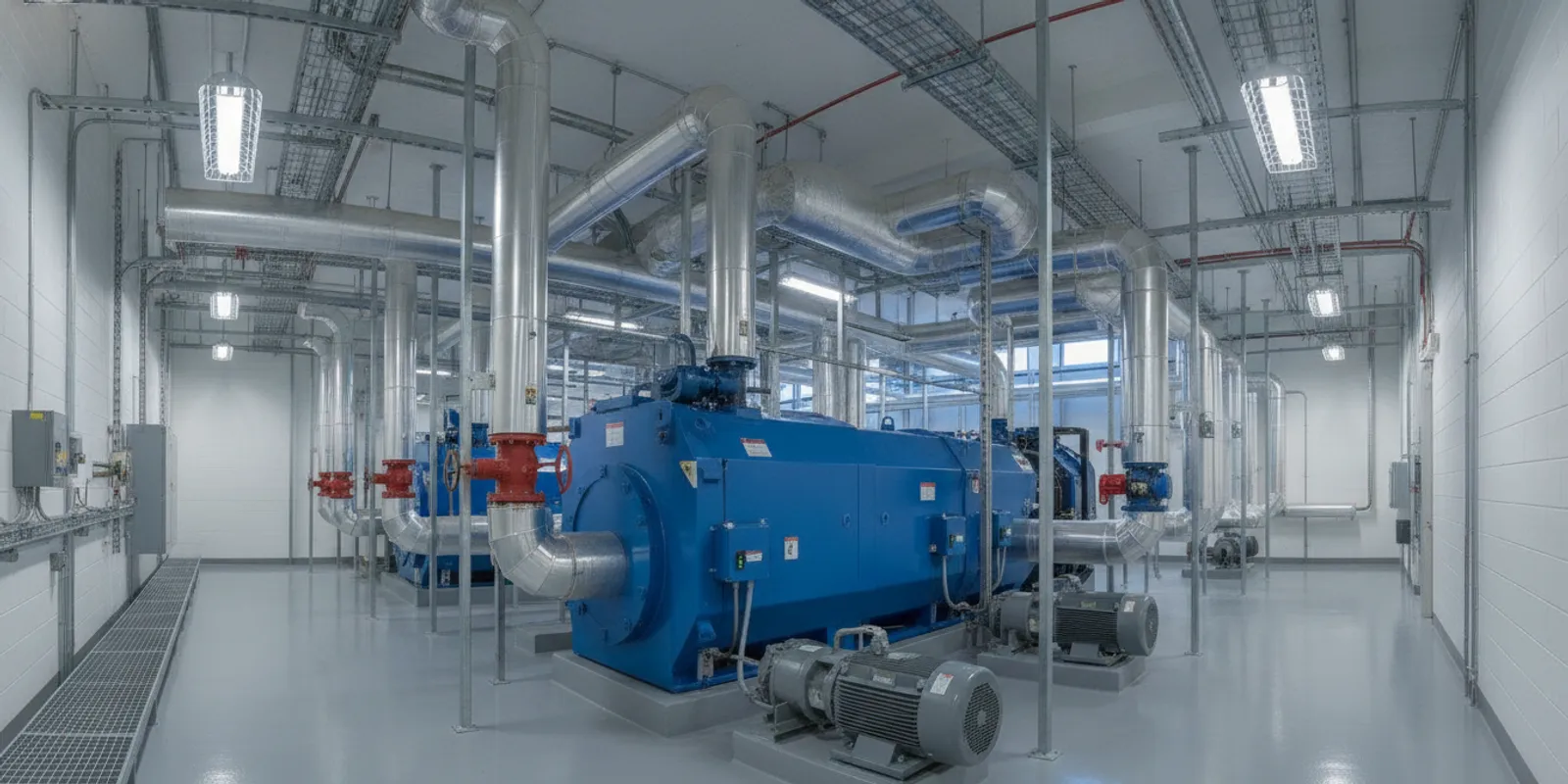
Chilled water HVAC maintenance in Northern California is easier to plan when facilities teams know which parts of the system to monitor, what changes deserve attention, and when to bring in a qualified technician. A chilled water system connects equipment in the mechanical room with coils and controls throughout a building, so a problem in one area can affect comfort elsewhere. Use this guide to organize observations and service decisions; equipment-specific work should follow the manufacturer's instructions and be handled by qualified professionals.
Talk with Airteks about your facility's HVAC needs
Call Airteks at (925) 292-0148
What does chilled water HVAC maintenance cover?
A chilled water system moves cooling energy through water rather than sending refrigerant directly to every occupied space. A chiller cools the water, pumps circulate it through a distribution loop, and coils in air handlers or fan coil units transfer cooling to building air. Depending on the system, heat rejection may involve a cooling tower, condenser water loop, or another arrangement. Controls coordinate the equipment and respond to building demand.
Maintenance is therefore more than a single chiller inspection. A useful plan considers the connected system, including:
- Chiller: operating status, alarms, visible condition, and service history.
- Water pumps and motors: unusual noise, vibration, leakage, and operating status.
- Piping and valves: visible leaks, damaged insulation, corrosion, and access to shutoff or balancing components.
- Air-side equipment: air handlers, coils, filters, condensate drainage, fans, and dampers.
- Controls: schedules, setpoints, sensor readings, alarms, and communication between equipment.
- Heat rejection equipment: where installed, its condition and maintenance needs under the applicable manufacturer and water-treatment requirements.
The exact scope varies with equipment type, building use, system age, and maintenance history. Facilities teams should use this list to frame a conversation, not as a substitute for the chiller manufacturer's service procedures or a site-specific maintenance plan. For broader commercial heating and cooling needs, see Airteks' commercial HVAC services.
Why does the system need a whole-building view?
Chilled water equipment works as a chain. The chiller may produce water at its expected condition, yet a pump, valve, coil, control sequence, or airflow restriction can keep that cooling from reaching a particular space. Likewise, a central alarm may point to a condition that affects several zones, while an isolated complaint may originate in terminal equipment or local controls. A maintenance review that records only the chiller's status can miss the distinction.
When documenting a concern, connect the symptom to its location and timing. For example, note whether several floors became warm at once or whether one conference room is consistently uncomfortable after lunch. Record whether the issue occurs during occupied hours, after a schedule change, or only when outdoor conditions are demanding. This context helps a technician decide what parts of the system to examine and makes the service report more useful to the facilities team.
Which chilled water components should facilities teams watch?
Routine observation helps staff describe a change before it becomes a larger comfort or operating issue. It does not mean opening equipment, adjusting refrigerant circuits, or making changes to electrical or water-treatment systems. Record what you can see safely and leave technical diagnosis to a qualified service professional.
Chiller and control panel
Check for active alarms, unexpected shutdowns, repeated resets, or operating readings that differ from the facility's normal pattern. Keep a simple log of the date, affected area, alarm message, and conditions when the issue appeared. A single reading rarely tells the whole story; the trend and the conditions at the time matter. Do not clear recurring alarms without understanding why they occurred.
Make the log consistent. Use the same units and record the displayed value, timestamp, equipment name, and whether the building was occupied. If staff are authorized to review operating screens, capture the relevant screen or alarm text without changing settings. A note such as “high temperature alarm” is less useful than the exact message, the time it appeared, whether it cleared on its own, and which equipment was running. Do not treat an isolated value as proof of a fault; operating readings depend on system design and current load.
Pumps, piping, and valves
Look for new water around equipment, damaged pipe insulation, unusual sounds, or vibration that was not present before. Note the location and whether the observation is persistent or intermittent. Do not touch hot, moving, or energized components, and do not tighten fittings or change valve positions unless that is part of your authorized operating procedure.
When recording a possible leak, describe whether water is actively dripping, collecting on the floor, or appearing as damp insulation. Identify nearby equipment and whether the area is close to electrical components. Use the building's response procedure for water or electrical hazards, and keep people away from a potentially unsafe area. For a noise or vibration, state when it occurs and whether it changes with equipment operation. These details are safer and more useful than trying to inspect behind guards or operate valves.
Air handlers, coils, and condensate drainage
Cooling coils transfer energy from the chilled water to the air. Restricted airflow, a dirty filter, a control issue, or a drainage problem can affect comfort even when the chiller is running. Check accessible areas for visible water, blocked airflow, or unusual odors, and report recurring concerns. ENERGY STAR's maintenance checklist includes checking condensate drains in central air-conditioning equipment; it is general HVAC guidance and is not a chilled-water chiller service procedure.
For complaints near an air handler, note which rooms it serves if that information is available, whether the complaint is limited to one room, and whether airflow seems different from normal. Do not remove panels or reach into a fan or coil section. A blocked condensate drain can cause water to appear away from the central plant, so tell the service provider exactly where moisture was found and whether it returned after cleanup.
Building controls and occupied spaces
Ask whether complaints are limited to one zone, one floor, or the whole building. Compare the reported area with control schedules and accessible temperature readings, and note whether the problem occurs at a particular time of day. A pattern limited to one area may direct the investigation toward an air handler, terminal unit, sensor, or zone control rather than the central plant alone.
Review recent changes as well as present readings. A revised schedule, space use, setpoint, or occupancy pattern can change demand and may explain why a familiar system behaves differently. Record the change and who authorized it, if known. Avoid making multiple adjustments while a problem is being diagnosed; doing so can hide the original condition and make it harder to compare before-and-after performance.
How can you plan chilled water HVAC maintenance through the year?
There is no single service calendar that fits every chiller and building. Equipment manuals, operating hours, system design, local conditions, and prior findings should guide the schedule. Northern California facilities may experience different loads and operating seasons across the Bay Area, Central Valley, and Sacramento region, so base the timing on the building's actual demand rather than a generic date.
- Review the previous season. Collect work orders, alarm histories, comfort complaints, service reports, and any periods when equipment could not meet demand. Identify repeat issues rather than treating each visit as unrelated.
- Agree on a service window. Plan around occupancy, business operations, school schedules, access restrictions, and any required notice. Confirm how the building will be affected if equipment needs to be unavailable during inspection or repair.
- Confirm system scope. Identify the equipment included in the visit: chiller, pumps, heat rejection equipment if present, air handlers, controls, and related components. Clarify what is visual inspection, what is testing, and what requires separate approval.
- Review findings and follow-up. Ask for documented observations, recommended actions, urgency, and any operating limitations. Assign an owner and due date for follow-up so recommendations do not disappear into a service file.
- Update the plan. After the work, revise equipment records and note any changed risks, access needs, or recurring conditions. The next service visit can then build on what was actually found.
Facilities with multiple locations can benefit from using the same basic log fields across sites, while still keeping each system's specifications and service history distinct. Airteks serves commercial clients across Northern California, including the Bay Area, Central Valley, and Sacramento region. Its commercial service areas page provides additional regional context.
How should you choose the timing?
Start with the building's operating calendar and the equipment manufacturer's recommended tasks. A facility that depends on cooling during most occupied hours may need a different work window from a building with a short cooling season. Consider when a shutdown or reduced capacity would create the least disruption, but do not postpone a safety concern or active failure simply to reach a preferred seasonal window.
Separate work that can be scheduled from work that depends on immediate findings. A planning meeting can establish access, escort requirements, notifications, and who can approve additional work. If a planned visit identifies a condition needing correction, the facility can then decide whether to schedule a separate repair, authorize work under an agreed process, or monitor the item. This distinction protects operations from surprise interruptions and gives managers time to coordinate budgets and occupants.
What records make seasonal planning easier?
Keep one current record for each major piece of equipment and connect it to dated service reports. Useful fields include equipment identifier and location, manufacturer and model if known, the date of each visit, reported symptoms, findings, work completed, parts or settings changed, and outstanding recommendations. Keep alarm history and comfort complaints with enough detail to compare recurring issues over time.
For a multi-building portfolio, use a shared format for the common fields but do not combine equipment histories. A spreadsheet or maintenance system can flag open recommendations by facility, responsible person, and target date. Before the next seasonal review, sort for repeat alarms, repeat comfort calls, and unresolved items. This makes the service discussion more specific than a general request to “check everything,” while preserving the differences among buildings.
What warning signs should prompt a service call?
Call for professional evaluation when the system repeatedly fails to maintain expected conditions, shuts down unexpectedly, shows recurring alarms, or develops a new leak, noise, or vibration. A sudden change affecting several occupied areas may warrant a more urgent response than a single isolated complaint. If water is near electrical equipment or there is another immediate safety concern, follow the building's emergency procedures and keep people away from the affected area.
Other useful triggers include:
- One zone remains uncomfortable despite the normal schedule and setpoints.
- Cooling performance drops after a service visit or an equipment change.
- Energy or operating patterns change noticeably without an obvious change in occupancy or weather.
- Staff repeatedly reset the same alarm or equipment without a documented resolution.
- Water appears near a coil, air handler, pump, or pipe joint.
- Maintenance records are incomplete, or the facility cannot confirm what was inspected previously.
A symptom is a reason to investigate, not proof that a particular component has failed. Write down when it began, what areas are affected, what alarms appeared, and what has already been tried. If the problem involves a commercial heating or cooling system beyond the chilled water plant, Airteks also provides commercial HVAC repair.
How urgent is the reported change?
Use impact and safety to decide the first response. An active leak near electrical equipment, an unexpected shutdown affecting a critical operation, or a concern that puts occupants at risk should be handled under the site's emergency procedures. For a recurring comfort complaint that affects one area without an apparent hazard, document the pattern and arrange evaluation through the normal service process. If multiple zones change at once, note the shared timing and operating conditions because that may help isolate a central issue.
Airteks notes 24/7 emergency availability for urgent HVAC issues. When contacting a service provider, state whether the condition is ongoing, whether the building remains occupied, and what immediate steps the facility has taken. Do not attempt a repair or bypass a safety device to restore operation. Clear communication about risk and impact helps the service team understand the call's urgency.
How do inspection, preventive maintenance, and repair differ?
These terms can describe different levels of work. Confirm what a proposed visit includes before scheduling, especially when a building needs a specific test, repair, or performance review. The table below is a planning aid; actual scope depends on the equipment and site conditions.
| Approach | Typical purpose | What to clarify | Best fit |
|---|---|---|---|
| Condition review | Document visible condition, operating concerns, alarms, and reported symptoms. | Which equipment is included? Will the provider deliver a written findings report? | Initial evaluation, incomplete records, or early investigation of a concern. |
| Preventive maintenance | Carry out planned, equipment-appropriate inspection and maintenance tasks. | Which tasks follow the manufacturer guidance? What access or shutdown is needed? | Facilities seeking a repeatable maintenance schedule and clearer service records. |
| Diagnostic service | Investigate a specific fault, recurring alarm, or performance problem. | What symptom is being investigated? What testing is included and what requires approval? | Unexpected operation, repeated complaints, or a change in system performance. |
| Repair or system improvement | Correct a confirmed problem or address a documented system need. | What is the diagnosed issue, proposed work, impact, and verification after completion? | A repair need or a planned project supported by site findings. |
Preventive work should not be treated as a promise that failures cannot occur. Its value is a consistent opportunity to inspect appropriate components, record conditions, and identify follow-up needs. For more on planned upkeep at a general HVAC level, review Airteks' HVAC maintenance information and preventative maintenance services.
What belongs in a useful service scope?
A clear scope identifies the equipment and tasks in plain language. It should distinguish the chiller from associated pumps, air handlers, controls, and heat rejection equipment where those components are part of the system. It should also explain whether the visit is a condition review, scheduled maintenance, diagnostic work, or a combination. Ask which tests are included, what requires separate authorization, whether the building needs to provide access or a shutdown, and what written documentation will be supplied.
For example, a request that says “check the chiller” may not address the air handler serving the affected office or the control schedule that changed recently. A more useful request identifies the equipment involved, the observed symptom, and what the facility needs to learn. The provider can then confirm whether the requested scope is appropriate or recommend a site assessment before setting the work plan.
What should you prepare before requesting service?
A short, accurate handoff helps the service team understand the building and the reported issue. Gather what is available; do not delay an urgent call because older records are missing.
- Facility address, primary contact, access instructions, and the preferred service window.
- Chiller and major component make, model, and age, if known.
- Photos of accessible equipment labels or visible conditions, without removing panels.
- Alarm codes and the date and time they occurred; avoid repeatedly clearing alarms before recording them.
- A description of affected floors, zones, or processes and whether the issue is constant or intermittent.
- Recent service reports, repair history, and any changes to schedules, setpoints, or occupancy.
- Known building requirements, such as escort rules, shutdown approvals, or notification procedures.
When asking for a proposal, request a defined scope and written deliverables. Ask how the provider will report findings, whether corrective work will be presented separately for approval, and how any recommended follow-up will be prioritized. Compare scope and documentation, not only the visit label. Airteks provides commercial HVAC solutions for businesses and institutions; its commercial service overview is a starting point for discussing facility needs.
How can you compare service proposals?
Compare what each proposal includes rather than relying on a broad label such as inspection or tune-up. Check whether the same equipment is covered, what tasks are planned, what records will be delivered, and whether operational coordination is included. A proposal that excludes controls, pumps, or connected air-side equipment may not answer a concern that spans the system. Ask the provider to mark any exclusions clearly so the facilities team can judge whether they matter for its needs.
Also clarify how additional work is handled. A maintenance visit may reveal a repair recommendation, but that does not automatically mean the repair is part of the scheduled scope. Confirm who can approve extra work, how the issue and proposed action will be documented, and whether the facility can review the recommendation before proceeding. This keeps decision-making clear and gives the building manager a record for internal approvals.
How should you evaluate maintenance findings?
Useful service documentation connects each observation to a next step. A report should make it possible for a facilities manager to understand what was checked, what was found, and what needs a decision. If a recommendation is unclear, ask the provider to explain the operating impact and what could happen if the action is deferred.
Separate findings into three practical groups:
- Immediate attention: a safety concern, active leak, shutdown, or condition that risks further disruption. Follow site procedures and agree on the appropriate response.
- Planned correction: a documented issue that needs repair but can be scheduled with operational planning. Confirm scope, dependencies, and access.
- Monitor and document: an observation without a confirmed failure that should be tracked or reviewed at the next visit. Set a date or trigger for reassessment.
Ask that unresolved items stay visible in the maintenance record. This avoids losing context when staff change, another contractor visits, or the same complaint returns. If multiple buildings are involved, identify the facility and equipment clearly in each record rather than combining unrelated observations.
What questions help clarify a recommendation?
Ask what was observed, how the observation was confirmed, which component is involved, and how the issue relates to the original complaint. Find out whether the system can continue operating safely while the facility plans the work, what conditions would require a faster response, and what a completed repair should change. If the recommendation is to monitor, agree on what should be recorded and when it should be reviewed again.
Then assign ownership. A facilities lead may coordinate access, while a building engineer updates logs and an operations manager approves a shutdown window. Keep the provider's report, the decision, and the completion record together. If the same alarm or comfort issue returns, the next investigation can start with the earlier findings rather than repeating the same initial questions.
Call Airteks at (925) 292-0148 to discuss commercial HVAC service
Frequently Asked Questions
How often should a chilled water system be serviced?
Use the equipment manufacturer's recommendations, operating conditions, system design, and service history to set the interval. A contractor can help build a site-specific schedule and identify which components require separate maintenance or testing.
Can building staff perform chilled water maintenance?
Staff can document comfort complaints, accessible readings, alarms, and visible changes within their normal safety procedures. Technical inspections, adjustments, and repairs should be assigned to qualified professionals and follow equipment requirements.
Does a running chiller mean the whole system is working correctly?
No. Pumps, valves, controls, coils, airflow, or zone equipment can affect building comfort even while the chiller is operating. A technician may need to review the connected system to find the cause.
What details are most helpful when reporting an issue?
Share when the issue began, which rooms or zones are affected, whether it is constant, any alarm message, and what changed beforehand. Include recent service information if available.
Can maintenance prevent every unexpected shutdown?
No maintenance plan can guarantee that equipment will never fail. Planned inspection and good records can help surface concerns and make it easier to respond with context when an issue occurs.
Thoughtful chilled water HVAC maintenance starts with clear system records, realistic service planning, and prompt attention to changes in operation. Airteks can discuss commercial HVAC needs for facilities across Northern California and help identify an appropriate next step.
Comments