
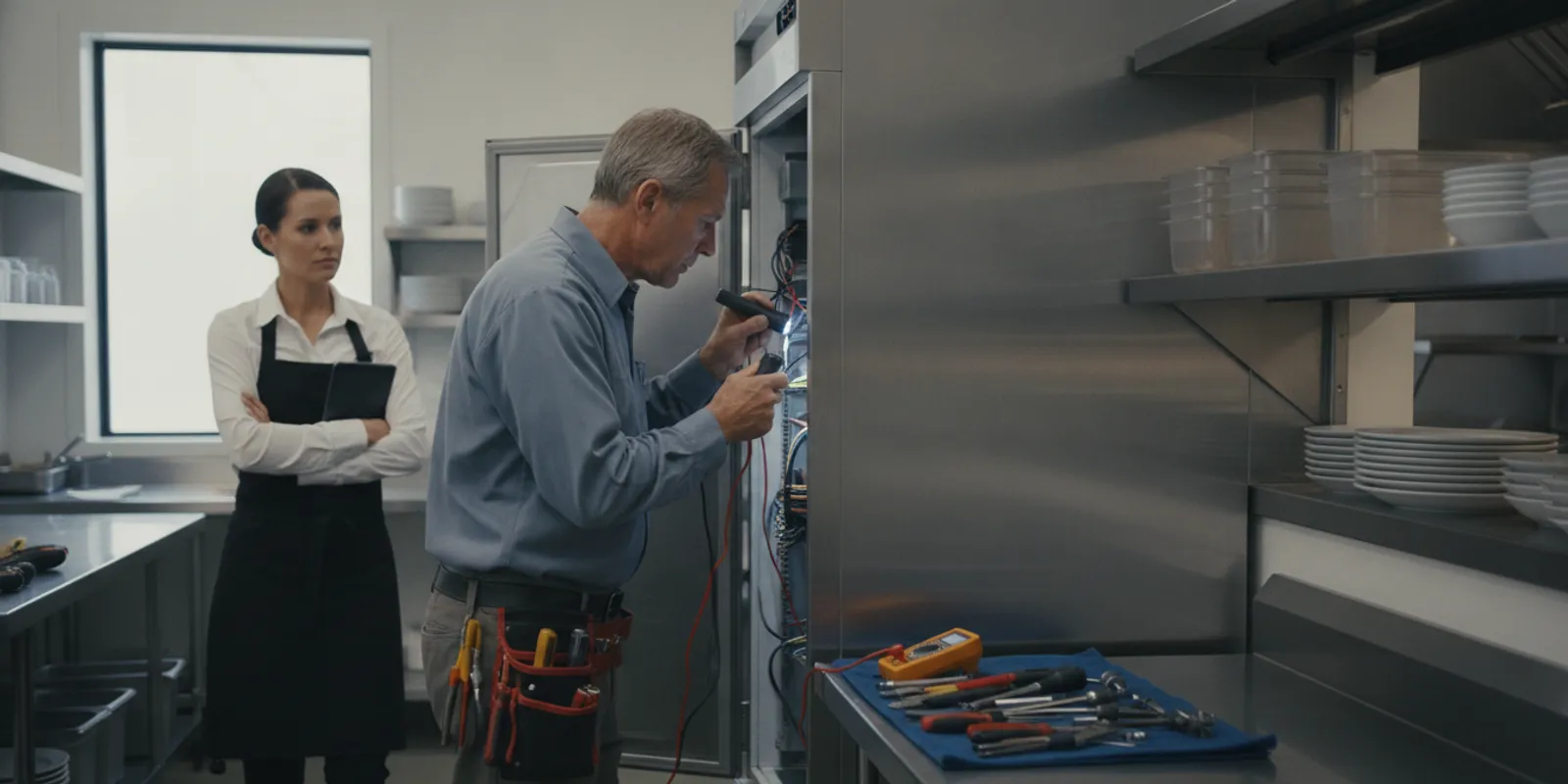
When a walk-in cooler, freezer, or display case stops holding temperature, the next decision can affect inventory, staff schedules, and daily operations. A thoughtful approach to commercial refrigeration repair in the Bay Area starts with documenting what changed, protecting people from unsafe equipment, and arranging a qualified assessment without guessing at the cause.
Call (925) 292-0148 to discuss the service need, or send Airteks a service request.
What should you know before arranging commercial refrigeration repair Bay Area service?
Start by recording what you observe rather than trying to diagnose the equipment. Note which unit is affected, what it is used to store, when the change began, and whether the condition is steady or intermittent. If the unit has a visible temperature display, record the reading and the time. A short timeline can help a technician distinguish a new problem from a condition that has been developing over several days.
Keep staff clear of damaged wiring, exposed moving parts, water near electrical equipment, and any area that seems unsafe. Do not remove access panels or work on refrigerant circuits. If you see smoke, smell burning, or notice an electrical hazard, follow your site’s safety procedures and contact the appropriate emergency responders before arranging equipment service.
For products that may be affected, follow your business’s established food, medicine, or inventory handling procedures. A refrigeration contractor can assess equipment, but your organization remains responsible for deciding what to do with stored products under its own applicable procedures. Avoid assuming that a unit is safe based only on how cold the air feels near the door.
Some basic observations can be useful if they are safe to make: confirm that the unit has power, check whether the door is closing, and note any visible alarm or unusual sound. Avoid repeatedly resetting controls or changing setpoints to mask a symptom. Record what staff have already tried and whether it changed the condition. Share those details during the service request.
Which details help a refrigeration technician assess the problem?
Clear information can make the first conversation more useful and help the service provider prepare for the visit. You do not need to know the failed part. Give a concise description of the behavior and the setting instead.
- Equipment and location: Identify the walk-in, reach-in, freezer, prep table, or display case, and give its location in the building.
- Observed change: Describe whether the unit is warmer than usual, cycling differently, making a new sound, leaking, or showing an alarm.
- Timing: Note when the symptom started, whether it is constant, and whether it follows a door opening, cleaning, delivery, or other change.
- Access and operating hours: Explain how a technician can reach the unit, whom to meet, and any delivery, security, or customer-area restrictions.
- Equipment information: If readily visible without opening panels, share the make, model, serial number, and any existing maintenance records.
- Previous work: Mention earlier service, recurring faults, or adjustments so a technician can consider the history.
For a multi-unit location, identify whether neighboring cases or other refrigeration equipment are working normally. This comparison does not prove a cause, but it gives useful context. Photos of a displayed alarm or visible damage may help too, provided staff do not put themselves at risk or delay necessary service to take them.
Businesses planning new cold-storage capacity can also review the considerations involved in walk-in cooler installation in the Bay Area. Repair and installation are different decisions, but an understanding of the equipment’s use and layout can help clarify what the business needs from either project.
What might the symptoms indicate, and what should you report?
A symptom is a starting point for inspection, not a diagnosis. Several conditions can look similar from the operator’s point of view. The table below helps organize observations for a service conversation; it does not replace an equipment assessment.
| What you observe | What to record | Useful next step |
|---|---|---|
| Temperature is not holding as expected | Display reading, time, affected compartments, and whether the reading changes | Share the timeline and arrange an equipment assessment |
| Unit runs for long periods or cycles unusually | When the pattern began, operating conditions, and any recent changes around the unit | Do not keep adjusting settings; report the pattern |
| Unusual noise or vibration | Where the sound seems to come from, when it occurs, and whether it is new | Keep clear of moving parts and describe the sound to the technician |
| Visible water, frost, or ice | Location, approximate amount, and whether it returns after cleanup | Protect nearby people and property; do not dismantle the unit |
| Alarm or control display changes | Exact display message or code, if visible, and when it appeared | Photograph the display if safe and provide the wording |
These observations help explain the service need, but a technician may need to inspect the equipment and operating conditions before identifying the cause. A fault in one part can affect performance elsewhere, and a visible symptom may not point to the underlying issue. A careful assessment should connect the reported behavior to what was inspected and what corrective work is proposed.
How can you plan access and reduce business disruption?
Before the visit, choose a point of contact who can describe the problem and approve access. Tell the service provider about check-in requirements, locked areas, loading docks, alarms, protective equipment rules, or times when the site is busiest. For restaurants and retailers, consider whether work near a customer-facing area needs to be coordinated around service hours. For schools, offices, and other managed properties, confirm who can authorize work and who needs updates.
Make the route to the unit clear and move movable items that block access, if safe and practical. Do not relocate stored products in a way that conflicts with your handling procedures. If the equipment is part of a larger system or connected to building controls, tell the technician what is known and identify the person who manages those controls. Airteks provides commercial HVAC services and works with commercial systems; explain the equipment and service need so the appropriate next step can be discussed.
Set expectations with staff before work begins. Let them know which area may be unavailable, who should relay new symptoms, and how to keep a clear path around equipment. If operations depend on more than one unit, identify the most critical equipment first. This helps the service conversation focus on business priorities without promising a repair outcome before an inspection.
For an urgent issue, Airteks offers 24/7 emergency response for HVAC issues and commercial refrigeration support throughout the year. A service provider will need the location, equipment type, symptoms, and access details to understand the request. Availability and the work that can be completed depend on the specific situation and assessment.
What should a commercial refrigeration repair Bay Area estimate explain?
A useful estimate should make the proposed work understandable. Ask the provider to describe the reported problem, what was inspected, the recommended correction, and any assumptions or limits. If a component is being replaced, ask which component and why. If more than one option is reasonable, ask what each option addresses and what it does not address.
Before approving work, clarify the scope and coordination details. For example, does the proposal cover diagnosis only, a specific repair, or follow-up verification? Are parts or additional work excluded until further approval? What access or shutdown is required? How will the technician communicate if inspection reveals a different issue? Getting these points in writing makes it easier to compare proposals and avoid a mismatch between the business’s expectations and the work authorized.
Price alone may not make two estimates comparable. One proposal might include a different scope, assumptions, parts, or verification steps than another. Compare the described work, timing, communication, and what happens if the initial correction does not address the symptom. Do not assume that the most detailed or the least expensive option is automatically the right one; ask questions until you understand the tradeoffs.
For businesses evaluating a provider, the Better Business Bureau’s San Francisco commercial refrigeration directory is one place to see directory listings. A listing is not a technical assessment or an endorsement. Check that a prospective provider can address your equipment and location, explain the proposed work, and meet your site’s practical requirements.
How can you confirm the service visit addressed the reported concern?
At the end of the visit, ask the technician to review what was inspected, what work was completed, and whether the original symptom was reproduced or otherwise evaluated. Confirm whether the unit was operating under the conditions relevant to the complaint. If a problem was intermittent and did not occur during the visit, ask what observations should prompt a follow-up and how to report them.
Keep the service record with the equipment log. Note the date, the reported concern, the findings, any work approved and completed, and recommendations that remain open. If a component or additional work was not included in the approved scope, record that too. This gives the next manager or technician a clear handoff rather than requiring staff to reconstruct the discussion later.
Set a practical follow-up plan with the people who operate the equipment. Tell them what change to watch for, who to notify, and when to escalate a returning symptom under the business’s procedures. Avoid assuming that a repair is confirmed simply because the unit restarted; the relevant check depends on the equipment, the complaint, and the work performed. Ask the technician what verification is appropriate for that specific service.
For companies coordinating several buildings, designate one contact to collect service records and another at each site who can provide access and operating details. A consistent process helps compare recurring reports without confusing one unit’s history with another. Airteks’ commercial HVAC service overview can be a starting point for discussing broader site needs, while the service request should still identify the refrigeration equipment and location.
When should you consider repair versus replacement planning?
Repair may be a sensible path when an assessment identifies a defined problem and the proposed correction fits the equipment’s role and the business’s needs. Replacement planning may deserve attention when the same equipment has recurring problems, a repair will not address the larger operational concern, or the business is changing its storage needs. These are reasons to compare options, not automatic rules that determine the answer.
Ask the technician to separate immediate corrective work from longer-term planning. What does the current repair aim to restore? Are there other observed conditions to monitor? Is a future repair likely to require a separate visit or additional parts? If replacement is being considered, what information about the existing installation, capacity needs, access, and operating schedule should be collected before requesting a proposal?
Keep records of service dates, reported symptoms, findings, parts replaced, and follow-up recommendations. A simple equipment log can help a manager see whether incidents are isolated or recurring and can support more informed budget discussions. If there are multiple locations, use consistent fields for each site while keeping equipment details distinct.
Maintenance planning can help a business organize recurring service and keep relevant equipment history in one place. Airteks offers HVAC maintenance services; ask what type of plan is appropriate for the refrigeration equipment and site in question rather than assuming every maintenance program covers every unit or task.
How can routine planning help prevent repeat service problems?
Not every failure can be prevented, but consistent observation and communication make it easier to spot changes and arrange appropriate attention. Assign responsibility for noting alarms, temperature readings, visible changes, and repeat complaints. Ensure the person responsible knows how to report a concern and when not to touch equipment. Use the manufacturer’s instructions and your organization’s procedures for routine operator checks.
Keep the area around equipment accessible and make sure doors are not routinely obstructed. Report a door that will not close properly or a new pattern of frost, moisture, or noise rather than treating it as normal. Avoid ad hoc repairs or repeated control changes by staff who are not qualified to work on the system. If a site uses building controls, document who can access them and how control changes are communicated.
A maintenance record is most useful when it captures actionable detail. Include the unit identifier, date, observed condition, work performed, and any follow-up requested. If an issue returns, refer to the record and describe what is similar or different this time. That history helps a service provider understand the pattern without relying on memory alone.
Businesses with needs beyond refrigeration can review Airteks’ commercial HVAC repair information or its commercial service area information. For refrigeration service, share the site address and equipment details when requesting assistance so the next step can be matched to the location and problem.
Call (925) 292-0148 to discuss commercial refrigeration service, or contact Airteks online.
Frequently Asked Questions
Can staff troubleshoot commercial refrigeration equipment before calling for service?
Staff can record visible symptoms and make simple, safe observations, such as noting a displayed alarm or whether a door closes. They should not remove panels, handle refrigerant, work on electrical parts, or attempt repairs outside their training. Follow your site’s safety and product-handling procedures, then give the service provider the details you collected.
What information should I have ready when requesting service?
Share the business address, equipment type and location, a clear description of the symptom, when it began, any visible alarm, and whether the issue is intermittent. Include site access instructions, operating-hour constraints, and relevant service history if available. This helps the provider understand the request before the assessment.
Does a refrigeration symptom identify the part that needs repair?
No. Similar symptoms can have different causes, so observations alone do not establish a diagnosis. A technician may need to inspect the equipment and its operating conditions before recommending work. Ask for an explanation of the findings and how the proposed repair relates to the reported symptom.
Should a business repair or replace a problem unit?
That depends on the assessment, the scope of the repair, the equipment’s role, recurring issues, and the business’s future needs. Ask the provider to explain what the repair addresses and whether replacement planning should be considered separately. Compare options using clear scope and assumptions rather than price alone.
With a clear symptom record, safe site preparation, and a well-defined service scope, a Bay Area business can make a more informed decision about commercial refrigeration repair and its next steps.
Comments