
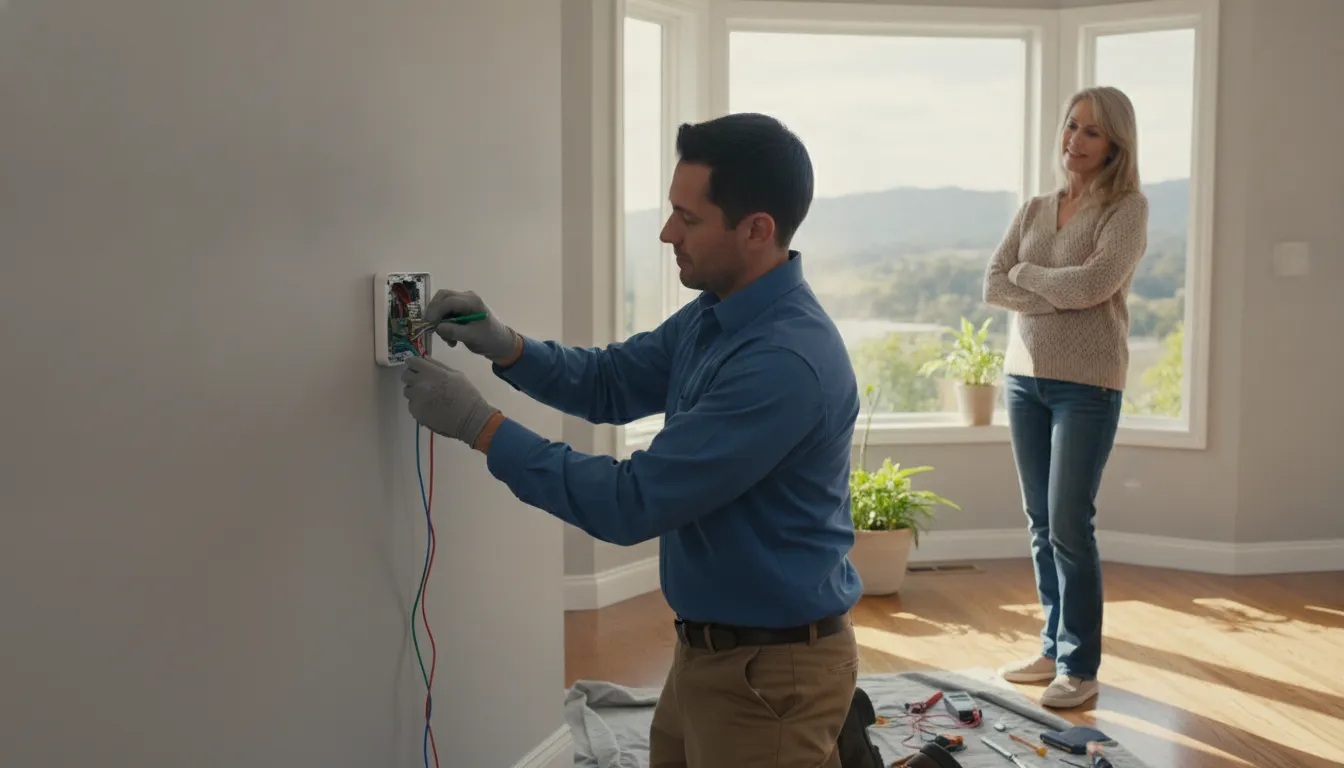
For Bay Area homeowners, the search phrase thermostat installation replacement bay area usually points to a practical concern. The home may be uncomfortable, the control may be unreliable, or a new smart thermostat may need to work with an existing HVAC system. Wiring, equipment type, stages, heat-pump functions, and comfort goals all matter.
Call Airteks at (925) 292-0148 to schedule thermostat service.
Airteks evaluates the thermostat and HVAC system together before recommending repair, replacement, or a broader diagnosis. For related heating and cooling guidance, see the Residential HVAC Guide for Northern California.
When Should You Replace a Thermostat in the Bay Area?
Consider thermostat replacement when the control gives inaccurate readings, misses heating or cooling calls, resets, or cannot support the HVAC equipment. Airteks checks compatibility first because wiring, airflow, and equipment problems can create symptoms that resemble thermostat failure.
Common warning signs include a room temperature that does not match the display. A system that ignores a changed setting, a blank or repeatedly rebooting screen, and programmed settings that disappear. A dead battery may explain a blank display, but repeated power loss deserves a closer look.
Symptoms that do not always mean a bad thermostat
- Uneven rooms: Air leakage, duct restrictions, insulation, or equipment performance may be responsible even when the thermostat reads correctly.
- Short cycling: A system that starts and stops too often may have an airflow, control, or equipment issue that needs diagnosis.
- Slow comfort changes: A heat pump, restricted airflow, or an incorrectly configured stage can affect recovery time.
- Intermittent operation: Loose connections, low-voltage issues, and equipment faults can look like a failing wall control.
Replacement makes sense when the thermostat is unreliable, incompatible, difficult to operate, or unable to provide features the household needs. If the control is accurate and the HVAC system responds normally, calibration or another repair may be more responsible. Airteks' residential heating and cooling services can help when the symptoms involve more than the thermostat.
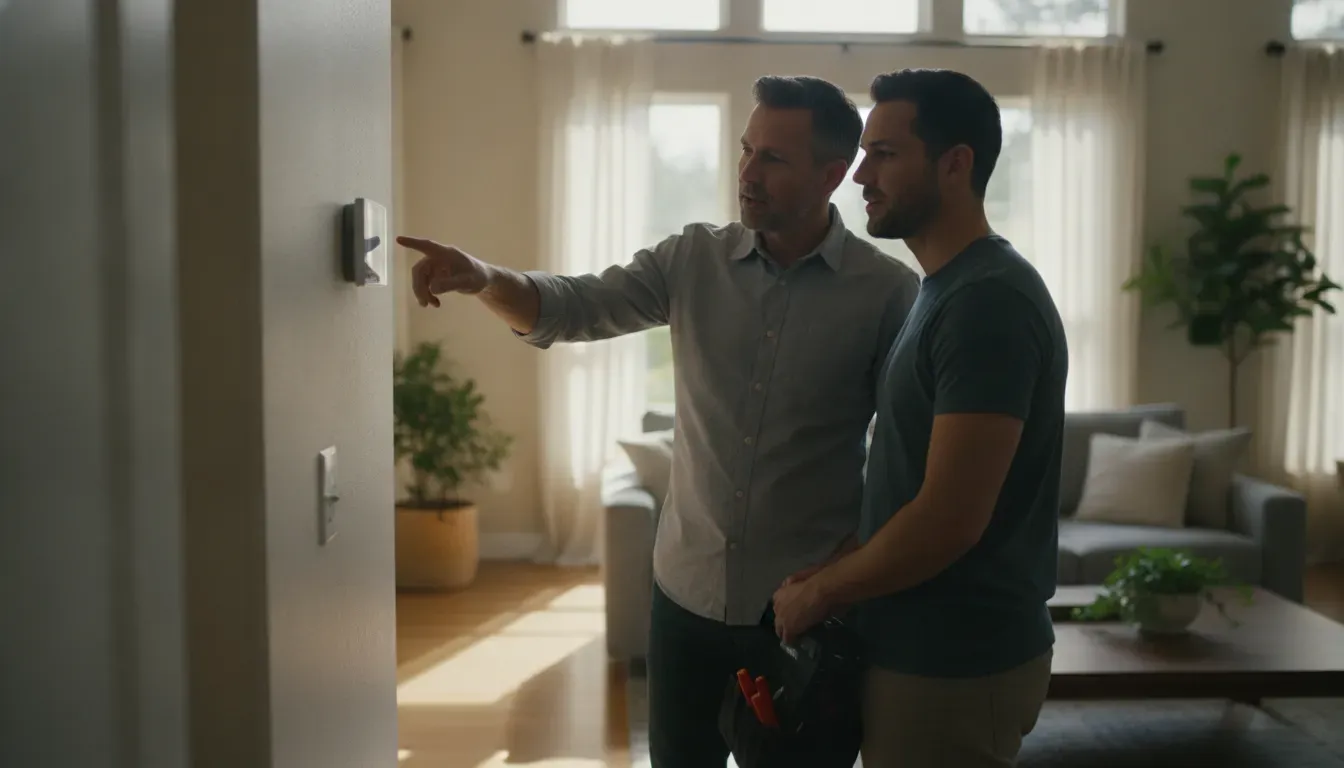
What Should Homeowners Know About Thermostat Installation Replacement in the Bay Area?
The thermostat installation or replacement process includes equipment identification, wiring review, control selection, configuration, and testing. Mounting a new device without confirming those details can leave missing operating modes or an undiagnosed HVAC problem.
Homeowners should also consider how the control will be used each day. A simple interface may be best when the priority is dependable manual adjustment. A programmable or connected model may be useful for changing schedules, remote access, or household routines. The most feature-rich device is not automatically the best choice. It can create a compatibility or usability problem.
The technician identifies the furnace, air conditioner, heat pump, dual-fuel system, and relevant accessories. Wire functions, terminals, low-voltage connections, and common-wire availability are documented before the old control is removed. The selected thermostat must also match staging, auxiliary heat, zoning, and other installed controls.
Many Wi-Fi thermostats need a common wire, often called a C-wire, for continuous power. Some older installations do not have one connected at the wall, or the conductor may not be connected at the equipment. A missing C-wire does not automatically mean the HVAC system must be replaced. It means the thermostat and wiring plan need to be evaluated together.
Airteks provides custom quotes and estimates instead of one universal price for every home. A direct replacement, a wiring change, and an installation that includes equipment diagnosis are different scopes of work. The useful comparison is the actual scope, not a price detached from the system's condition.
Why the installation scope matters
A basic replacement may use the existing mounting location and compatible conductors. A more involved project may require wiring work, a new mounting approach, setup for multiple stages, or testing of auxiliary heat. If the thermostat is reporting an error because of an equipment fault, replacing the control alone may not solve the comfort problem. A careful evaluation separates the thermostat decision from the rest of the HVAC diagnosis.
This distinction is useful when comparing a do-it-yourself device purchase with professional service. Product packaging may describe general compatibility, but the home's actual equipment and wiring determine whether those claims apply. Airteks can explain what was found and which options are necessary before the homeowner approves the work.
Should You Choose a Smart Thermostat or Pelican Wireless?
A smart thermostat generally fits one compatible home HVAC system, while Pelican Wireless is designed for connected control across multiple zones or complex properties. Airteks reviews the equipment, building, and control goals before recommending either approach.
A residential smart thermostat may offer schedules, remote adjustments, occupancy-based features, and convenience for a changing household routine. Those features are useful only when the thermostat supports the home's wiring, heat-pump functions, stages, and accessories. A smart label alone does not guarantee compatibility.
Pelican Wireless addresses a broader control need. Connected thermostats and equipment can be coordinated across zones, rooftop units, schools, businesses, or larger facilities. Airteks provides Pelican Wireless guidance for school districts and can evaluate whether a property needs centralized oversight.
Questions to ask before selecting a control
- Is the goal easier scheduling in one home, or centralized management across several spaces?
- Does the current HVAC equipment need a specific heat-pump, staging, or accessory configuration?
- Will the people using the system benefit from remote access, or is a simpler control easier to operate?
- Who will manage settings, maintenance, and troubleshooting after installation?
| Consideration. | Home smart thermostat. | Pelican Wireless. |
|---|---|---|
| Typical fit. | One compatible home HVAC system. | Multiple zones, connected equipment, or larger facilities. |
| Primary benefit. | Scheduling and remote adjustments. | Centralized oversight across connected spaces. |
| Planning question. | Do the wiring and equipment support the selected control? | How should zones and equipment be coordinated? |
For more context, read Airteks' guide to energy-efficient HVAC smart controls. Potential energy improvements depend on equipment, schedules, building use, and maintenance. No control system should be presented as a guaranteed savings result.
Call Airteks at (925) 292-0148 to discuss thermostat compatibility and control options.
Can a New Thermostat Work With an Older HVAC System?
Often, yes, but an older HVAC system should be checked before a new thermostat is installed. Airteks verifies voltage, wire functions, stages, equipment type, and operating modes. The age of the existing thermostat alone does not determine compatibility.
That check is especially important in older Bay Area homes where the thermostat wiring may have been changed during a repair or remodel. The visible wall plate can show only part of the control circuit. A technician may need to compare the conductors at the thermostat with the terminals at the indoor unit. Then confirm that the system responds correctly to each operating command. This process protects the equipment and gives the homeowner a clearer recommendation.
Heat pumps require particular care because the thermostat may control changeover, auxiliary heat, emergency heat, and other equipment-specific functions. Multi-stage furnaces and air conditioners also need settings that match the available stages. A familiar set of wires can still be connected or configured incorrectly.
Compatibility questions to answer
- What equipment does the thermostat control, and which heating and cooling modes are available?
- Is a C-wire present and connected at both the thermostat and HVAC equipment?
- Does the selected control support stages, heat-pump functions, zones, and accessories?
- Is the wall location suitable, or could drafts, sunlight, or another heat source distort readings?
Incorrect setup can cause delayed operation, missing heat-pump functions, short cycling, or unnecessary runtime. A professional installation includes wiring review, configuration, testing, and a homeowner handoff. When a larger equipment decision is also under consideration, Airteks' heat pump and furnace guide provides additional context.
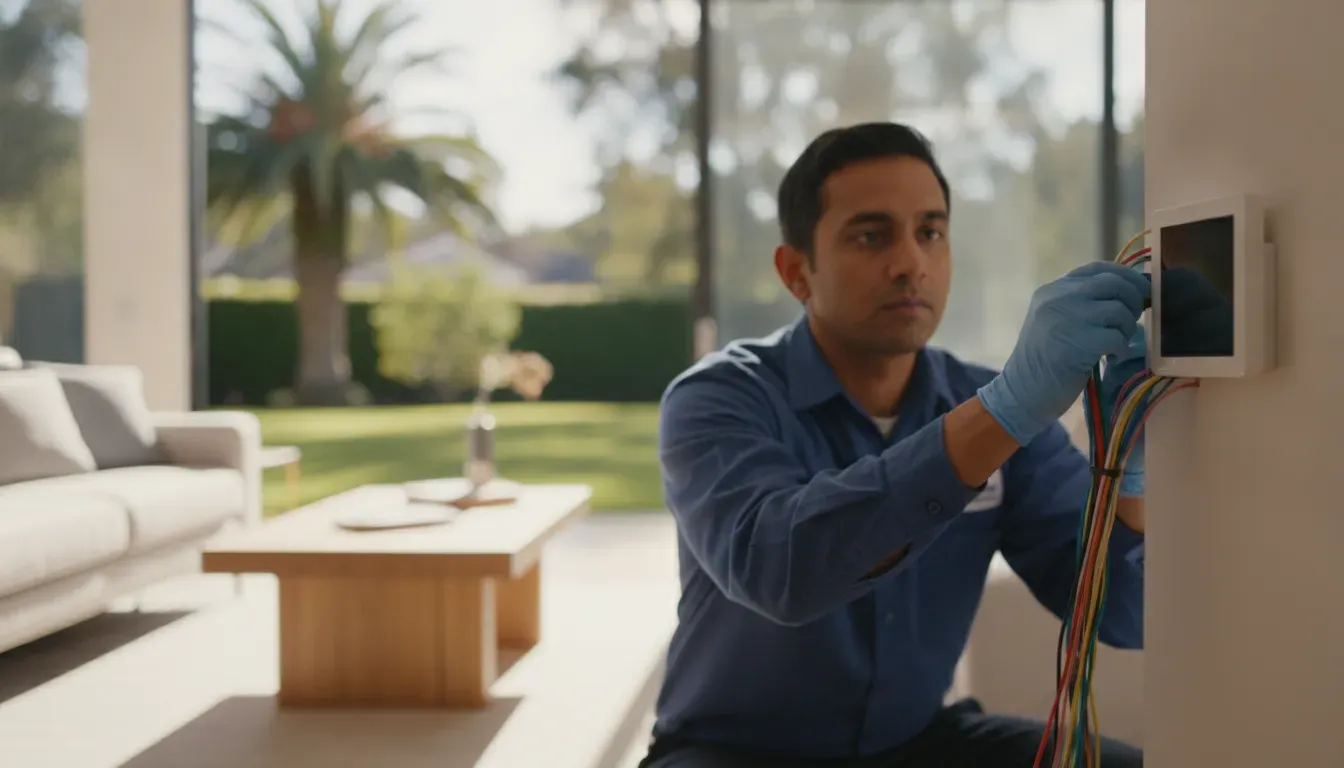
How Does Professional Thermostat Installation Work?
Professional thermostat installation moves from diagnosis to testing, rather than treating the wall control as an isolated accessory.
- Review the symptoms. The technician asks about readings, missed calls, error messages, comfort differences, recent repairs, and changes in system behavior.
- Inspect the setup. The thermostat location, low-voltage wiring, equipment, stages, and accessories are reviewed.
- Confirm the scope. The technician explains whether the work is a direct replacement, requires wiring, or should include broader HVAC diagnosis.
- Install and configure. The selected control is mounted and programmed for the verified system configuration.
- Test and explain. Heating, cooling, fan response, temperature readings, and applicable auxiliary modes are checked. The homeowner receives basic operating guidance.
Installation scope varies with access, wiring, equipment configuration, and related repairs. The important result is a correctly configured and tested control, not an arbitrary time promise.
After the installation, the homeowner should know how to change the temperature, select the operating mode, adjust a schedule when appropriate, and recognize when service is needed. A short handoff can prevent confusion about fan settings, heat-pump operation, or alerts. It also gives the technician an opportunity to confirm that the control responds as expected in the modes the home uses.
How Can You Prepare for Thermostat Service?
Before service, note the HVAC equipment type, thermostat model, symptoms, and Bay Area location. These details help Airteks prepare for compatibility questions, although an on-site evaluation may still be necessary.
- Record whether the home uses a furnace, air conditioner, heat pump, or more than one system.
- Note whether the display is blank, shows an error, resets, or fails to start the equipment.
- Describe whether the issue affects one room, several rooms, or the whole home.
- Share the thermostat model and photos only when they can be taken safely.
- Do not remove wires or open equipment panels unless you are qualified to do so.
Airteks serves Livermore, Pleasanton, Walnut Creek, and communities throughout Northern California, including the Bay Area, Central Valley, and Sacramento region. Review the Bay Area HVAC maintenance guidance if you want the thermostat and larger system evaluated together.
For a commercial property or multi-zone facility, Airteks also offers commercial Pelican Wireless systems support. The appropriate control depends on the building, equipment, occupancy, and management objectives. A site review helps identify the right fit.
Call Airteks at (925) 292-0148 to schedule thermostat installation or replacement.
Frequently Asked Questions
How do I know whether to repair or replace my thermostat?
Consider replacement when readings are inaccurate, the control resets, heating or cooling calls are missed, or the device cannot support the HVAC equipment. Airteks checks the wiring and system first because airflow or equipment trouble can cause similar symptoms.
Do smart thermostats always need a C-wire?
Many smart thermostats need a C-wire for continuous power, but requirements vary by model and system. Airteks can check the existing wiring, equipment, and selected thermostat before installation. Do not assume a missing wall wire makes the system incompatible.
Can a smart thermostat control a heat pump?
Some smart thermostats can control heat pumps, but the model must support changeover, auxiliary heat, and other equipment functions. Airteks verifies the configuration and tests the relevant modes after installation.
Is Pelican Wireless the same as a home smart thermostat?
No. A home smart thermostat typically manages one compatible HVAC system, while Pelican Wireless can coordinate connected thermostats and equipment across zones or larger properties. Airteks can assess which approach fits the building.
How much does thermostat replacement cost in the Bay Area?
There is no single price for every Bay Area home. Cost depends on the thermostat, wiring, equipment compatibility, access, configuration, and any diagnosis or repair. Airteks provides a custom estimate based on the system in front of the technician.
Schedule Thermostat Installation With Airteks
Choosing a thermostat is easier when the control, wiring, HVAC equipment, and comfort goals are evaluated together. Airteks provides dependable residential HVAC guidance across the Bay Area. The team can help determine whether your home needs a simple replacement, wiring work, or a broader system diagnosis.
Call Airteks at (925) 292-0148 to schedule thermostat installation or replacement service.
Comments