
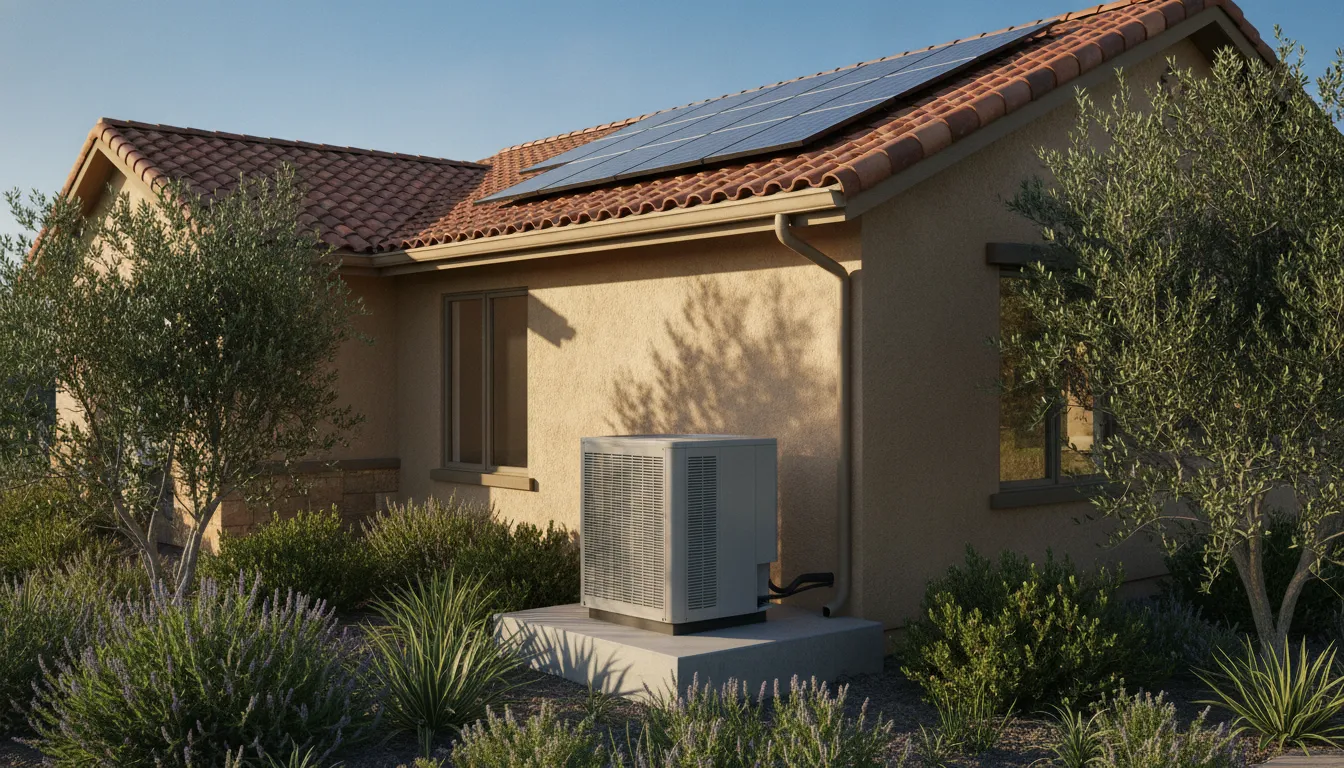
What Is a Heat Pump and How Does It Work?
Understanding the technology difference is the first step. A heat pump does not generate heat by burning fuel. Airteks installs and services all major heat pump brands across Northern California. Instead, it transfers heat from one place to another using refrigerant and electricity. In winter, it pulls heat from the outside air (even when temperatures drop) and moves it inside. In summer, it reverses direction and works like an air conditioner, removing heat from your home and releasing it outside. A gas furnace burns natural gas to generate heat directly. It blows air across a metal heat exchanger warmed by the gas flame, then circulates the heated air through your ductwork. A furnace heats your home efficiently , modern units reach 80 to 96 percent AFUE , but it only performs one job: heating. To cool your home in summer, you need a separate central air conditioner or ductless system. This single-system-versus-two-system difference is the most important practical distinction for California homeowners. A heat pump handles both seasons from one piece of equipment. A gas furnace leaves you needing a second system for cooling. Modern cold-climate heat pumps work effectively down to 5 degrees Fahrenheit, which covers virtually all Bay Area and Central Valley winter conditions. The efficiency advantage is significant: heat pumps deliver two to three times more heat energy than the electricity they consume. Making them far more efficient than gas furnaces on an energy-in versus heat-out basis.Heat Pump vs Gas Furnace California: Upfront Cost Comparison.
Installation costs vary based on home size, equipment efficiency, and existing infrastructure. For a complete overview of heating and cooling options, see our Residential HVAC Guide. The ranges below reflect typical single-family homes in Northern California in 2026.| Cost Category. | Gas Furnace (80% AFUE). | Gas Furnace (95% AFUE). | Heat Pump (Central Ducted). |
|---|---|---|---|
| Equipment (unit only). | $2,000 to $3,500. | $3,500 to $4,500. | $4,400 to $10,000. |
| Labor and installation. | $2,000 to $5,000. | $2,000 to $5,000. | $5,500 to $9,000. |
| Gas line work (if needed). | $500 to $1,500. | $500 to $1,500. | N/A. |
| Electrical work. | $200 to $500. | $200 to $500. | $500 to $1,500. |
| Ductwork modifications. | $0 to $3,500. | $0 to $3,500. | $0 to $3,500. |
| Permits and inspections. | $350 to $900. | $350 to $900. | $400 to $1,000. |
| Thermostat. | $150 to $300. | $150 to $300. | $150 to $300. |
| Total Installed. | $6,500 to $7,500. | $7,500 to $11,000. | $11,000 to $18,000. |
Annual Operating Costs in the Bay Area Climate.
Annual heating costs depend on your home size, insulation quality, thermostat settings, and the rates PG&E charges in your area. Here is the current rate picture and what it means for your operating costs. PG&E rates as of January 2026:- Electric (Non-CARE): 41.46 cents per kilowatt-hour.
- Natural gas (Non-CARE): $2.78 per therm.
- Gas furnace (80-95% AFUE): $600 to $1,200 per year.
- Heat pump (ducted system): $400 to $800 per year.
California Tax Credits and Rebates for Heat Pumps.
Incentives are the single most important factor in making heat pumps cost-competitive in California. Here is the current landscape as of 2026. Federal 25C Tax Credit (Inflation Reduction Act). This provides 30 percent of the installed cost of a qualifying heat pump, up to $2,000 per year. It is a non-refundable tax credit , it reduces your federal income tax liability dollar-for-dollar but does not produce a refund beyond what you owe. The credit applies to heat pumps placed into service by December 31, 2025, per the California Energy Commission. If you are planning a 2026 installation, confirm whether the 25C credit has been extended or replaced before budgeting. TECH Clean California rebates. This statewide program offered $1,000 to $2,000 per home for heat pump HVAC retrofits. Unfortunately, single-family heat pump HVAC incentives were fully reserved as of November 2025. No new reservations are being accepted. If you had a reservation before that date, your rebate is still valid. For new projects, this incentive is no longer available. HEEHRA rebates (income-qualified). The High-Efficiency Electric Home Rebate Act provides up to $8,000 for income-qualified households installing heat pump HVAC systems. As of February 2026, single-family rebates are fully reserved statewide. Some waitlist opportunities may exist, but confirmed funding is no longer available for new applicants. Multi-year planning strategy. Even with TECH and HEEHRA reserving out, the federal 25C credit (if active in your installation year) plus local utility rebates can still reduce your out-of-pocket cost. PG&E and community choice energy providers such as East Bay Community Energy, Silicon Valley Clean Energy, and others occasionally offer time-limited heat pump incentives. Check current offerings before proceeding. For a complete breakdown of all active programs by zip code, see our guide to California HVAC rebates and tax credits.Which System Is Right for Your Home and Location?
A heat pump is not the right choice for every California home, and neither is a gas furnace. Here is a framework to help you decide. Coastal and moderate climates (San Francisco, Oakland, Berkeley, Peninsula): Heat pumps excel here. Winter temperatures are mild, heating demand is moderate, and the heat pump's cooling capability is valuable during the few hot weeks each year. Payback is typically 6 to 8 years. If you do not already have a gas line, a heat pump also saves you the $500 to $1,500 cost of running one. Inland climates with colder winters (Livermore, Pleasanton, Walnut Creek, Concord, Sacramento): Heat pumps work well here too. Modern cold-climate models handle temperatures down to 5 degrees Fahrenheit without efficiency loss. The higher heating demand actually accelerates the payback timeline to 4 to 6 years in many cases. However, if your home has poor insulation or you prefer the warmth of gas heat on the coldest mornings. A gas furnace or hybrid system may be more comfortable. Homes with existing gas infrastructure: If you already have a gas furnace that needs replacement and your ductwork is in good condition. Replacing it with a new high-efficiency gas furnace is the lowest-cost path forward. The installation is straightforward, and a 95 percent AFUE furnace will keep your operating costs manageable. This is a perfectly reasonable choice , especially if you do not plan to stay in the home long enough to capture the heat pump's payback. Homes with solar panels: Solar pairs exceptionally well with heat pumps. Once your panels offset your electricity usage, a heat pump's operating costs drop to nearly zero. Homes with solar should strongly consider a heat pump for maximum long-term savings. Homes without ductwork: Both systems require ductwork for whole-home distribution. If your home lacks ducts, a ductless mini-split heat pump system is an excellent option. It provides zoned heating and cooling without the expense of installing new ductwork. Budget-constrained homeowners: If upfront cost is your primary concern, a standard-efficiency gas furnace at $6,500 to $7,500 installed is the most affordable option. You can always upgrade to a heat pump when the furnace reaches the end of its service life in 15 to 20 years.Is a Heat Pump Enough for Cold Northern California Winters?
This is the most common concern we hear from homeowners considering a heat pump for the first time. The short answer: yes, a modern heat pump is sufficient for Northern California winters. The threshold to watch is 5 degrees Fahrenheit. Modern cold-climate heat pumps maintain full heating capacity down to 5 degrees, and most models continue operating , with reduced efficiency , below that temperature. In the Bay Area, temperatures drop below freezing only a handful of nights each year, and they almost never approach zero. Even in inland areas like Livermore, Concord, and Sacramento, freezing temperatures are intermittent and rarely sustained. For homeowners who want absolute peace of mind, a hybrid or dual-fuel system is an excellent option. This setup pairs a heat pump with a gas furnace. The heat pump handles the vast majority of your heating needs efficiently. And the gas furnace automatically kicks in during extreme cold snaps or when you need rapid temperature recovery. The dual-fuel approach gives you the operating cost savings of a heat pump for 90 percent of the year with the reliable warmth of gas heat when you want it. Airteks installs and services both heat pumps and gas furnaces across Northern California. Our technicians can assess your home, review your heating patterns, and recommend the system that fits your comfort preferences and budget. We serve the full range of options , from standard gas furnaces and heat pumps to hybrid configurations. So you get an unbiased recommendation rather than a one-size-fits-all pitch.Frequently Asked Questions.
Which is more cost-effective in California , a heat pump or a gas furnace?
It depends on your specific region's electricity and gas rates. In Northern California, a heat pump typically saves $200 to $400 per year on heating costs compared to a gas furnace. With a 5 to 8 year payback on the higher upfront investment. A gas furnace is cheaper to install but costs more to operate over the long term.
Do heat pumps work well in California's climate?
Yes. Modern heat pumps are designed for mixed climates like California's. They provide efficient heating in winter (down to 5 degrees Fahrenheit) and full cooling in summer , all from one system. They are especially effective in coastal and moderate inland areas.
How does the longevity of a heat pump compare to a gas furnace?
A gas furnace typically lasts 15 to 20 years, while a heat pump lasts 10 to 15 years. Furnaces last longer because they only operate during heating season. Heat pumps run year-round (heating and cooling), which increases wear. However, a heat pump eliminates the need for a separate air conditioner, so total equipment count and cost over 20 years should be considered holistically.
Is a heat pump worth the extra cost in the Bay Area?
For most Bay Area homeowners, yes. The combination of lower operating costs, dual heating and cooling functionality, and available incentives makes heat pumps cost-effective within 5 to 8 years. For moderate climate zones like Oakland, Berkeley, and the Peninsula, the payback can be even faster because mild winters mean the heat pump rarely needs defrost cycles.
Does it make sense to switch from gas to a heat pump in the Bay Area?
It makes sense if you plan to stay in your home for at least 5 years. Have adequate electrical capacity or are willing to upgrade, and want year-round efficiency. Homes with solar panels see the fastest payback. If you are on a tight budget or plan to move soon, a new gas furnace is the more practical choice.
Comments