
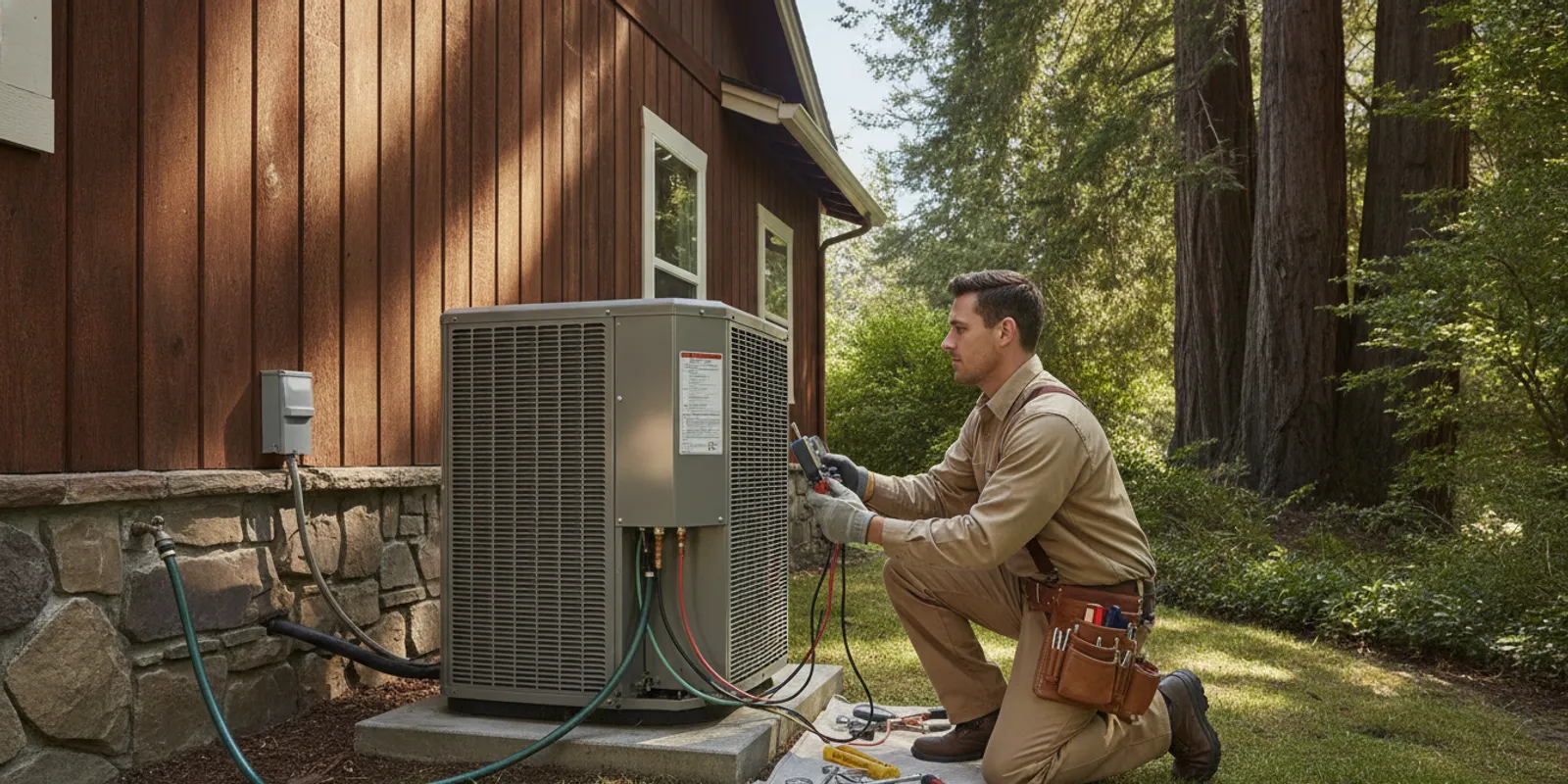
When a heating or cooling system stops working, it is not always clear whether to try a basic check, arrange a service visit, or consider a larger repair. This guide to hvac repair walnut creek explains what you can safely observe, what can affect the diagnosis and schedule, and how to compare a proposed repair. The steps apply to furnaces, air conditioners, and heat pumps in homes and commercial properties.
Contact Airteks to discuss your HVAC repair
What should you do first when an HVAC system has a problem?
Start with a simple description of the symptom. Is the system completely off, running without heating or cooling, making a new sound, or switching on and off more often than usual? Note whether the issue affects the whole property or only certain rooms. Write down when it began and whether anything changed shortly beforehand, such as a power interruption, thermostat adjustment, or recent work in the home.
Check the thermostat without opening the HVAC equipment. Confirm it has power, is set to the right mode, and has a reasonable setpoint. If it uses replaceable batteries and shows a low-battery indicator, replace them according to its instructions. A thermostat setting can explain some no-heat or no-cooling calls, but it does not rule out a system fault if the equipment still does not respond.
Look at the electrical panel only if you can do so safely. If an HVAC breaker has tripped, do not repeatedly reset it. A breaker that trips again needs professional attention. Do not remove equipment panels, handle wiring, or reach into an outdoor unit. Keep leaves and stored items away from the outside unit without touching its fan or internal components.
For a furnace or central system, check whether supply registers are open and whether furniture, rugs, or boxes block return-air grilles. If the filter is easy to reach, inspect it and replace it with the size and type specified for the system if it is dirty. A filter change may help with airflow, but it cannot correct every cause of weak heating or cooling. Do not run the system without a filter unless a qualified professional has advised you to do so.
Stop using the equipment and seek appropriate help if you smell gas, see smoke, notice a persistent burning odor, or suspect an electrical hazard. If you suspect a gas leak, leave the area and contact the appropriate emergency utility or public safety service. Avoid trying to diagnose the equipment yourself in a potentially unsafe situation.
Which safe checks can a homeowner or building contact make?
Safe checks are observations and simple controls, not repairs. The goal is to collect useful information and rule out an obvious setting or airflow issue without exposing yourself to moving parts, electrical components, fuel, or refrigerant. If a step requires a tool, opening a panel, or uncertainty about what you are seeing, leave it for a technician.
- Read the thermostat mode, setpoint, display, and any error message. Record the message rather than clearing it.
- Check whether the relevant breaker appears tripped, but do not repeatedly reset it.
- Look at the filter and visible supply and return grilles; note a dirty filter or blocked airflow path.
- Observe the outdoor unit from a safe distance and note visible debris or unusual sounds without reaching inside.
- Look for water near the indoor equipment and note where it appears, but do not dismantle a drain or open the unit.
Make a note of the result of each check. For example: “Thermostat set to cool at 74 degrees, display is on, indoor fan runs, but the house remains warm; the issue affects two rooms.” This is more useful than saying only that the system is broken. For more background on residential equipment and service options, see Airteks' residential HVAC services.
What details help a technician diagnose the problem?
A good service request gives a technician a starting point without trying to guess the cause. Share the equipment type if you know it, approximate age if readily available, thermostat reading, and whether the system starts at all. Mention any unusual sound, odor, water, or repeated breaker trip. If you have a photo of a thermostat message or equipment label, have it ready, but do not remove a panel to find one.
Describe the pattern as precisely as you can. Does the problem happen all day or only at a certain time? Does it occur on especially warm or cool days? Does one room feel different from the rest? Did it begin after a filter change, renovation, power interruption, or change to the thermostat schedule? These details do not establish a diagnosis, but they help frame the inspection.
- Record when the symptom started and whether it is constant or intermittent.
- List the rooms or zones affected and what each one is doing.
- Note the thermostat setting and any message or code shown.
- Describe how long the system runs before the symptom appears, if known.
- Tell the service provider about access instructions, pets, parking, or building rules.
- For a business, identify the facility contact and the mechanical rooms or work areas that require access.
For a commercial property, clarify which tenants, work areas, or zones are affected and whether the equipment serves one area or several. If roof access or a locked mechanical room is involved, arrange entry in advance. Airteks also provides commercial HVAC services, so identify the property type when you make an inquiry.
What happens during an HVAC repair visit?
A repair visit generally begins with a review of the reported symptoms and the equipment involved. The technician may ask when the issue began, what you have observed, and whether it changes under particular conditions. The inspection and testing needed depend on the system and the fault. A system that will not start may call for a different diagnostic path than one that runs but cannot maintain a comfortable temperature.
After investigating, ask the technician to explain what was checked, what was found, and how the recommended work relates to the symptom. If the issue is intermittent or additional testing is needed, ask what remains uncertain and what the next diagnostic step would be. A plain explanation should distinguish between confirmed findings and possibilities still being investigated.
Before work begins, review the scope and estimate. Ask whether the amount covers diagnosis, labor, parts, and follow-up, and what would require your approval before the scope changes. If a part must be identified or obtained, clarify what happens next and whether the system should remain off or can be used while waiting. Repair schedules depend on findings, access, and parts availability, so a symptom alone cannot establish an exact completion time.
What affects HVAC repair timing in Walnut Creek?
Timing depends first on the problem itself. Some symptoms are straightforward to reproduce and inspect. Others appear only under certain conditions, stop before the appointment, or require more than one test to isolate. A new noise that occurs only when the outdoor unit starts, for instance, is different from a system that is consistently unresponsive.
Equipment type, access, and the information available also matter. The technician may need access to a thermostat, indoor air handler, furnace, outdoor unit, roof, or mechanical room. For a business, a check-in process, tenant schedule, or restricted area can add coordination. Clear a safe path to equipment and arrange keys or escorts before the visit when possible.
Parts may affect the timeline if a component needs to be identified and sourced. Ask whether the current visit can establish the diagnosis, whether a return visit may be needed, and how the service provider will communicate if the plan changes. Do not treat a general estimate of timing as a guarantee; the actual repair depends on what inspection reveals.
| Situation | Useful details to share | What may affect the next step |
|---|---|---|
| System will not start | Thermostat display and mode, breaker status, and whether any fan or equipment sound occurs | Control or electrical diagnosis and safe access to equipment |
| Weak heating or cooling | Rooms affected, airflow changes, filter condition, and when the symptom is strongest | Airflow checks, system testing, and the cause of reduced output |
| New noise or odor | When it happens, where it seems to come from, and whether it continues | Safety assessment and inspection of the relevant components |
| Water near equipment | Where water appears, whether it is ongoing, and any visible wall or ceiling impact | Finding the source and reaching the relevant equipment or drainage area |
| Intermittent fault | Time, weather, thermostat readings, and how long the system runs | Reproducing the condition and testing controls or operating patterns |
This comparison is a planning aid, not a diagnosis or a promise about repair duration. If the equipment seems unsafe or water threatens the property, say so when you request service. For general federal information about energy use in homes and heating and cooling, the U.S. Department of Energy is an authoritative starting point; it does not replace an on-site assessment of a specific fault.
What determines the cost of HVAC repair?
There is no single price that applies to every HVAC repair. Cost depends on the fault, the equipment, parts required, how accessible the components are, and how much diagnosis and repair work is needed. Two systems can show the same symptom but need different work. A system that blows warm air, for example, may require investigation of more than one possible cause, so the symptom by itself is not enough to estimate the repair.
When you request an estimate, ask what the visit includes and whether diagnosis is charged separately. Check whether the proposed amount includes parts, labor, and any follow-up visit. If the technician discovers another issue, ask whether the new work will be explained and approved before it is added. A written scope makes it easier to compare options and understand what the estimate does and does not cover.
Repair versus replacement is a separate decision from the immediate diagnosis. Consider the equipment's observed condition, the repair scope, comfort concerns, and the likely usefulness of the system after the work. Ask what evidence supports each option and whether there are reasonable alternatives. Age alone does not describe the condition of a particular system, and a broad rule of thumb cannot replace an inspection.
Airteks' HVAC repair information and maintenance overview provide related service context. If the issue is in a home, its Walnut Creek HVAC service page is another place to review local service details.
How should repair priorities differ for homes and businesses?
At home, first determine whether the issue affects one room or the entire property. Note who is affected and whether indoor conditions are becoming uncomfortable. Keep children and pets away from open equipment or any area where you suspect a gas or electrical hazard. If only one room is affected, mention that clearly; the technician can consider both the room and the rest of the system during diagnosis.
In a business or institutional building, prioritize the people and operations affected, then coordinate access. A facility contact can identify the zones involved, explain building schedules, and share any available equipment or control information. A school, office, retail site, and warehouse may have different occupancy patterns and access rules, so service planning should reflect the actual building rather than a generic residential visit.
For a larger facility, keep a simple record of the complaint, affected area, time, thermostat reading if available, and any temporary change made. This helps the facility team and technician discuss the same facts. Airteks serves residential and commercial customers across Northern California; the commercial service-area information offers additional context for business and facility inquiries.
What should you ask before approving HVAC repair?
You do not need technical vocabulary to make an informed decision. Ask for a direct explanation of what the technician tested, what the inspection found, and how the recommended work addresses the symptom. If the diagnosis is not conclusive, ask what remains to be checked instead of treating a possibility as a confirmed fault.
- What did the inspection show, and which condition is causing the reported problem?
- What work is included in this estimate, including diagnosis, parts, labor, and follow-up?
- Are there multiple reasonable repair options, and how do they differ?
- What could require additional work or change the estimate?
- Should I leave the system off or use it in a particular way while waiting?
- What should I monitor after the repair, and whom should I contact if the symptom returns?
For a larger repair, ask for the scope in writing and take time to review it. Compare the work being proposed, not just a short label or total. If replacement is discussed, ask what condition or repair findings led to that recommendation and what a repair option would address. A clear conversation helps you decide based on the equipment and the needs of the property.
When should you request professional HVAC service?
Arrange professional service when safe basic checks do not resolve the issue, when the system repeatedly shuts down, or when heating or cooling remains poor. A new mechanical noise, persistent odor, water near equipment, or repeated electrical trip also calls for professional attention. Stop using the equipment if you believe it may be unsafe, and describe the concern when you contact a service provider.
Do not attempt refrigerant work, electrical repairs, or internal component testing yourself. These tasks require appropriate training and equipment. If you are unsure whether an observation or check is safe, leave it alone. Airteks notes 24/7 emergency availability for urgent HVAC issues; explain the urgency when contacting the company so the appropriate next step can be discussed. For location-specific information, review the Walnut Creek HVAC service page.
Frequently Asked Questions
How quickly can an HVAC technician diagnose a problem?
It depends on the symptom, system, access, and whether the problem is occurring during the visit. Some issues are apparent during initial checks. Intermittent faults or conditions that require additional testing may take longer to identify.
Can I keep running my system if it is not heating or cooling properly?
If you suspect gas, smoke, a persistent burning odor, or an electrical hazard, stop using the equipment and seek appropriate help. For other performance issues, avoid repeatedly switching the system on and off and ask a technician what is appropriate based on the symptoms.
Does a repair estimate state the final cost?
An estimate describes the proposed work and expected charges. Additional findings can change the scope, so ask what is included and how the provider will request your approval if the diagnosis changes.
Should I repair or replace an older HVAC system?
That depends on the system's observed condition, the repair required, comfort needs, and the options available. Ask the technician to explain the evidence and compare the practical implications of repair and replacement rather than relying on age alone.
Contact Airteks to request HVAC service
When you reach out, share what the system is doing, when the problem began, and which areas are affected so the next step can be based on the actual issue.
Comments