
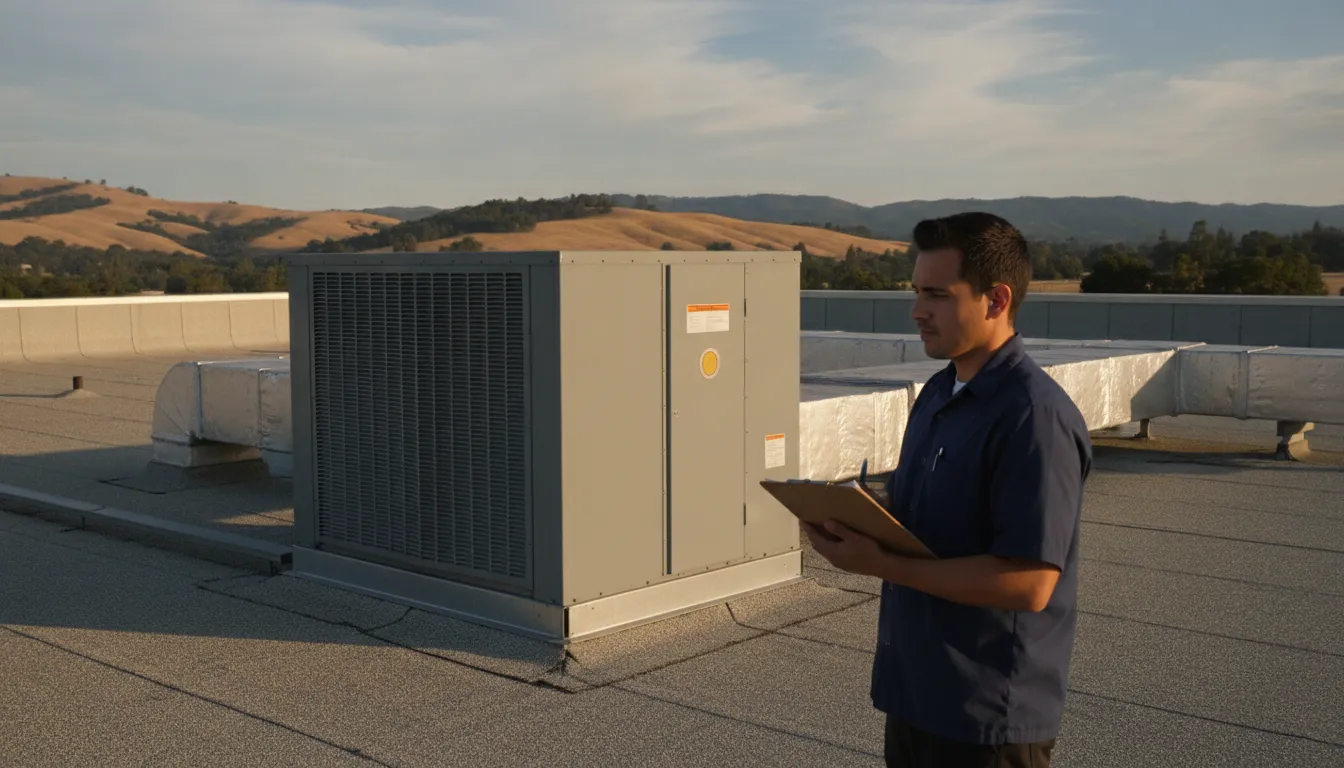
Pelican Wireless HVAC controls help when a building has more than one thermostat. They also help when a rooftop unit runs on a fixed clock, or when several sites sit unchecked. The useful question is not whether the brand is modern. It is which service fits the equipment you already have, and what to book next. Airteks installs and supports these systems for homes and businesses from Livermore across the Bay Area, the Central Valley, and Sacramento.
Call Airteks at (510) 719-0621
This guide sorts the service choices a facility manager, property owner, or office manager usually faces. It stays on the decision: thermostat and gateway, rooftop logic, multi-zone oversight, or ongoing support. For a side-by-side with consumer thermostats, read the Pelican Wireless versus Nest and Ecobee comparison. For school campuses, the school district installation guide covers that setting on its own.
Which Pelican Wireless HVAC Controls Fit the Building You Have
Start with the building, not the catalog. A single office suite, a retail strip, a church, a warehouse, and a campus do not need the same scope of work. Pelican describes its web app as a way to manage climate in one building or across several sites. Schedules can cover rooms, events, and time away. That range is why the first visit should name the footprint before anyone orders hardware.
Airteks is an exclusive dealer and installer of Pelican Wireless Systems. On a first look, a technician checks three things. How many spaces need their own schedule. Whether the heating and cooling equipment can accept a smarter control without a full replacement. And who will change setpoints after the crew leaves. Those answers point to one of four service choices.
- Replace aging thermostats and add a gateway so staff can see and change the system from a phone or computer.
- Add rooftop economizer and ventilation logic when packaged units bring in outdoor air but do not use it well.
- Tie several zones or several buildings into one view when staff already spend the week driving between sites.
- Keep an installed system healthy with alarms, schedule reviews, and equipment service when comfort or runtime drifts.
A Livermore medical office and a Stockton warehouse can both use the same brand and still need different scopes. The office may care about after-hours lockout and a clean lobby setpoint. The warehouse may care about a few large units and a manager who is rarely on site. Name that difference in the first conversation so the proposal matches the building.
Thermostat and Gateway Service for Everyday Schedule Control
The most common first step is a thermostat and gateway installation. Pelican states that one gateway can connect up to 2,000 devices to the Pelican Connect app. The link can be standard Ethernet or a cellular option. For most Bay Area and Central Valley buildings, the practical number is far smaller. What matters is a controller in each zone, plus one gateway that puts those controllers on the app.
This service fits when the equipment is sound and the pain is the schedule. Pleasanton and Walnut Creek offices run into this often. So do church halls that sit empty midweek, and shops that heat an empty floor before opening. Staff can set a seven-day pattern, a weekday and weekend split, or a one-day exception. They can do it without walking to every stat. Event and vacation schedules are the feature managers ask for before a holiday closure.
Airteks handles this as a controls service, not a gadget swap. The crew checks that the unit will accept the new stat. They place the gateway where it can reach the network. Then they walk the person who owns the schedules through the app. If you only need a basic thermostat swap, the Bay Area thermostat installation guide covers that narrower job.
When a gateway-only scope is enough
Choose this path when zones already match how people use the building. The rooftop or split equipment should not be failing. You want remote changes, occupancy-based schedules, and a record of what the system did. You do not yet need new ductwork, a new rooftop unit, or a new air layout. If humidity or carbon dioxide is part of the complaint, say so up front. Pelican offers stats for temperature only, temperature and humidity, or temperature with carbon dioxide. The stat on the wall should match the problem you want to see.
Rooftop and Ventilation Service When the Unit Wastes Outdoor Air
Some buildings do not need more thermostats. They need the rooftop unit to make better use of outdoor air and to stop running harder than the space requires. Pelican's PEARL advanced rooftop controller is built for that job. The company says PEARL talks to its Pelican thermostat over three wires. That helps when the existing cable bundle is short. It adds economizer and ventilation logic. It can vary the output of equipment that already modulates. It also gives a web view of how the unit is running.
That service is the right next step on a sanctuary, gym, sales floor, or open office. It fits when the economizer is stuck, disabled, or was never commissioned. Mild seasons around Livermore, Dublin, and the inland valleys are when outdoor air can carry part of the cooling load. A controller that never opens the damper leaves that chance behind and keeps the compressor working.
PEARL can take extra temperature inputs, such as discharge, return, and outside air. It can also take a simple contact from an occupancy sensor or an equipment alarm. Used well, a team sees a stuck damper or an all-night unit before tenants complain. It is not a fix for a failed compressor or a cracked heat exchanger. If the unit is near the end of its life, look at commercial HVAC system service before you spend on controls alone.
What this visit should confirm
A rooftop controls visit should answer four plain questions. Does the unit have an economizer, and does it move. Are there enough conductors for the three-wire link. Who gets the alarm if the unit faults after hours. And does the space need scheduled ventilation, not just a temperature setpoint. If the answer to the last question is yes, ask about a carbon dioxide input so ventilation can follow occupancy instead of a clock.
Compare Pelican Wireless HVAC Control Services Before You Book
Use the table below to match today's complaint with the service that usually fixes it. Price depends on zone count, roof access, and whether equipment needs repair first. Airteks quotes the building rather than publishing a flat package rate.
| Service choice. | Best fit. | What you leave with. | Book this when. |
|---|---|---|---|
| Thermostat and gateway. | Sound equipment and weak schedules. | Room control plus app access. | Staff still walk to each stat. |
| Rooftop economizer logic. | Packaged units with outdoor air. | Smarter ventilation and runtime data. | The unit runs hard in mild weather. |
| Multi-zone or multi-site view. | Several suites or buildings. | One place to see schedules and alarms. | A manager covers more than one address. |
| Support after install. | A system already in place. | Alarm review, schedule cleanup, and repairs. | Comfort or energy use has drifted. |
Two choices can belong in the same proposal. A Walnut Creek office with four rooftop units may need new stats and economizer logic on two of the units. A Sacramento property manager with three small buildings may only need gateways and a shared login. The mistake is buying the widest package because it sounds complete. Match the scope to the complaint you can point at this month.
Multi-Zone and Multi-Building Oversight for Facility Teams
Once more than a handful of spaces share a schedule, the service question changes. You are no longer buying a thermostat. You are buying a way for one person to see the building. Pelican's web app is built for that view. Staff can move between spaces and adjust temperature, humidity, ventilation, and equipment. Everyday schedules and event schedules stay in one place. Trends and alerts by email, text, or the app surface a problem before Monday complaints.
This scope fits churches and private schools that are not asking for a full campus build. It also fits clinics, light industrial sites, and owners with two or three buildings in Alameda, Contra Costa, or San Joaquin County. A Central Valley operator who splits time with a Bay Area office is in the same group. The payoff is fewer truck rolls for a setpoint change. You also get a clearer story when a tenant says a suite was hot at 6 a.m.
Zoning still has to be real. Controls cannot fix a single duct trunk that serves a sunny west conference room and an interior office as if they were the same space. If the building fights itself that way, read how HVAC zoning works in California before you add more stats to a bad air plan. Airteks will say so on site rather than sell controllers that cannot separate those rooms.
What to hand the technician before the visit
A short packet speeds the proposal and keeps the scope honest.
- A simple list of buildings and the suites or rooms that need their own schedule.
- The brand and age of each rooftop unit, boiler, or split system, if you know it.
- Who should receive alarms, and whether that person is on site during business hours.
- Any hours the building must stay in setback, including services, practices, and retail nights.
- Notes on rooms that are always too hot, too cold, or too stuffy, with the time of day.
You do not need a controls drawing. If you have last year's utility bills or a list of after-hours overrides, bring those too. They show whether the problem is a schedule, a stuck economizer, or a unit that needs repair.
How Northern California Rules Shape the Control Choice
California's nonresidential energy standards push mechanical systems to run only as much as the space needs. The California Energy Commission describes the goal in plain terms. Equipment should be efficient. Distribution losses should stay low. Controls should cut extra runtime and simultaneous heating and cooling. Outdoor air still has to come in during occupied hours. That is the public standard behind many local plan checks. You can read the Commission's summary of mechanical system requirements in the energy standards.
For a facility team, the practical effect is simple. A control upgrade should schedule occupancy and limit runaway overrides. It should also support ventilation that follows how the building is used. Where demand control ventilation is required, fresh air tracks occupancy instead of a damper left at a fixed opening. Pelican stats and rooftop products use schedules, optional carbon dioxide sensing, and economizer logic. That is why they come up in Title 24 talks. The code call belongs to the building official and the project documents. Airteks uses the site visit to see whether current stats can carry that schedule.
Local weather still decides the details. Coastal mornings and hot inland afternoons do not share one setpoint. A Livermore or Pleasanton afternoon can load a west-facing rooftop hard while a Walnut Creek suite on the shade side is fine. Sacramento and San Joaquin County summers reward a schedule that releases the building in the evening instead of holding a daytime setpoint all night. Napa and Santa Clara sites add occupancy swings: tasting rooms, clinics, and offices that fill and empty on different clocks. The control choice has to survive those swings, not a single design day.
Airteks covers that territory from its Livermore base. Crews already work commercial heating and cooling across Alameda, Contra Costa, Santa Clara, Napa, and San Joaquin counties, plus Sacramento. If you want contractor context before a controls quote, start with how to choose a Northern California commercial HVAC contractor. City pages such as HVAC service in Livermore and HVAC service in Dublin show the local work, separate from this controls decision.
What to Book Next After You Pick a Service
The next step depends on which row of the table you landed on. Booking the wrong visit wastes a trip and leaves the proposal vague.
Book a controls survey
Choose a survey when the building is uncomfortable or hard to schedule. You do not yet know if the fix is stats, rooftop logic, or both. Airteks walks the zones, looks at the units, and comes back with a scope. This is the right first call for an office, a shop, or a house of worship.
Book installation
Choose installation when the scope is already clear. That means a set number of thermostats, a gateway, and maybe rooftop controllers on units you plan to keep. The crew replaces the existing controls, adds the gateway, and confirms the app login before leaving. Airteks describes that path on the Pelican Wireless Systems service page. If the units themselves need design or replacement, start with commercial HVAC services.
Book support or repair
Choose support when Pelican is already on the wall and something drifted. A stat may have lost its schedule. A gateway may have dropped offline. An alarm may be going nowhere. Or a rooftop unit may run while the app says the space is fine. Airteks treats that as system support, including help reading energy use, not only a reset. For an ongoing plan on the equipment around the controls, see the commercial maintenance contracts guide.
Urgent no-heat or no-cool calls are different from a controls project. Airteks offers 24/7 response for urgent HVAC failures. Use that path when people are in the building and the unit is down. Use the survey path when the unit runs but the schedule, the damper, or the remote access is what you want to change.
A clean handoff has three parts. The person who will live in the app gets a login and a short lesson. Alarm routes go to a real phone or inbox, not a shared address nobody opens. And the first-week schedule matches actual occupancy, including the rooms that close early. Most "the system is not saving anything" complaints a month later trace back to a schedule that still holds daytime setpoints at night.
Service Choices Across Airteks Counties
The same four choices show up in every county Airteks serves. The building stock changes the mix.
In Alameda County, Livermore, Pleasanton, and Dublin buildings are often low offices, clinics, and light industrial suites. Most use packaged rooftop units. Thermostat-and-gateway work and a rooftop review are the usual pair. Owners here also ask for one login that covers a second suite down the street.
Contra Costa County, including Walnut Creek, adds more multi-tenant offices. The service question is often who is allowed to change a setpoint. A platform with lockouts and a manager login beats a stat that any tenant can override all weekend. Zoning complaints in these buildings should be checked against the duct layout before extra stats go on the wall.
Santa Clara County and Napa County bring longer occupied hours and mixed use. A control survey should list rooms that stay occupied after the main schedule ends. Otherwise the setback fights a real late shift. Ventilation complaints in conference and assembly rooms belong in that same visit.
San Joaquin County, the wider Central Valley, and Sacramento see hotter design days. More buildings there have a manager who is not on site every afternoon. Remote alarms and a gateway you can reach without a truck matter more than a fancy local display. Modesto and Sacramento customers often start with the multi-site row of the table. They add rooftop logic only on units that run through mild evenings.
Homes can use Pelican when they need whole-house schedule control. This article is aimed at commercial and institutional buyers. Airteks does not service mobile homes, trailer homes, or manufactured homes. For a house with a standard system, residential HVAC service is the better starting page. Reasons other facilities adopt the platform, separate from this service menu, are covered in why commercial facilities choose Pelican Wireless.
Mistakes That Send the Project Down the Wrong Path
A few patterns waste money on otherwise sound Pelican projects. Avoid them when you brief the survey.
- Buying consumer-style stats for a rooftop building because the app looks familiar. Commercial equipment, economizers, and lockouts are a different service. The comparison article linked above is the place for that brand decision.
- Adding controllers to a unit that needs repair. A new stat will not fix a failed blower, a dead compressor, or a refrigerant leak. Repair the equipment first, then commission the controls.
- Skipping the person who will own the schedule. If nobody is named, the system returns to occupied mode and the savings story disappears.
- Treating a school campus, a savings study, or a mesh-network explainer as if it answered your service question. Those are different jobs. Your decision is which visit to book for this building.
- Ignoring ventilation. Temperature-only complaints sometimes turn out to be a damper or a carbon dioxide issue. Say if rooms feel stuffy, not only warm.
Airteks will recommend the smaller scope when the smaller scope is honest. A gateway and four stats is the right job when that is the gap. A rooftop controller is the right job when the economizer is the gap. A full multi-building rollout can wait until the first site is stable.
Call Airteks at (510) 719-0621
Frequently Asked Questions
What are Pelican Wireless HVAC controls used for?
They give a building remote schedules, alarms, and equipment coordination through wireless thermostats, a gateway, and optional rooftop controllers. Facility teams use them to run rooftop units, split systems, and several sites from one app instead of walking to every thermostat.
Do I need new HVAC equipment to add Pelican controls?
Often no. The usual project replaces existing thermostats, adds a gateway, and keeps the units you already have. If a rooftop unit or boiler is failing, repair or replace that equipment first so the new controls are not commissioned on a broken system.
Which service should a small office book first?
Book a controls survey if you are unsure. If the equipment is reliable and the only pain is schedules and after-hours overrides, a thermostat and gateway installation is usually the first service. Add rooftop economizer work only if the unit wastes outdoor air or runs too hard in mild weather.
Can one system cover more than one Airteks service area?
Yes. Owners with buildings in the Bay Area, the Central Valley, and Sacramento can put those sites on one Pelican account. Each site still needs its own gateway and a person assigned to alarms. Airteks can survey sites in Alameda, Contra Costa, Santa Clara, Napa, San Joaquin, and Sacramento counties.
Who do I call when an installed system drifts?
Call Airteks for schedule cleanup, gateway and alarm issues, and equipment faults tied to the controls. For a full outage that leaves people without heating or cooling, ask for urgent service. For a planned upgrade, ask for a Pelican survey so the next scope matches the building.
Talk With Airteks About the Right Pelican Service
Pelican Wireless HVAC controls work best when the service matches the building in front of you. A gateway and new thermostats solve schedule problems. Rooftop logic solves wasted outdoor air. A multi-site view solves the manager who cannot be everywhere. Support solves the system that used to behave and no longer does.
Airteks is based at 2432 Armstrong Street in Livermore and serves commercial and residential customers across Northern California. Jerry Bohland and the Airteks team can walk the site, name the service, and leave you with a login a real person will use. Use the contact page or call to set a survey.
Comments