
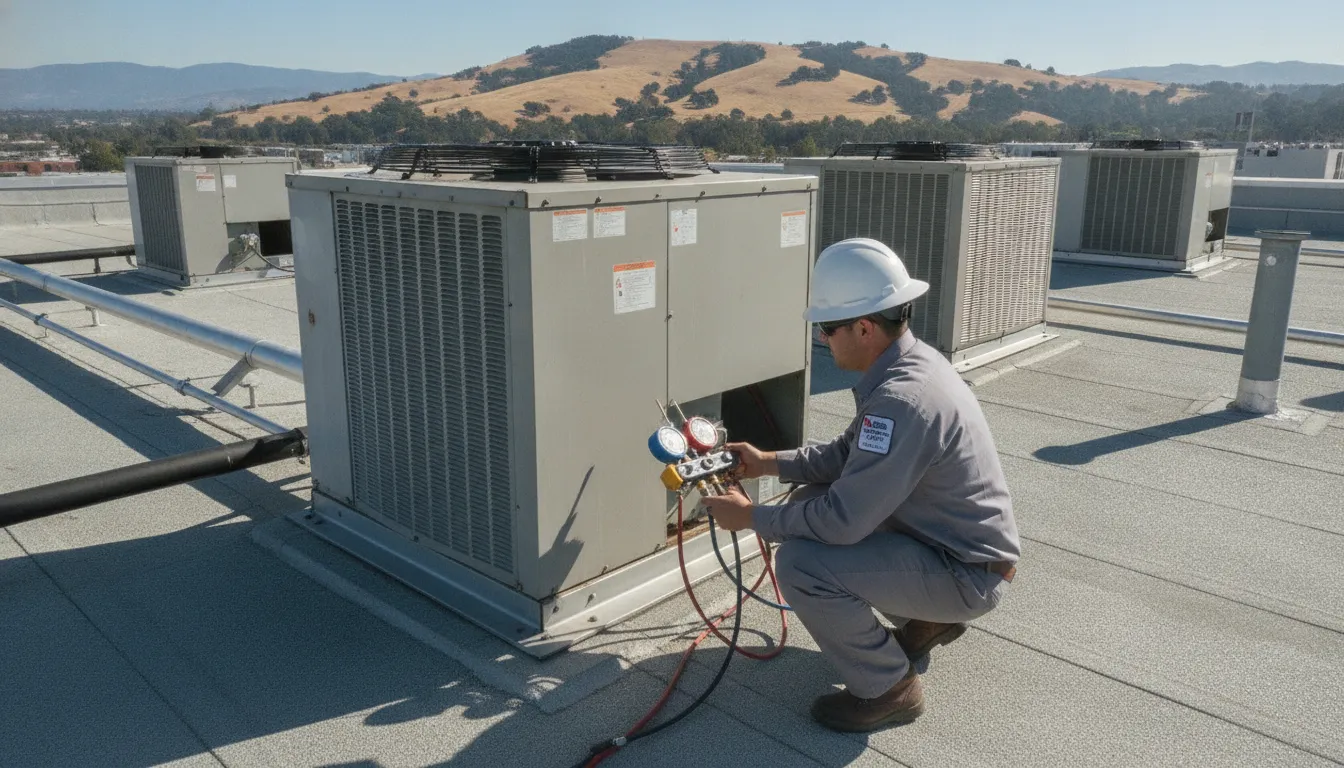
Commercial HVAC maintenance contracts in Northern California establish a predetermined, scheduled regimen of technical inspections, comprehensive cleaning, sensor calibration, and component testing designed to ensure peak mechanical efficiency. These contractual agreements protect commercial facilities against catastrophic system failures, optimize energy consumption, and guarantee healthier indoor air quality (IAQ). By partnering with a licensed commercial mechanical contractor, facility executives secure priority emergency response times, discounted repair rates, and certified compliance with ASHRAE standards. According to research from the Better Buildings Solution Center, implementing a systematic maintenance protocol is highly effective for reducing energy costs and extending equipment service life. This proactive mechanical management transforms unpredictable, high-cost emergency repairs into predictable, budgeted operational expenses.
Need urgent assistance or ready to secure a custom planned maintenance program for your facility? Contact Airteks online or call our commercial service team directly at (925) 292-0148 to schedule a technical consultation. Our engineers are ready to evaluate your system's current performance and draft a customized service agreement tailored to your facility's unique operational needs.
For facility managers and property owners assessing these agreements, understanding the precise technical scope of a professional maintenance program is critical. To assist in your evaluation, we analyze below the foundational services included in a high-caliber commercial agreement.
Commercial Hvac Maintenance Contracts Northern California: Commercial HVAC Maintenance Contracts in Northern California: What Is Included in the Technical Scope?
Managing modern commercial properties demands a rigorous approach to mechanical systems upkeep. Rather than waiting for a critical system failure to disrupt operations, sophisticated facility managers rely on structured commercial planned maintenance programs to guarantee uptime and contain operating costs. These service agreements are not mere superficial cleaning checklists. They are detailed technical blueprints designed to ensure mechanical systems comply with ANSI/ASHRAE/ACCA standards. By maintaining these strict guidelines, commercial enterprises preserve indoor air quality (IAQ) and maximize energy savings across their entire property portfolio. A comprehensive mechanical maintenance program typically covers several critical phases of service.- Rigorous Diagnostic Inspections: Experienced technicians perform complete visual and electrical evaluations of all mechanical components, locating early indicators of material wear, electrical fatigue, or refrigerant leaks.
- Coil Cleaning and Condensate Management: Evaporator and condenser coils are meticulously cleared of particulate matter, and condensate drain lines are flushed to prevent biological growth and water damage.
- Air Filtration and Airflow Optimization: Air filters are replaced on a strategic schedule based on facility occupancy patterns, reducing mechanical resistance and keeping ventilation strong.
- Control System Calibration: Thermostats, sensors, and central controllers are tested and calibrated to align with actual building thermal loads.
- Operational Performance Testing: Complete system runs are conducted to evaluate overall heating and cooling capacity, testing safety controls under real-world operating loads.
Electrical Integrity and Refrigerant Level Diagnostics
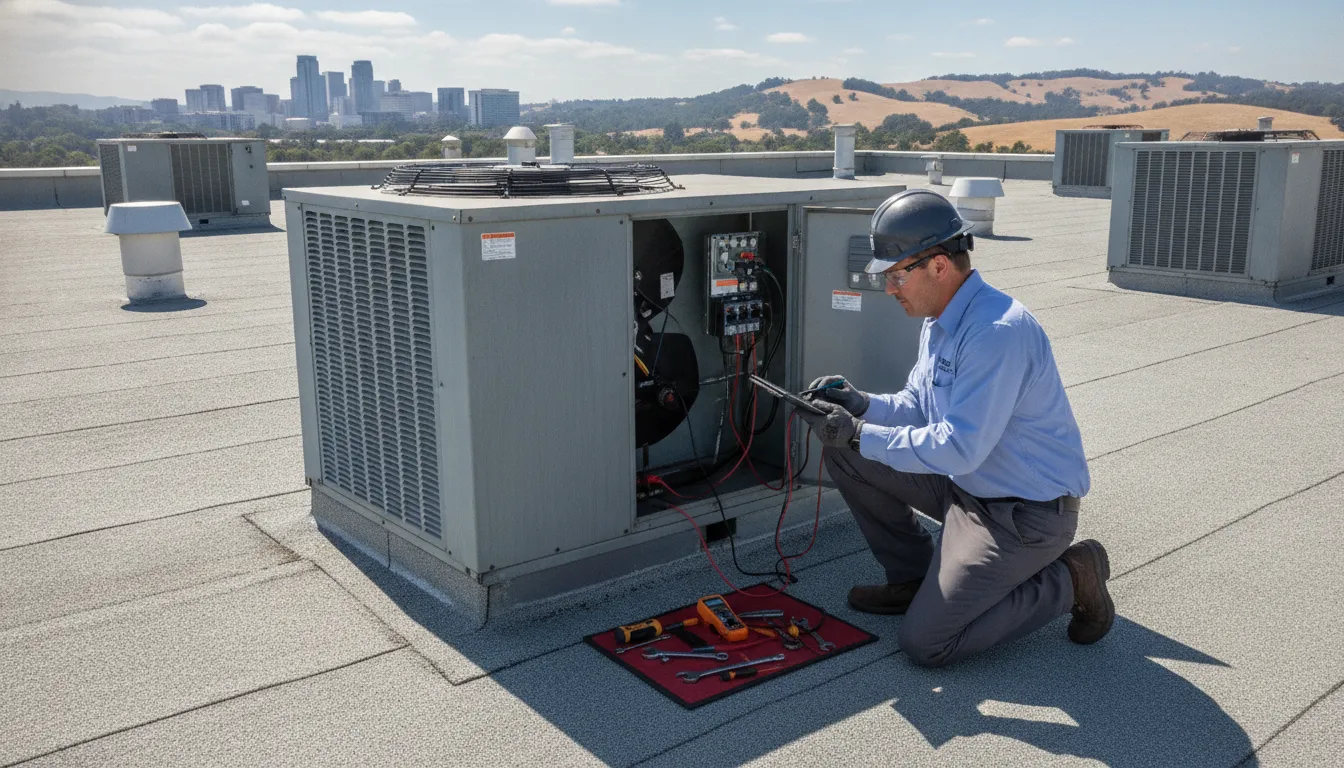
Each planned maintenance visit begins with a comprehensive diagnostic evaluation of the system's electrical and refrigeration sub-assemblies. Technicians measure voltage and amperage across motors, test compressor contactors, inspect electrical relays, and secure loose terminal connections. In addition, the system's refrigerant charge is monitored. An improper charge not only reduces cooling capacity but also places excessive thermal load on the compressor, accelerating wear and risking premature motor failure. By detecting these electrical and chemical imbalances early, Airteks mitigates the risk of sudden, expensive equipment breakdowns.Advanced Heat Transfer and Drainage Restoration
Environmental debris, atmospheric dust, and organic matter act as severe thermal insulators when allowed to accumulate on heat exchanger surfaces. Consequently, professional service agreements prioritize the deep cleaning of condenser and evaporator coils to restore optimal thermal transfer. Clean coils reduce the compressor's workload, resulting in immediate energy efficiency gains. Simultaneously, technicians clear and treat condensate pans and drain lines to prevent blockages that can lead to biological growth. Indoor air contamination, or devastating water damage to building interiors.Air Filtration Management and Airflow Balancing
Maintaining high-performance air filtration is essential for protecting expensive indoor mechanical components and ensuring the health of building occupants. Planned maintenance programs establish a dedicated filter-replacement schedule tailored to your facility's specific occupancy levels and filtration requirements (such as MERV ratings). This regular exchange maintains unrestricted airflow, reduces static pressure across the air handler, and prevents dust accumulation on fan blowers. Additionally, technicians check belt tension and align pulleys to ensure optimal blower motor performance and balanced air distribution throughout the building.Control Interface Calibration and Operational Testing
The final phase of a high-quality preventative service visit involves calibrating the system's control interfaces and verifying its overall operational sequences. Technicians test thermostats, zone sensors, and central controllers to ensure control signals are accurate and responsive. Incorrect sensor calibration often forces systems to run longer than necessary, leading to rapid energy waste and uneven heating or cooling. Once calibration is complete, the entire heating and cooling cycle is run through a complete test sequence to verify that all safety limits. Limit switches, and pressure cut-outs are fully functional and prepared for seamless operation.How Often Should a Commercial HVAC System Be Serviced?
Commercial mechanical infrastructure operates under continuous, heavy duty cycles. Unlike standard residential equipment, commercial heating, ventilation, and air conditioning systems manage substantial thermal loads to maintain stable indoor environments for large numbers of occupants. Consequently, a passive, reactive approach to equipment servicing is a severe operational risk. Establishing a systematic, frequency-based maintenance schedule is a fundamental necessity for protecting building occupant health, ensuring consistent thermal comfort, and minimizing long-term total cost of ownership.Strategic Seasonal and High-Frequency Maintenance Intervals
Most moderate office environments achieve optimal performance with semi-annual service schedules. These visits are strategically scheduled in the spring for cooling systems and in the autumn for heating systems. However, high-occupancy environments, institutional facilities, or buildings operating under heavy manufacturing loads require a quarterly service interval. Regular high-frequency check-ups ensure that air filtration, belt wear, and electrical assemblies are monitored before they reach critical failure points. Under guidelines published by the Lawrence Berkeley National Laboratory, establishing and maintaining a regular maintenance cadence is an absolute requirement for sustaining high-performance commercial indoor environments. A professional service program typically incorporates these high-frequency tasks.- Frequent replacement of high-efficiency air filters to prevent air restricted-flow and maintain lower fan-motor static pressure.
- Thorough cleaning of condenser and evaporator coil surfaces to sustain optimal heat-rejection rates and lower monthly power draws.
- Precise testing of system refrigerant pressures and compressor performance to detect slow-developing system leaks.
- Detailed diagnostic checking of mechanical linkages, motor bearings, and fan belts to prevent mechanical lockups.
Mitigating Northern California's Extreme Local Climates
Northern California's unique microclimates place heavy, localized demands on commercial mechanical systems. In regions like the Central Valley and Sacramento, summer temperatures regularly exceed 100 degrees Fahrenheit for consecutive weeks, forcing rooftop air conditioners to run at maximum thermal capacity. Conversely, in the San Francisco Bay Area. Rapid daily shifts from cool coastal mornings to warm afternoons require HVAC systems to transition frequently between heating and cooling modes, cycling compressors and heat exchangers rapidly. This constant mechanical cycling accelerates material wear and stresses critical mechanical components. When a commercial system operates under these intense regional demands, any minor inefficiency can lead to catastrophic system failure. If condenser coils are dirty with local agricultural dust, or if electrical contacts are oxidized. The system's operating temperatures will spike, triggering safety shut-offs or compressor motor burnouts during the peak of summer. A customized maintenance agreement engineered for Northern California's microclimates ensures that equipment is dynamically prepared for local seasonal transitions. Mitigating the risk of sudden offline failures when the system is needed most.Capital Asset Optimization and Predictive Maintenance Scheduling
Securing a comprehensive maintenance contract allows facility managers to shift to predictive modeling. A professional contract removes the logistical burden of tracking mechanical maintenance schedules. Your mechanical service provider proactively monitors system performance and manages all routine check-ups. This systematic oversight ensures that no vital inspections are missed, preserving system efficiency and ensuring complete reliability during peak heating and cooling seasons. Moreover, these structured agreements deliver far greater long-term economic value than ad-hoc, call-as-needed repairs. Preventative agreements include comprehensive system diagnostics, detailed combustion safety tests, and complete electrical balancing. By choosing an experienced commercial HVAC contractor serving Sacramento, Pleasanton, and Livermore, you secure a long-term mechanical partner who understands your building's specific systems. This deep system familiarity results in fewer tenant complaints, reduced energy expenses, and a significantly extended equipment lifespan.Is Your Commercial HVAC System Prepared for the Upcoming Season?
Unplanned commercial HVAC downtime can result in lost revenue, tenant dissatisfaction, and costly emergency dispatch fees. Partnering with a dedicated mechanical expert ensures your building remains fully operational and energy-efficient. Contact the Airteks engineering team today to schedule a comprehensive facility walkthrough and secure a customized maintenance agreement, or call us at (925) 292-0148 for immediate commercial HVAC assistance.Preventive vs Reactive Maintenance: The Cost Difference for Business Owners
Evaluating the economic difference between proactive and reactive management is essential. While it is tempting to postpone routine service to temporarily lower near-term maintenance expenses. This wait-and-see policy invariably results in significantly higher total operational costs, premature equipment depreciation, and costly business disruptions. Managing a commercial facility with a reactive mindset is an expensive operational failure.Direct Comparison: Preventive vs. Reactive Costs
To help visualize the financial benefits, here is a direct comparison of the two approaches to commercial HVAC management.| Service Aspect | Preventive Maintenance Plan | Reactive (Break-Fix) Strategy |
|---|---|---|
| Upfront Cost | Low, predictable quarterly or semi-annual flat fees. | Zero until a failure occurs. |
| Emergency Service Fees | Typically waived or heavily discounted under contract. | Premium after-hours and fast-response rates apply. |
| Equipment Lifespan | Extended, maximizing the return on your system investment. | Shortened due to excessive strain on neglected parts. |
| Monthly Energy Bills | Up to 20% lower due to peak operating efficiency. | Significantly higher as dirt and wear restrict system flow. |
| Business Disruptions | Minimal, with scheduled off-peak maintenance visits. | High, with unpredictable system shutdowns during hot weather. |
The Economic Strain of Reactive 'Break-Fix' Management
The "break-fix" strategy appears cost-effective only on paper, as it avoids immediate upfront service fees. However, this approach ignores the hidden, compounding costs of mechanical neglect. When an unmaintained commercial system fails, the resulting repairs are rarely simple or cheap. Emergency service dispatches during extreme weather events carry premium rates, rapid shipping surcharges for replacement parts, and substantial labor fees. Furthermore, a major system breakdown can result in complete commercial building closure, resulting in lost business revenue, compromised inventory, and potential legal liabilities from uncomfortable tenants. Establishing regular maintenance visits with an experienced commercial HVAC contractor in Northern California eliminates these high-stress emergencies. Certified technicians detect minor wear, such as dry bearings, micro-fissures in heat exchangers, or loose electrical connections, long before they lead to full system failures. This early intervention allows facility managers to schedule minor repairs during planned, off-peak hours, avoiding tenant disruption and costly emergency fees.Long-Term Financial Yields and Asset Depreciation Mitigation
A planned preventative service contract is a highly effective investment that pays for itself through immediate and long-term savings. According to data compiled by the Better Buildings Solution Center, mechanical heating and cooling systems account for approximately 40% of the total energy consumed in commercial properties. This makes HVAC systems the single largest driver of commercial utility expenses. Routine, systematic upkeep ensures that these units operate at peak thermodynamic efficiency, resulting in a dramatic reduction in monthly energy consumption. Empirical studies demonstrate that commercial properties achieve substantial annual energy savings. Facilities following regular preventative maintenance programs achieve between 5% and 20% in annual energy savings compared to unmaintained buildings. For properties with large footprints or companies managing multiple facilities, these utility savings represent thousands of dollars returned directly to the bottom line. By investing in systematic commercial HVAC maintenance contracts in Northern California, business owners transform their HVAC systems from high-cost liabilities into highly optimized, cost-saving operational assets.Enhancing Operating Margins Through Thermodynamic Efficiency
Maximizing mechanical efficiency delivers benefits that extend far beyond immediate utility savings. Properly maintained HVAC systems generate superior indoor air quality, consistent relative humidity control. And stable temperatures, factors that are directly linked to increased employee productivity and enhanced tenant retention. Additionally, preventing thermodynamic inefficiencies reduces the physical stress placed on compressors, fan motors, and control components, significantly delaying the need for a major capital expenditure on a new commercial HVAC system. Proactive maintenance allows business owners to manage their cash flow strategically, plan for future equipment upgrades, and avoid the operational chaos of sudden capital replacement costs.What to Look for in a Commercial HVAC Contractor Before Signing a Contract
Selecting the right commercial mechanical partner is a major decision. This choice directly impacts your facility's operational efficiency, occupant comfort, and long-term capital budget. A high-caliber commercial HVAC contractor in Northern California should offer far more than simple, reactive repairs. You require a sophisticated partner who understands complex mechanical engineering, building automation system (BAS) integration, and local environmental codes. Carefully evaluating a few key qualifications before executing a maintenance agreement can protect your enterprise from substandard workmanship, administrative liabilities, and ongoing system performance issues.Verify Valid Licensing, Insurance, and Industry Certifications
First and foremost, always confirm that any potential contractor holds active, valid state licensing (such as a C-20 Warm-Air Heating. Ventilating and Air-Conditioning license from the California Contractors State License Board) and carries comprehensive liability insurance and worker's compensation coverage. This baseline requirement protects your business from massive financial and legal liabilities in the event of an onsite industrial accident. A professional mechanical firm will provide these credentials and verify their active status instantly. They should also possess deep familiarity with regional building codes and Title 24 energy standards in Northern California cities, ensuring that any new commercial heating installation or system modification complies fully with state regulations.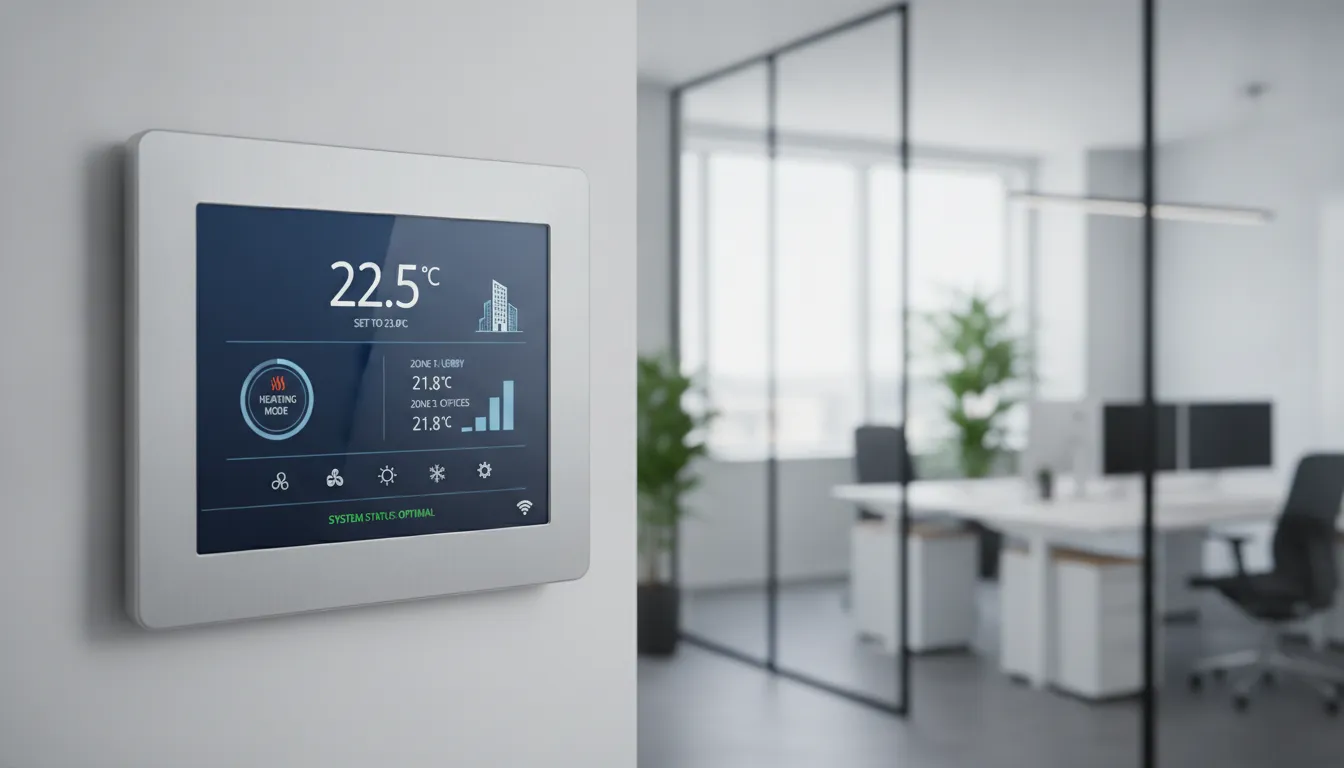
Comments