
Need immediate help? Call (925) 292-0148 to schedule a professional AC inspection with Airteks today!
The signs ac needs repair vs replacement often depend on the age of your system, high energy bills, and the total cost of all your fixes. While units under ten years old usually only need small repairs, systems lose a lot of efficiency after a decade according to Refrigeration School, Inc..
You should replace your AC if the repair costs are more than forty percent of a new setup or if the unit uses old R-22 gas. Weak air and high monthly bills in the heat show that your cooling system is no longer safe, reliable, or cheap to run.
A new unit can lower your utility costs while keeping your family cool and comfortable in your Northern California home.
Signs Ac Needs Repair Vs Replacement: How Long Does an Air Conditioner Last in California?
Most homeowners want to know how many years they can get from their cooling systems. In Northern California, an air conditioner usually lasts between 15 and 20 years. This range assumes you keep up with basic care and yearly checks. But local weather and how you use the unit can change this timeline.
Systems in the Central Valley often work harder than those near the coast. This extra stress may shorten the life of the unit if you do not care for it well. Knowing these facts helps you plan and avoid a sudden breakdown on a hot day.
Typical lifespan for California cooling units
A standard air unit can provide steady cooling for nearly two decades. Research shows that good service is the key to hitting the 15 to 20-year mark. Without regular help, small issues can turn into big failures. In places like Livermore or Sacramento, the summer heat puts a lot of pressure on the parts.
If the system is old, it might struggle to keep up when the heat rises. It is helpful to read The Homeowner's Complete Guide to Residential HVAC in Northern California to learn more about unit care.
The type of system you own also plays a role in how long it lasts. Central air systems are built to be tough. Still, they need clean filters and clear coils to stay in good shape. If your unit is over 15 years old, it may use old fluid like R-22.
This fluid is now hard to find and costly to buy. At this stage, many people choose to get a new unit instead of fixing an old one. This choice can save money on bills and repair costs over time.
The 10 year efficiency milestone
Even if your AC is still running, it may start to slow down after 10 years. This is a vital point for any homeowner to watch. At this age, many units begin to lose efficiency. You might notice that your power bills go up even when your habits do not change.
This happens because the parts inside the machine wear out. They have to work longer and harder to cool your home. This is often the time when you start to weigh the cost of repairs against a new system.
When you hit the 10-year mark, look for signs that the unit is failing. Do you hear loud noises or smell strange scents? These are clear signals that something is wrong. Small leaks can also lead to big drops in cooling power. Fixing these issues early can help the unit last longer.
But if the repairs cost too much, a new system might be the best path. Newer models use less power and keep your family more cozy. This can be a wise move for your home.
How local weather impacts your system
California has many climates that affect how your AC works. In the Bay Area, the air is often mild but can be salty. This salt can cause metal parts to rust. In the Central Valley, the heat is the main issue. Units there run for many hours each day during the summer.
This heavy use means the parts will wear out faster. You must stay on top of service to prevent an early failure. A local pro can help check for signs ac needs repair vs replacement before the heat arrives.
Dirt and dust are also common in many parts of the state. These particles can clog your coils and block air flow. When air cannot move well, the motor gets too hot. This can lead to a broken compressor, which is an expensive fix. Cleaning the area around your unit is a simple way to help.
Make sure no plants or trash block the air. Taking these small steps can add years to the life of your system. It keeps your home cool and your bills low during the hot months.
Warning Signs Your AC Needs Immediate Repair
Finding a problem early can save you a lot of cash. It helps you decide if you should fix your unit or buy a new one. Some signs are easy to see, while others hide in your vents. If you see these red flags, call for professional HVAC repair services right away.
Catching these issues now keeps your home cool and safe during hot days. A quick fix can prevent a small glitch from turning into a huge cost.
Checking Air Temperature and Flow
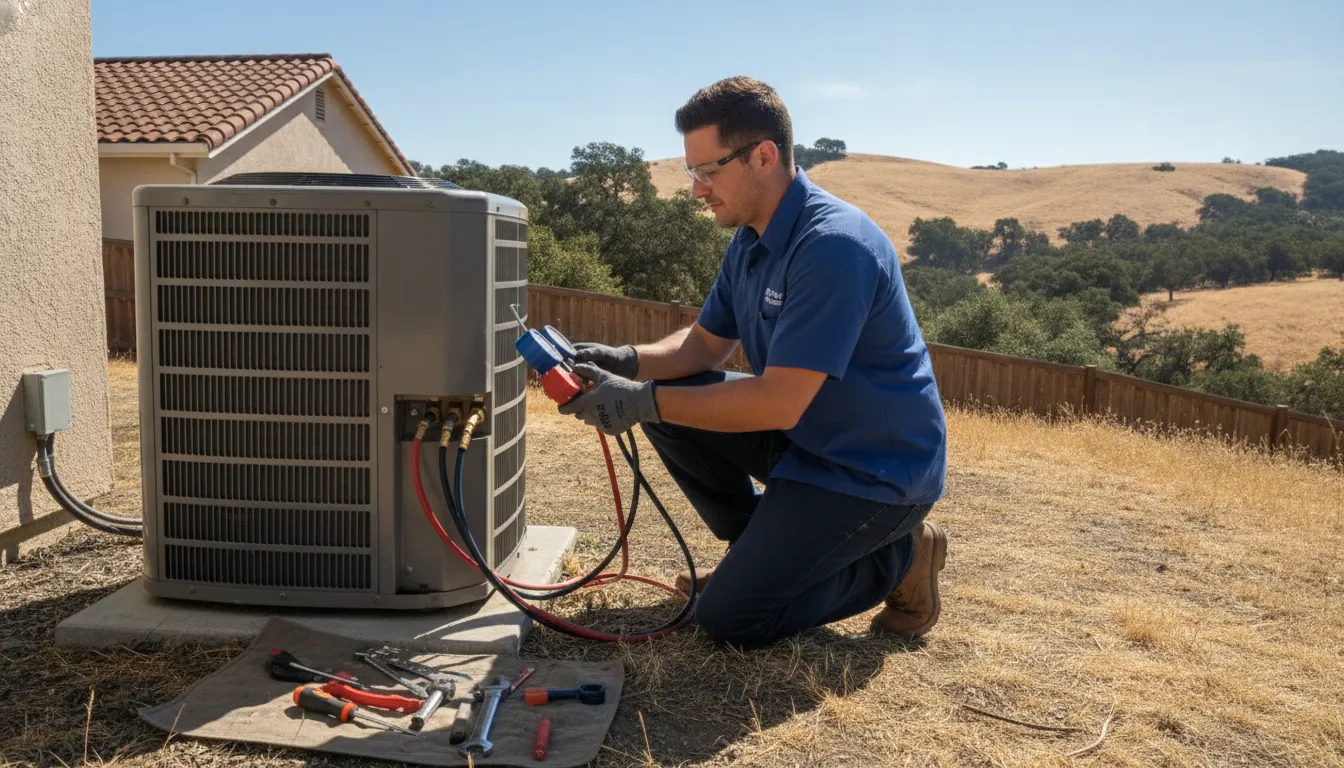
Warm air blowing from your vents is a big warning sign. Your AC should always blow cold air when it is on. If the air feels warm, you may have a broken compressor. It could also mean your coolant levels are low. A tech must find the cause before the whole system stops.
This is a clear case where residential air conditioning solutions are needed to fix the problem fast.
Weak airflow is another common issue for many owners. You might feel very little air coming out of your vents. This often happens because of clogs or old parts. But the real problem might be in your walls. The Department of Energy says leaky ducts can waste 20 to 30 percent of your cold air.
This waste makes your unit work harder. It also raises your power bills every month.
Unusual Noises and Odors
Your AC should run with a quiet hum. Loud or odd sounds mean something is wrong inside. Squealing sounds often point to a belt that has slipped or worn out. Grinding sounds may mean the motor parts are bad. If you hear banging or clanking, a part might be loose or broken. These sounds are not just a nuisance.
They can lead to a total system crash if you do not act now. Getting a pro to look at it can save the motor.
Bad smells are also a big concern for your health and safety. A musty scent often means mold is growing in your drain lines or coils. This can ruin your air and cause health issues. A sharp, burning smell is even more urgent. It usually means a wire is melting or a motor is burning out.
If you smell smoke or burning plastic, turn off your AC. Call for help right away to avoid a fire or more damage.
Cycles and Efficiency Issues
Most AC units turn on and off in steady cycles. Short cycling happens when the unit turns off too fast and then starts back up. This puts a lot of stress on the main parts. It also stops the system from taking dampness out of your air. Your house may feel sticky and warm even if the AC is on.
This habit shortens the life of your unit. It also leads to more repair needs over time.
Low coolant levels often cause your system to fail. This is usually due to small leaks in the coils or lines. You should never have to add more coolant to a healthy unit. If it is low, you have a leak that needs a pro to fix it.
A tech must find the leak and test the repair before adding more gas. Per the Department of Energy, fixing these leaks the right way is key. It keeps your system working well. If your unit is very old and breaks often, you may need to buy a new one.
When Repair Costs More Than Replacement: The $5,000 Rule
Picking between a fix and a full unit swap is a big task for any homeowner. You want to save cash but also want a cool home. High heat in the Bay Area makes this choice even more vital. We use two main rules to help you find the best path. These simple math steps help you spot the signs ac needs repair vs replacement. Using these rules helps you avoid spending money on a system that will fail soon.The Basic Cost Math
The $5,000 rule is a fast way to check if a fix is worth the price. To use it, you times the age of your unit by the cost of the fix. If the total is more than $5,000, you should buy a new unit. If the total is less, then professional HVAC repair services are likely the better bet. Say you have a $400 fix on an 8-year-old unit. That math equals $3,200. Since that is less than $5,000, a fix makes sense. But a $600 fix on a 10-year-old unit hits $6,000. In that case, the math says it is time to shop for a new system. This rule helps you see if your unit still has value left in it.The 40 Percent Standard
One more rule we often use is the 40 percent cap. This rule looks at the cost of the fix versus the cost of a new setup. If a fix costs more than 40 percent of what a new unit would cost, you should stop. Sinking that much cash into an old machine is rarely a good move. High costs for old parts often show that more breaks are coming soon. Most units start to lose big efficiency after they hit 10 years. Paying for a big fix on a weak unit just delays the cost of a new one. It is often better to put that cash toward a new, modern system that will last for 15 to 20 years.Long-Term Value and Savings
You must look at more than just the first bill when making this choice. Older units use old coolants like R-22 that are now very hard to find. This makes even small leaks very costly to fix. New units use far less power and can lower your monthly power bills. Over time, these savings help pay back the cost of the new unit. You also get a new warranty, which gives you peace of mind during hot summer days. Keeping your system clean can help it last, as dirty filters and coils often lead to big part failures. But once a unit hits its limit, a fresh start is the most honest and best path forward.| Age of System. | Repair Cost. | System Efficiency. | Recommended Action. |
|---|---|---|---|
| 5 Years. | $350. | High. | Repair. |
| 10 Years. | $450. | Medium. | Repair (Math: 4,500). |
| 12 Years. | $600. | Low. | Replace ($5,000 Rule). |
| 15 Years. | $2,500. | Very Low. | Replace (40% Rule). |
Energy Efficiency: The Hidden Signal Most Homeowners Miss
High power bills are often the first sign that an AC unit is failing. In Northern California, PG&E rates continue to rise. This makes it hard to ignore a jump in your monthly cost. If your home stays warm while your bill goes up, your unit is likely losing its edge.
Learning the signs ac needs repair vs replacement is easier when you track your power bills. Most systems start to drop in how well they use power around the 10-year mark. This drop means your unit must run longer to cool the same space. When a system works too hard, parts like the motor or compressor wear out much faster.
Rising Power Bills in Northern California
Many owners in the Bay Area and Central Valley do not know their AC is the cause of high bills. In cities like Livermore and Sacramento, summer heat waves put a huge load on older systems. A unit that is 12 to 15 years old uses much more power than a new one to reach the same goal.
Even a small leak in your ducts can cause big problems for your wallet. The Department of Energy finds that leaky ducts can waste up to 30 percent of your cooled air. This waste forces your system to run all day. That spikes your PG&E bill.
If you see your costs grow every year, it may be time to look at residential air conditioning solutions that use less power.
The Problem with Old Refrigerant
Older units often use a type of coolant called R-22. This fluid is now hard to find and very costly because it is no longer made. If your old unit has a leak, the cost to fix it and add new fluid can be more than the unit is worth.
Repairs on these old systems are often just a short-term fix for a larger problem. Newer systems use better fluids and meet high SEER2 rules. These rules set the bar for how well a unit uses power to cool your home. A high SEER2 rating means the unit is built to save you money on your power bill each month.
Moving to a new system is often the best way to avoid the high price of R-22 repairs and rising energy costs.
Signs of a Weak Compressor or Motor
The compressor is the heart of your cooling system. When it starts to fail, it draws much more power to do its job. You might notice your lights flicker when the AC starts. You may also hear a loud hum from the outside unit. These are clear signs that the motor or compressor is struggling to keep up.
A failing motor will run hot and use more power, which you will see on your bill. If your unit is over 15 years old, these parts are prone to break down during a heat wave. Replacing a compressor in an old unit is often not the best choice.
High power bills and odd noises are clear signals that your system is at the end of its life. Buying a new, better unit can lower your monthly costs and give you peace of mind.
What to Ask Your HVAC Technician Before Deciding
When you see the signs ac needs repair vs replacement, you must pick the best path for your home. Talking to an expert can help you save money and stay cool. You should not just take the first quote you get. Instead, ask hard questions to find out if a fix is worth the cost.
This checklist helps you vet your tech and understand your options.
A good tech will give you clear facts about your unit. They should explain why a part failed and how long a fix might last. At Airteks, we believe in honest talk and clear advice. We offer professional HVAC repair services to help you make the right choice for your budget.
Check technical skills and papers
Your first task is to make sure the tech has the right tools and training. This is very important if your unit has a leak. Handling cooling gas is a big job that needs a special seal from the state. You want to know your home is in safe hands before any work starts.
Do you have your EPA card for handling cooling gas? Only pros with an EPA card should fix leaks or test your unit before adding more gas. A pro must test the repair before they put more cooling gas into the system. This stops leaks from coming back and saves you money on gas costs.
What is the total cost to fix this unit versus buying a new one? Use the math to see if a fix makes sense. If the age of the unit times the fix cost is over five thousand, you should think about a new unit.
A pro can give you a quote for both paths so you can compare the long-term costs.
How fast can you get here if the unit breaks again? You need a team that moves fast when the heat is high in the Bay Area. Ask if they offer residential air conditioning solutions that include help at all hours. Airteks provides 24/7 help and same-day work for urgent jobs to keep your home safe.
Will a fix help lower my power bill? Older units often use too much power as they wear out. Ask the tech if a new part will make the unit run better or if the motor is just too old. Sometimes, a new unit pays for itself in just a few years through lower power bills.
Do you offer a bond or a promise on your work? You should not pay for the same fix twice. Ask if the tech stands behind their work with a solid promise. A good shop will back their work because they trust their team and their parts.
Compare repair costs to new units
The cost of a fix can grow fast. You need to know when to stop putting money into an old machine. A tech should show you the math on energy use and part costs. If a fix costs more than half of a new unit, it is likely time to trade it in for a better model.
Newer units use much less power and cool your home faster. They also use new types of gas that are better for the air. If your unit is more than fifteen years old, parts may be hard to find. A tech can help you find a unit that fits your home and your budget.
Verify service speed and support
Support after the job is just as vital as the fix itself. In the Central Valley, a broken AC is more than just a pain; it can be a risk to your health. You need a team that is there when you need them most.
Look for a shop that has a local base and a fleet of trucks ready to roll.
Ask about their response times during a heat wave. Some shops get booked up for weeks when it gets hot. You want a team that plans for these peaks and puts their customers first. This gives you peace of mind all summer long.
Is It Worth Fixing a 20-Year-Old AC Unit?
Most experts say that an air conditioner lasts about 15 to 20 years. When your unit hits the two-decade mark, you face a big choice. You must decide if you should pay for more repairs or buy a new system. For most people, fixing a unit this old is not the best move.
These older machines often break down more often and cost more to run each month. They may also show clear signs ac needs repair vs replacement as they reach the end of their life.
The cost of old refrigerant
One big issue with 20-year-old units is the type of gas they use to cool the air. Most systems from that time use R-22 refrigerant. This gas is now obsolete and very hard to find. Because it is no longer made, the price to buy it has gone way up.
If your old unit has a leak, the bill to fix it can be huge. A trained technician must find the leak and test the repair before adding more gas. Often, the price of the gas alone makes the repair cost too much compared to a new unit.
Safety and fire risks
Old AC units can also become a safety risk in your home. Over time, wires can wear out or rust. This corrosion often leads to electrical failures. Some units may even start to smoke or spark if the parts are too old. According to the Department of Energy, frequent on and off cycling can wear out the controls.
A new system uses modern parts that meet current safety rules. This change gives you peace of mind and keeps your family safe during the hot California summers.
Better energy efficiency
Newer air conditioners are much better at saving power. Old units from twenty years ago use a lot of energy to do the same job. Today's systems use SEER2 ratings to show how well they work. By switching to new residential air conditioning solutions, you can cut your power bills by a lot.
A new system will run less and cool your home faster. While the start price is higher, the savings on your monthly bill help the new unit pay for itself over time. Most owners find that an upgrade is the smart economic play for their home.
Frequently Asked Questions
What should I do if my air conditioner won't turn on?
If your cooling system fails to start, you should first check your home fuses or circuit breakers to ensure power is reaching the unit. If the power supply is stable, turn the system off and allow it to cool for about five minutes before you attempt a manual reset.
According to the DOE, frequent breakdowns often point to electrical issues or wire rust that need a pro repair from a skilled worker.
Can I just add more refrigerant if my air conditioner is low?
No, you should never simply add more refrigerant without first finding and fixing the source of the leak. Refrigerant does not get used up like fuel; if levels are low, a leak is present. A skilled worker must find and fix the leak, test the repair, and then charge the system with the right amount of refrigerant.
The DOE warns that wrong refrigerant levels can greatly lower your system's efficiency and cause major damage.
How often should I have my air conditioner serviced in California?
You should schedule yearly care for your air cooling unit at least once per year. The best time to do this is in the spring, before the peak heat of summer hits the Central Valley or Bay Area. Regular service helps you avoid costly urgent repairs and ensures your unit runs at peak efficiency.
Experts at Airteks suggest this annual check to keep your system in good shape and prolong its total life.
Can a technician repair any brand of air conditioner?
Yes, expert HVAC shops like Airteks service all makes and models of air cooling units without any brand limits. Whether you have an old system or a new high-efficiency unit, a skilled worker can do the needed repairs or give a replacement price. This includes everything from home split systems to complex business HVAC setups.
Getting a neutral check ensures you get honest advice based on your system's actual state rather than a specific brand's sales goals.
Ready to schedule your California AC service call?
If you wait to fix your air conditioner, you risk a total system failure during the next big heat wave in California. A small issue today can grow into a very large bill or a full replacement that you did not want to buy yet.
By setting up your service now, you ensure your home stays cool and you avoid the long wait times for parts that often happen in summer. You will also save money on your monthly power bills by running a unit that works the right way.
Jerry Bohland and his team offer same day help to find the best solution for your house and your budget.
Ready to schedule a professional service call or. Request a free system replacement quote? Call (925) 292-0148 to talk to a pro and book your visit now.
Comments