
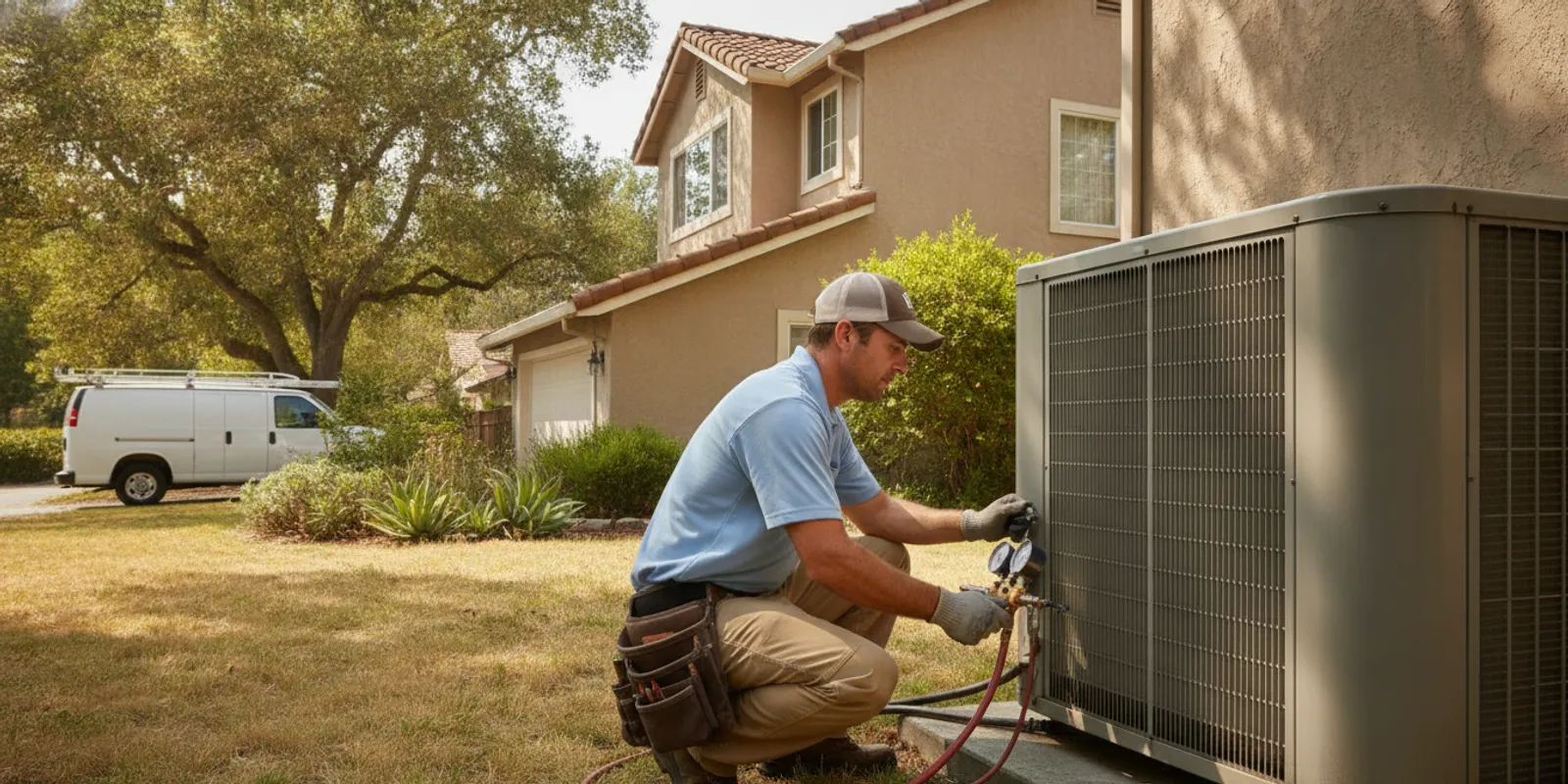
When an air conditioner stops cooling, makes an unfamiliar sound, or runs without changing the room temperature, it is natural to want a fast, clear answer. This ac repair manteca guide explains what property owners can check safely, what information helps a technician, and how to think through repair and replacement choices. The goal is to help you make a sound next-step decision without guessing at the cause.
Call Airteks at (510) 719-0621 to discuss your AC concern
What should you do first when an AC has a problem?
Start by noting what changed and when. Is the system completely off, running continuously, or blowing air that feels warmer than usual? Is the issue limited to one room, or is the whole property affected? These details help distinguish a comfort complaint from a full system shutdown and make the first conversation more useful.
Check the thermostat setting and mode. Confirm that it is set to cooling and that the set temperature is below the current room temperature. If the thermostat uses batteries, a low-battery indicator is worth addressing according to its instructions. Make sure the relevant breaker has not visibly tripped. If it has, do not repeatedly reset it; recurring trips need professional attention.
Look at the air filter if it is readily accessible. A visibly clogged filter can restrict airflow. Replace it with the correct size and type if you know how, and follow the equipment or filter guidance. Do not remove access panels or handle wiring, refrigerant lines, or internal components. If you see water near equipment, smell burning, hear electrical buzzing, or notice a damaged wire, stop using the system if safe and arrange qualified service.
Which safe checks can a property owner make?
Keep checks simple and limited to visible conditions. Make sure supply registers are not intentionally closed or covered by furniture. From a safe distance, check whether leaves or other debris are blocking the outside of the condenser. Do not reach into the unit, remove its grille, or spray electrical components. If clearing loose debris around the exterior, turn the system off first and avoid disturbing the equipment.
Listen for changes, but do not try to diagnose by sound alone. A new rattle, repeated clicking, grinding, or unusually loud operation can help describe the problem. Note whether the system starts and stops rapidly, whether air moves from the vents, and whether any display shows a code. A photo of a thermostat code or visible water can be helpful, provided you do not touch anything unsafe.
For a broader overview of routine care, see Airteks' home HVAC maintenance guide. The U.S. Department of Energy explains that regular filter replacement helps maintain airflow and system performance in its air conditioner maintenance guidance. These basic observations are not a substitute for a diagnosis. Air conditioning systems contain electrical and pressurized components that should be handled by trained professionals.
What information helps a technician diagnose the issue?
Before contacting a service provider, gather a concise description. Record the equipment type if known, the thermostat setting, the symptoms, and when they began. Mention recent changes such as a power interruption, filter replacement, unusual weather, or work around the equipment. Share whether the issue affects one zone or several and whether the problem is intermittent.
- Write down what the system does when it is called to cool: no response, fan only, brief operation, or continuous operation.
- Note any visible thermostat message or error code without opening equipment.
- Describe unusual sounds, odors, water, or ice that you can see safely.
- Tell the technician whether the system has been serviced or repaired recently, if you know.
- For a business or rental property, identify who can provide access and which spaces are affected.
Do not assume a single symptom proves a particular part has failed. Warm air, for example, can have several possible causes. A technician may need to inspect the system and test components before recommending work. For general information on service options, review Airteks' residential HVAC services.
What happens during an AC repair visit?
A useful service visit starts with the reported symptoms and the equipment history. The technician can inspect the system, check relevant operating conditions, and test components as appropriate. The exact process depends on the equipment and what the inspection finds; there is no reliable way to promise a repair before diagnosis.
Ask the technician to explain the finding in plain language. A clear explanation should connect the observed problem to the proposed work, identify any limits or uncertainties, and describe what will be checked after repair. Before authorizing work, make sure you understand the scope, any quoted charges, and whether additional findings could change the plan. A dependable recommendation should be based on the equipment and condition, not pressure to select a particular option.
Keep the service area accessible and secure pets or other obstacles. For a rental or commercial space, arrange access in advance and tell occupants what rooms or equipment may be affected. If the unit is on a roof or behind a locked gate, clarify access logistics before the appointment.
How should you compare repair and replacement options?
Repair is often worth discussing when the fault is specific, the rest of the system is in reasonable condition, and the proposed work addresses the cause. Replacement may merit consideration when problems recur, major components are failing, the system no longer meets the property's needs, or repair would not provide a sensible long-term result. Age alone does not settle the question. Ask for the reasoning behind each recommendation and compare the expected scope, not just the headline amount.
| Consideration | Repair discussion | Replacement discussion |
|---|---|---|
| Observed condition | A defined fault appears repairable and other components are operating acceptably. | Several concerns, extensive deterioration, or a major failure may affect reliability. |
| What to ask | What failed, what work is proposed, and what tests confirm operation afterward? | What equipment fits the property, what installation work is included, and what options exist? |
| Cost comparison | Request an itemized explanation of the diagnostic and repair scope. | Request a written estimate that identifies equipment, installation scope, and any included changes. |
| Best next step | Compare the repair scope with the system's overall condition and service history. | Compare system fit, scope, and long-term ownership considerations before deciding. |
For replacement planning, Airteks explains common factors in its air conditioner replacement guide and home HVAC installation cost guide. An estimate depends on the specific property and equipment; broad online ranges cannot determine the right scope for an individual home.
How do repair priorities differ for homes and businesses?
A single-family home and a commercial property may have similar equipment symptoms, but the service decision can involve different people and consequences. In a home, one room that warms up may be inconvenient, while loss of cooling across the whole house can affect sleeping, work, or occupants who need a comfortable indoor environment. Describe which rooms are affected and whether airflow differs from room to room. This helps keep the discussion specific rather than treating every comfort complaint as the same issue.
At a business, consider the schedule and the spaces that depend on cooling. An office, customer-facing area, equipment room, or food-service space may have distinct operational needs. Identify whether the problem affects one zone or an entire building, whether staff can safely use the affected area, and who can approve work. Do not bypass controls or alter equipment settings to compensate without understanding the system; temporary adjustments can obscure the symptoms or affect other zones.
For multi-zone systems, make a simple list of zones with the reported condition, thermostat reading, and time the problem occurs. For example, note that the front office is warm after midday while the rear work area remains comfortable. Such a pattern does not identify the cause, but it gives a technician a useful starting point. Airteks provides both residential service information and commercial HVAC service information, which can help clarify the type of support relevant to the property.
When should you request professional HVAC service?
Arrange a professional assessment when basic checks do not resolve the issue, when the system repeatedly stops or trips a breaker, or when cooling remains poor despite normal thermostat settings and an accessible clean filter. A professional can evaluate the equipment rather than relying on a symptom that may have several explanations. Do not keep cycling power or resetting a breaker as a workaround.
Stop troubleshooting and keep clear of the equipment if you see smoke, smell burning, notice exposed or damaged wiring, find standing water around electrical components, or observe ice on the system. If safe, switch the equipment off using its normal control and seek professional guidance. If there is immediate danger, such as smoke or fire, contact emergency services. Airteks notes emergency availability for urgent HVAC issues; call to discuss the situation and the next appropriate step, without assuming a particular response time.
For situations that are uncomfortable but not immediately dangerous, write down symptoms and arrange a service conversation. Avoid opening the cabinet, adding refrigerant, handling electrical parts, or attempting a repair based on an online symptom list. The boundary is simple: observe and report; leave testing and internal work to a qualified technician.
How can you prepare the property and plan follow-up?
Clear a path to the thermostat, indoor equipment, and outdoor unit. Note any gate codes or access instructions, and let the service provider know if the system serves a sensitive room or business operation. If you have records from earlier service, keep them nearby. For a commercial property, identify the person who can approve work and communicate with tenants or staff.
After work is completed, ask what was found, what was repaired, and whether any monitoring or maintenance is recommended. Keep the written estimate and invoice with equipment records. If the original symptom returns, note when it happens and contact the provider with that information rather than attempting internal repairs.
Airteks serves residential and commercial customers across Northern California. Manteca property owners can use the service areas page to explore coverage, and can review the company's HVAC repair information for a clearer view of repair support. Service availability and the appropriate solution depend on the property and the issue.
What should you ask before authorizing a repair?
Once a diagnosis is available, a short set of questions can help you understand the recommendation without needing to become an HVAC expert. Ask what was observed, how that finding relates to the symptom, and what the proposed work is intended to change. If more than one approach is possible, ask what each option includes and what tradeoffs matter for your system.
- Which specific condition or component explains the symptom?
- What work is included in the recommendation, and what is not included?
- How will the system be checked after the work?
- Could another condition affect the result or change the scope?
- What maintenance or monitoring should I plan for afterward?
For example, if a system cools intermittently, ask how the diagnosis distinguishes an equipment issue from a control or airflow concern. The answer should refer to what the technician inspected or tested, rather than treating intermittent cooling as proof of one failed part. If you manage a property, record the approved scope and share it with the person who will receive the service report. This keeps expectations consistent between the owner, occupants, and technician.
Understanding the boundaries of an estimate is important, too. A quote for a defined repair may not include unrelated work discovered later. Ask how the provider will communicate if inspection reveals another issue, and do not feel obliged to approve additional work before you understand the reason and cost. Clear documentation helps you compare recommendations fairly, especially when a repair and replacement proposal cover different scopes.
How can routine care reduce avoidable disruptions?
Maintenance cannot prevent every failure, but it gives a property owner a regular opportunity to notice changes before the hottest day or busiest operating period. Follow the equipment instructions for filter inspection and replacement, keep supply and return openings clear, and avoid storing objects where they obstruct equipment access. Ask a technician what maintenance schedule fits the equipment and how the filter type should be selected.
For a business, assign responsibility rather than assuming someone else is checking the system. A simple record can note filter changes, service visits, recurring comfort complaints, and dates when a zone stopped cooling. This history is useful when symptoms return because it gives the technician a timeline. A building contact can also walk through occupied areas and note patterns: one room, one floor, or several zones; morning versus afternoon; and whether the problem follows a schedule change.
Homeowners can use the same method without turning routine care into a technical project. Keep receipts and service notes together, label the filter size if it is known, and note the date of a change. Do not force a filter into place or use an unverified substitute. If you are uncertain about access or equipment instructions, leave the task for a professional. Airteks' HVAC maintenance information offers a starting point for considering ongoing care.
Frequently Asked Questions
Should I keep running an AC that is blowing warm air?
If it is running without cooling, note the symptoms and check only basic settings and airflow. If there is ice, water, an unusual odor, or an electrical concern, turn it off if safe and request professional advice rather than continuing to operate it.
Can a dirty filter cause an AC problem?
A clogged filter can restrict airflow and affect comfort. Check the filter if accessible, use the correct replacement, and follow the equipment guidance. Persistent poor cooling needs further diagnosis because the filter may not be the only issue.
How do I know whether repair or replacement is better?
Ask for a diagnosis and compare the condition of the whole system, the proposed repair scope, the cost, and the suitability of the equipment for the property. No single symptom or age threshold can decide for every system.
What should I have ready before I call?
Have the address, equipment type if known, a short description of what changed, any visible thermostat code, and your access availability. Mention safety concerns or business impacts so the service conversation can start with the right context.
Call Airteks at (510) 719-0621 to discuss your AC service needs
What is the next step?
A careful description and a professional diagnosis can turn an uncertain AC problem into a clearer set of choices. Avoid unsafe repairs, ask questions about the proposed work, and choose the next step that fits the condition of your system and property.
Comments