
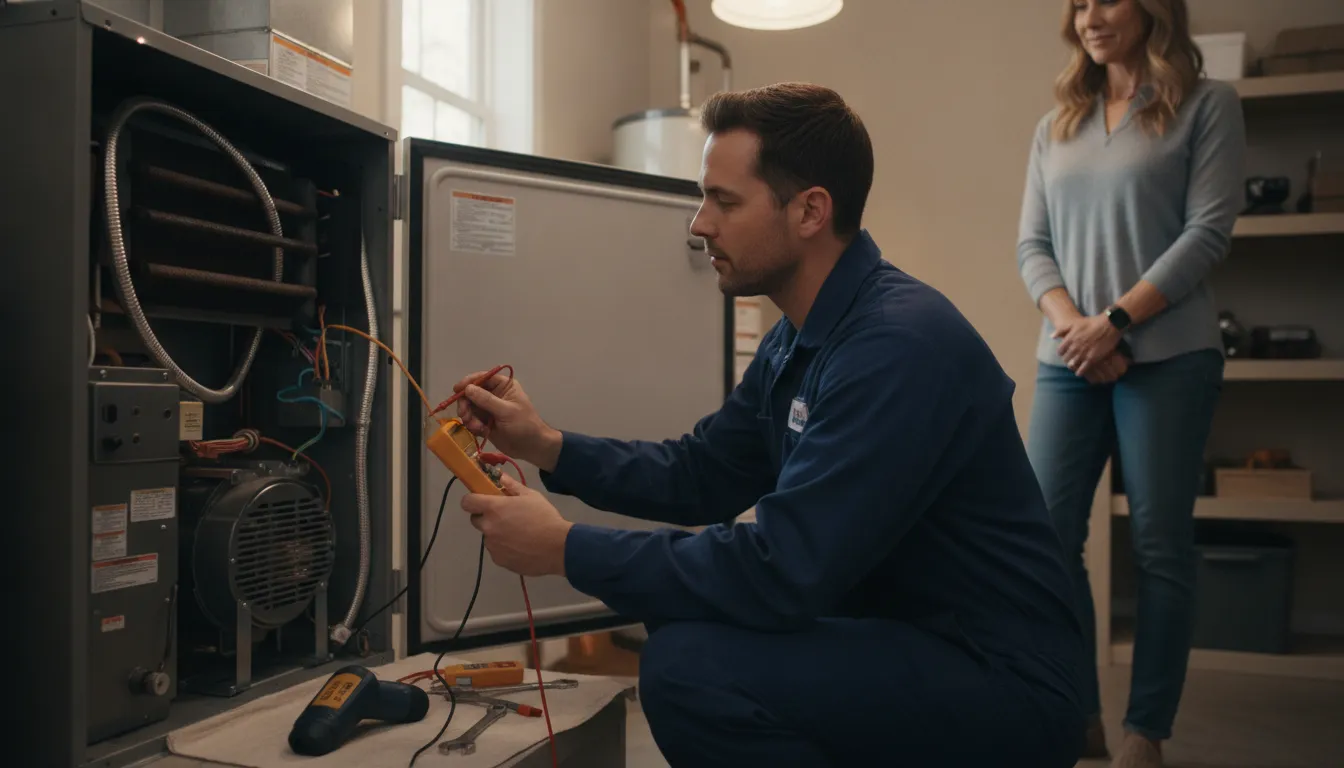
A furnace that stops heating can turn a comfortable home into an urgent problem, especially during a cold Bay Area night. Emergency furnace repair in the Bay Area starts with a safety decision: identify hazards that require immediate action, then arrange professional service for problems that can safely wait. This guide explains what to do next without guessing at a repair or a price.
Call (925) 292-0148 to ask about same-day furnace service.
If you are comparing repair, emergency service, and replacement options, Airteks' guide to HVAC costs, emergency repair, and replacement decisions in the Bay Area provides broader planning context. This article narrows the focus to a furnace problem that needs a safe, timely response in a Northern California home.
What Is a Furnace Emergency vs. a Problem That Can Wait?
A furnace problem is an emergency when it creates an immediate safety risk, leaves the home without necessary heat, or is getting worse in a way that could damage equipment or the property. A comfort issue without signs of danger may be suitable for a prompt service appointment, but only a qualified technician can diagnose the cause.
- Leave and get emergency help: You smell gas, a carbon monoxide alarm sounds, you see smoke or flames, or you notice an electrical burning smell or sparking.
- Call promptly for urgent service: The furnace will not run, the home has no heat, the system repeatedly shuts down, or the unit is blowing cold air and the problem is not resolved by a safe thermostat check.
- Schedule a prompt inspection: You hear a new or worsening noise, notice uneven heating, see weak airflow, or observe short cycling without a gas odor, smoke, sparks, or alarm.
Do not remove access panels, adjust gas controls, bypass safety switches, or keep operating a furnace that shows dangerous symptoms. A thermostat setting or filter check may be reasonable for a homeowner, but it should never delay leaving the property when a safety hazard is suspected. For symptom background, see Airteks' guide to common causes of a furnace that is not heating.
How Quickly Can You Get Same-Day Furnace Repair in the Bay Area?
Same-day furnace repair may be available in the Bay Area, but timing depends on the city, call volume, technician availability, the nature of the failure, and whether the necessary part is available. Airteks documents emergency HVAC availability and same-day service capability, so call to confirm the current schedule rather than relying on a guaranteed arrival or completion time.
What affects same-day availability?
When you call, share the service city, whether anyone in the home is especially vulnerable to cold, what the furnace is doing, and whether you smell gas or hear unusual sounds. Explain whether the system stopped suddenly or has been deteriorating. This helps the service team determine urgency and set realistic expectations.
Airteks serves Northern California customers across the Bay Area, Central Valley, and Sacramento region, including named communities such as Livermore, Pleasanton, Walnut Creek, and Dublin. Availability can vary by location and schedule. If you need a broader emergency HVAC resource, review 24-hour HVAC repair in the Bay Area.
What can happen during the service visit?
A professional visit generally begins with a safe inspection and diagnosis. The technician may review the thermostat, power supply, airflow, ignition or control components, venting, and other equipment-specific conditions. The next step should be explained in plain language, along with the repair options and any parts or labor involved. If the repair cannot be completed during the first visit, the reason may be equipment condition, safety requirements, technician availability, or parts availability.
Is a Gas Furnace That Smells Like Gas an Emergency?
Yes. A gas odor near a furnace should be treated as a potential gas leak, not as a routine HVAC troubleshooting problem. Leave the property immediately, avoid flames, light switches, and electronics, and call 911 or the gas utility from a safe location outside. Do not re-enter until emergency personnel or the utility says it is safe.
Do not use a phone inside the building, search for the source of the odor, relight a pilot, or operate the furnace to see whether the smell clears. PG&E's gas safety guidance explains precautions for suspected gas leaks. An HVAC technician can evaluate the furnace after the immediate gas-safety response, but a service call does not replace emergency response or utility clearance.
A carbon monoxide alarm is also an emergency. Carbon monoxide is odorless and colorless, so do not wait for a smell. Leave the building and call 911 from outside. The CDC carbon monoxide guidance explains why fuel-burning appliances, including furnaces, can be sources of exposure and why prompt action matters.
What Does Emergency Furnace Repair Cost?
Emergency furnace repair does not have one universal price. The final quote depends on the diagnosis, equipment, failed component, labor, repair complexity, parts, and timing. Airteks does not publish a standardized furnace repair price list, so the responsible way to plan is to describe the symptoms, ask what the visit includes, and request an itemized explanation before approving work.
| Cost factor | Why it matters |
|---|---|
| Diagnosis | The technician must identify the actual failure before recommending a repair. |
| Parts and equipment | The required component and its availability can affect the scope and timing of work. |
| Labor and complexity | Access, system design, safety checks, and repair difficulty can change the work involved. |
| Urgency and timing | After-hours, weekend, or holiday requests may have different terms. Ask for those terms before dispatch. |
For a separate regional cost discussion, read Airteks' furnace repair cost guide for Northern California. That article addresses cost research, while this guide focuses on the safe decisions that come before and during an emergency call.
Should You Repair or Replace a Furnace During an Emergency?
An emergency does not automatically mean a furnace needs replacement. Repair may be appropriate when the system can be made safe and reliable, while replacement may deserve consideration when the equipment has repeated failures, a major safety issue, or a condition that makes continued operation impractical. The decision should follow diagnosis, system condition, repair scope, and your household or property's needs.
Ask the technician to explain what failed, whether the system is safe to operate, what the repair is expected to address, and what signs would justify replacement planning. Airteks provides furnace repair, installation, maintenance, inspection, upgrade, and replacement services, so the conversation can stay focused on the best next step instead of a one-size-fits-all recommendation. For the broader decision framework, revisit the pillar guide's section on repair-versus-replacement decisions.
Homeowners can also ask whether a temporary shutdown, a follow-up visit, or a maintenance plan is appropriate after the urgent issue is addressed. A clear recommendation should account for safety first, then reliability, comfort, operating needs, and the cost of the available options.
How Should You Prepare for After-Hours Furnace Service?
Before the technician arrives, focus on safety and useful information rather than attempting a complex repair. Airteks lists emergency HVAC availability outside regular service hours, but after-hours availability and timing should be confirmed when you call.
- Protect people first: Leave immediately for a suspected gas leak, carbon monoxide alarm, smoke, or fire. Contact emergency services from outside.
- Stop unsafe operation: Do not keep running a furnace that smells like gas, sparks, smokes, or triggers an alarm. Do not bypass a safety control.
- Record the symptoms: Note when the furnace stopped, what the thermostat displays, unusual sounds or smells, and whether the system cycles on and off.
- Clear safe access: Keep the area around the furnace accessible, but do not open panels or handle gas connections unless directed by a qualified professional.
- Ask practical questions: Confirm the expected service window, diagnostic terms, quote process, and whether a same-day repair depends on parts or follow-up work.
Airteks' residential furnace services page is the right next resource for homeowners comparing repair, maintenance, installation, and replacement support.
Call (925) 292-0148 before the problem gets worse and ask about after-hours furnace service.
Frequently Asked Questions
When is a furnace problem an emergency?
A gas odor, carbon monoxide alarm, smoke, flames, sparking, or an electrical burning smell is an immediate safety concern. Leave the property and contact emergency services or the gas utility from outside. A total loss of heat can also require urgent service, especially when the home cannot remain safely occupied.
How fast can same-day furnace repair respond in the Bay Area?
Airteks documents emergency HVAC availability and same-day service capability, but timing depends on the city, demand, technician availability, safety conditions, the failure, and parts. Call (925) 292-0148 to confirm current availability. Same-day service is not a guaranteed arrival or completion time.
What should I do if I smell gas near my furnace?
Leave immediately. Do not use switches, flames, or electronics inside, and do not investigate the source. From outside, call 911 or the gas utility and wait for clearance before re-entering. Arrange HVAC service only after the immediate gas-safety response is complete.
How much does emergency furnace repair cost?
Airteks does not publish a standardized repair price because the cost depends on the diagnosis, system, parts, labor, complexity, and timing. Ask what the diagnostic visit includes and request an itemized quote before approving work. A technician can explain whether repair or replacement is the more practical option.
Can a furnace repair be completed the same day?
Some repairs may be completed during the first visit, but same-day completion depends on the failure, technician availability, safety requirements, and parts. Ask about the likely next step when you schedule service, and be prepared for a follow-up if a required part is unavailable.
What information should I provide when I call for service?
Share your city, the furnace symptoms, when the problem began, thermostat or alarm information, unusual sounds or odors, and whether there is no heat. If you smell gas or a carbon monoxide alarm sounds, leave first and call emergency services or the gas utility from outside.
Call (925) 292-0148 to contact Airteks for emergency furnace repair in the Bay Area.
Comments