

Industrial HVAC in Central Valley California facilities has a bigger job than keeping an office comfortable. Manufacturing plants, warehouses, and distribution centers must manage large spaces, changing heat loads, ventilation, equipment access, operating schedules, and the cost of an unexpected shutdown. The right approach starts with the facility and its work, not with a one-size-fits-all equipment list.
Call (925) 292-0148 to discuss your commercial HVAC needs with Airteks.
Airteks serves commercial and industrial properties across Northern California. Start with this commercial HVAC contractor serving Northern California guide, then use the information below to prepare for a facility-specific conversation.
What Makes Industrial HVAC Different From Commercial Office HVAC?
Industrial HVAC differs from office HVAC because the system must respond to larger spaces, longer run times, process-related heat, ventilation demands, and operational consequences when performance slips. An office system primarily supports occupant comfort. A manufacturing or distribution facility may also need to protect stored goods, maintain stable working conditions, move air through high-bay areas, and coordinate with production schedules.
That does not mean every plant needs specialized process cooling or a particular equipment type. It means the HVAC evaluation should account for how the building is used. A useful assessment considers:
- Building size, ceiling height, zoning, occupancy, and work areas
- Operating hours, shift changes, weekend use, and seasonal loads
- Heat produced by equipment, lighting, people, and stored materials
- Outdoor-air, exhaust, make-up-air, filtration, and air-movement needs
- Access for service, replacement, lifting, and future expansion
- Controls, alarms, monitoring, and the information a facility manager needs
- Maintenance windows and the business impact of a system failure
For a plant manager, reliability is not just a comfort issue. Uneven temperatures, poor airflow, or recurring equipment faults can affect staff, inventory, production planning, and the ability to keep a facility operating as intended. A qualified HVAC contractor should explain which requirements can be handled by commercial equipment and which require additional engineering or a specialized assessment.
Temperature and Air Quality Requirements for Central Valley Industrial Facilities
Central Valley facilities should evaluate temperature control, humidity, ventilation, filtration, and air movement together, because improving one part of the system can affect the others. A large building may have different conditions near loading doors, production areas, offices, storage zones, and equipment rooms. A single thermostat reading may not show what employees, products, or machinery experience across the full facility.
Begin by documenting the conditions that matter to your operation. Note areas that run hot or cold, doors that open frequently, dust or odor concerns, recurring humidity problems, and locations where airflow is weak. Also identify whether equipment creates heat, fumes, airborne particles, or other conditions that require a separate ventilation or safety review.
California's Central Valley can bring long periods of intense summer heat. That makes capacity, condenser condition, airflow, controls, and maintenance especially important before peak demand arrives. It does not replace a load calculation or engineering review. A site assessment should determine whether the existing system is correctly sized, whether zones are balanced, and whether ventilation and filtration match the actual use of the building.
Airteks' documented commercial capabilities include rooftop units, packaged systems, split systems, heat pumps, chilled-water systems and boilers, air handlers, exhaust and make-up-air systems, and building controls. The appropriate combination depends on the facility, existing infrastructure, project goals, and service access. Explore commercial HVAC systems for facilities and businesses for the service-level context, then request an evaluation of your specific building.
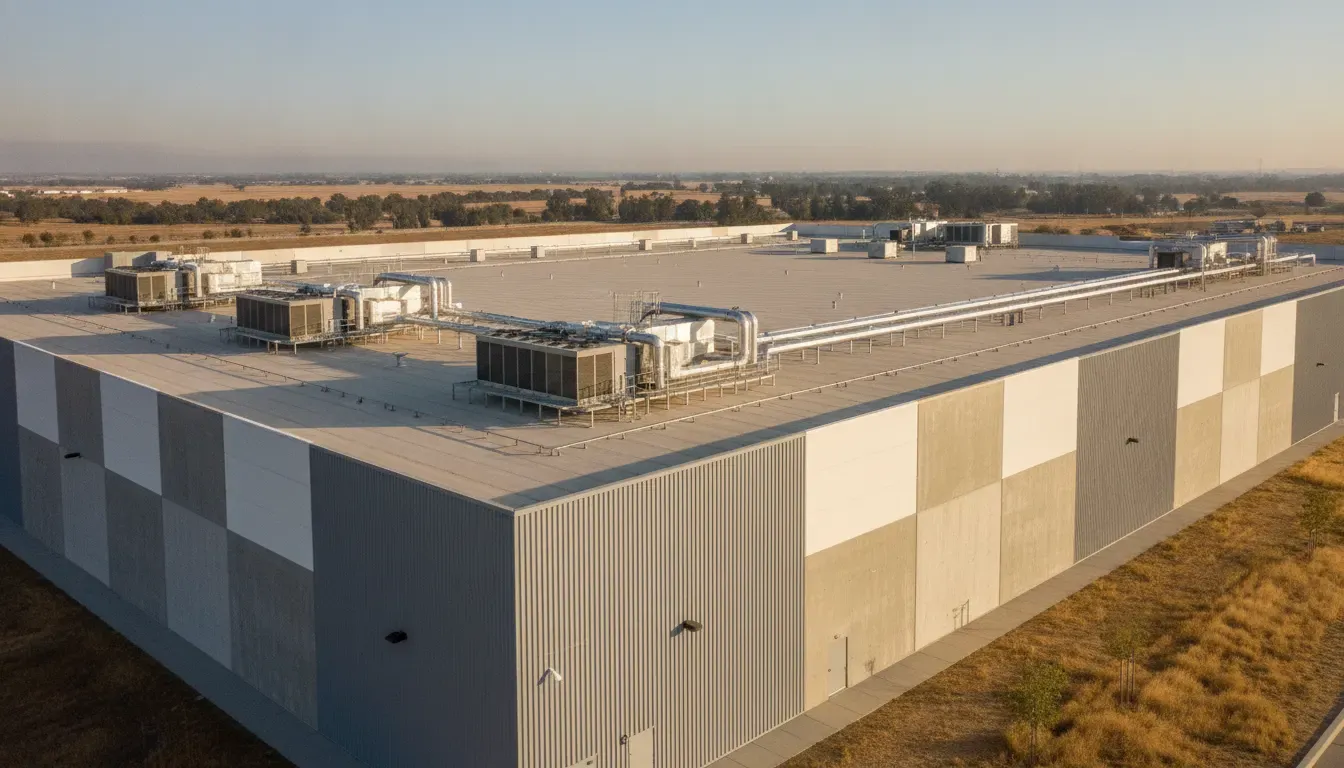
HVAC Systems for Warehouses and Distribution Centers in California
Warehouse and distribution HVAC planning should match the building's size, storage layout, loading activity, staffing, equipment heat, and required operating schedule. The goal is not to select the most complex system. The goal is to create a maintainable design that delivers appropriate air movement and temperature control while leaving room for service, future changes, and a clear response plan.
| Facility consideration | Questions to review |
|---|---|
| Large open areas | Are high-bay spaces receiving even airflow, or are some zones consistently uncomfortable? |
| Loading and shipping | How often do doors open, and how does outside air affect temperature and equipment demand? |
| Production or machinery heat | Where are the heat loads concentrated, and does the system need separate zones or dedicated exhaust? |
| Stored materials | Are there documented temperature, humidity, filtration, or ventilation requirements for the goods? |
| Maintenance access | Can technicians safely reach filters, coils, controls, rooftop equipment, and electrical components? |
| Future expansion | Will new lines, storage, shifts, or building additions change the load or zoning plan? |
Common commercial system categories can include rooftop units, packaged systems, split systems, heat pumps, chilled-water equipment, boilers, air handlers, exhaust, and make-up air. A contractor should explain the reason for each recommendation, how it connects to existing equipment, and how the system will be tested and maintained after installation or replacement.
Controls can also help facility teams see trends rather than wait for a complaint. Airteks installs and supports Pelican Wireless Systems, which the customer context describes as providing wireless control, cloud-based monitoring, analytics, alerts, and multi-site management. Any projected savings or return on investment should be treated as project-dependent, not guaranteed. Learn more about why commercial facilities choose Pelican Wireless Systems.
How to Keep Industrial HVAC Running During Central Valley Heat Waves
Heat-wave readiness comes from planned inspections, clear priorities, working controls, and a response plan prepared before equipment is under maximum demand. Waiting for a rooftop unit or air handler to fail during a hot production day usually leaves fewer scheduling options and more pressure on the facility team.
A practical readiness plan includes:
- Review equipment history and identify repeat failures, aging components, and unresolved comfort complaints.
- Inspect filters, coils, belts, electrical connections, condensate paths, fans, refrigerant-related components, and controls according to the equipment and manufacturer guidance.
- Confirm that thermostats, sensors, schedules, alarms, and remote access are reporting correctly.
- Document critical areas, backup priorities, equipment shutoff points, roof access, and safe service procedures.
- Schedule planned maintenance before the highest-demand season, with enough time to correct findings.
- Decide who receives an after-hours call and what information the service team will need to diagnose the problem.
Planned service does not guarantee that a facility will avoid every breakdown. It gives the facility team better information and a more orderly way to address known risks. Airteks offers customized commercial maintenance planning and priority emergency response for contract customers. See the guide to commercial HVAC maintenance contracts in Northern California and the commercial planned maintenance service page.
How Airteks Supports Industrial Clients Across the Central Valley
Airteks approaches industrial and commercial HVAC through the full equipment lifecycle, from design and installation to planned maintenance, repair, replacement, and controls support. The company serves businesses, property managers, warehouses, and industrial properties across Northern California, including Central Valley markets referenced in its customer information.
That full-service model can reduce the need to coordinate separate vendors for every stage of a project. Airteks documents licensed, insured, factory-certified, EPA-certified, and HVAC-certified technicians, along with service for all makes and models. The company also describes direct employee technicians, detailed service reports, clear communication, and follow-up recommendations.
For a manufacturing facility, the next step should be a site-specific discussion. Bring equipment lists, floor plans if available, operating hours, comfort or air-quality concerns, maintenance history, expansion plans, and any documented requirements for temperature or humidity. Airteks can then explain what its commercial HVAC team can address and where a specialized engineering or compliance review belongs. For broader regional context, review the commercial HVAC contractor serving Northern California pillar guide.
Airteks provides commercial service across the Bay Area, Central Valley, and Sacramento region. Use the Airteks service map to review the broader coverage area, or visit Airteks' commercial HVAC services for the main service path.
Call (925) 292-0148 to request a facility-specific HVAC conversation.
Frequently Asked Questions
What does industrial HVAC service include for Central Valley businesses?
Industrial HVAC service can include facility assessment, system design, installation, replacement, repair, controls, ventilation review, planned maintenance, and emergency analysis. The exact scope depends on the building, equipment, operating schedule, and any process or indoor-air requirements that need separate technical review.
How is industrial HVAC different from commercial HVAC?
Industrial HVAC often involves larger spaces, longer operating hours, more concentrated heat loads, more demanding ventilation, and greater consequences when equipment stops working. The correct solution may still use commercial equipment, but the evaluation must account for the facility's layout, work, access, controls, and maintenance plan.
What factors affect industrial HVAC system design in California's Central Valley?
Facility size, ceiling height, process and equipment heat, occupancy, operating hours, loading-door activity, outdoor-air needs, filtration, humidity, energy goals, existing infrastructure, and future expansion all matter. A contractor should evaluate these factors on site rather than recommend equipment from the building type alone.
How often should an industrial HVAC system be inspected and maintained?
The schedule depends on the system, manufacturer guidance, operating hours, environment, filtration needs, and consequences of a failure. A customized maintenance plan can set inspection and service intervals around the facility's equipment and production calendar instead of relying on a generic schedule.
What are the signs an industrial HVAC system needs repair or replacement?
Recurring breakdowns, uneven temperatures, weak airflow, unusual noise, rising energy use, persistent odors or humidity issues, obsolete components, and frequent service calls are reasons to request an assessment. Repair may be appropriate, while replacement can make sense when reliability, parts availability, or lifecycle performance has materially changed.
What should a Central Valley business ask before hiring an industrial HVAC contractor?
Ask about relevant commercial equipment experience, the assessment process, system options, maintenance support, documentation, emergency availability, access requirements, project coordination, and how the estimate will be developed. Confirm licensing and insurance as appropriate for the work, and ask which requirements need a separate engineering or compliance review.
Call (925) 292-0148 to schedule your Airteks commercial HVAC consultation.
Comments