

A complete HVAC maintenance checklist seasonal tune-up gives Northern California homeowners a practical way to prepare heating and cooling equipment before seasonal demand increases.
Call Airteks at (925) 292-0148
A seasonal HVAC tune-up is a planned inspection, cleaning, testing, and adjustment of your heating and cooling system before demanding weather arrives. In Northern California, a well-timed visit can protect comfort and help identify small concerns before they become disruptive repairs.
Airteks helps Northern California homeowners maintain air conditioning, furnaces, heat pumps, and related HVAC equipment with clear recommendations and dependable workmanship. Use the checklist below to handle safe homeowner tasks and recognize the work that belongs with a qualified HVAC professional.
A complete hvac maintenance checklist seasonal tune-up should cover the filter, airflow, thermostat, electrical connections, safety controls, coils, condensate drainage, ductwork, and overall system performance. A professional technician also documents concerns and recommends repairs based on observed conditions.
What Does a Complete HVAC Maintenance Checklist Seasonal Tune-Up Include?
A complete seasonal tune-up is a structured review of the equipment, controls, airflow, and safety components that affect heating or cooling performance. It is more than changing a filter. The technician evaluates the system as a whole, cleans accessible components, tests operation, and explains any condition that needs attention.
Core checks for every system
The exact work depends on the equipment type, age, condition, and season. A thorough visit commonly includes:
- Filter and airflow review: Check the filter, supply registers, return grilles, blower operation, and signs of restricted airflow.
- Thermostat check: Review settings, temperature response, cycling, and communication between the thermostat and equipment.
- Electrical inspection: Examine wiring, connections, capacitors, relays, disconnects, and controls for wear or unsafe conditions.
- Coil and cabinet inspection: Look for dirt, corrosion, debris, blocked passages, and other conditions that can limit heat transfer.
- Drainage review: Inspect the condensate pan and drain path where applicable, because restricted drainage can cause water damage or a system shutdown.
- Equipment performance: Test the system while operating and compare measured conditions with expected operation for that equipment.
Heating equipment also requires attention to combustion, ignition, venting, and safety controls. Cooling equipment may require refrigerant-related measurements or sealed-system work. Those tasks require appropriate training and tools. For broader information about equipment choices and year-round care, read Airteks' complete guide to residential HVAC in Northern California.
Spring AC Tune-Up Checklist for Northern California Homes
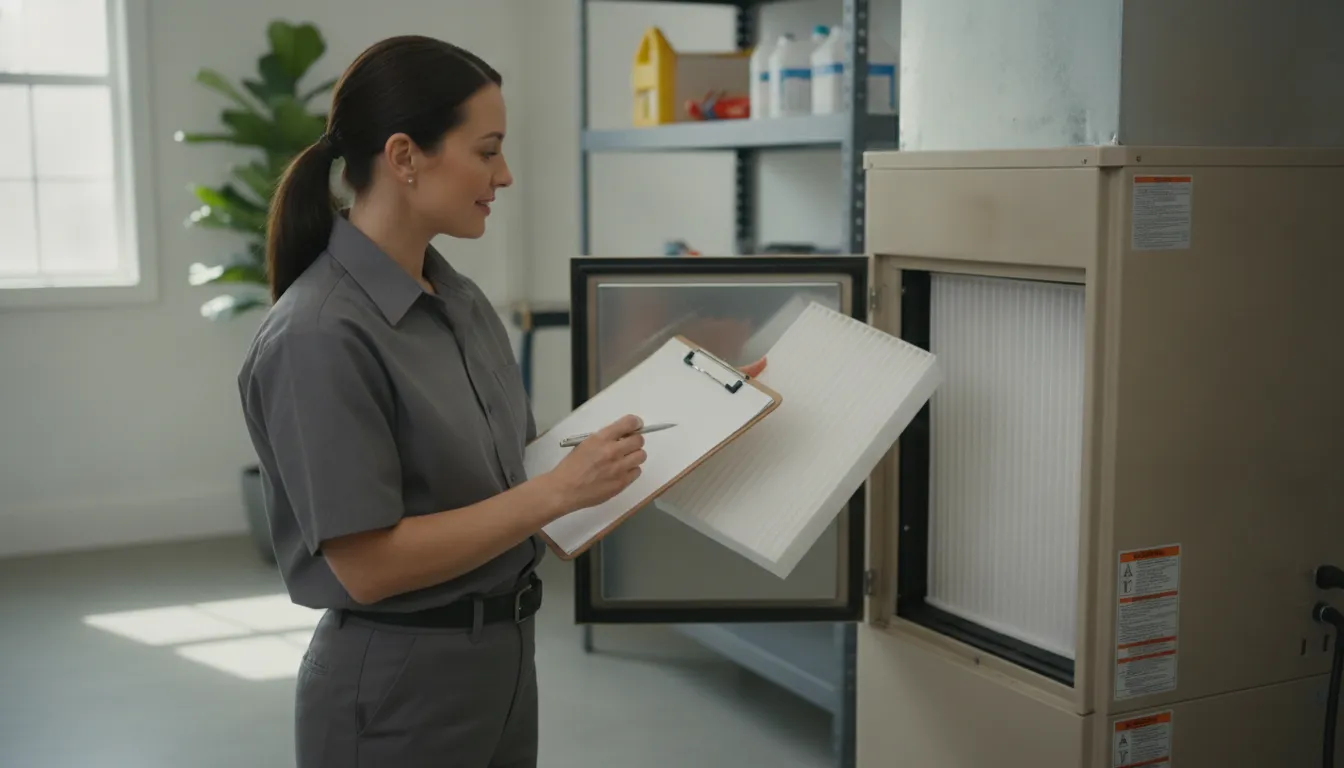
A spring AC tune-up prepares cooling equipment for warmer days and longer run times. Start with visible, low-risk checks, then arrange professional service for electrical, refrigerant, coil, and sealed-system work. This spring checklist is a practical starting point, not a substitute for equipment-specific instructions.
Safe homeowner checks
- Inspect the filter. Check the filter monthly and replace it when dirty or when the manufacturer's service interval calls for replacement. Use the correct size and type for the equipment.
- Clear the outdoor unit. Remove leaves, grass, and loose debris around the condenser. Keep vegetation from blocking the airflow path, and follow the equipment instructions before working near the cabinet.
- Open supply registers. Confirm that registers and return grilles are not blocked by furniture, rugs, or storage. A closed or obstructed register can affect comfort and airflow.
- Review thermostat operation. Replace batteries when applicable and confirm that the system responds to a reasonable cooling setting without unusual delays or cycling.
- Observe the first cooling cycle. Listen for new rattling, grinding, buzzing, or scraping. Notice whether the system reaches the setting and whether airflow feels consistent in the main rooms.
Work for a qualified HVAC professional
- Inspect and clean evaporator and condenser coils when needed.
- Test electrical components, connections, controls, and operating amperage.
- Evaluate refrigerant-related performance and inspect for signs of a sealed-system concern.
- Check condensate drainage and safety shutoffs.
- Measure system operation and explain any repair or replacement recommendation.
Stop the system and request service if you notice burning odors, repeated breaker trips, unusual electrical noise, leaking water, or a sudden change in cooling. If weak airflow, unusual cycling, water around the indoor unit, or inconsistent cooling continues after the basic checks, schedule service before sustained heat arrives.
Fall Furnace Tune-Up Checklist Before Heating Season
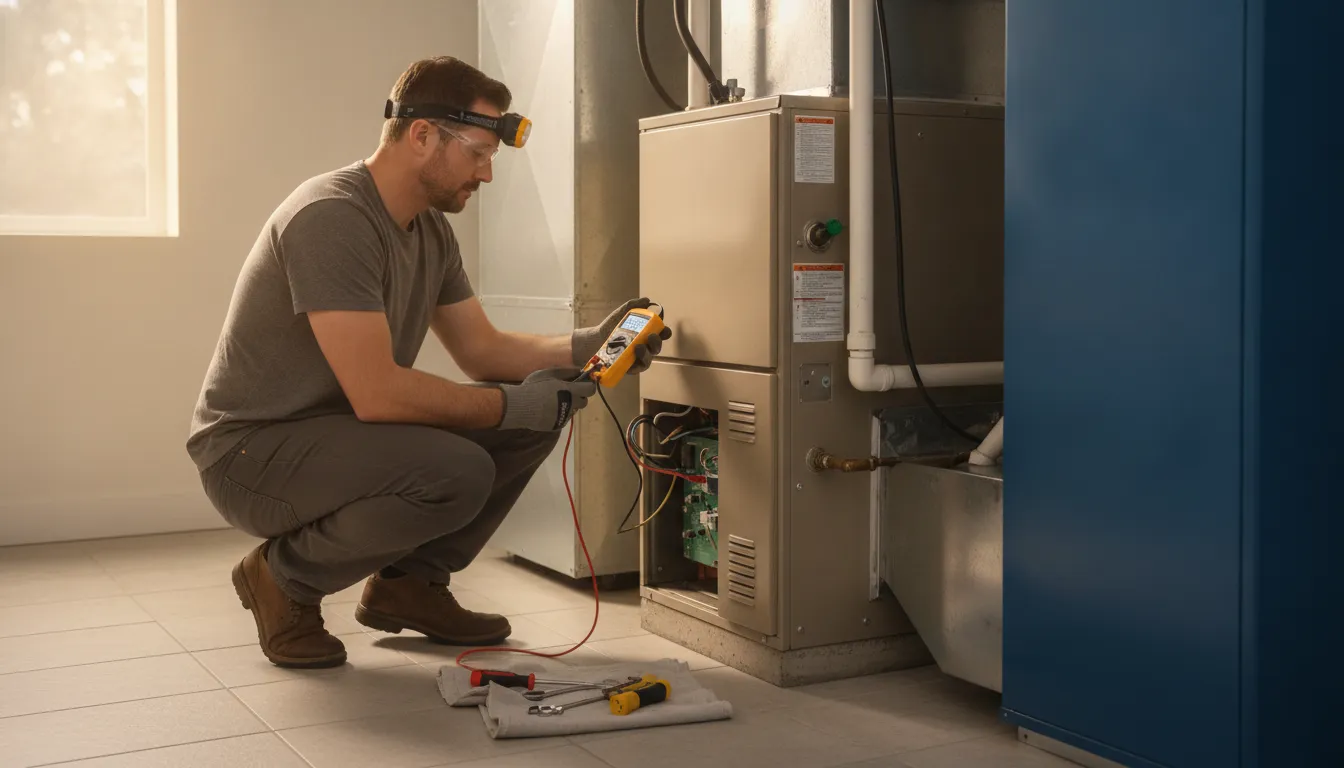
A fall furnace tune-up prepares heating equipment for regular operation when temperatures drop. Homeowners can replace the filter and keep the area around the equipment clear. A qualified technician should handle combustion, ignition, electrical, venting, and safety testing.
Homeowner preparation
- Check the filter and replace it with the correct size and type when needed.
- Keep boxes, clothing, cleaning supplies, and other combustible materials away from the furnace.
- Make sure supply registers and return grilles are open and unobstructed.
- Check that outdoor intake or exhaust areas are not blocked, when the system has those components.
- Test smoke and carbon monoxide alarms according to the manufacturer's instructions.
- Run the furnace before the first cold spell and listen for unusual noises or odors.
Professional furnace checks
A technician may inspect the burner assembly, igniter, flame-sensing components, heat exchanger, venting, blower, electrical connections, thermostat, and safety controls. The technician can also check temperature rise and airflow, clean appropriate components, and identify conditions that could affect safe operation.
A cracked heat exchanger or venting problem can allow combustion gases to enter an occupied space. If a carbon monoxide alarm sounds, leave the area and follow the alarm manufacturer's emergency guidance. Do not restart equipment that appears unsafe. Contact the appropriate emergency resource and arrange qualified HVAC service.
For heating, cooling, and equipment planning considerations, Airteks' Northern California residential HVAC guide provides additional background.
What Gets Checked During a Professional HVAC Inspection?
A professional inspection combines visual review, measurement, cleaning, and operational testing. The technician looks for conditions that affect comfort, reliability, efficiency, and safety. The process should be tailored to the equipment rather than presented as the same checklist for every home.
Performance and comfort
- Thermostat response and temperature control.
- Supply and return airflow, filter condition, and blower operation.
- Temperature readings and system cycle behavior.
- Uneven heating or cooling that may point to airflow, ductwork, equipment, or control concerns.
Mechanical and electrical condition
- Motors, belts, bearings, fans, cabinets, and accessible moving parts.
- Electrical connections, capacitors, relays, disconnects, and controls.
- Coils, heat-transfer surfaces, drain pans, and condensate lines.
- Outdoor equipment condition, debris, corrosion, and clearance.
Safety and system-specific items
- Combustion, ignition, burners, heat exchanger, and venting for applicable furnaces.
- Refrigerant-related performance and sealed-system indicators for applicable air conditioners and heat pumps.
- Safety switches, limit controls, and shutdown functions.
- Ductwork connections and visible insulation concerns where accessible.
The U.S. Department of Energy's HVAC inspection and maintenance guidance also illustrates why planned inspection and maintenance should address the system as a whole. Residential equipment differs from commercial equipment, but the principle is the same: document observed conditions and match the service to the equipment.
A good service explanation separates an observed defect, a recommended repair, and an optional improvement. Ask what was measured, what condition was found, and what could happen if the issue is left unresolved. That information helps a homeowner make an informed decision without guessing from a generic checklist.
DIY HVAC Maintenance Tasks vs What a Pro Should Handle
Homeowners can safely handle a small set of visible maintenance tasks. Internal cleaning, electrical testing, refrigerant work, combustion checks, and repairs require specialized knowledge and equipment. When in doubt, stop at the observation stage and request professional help.
| Task | Reasonable homeowner action | Professional responsibility |
|---|---|---|
| Air filter | Check monthly and replace with the correct filter. | Check airflow and identify whether another condition is restricting performance. |
| Outdoor unit | Remove loose debris and keep the area clear. | Inspect coils, electrical components, refrigerant-related performance, and cabinet condition. |
| Registers and returns | Keep grilles open and free of furniture or storage. | Diagnose persistent airflow imbalance or ductwork concerns. |
| Thermostat | Review settings and replace batteries when applicable. | Test controls, wiring, communication, and cycling when operation is abnormal. |
| Furnace | Keep the area clear and test alarms. | Inspect combustion, ignition, venting, heat exchanger, and safety controls. |
| Coils and refrigerant | Do not disassemble the system or adjust refrigerant. | Clean appropriate components and perform refrigerant or sealed-system work. |
When should you stop a DIY task?
Stop and arrange service when a task involves an access panel, wiring, gas, refrigerant, combustion, a persistent leak, or a safety control. Also stop if the system trips a breaker, produces smoke or a burning odor. Makes a new mechanical noise, or fails to operate after a basic filter or thermostat check. A short inspection by a qualified technician is safer than turning an uncertain condition into a larger repair.
How Often Should an HVAC Maintenance Checklist Seasonal Tune-Up Be Scheduled?
Schedule professional preventive maintenance at least annually. For homes that use both air conditioning and heating, spring cooling maintenance and fall heating maintenance can provide a practical seasonal schedule. Equipment age, usage, manufacturer guidance, comfort complaints, and prior repair history may justify a different plan.
Signs that service should happen sooner
- Uneven temperatures or rooms that no longer reach the thermostat setting.
- Weak or changing airflow from several registers.
- Frequent cycling, delayed starts, or a system that runs unusually long.
- New rattling, grinding, buzzing, or other unusual sounds.
- Unusual odors, visible water, or repeated shutdowns.
- A noticeable change in comfort or operating behavior after a repair.
Do not wait for a complete failure when these signs appear. A seasonal visit can help identify blocked drainage, worn components, airflow restrictions, control problems, or other concerns while the system is still operating.
Talk with Airteks about seasonal HVAC maintenance at (925) 292-0148
How a Planned Maintenance Program Supports Long-Term HVAC Care
A planned maintenance program turns HVAC care into a consistent schedule instead of an emergency decision. The goal is not to promise that a system will never fail. The goal is to inspect equipment regularly, document its condition, address safety concerns, and make repair or replacement decisions with better information.
Potential benefits of a consistent schedule
- More predictable planning: Seasonal appointments create a reminder to check equipment before the period of highest demand.
- Better comfort monitoring: Repeated observations can reveal changes in airflow, cycling, noise, or temperature control.
- Fewer neglected conditions: A recurring review creates an opportunity to find dirty components, drainage concerns, loose connections, and worn parts earlier.
- Clearer replacement decisions: Service records help show whether a system needs routine repair, a larger improvement, or eventual replacement.
- Safer operation: Equipment-specific safety checks can identify conditions that should not be handled as a homeowner task.
Maintenance does not guarantee a particular energy bill, repair outcome, or equipment life. Results depend on the system's condition, installation, usage, weather, ductwork, insulation, and other home conditions. A responsible contractor should explain those limits and recommend only work supported by the inspection.
Airteks offers residential HVAC maintenance for homeowners who want help building a practical service schedule. Review the residential HVAC maintenance service page to learn more about the available service approach. You can also review Airteks' HVAC efficiency and upgrade guidance when evaluating comfort or operating concerns.
Schedule your HVAC tune-up with Airteks at (925) 292-0148
Frequently Asked Questions
What is included in an HVAC seasonal tune-up?
A professional tune-up typically reviews the filter, airflow, thermostat, electrical connections, controls, coils, condensate drainage, and system performance. Heating equipment may also require combustion, ignition, venting, and safety checks. Cooling equipment may require refrigerant-related measurements. The exact checklist should match the equipment and its condition.
How often should I schedule HVAC maintenance?
Schedule professional preventive maintenance at least once a year. Many Northern California homes benefit from a cooling check in spring and a heating check in fall because each visit prepares the equipment for a different operating season. Follow the manufacturer's guidance and ask a qualified technician to consider the equipment's age and usage.
Can I do my own HVAC maintenance tune-up?
You can replace the filter, clear loose debris around an outdoor unit, keep registers open, review thermostat settings, and monitor unusual sounds or odors. Leave electrical, refrigerant, combustion, sealed-system, and internal component work to a qualified HVAC professional. Do not remove panels or continue a task when the system appears unsafe.
What are the signs my HVAC system needs a tune-up?
Common signs include uneven temperatures, weak airflow, unusual noises or odors, frequent cycling, visible water, repeated shutdowns, or a system that struggles to reach the thermostat setting. These signs do not identify one guaranteed cause. They indicate that a professional inspection may help find the source before a larger disruption occurs.
Schedule Your Seasonal HVAC Tune-Up
A professional tune-up gives your heating and cooling system a careful inspection before seasonal demand increases. Airteks serves Northern California homeowners with experienced HVAC service and clear recommendations based on the condition of the equipment.
Comments