
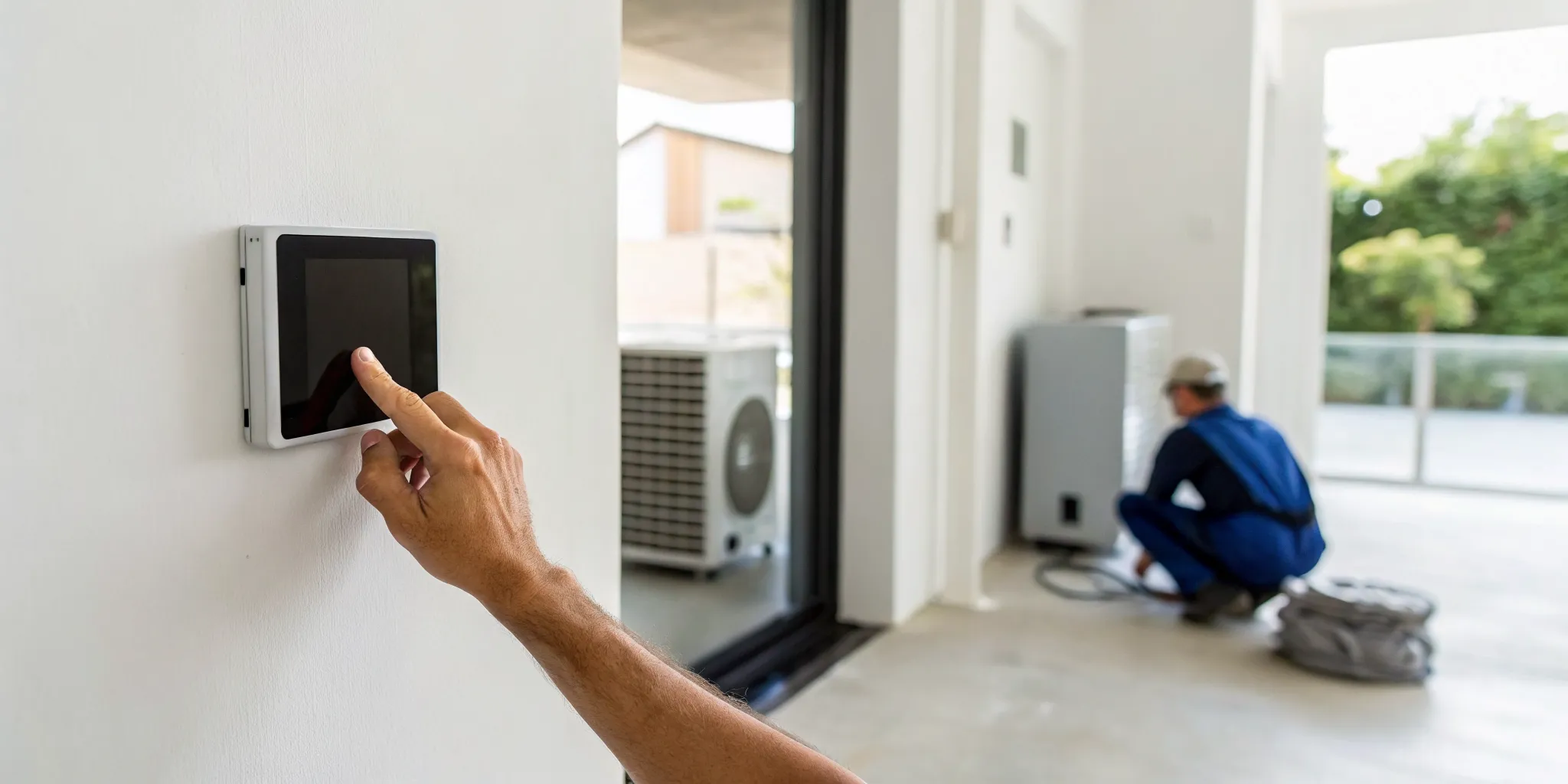
Figuring out why your air conditioner won’t start can feel like solving a mystery. You know it should be working, but the system remains silent. The central question, "Why is my AC unit not turning on?" has several possible answers, and our goal is to help you find the right one through a process of elimination. We’ll start with the most obvious clues, like your thermostat settings and power supply, which often resolve the issue right away. From there, we’ll investigate other common suspects, such as a clogged air filter or a tripped safety switch. This step-by-step approach helps you rule out the simple fixes before concluding that you need a professional. Let’s begin the investigation and get your home comfortable again.
Key Takeaways
- Start with the simple stuff: Before assuming a major repair is needed, check the most common culprits. Make sure your thermostat is set to "Cool," reset any tripped circuit breakers, and inspect your air filter to see if it's dirty.
- A little maintenance goes a long way: Regular upkeep is the best way to prevent future breakdowns. Consistently changing your air filter and keeping your outdoor unit clear of leaves and debris will improve efficiency and extend your system's life.
- Know when to call for help: Some problems require a trained technician for a safe and effective repair. If you notice signs of an electrical issue like a repeatedly tripping breaker, suspect a refrigerant leak (ice on the lines), or hear strange noises, it's time to contact a professional.
Why Won't My AC Turn On? 7 Common Reasons
When your air conditioner refuses to turn on, especially during a heatwave, it’s easy to feel a wave of panic. But don’t worry. More often than not, the cause is something simple you can identify and even fix yourself. Before you assume the worst, let’s walk through the most common culprits, from simple settings to minor maintenance tasks. This guide is designed to give you a clear, step-by-step process to check the most likely suspects without needing any special tools.
Working through these seven potential issues can help you diagnose the problem. You might be able to get your cool air flowing again in just a few minutes with a quick adjustment. And if the problem turns out to be more complex, you’ll have a much better idea of what to tell a professional when you call for service. Having that information ready can make the repair process smoother and faster. Let's get started on figuring out what's going on with your AC so you can get back to feeling comfortable in your home.
Is your thermostat set correctly?
It might sound too simple, but an incorrect thermostat setting is one of the most frequent reasons an AC won’t start. First, check that your thermostat is set to the "Cool" mode. If it’s on "Heat" or "Fan," it won't activate the cooling cycle. Next, make sure the temperature is set at least a few degrees below the current room temperature. Your AC will only kick on when it senses a difference to correct. If you have a digital thermostat, the batteries might be dead. Try swapping them out for a fresh pair. A dead battery can prevent the thermostat from sending the signal to your HVAC system to start cooling, leaving you in the heat for no good reason.
Did a circuit breaker trip?
Your air conditioner is a powerful appliance that uses a lot of electricity, so it has its own dedicated circuits. If one of these circuits gets overloaded, the breaker will trip to prevent electrical damage. Head to your home's main electrical panel (it's usually in the garage, a closet, or the basement) and look for a breaker switch that is in the "off" or middle position. To reset it, flip the switch completely to the "off" position, wait about 30 seconds, and then flip it back to the "on" position. If the breaker trips again right away, don't keep resetting it. This indicates a deeper electrical issue that needs a professional's attention.
Is the air filter clogged?
Your AC system needs to breathe, and a clogged air filter is like trying to run a marathon while breathing through a straw. When the filter is packed with dust and debris, it severely restricts airflow. This can cause two problems: the evaporator coils can freeze over, or a safety switch can shut the entire system down to prevent the compressor from overheating. This is a protective measure to avoid expensive damage. Luckily, it’s an easy fix. Check your filter, and if it’s dirty, replace it. This simple maintenance task can often get your system running again and will improve your home's air quality at the same time.
Is a safety switch triggered?
As your AC cools the air, it also removes humidity. This moisture collects in a drip pan and flows out through a condensate drain line. If that line gets clogged with algae or debris, the water backs up into the pan. To prevent this from overflowing and causing water damage to your home, most systems have a float switch. When the water level gets too high, the switch is triggered, and it shuts off your AC unit. You can check for a full drip pan or signs of water near your indoor unit. While you can try to clear the clog yourself, it’s often a sign that your system is due for routine maintenance.
Are the coils dirty or frozen?
Your AC has two sets of coils that work together to cool your home: the evaporator coil (inside) and the condenser coil (outside). If the evaporator coil gets too dirty, airflow is blocked, and the moisture on the coil can freeze solid, turning it into a block of ice. This completely stops the cooling process. A frozen coil is usually caused by something else, like a clogged air filter or low refrigerant. If you suspect your coil is frozen, turn the system off but leave the fan running to help it thaw. Once it’s thawed, you can try running it again, but the underlying issue will still need to be addressed.
Could it be low refrigerant?
Refrigerant is the lifeblood of your air conditioner; it’s the chemical compound that absorbs heat from your home and releases it outside. If your system develops a leak, the refrigerant level will drop. When this happens, your AC can’t cool effectively, and it may shut down entirely as a safety precaution to protect the compressor. Signs of a refrigerant leak include hissing sounds, ice on the refrigerant lines, or your AC blowing warm air. This isn't a DIY fix. Handling refrigerant requires special tools and certification, so this is a clear sign you need professional air conditioning repair.
Is there an electrical failure?
Beyond a tripped breaker, other electrical problems can stop your AC from turning on. Your system has fuses that can blow during a power surge, which cuts off electricity to protect the unit. There could also be an issue with the capacitor, which gives the motor the jolt it needs to start, or there might be frayed or disconnected wiring somewhere in the system. These issues can be tricky and dangerous to diagnose without the right training and equipment. If you’ve checked your thermostat and breakers and still have no power, it’s best to stop there and contact us to have a qualified technician safely inspect your system.
First, Check Your Thermostat
Before you start picturing a complicated and costly repair, let's begin with the easiest and most common culprit: your thermostat. Think of it as the brain of your entire cooling system. It tells your air conditioner when to turn on, how hard to work, and when to shut off. Sometimes, a simple setting is all that stands between you and a cool, comfortable home.
A quick check of your thermostat can often resolve the issue in minutes, saving you time, stress, and the cost of a service call. It’s the first place any HVAC professional would look, so it’s the perfect place for you to start your troubleshooting. We’ll walk through the four most important things to check: the mode and temperature settings, the fan setting, the batteries, and the wiring. Taking a moment to verify these simple things can get your AC back up and running without any tools or technical know-how.
Set to "Cool" and adjust the temperature
This might sound obvious, but it’s an easy mistake to make. Someone in your home might have switched the system to “Heat” during a chilly evening or turned it off entirely. First, check your thermostat to ensure it’s set to the “Cool” position.
Next, look at the temperature setting. For your AC to kick on, the target temperature must be set at least a few degrees lower than the current room temperature. If you have it set to 75 degrees and the room is already 72, your system won’t start because it has already met its goal. Try lowering the thermostat by five degrees and wait a few minutes to see if the AC unit turns on.
Switch the fan to "Auto"
Your thermostat likely has two fan settings: “On” and “Auto.” If the fan is set to “On,” it will run continuously, even when your air conditioner isn’t actively cooling. This can be misleading because you’ll feel air coming from the vents, but it might just be room-temperature air being circulated.
For efficient operation, make sure the fan is on the “Auto” setting. This tells the fan to run only when the cooling cycle is active. If you switch it to “Auto” and the fan stops running (and the AC still doesn’t kick on after a few minutes), it confirms the problem isn’t just a continuously running fan. It’s a small adjustment that ensures you’re not wasting energy.
Replace the batteries
If your thermostat screen is blank, the first thing to do is change the batteries. Many digital thermostats rely on battery power to function, and just like any other battery-operated device, they eventually run out of juice. Even if the screen isn’t completely dark, a low-battery icon or a dim display is a clear sign that it’s time for a fresh pair.
Without enough power, your thermostat can’t send the signal to your AC unit to start cooling. This is a very common issue and, thankfully, one of the simplest and cheapest to fix. Grab a pair of AA or AAA batteries (check your model’s requirements) and swap them out to see if that restores power and solves the problem.
Look for loose wires
This step requires a bit of caution. If the settings and batteries are fine, a loose wire might be the issue. You can check this by gently pulling the thermostat’s faceplate off its wall-mounted base. Look closely at the small, color-coded wires connected to the terminals. Do any of them look disconnected or out of place?
Over time, vibrations can sometimes cause a wire to come loose. However, if you see frayed or loose wires, do not touch them. Electrical work can be dangerous and is best left to a trained expert. Your safety is the top priority, so if you suspect a wiring problem, it's time to contact a professional for help.
Next, Check the Power Supply
If your thermostat seems to be working fine, the next place to look is your home’s power supply. It might sound a little technical, but a simple loss of power is a very common reason for an AC to stop working. Often, the fix is as easy as flipping a switch. Your air conditioner is a powerful appliance that draws a lot of electricity, and safety features are built in to prevent electrical overloads and damage. Sometimes, a power surge or just the strain of starting up on a hot day can cause one of these safety features, like a circuit breaker, to trip. Before you assume the worst, taking a few minutes to check your breakers and switches can save you time, worry, and the cost of a service call. We’ll walk through exactly what to look for and how to safely get the power flowing again.
Find the main electrical panel
First, you’ll need to locate your home's main electrical panel. This is typically a gray metal box located in a garage, basement, utility closet, or hallway. When you open the panel door, you'll see rows of switches, which are your circuit breakers. Each breaker controls the flow of electricity to a different part of your home. Look for breakers labeled "AC," "HVAC," "Air Conditioner," or "Condenser." Your AC system usually has two dedicated circuits: one for the indoor unit and one for the outdoor unit. A tripped breaker won't be in the firm "On" or "Off" position; instead, it will be stuck in the middle.
How to safely reset a tripped breaker
If you find a tripped breaker, resetting it is simple. First, push the switch firmly to the "Off" position to fully disengage it. Wait about 30 seconds, then flip it back to the "On" position. This should restore power to your AC unit. If the breaker trips again immediately or very soon after, that’s a sign of a more serious electrical problem that needs professional attention. Don't keep resetting it, as this could damage your system or create a fire hazard. At this point, it’s best to leave the breaker off and contact an HVAC professional to diagnose the issue safely.
Inspect the indoor and outdoor disconnect switches
Beyond the main electrical panel, your HVAC system has other power switches for safety and servicing. There is usually a switch that looks like a standard light switch on or near your indoor air handler (the unit in your attic, closet, or basement). Make sure this switch is in the "On" position, as it can sometimes be flipped off by accident. Next, head outside to your outdoor condenser unit. Look for a small metal box mounted on the wall nearby. This is the outdoor disconnect switch. Open the cover; inside, you'll find either a pull-out tab or a circuit breaker-style switch. Ensure it's set to "On" or that the pull-out is inserted correctly.
Look for a blown fuse
If you live in an older home, you might have a fuse box instead of a circuit breaker panel. Instead of switches that trip, fuses "blow" to protect against overloads. A blown fuse will have a broken or melted metal filament inside its glass window, or the glass itself might look cloudy or discolored. If you find a blown fuse for your air conditioner, it will need to be replaced. It's crucial to replace it with a new fuse of the exact same amperage. Using the wrong size can be a serious fire risk. If the new fuse blows right away, it indicates an underlying electrical issue that requires a professional diagnosis.
Can a Dirty Air Filter Stop Your AC?
It might seem like a small thing, but a dirty air filter is one of the most common culprits behind an AC that refuses to start. Your air conditioner needs to breathe, and a clogged filter essentially suffocates it. When airflow is blocked, it throws the whole system off balance, leading to bigger problems than just poor air quality. Before you assume the worst, take a few minutes to check this simple component. It’s an easy fix that can save you a lot of stress and money. This is often the first thing a technician checks, so getting to it first can sometimes solve the problem right away.
Why a clogged filter shuts down your system
Think of your AC system as a set of lungs. It needs to pull in a steady stream of warm air from your home to cool it down. A heavily clogged air filter restricts that airflow, forcing the system to work much harder than it should. This strain can cause the evaporator coils to get too cold and freeze over, creating a block of ice that stops the cooling process entirely. To protect itself from serious harm, your AC has safety switches that will shut the unit down if it detects dangerous operating conditions. This prevents permanent damage to expensive parts, but if the system is already frozen, you may need professional air conditioning repair to get it running again.
How to find and replace your air filter
Finding your air filter is usually straightforward. It’s typically located in one of two places: inside the return air vent (the large vent that pulls air into the system) or in a slot on the indoor air handler unit itself. Look for a cover or panel that you can easily open or slide off. Once you find it, slide the old filter out. Before you throw it away, check the frame for the size, which will be printed along the edge (for example, 16x25x1). Buy a replacement of the exact same size. When you slide the new filter in, make sure the arrow printed on the frame points in the direction of the airflow, which is toward the air handler.
How often should you change your AC filter?
A good rule of thumb is to change your air filter every 30 to 60 days. However, this isn't a one-size-fits-all schedule. If you have pets that shed, family members with allergies, or live in a particularly dusty area, you should check your filter every month. A clean filter not only prevents shutdowns but also improves your system's efficiency, lowers energy bills, and keeps your indoor air cleaner. Making this a regular habit is the easiest and most affordable way to support your system's health. It's a core part of any good HVAC maintenance plan and can prevent many common problems before they start. If you're unsure, just pull the filter out and hold it up to a light. If you can't see light through it, it's time for a change.
Final DIY Checks Before You Call for Help
If your thermostat and power supply seem fine, there are a few more things you can safely check before picking up the phone. These steps involve looking at different parts of your HVAC system, both inside and outside your home. They are simple inspections that can sometimes reveal an easy fix. Let's walk through these final checks together.
Check the condensate drain line
Your air conditioner creates condensation as it cools the air, and this water needs to go somewhere. It travels out of your home through a pipe called the condensate drain line. Over time, this line can get clogged with algae or debris. If a clog happens, the water backs up into a drip pan and trips a safety switch, shutting down your entire system to prevent water damage. You can usually find this drain line near your indoor air handler. A quick visual inspection might show you if water is overflowing or if the line looks blocked.
Clear debris around the outdoor unit
Your AC system has two main parts: one inside and one outside. The outdoor unit, called the condenser, needs plenty of space to work properly. Take a walk outside and check on it. Leaves, grass clippings, dirt, and overgrown bushes can block airflow, causing the unit to overheat and shut down. A good rule of thumb is to make sure there are at least two feet of clear space around the entire unit. Taking a few minutes to clear away any debris is a simple step that can make a big difference. This is also a key part of routine HVAC maintenance that keeps your system running efficiently.
Make sure your vents are open
This one sounds almost too simple, but it’s a common culprit. If the vents in your rooms are closed or blocked by furniture, rugs, or curtains, it can disrupt the airflow throughout your entire system. When the cool air has nowhere to go, it can cause pressure to build up and may lead to your AC coils freezing over, which triggers a shutdown. Do a quick tour of your house and double-check that all your supply vents are open and unobstructed. It’s an easy fix that ensures your system can circulate air the way it was designed to.
Listen for unusual sounds
Sometimes, your ears can tell you what’s wrong. Go outside and listen to your condenser unit. If you hear a buzzing or humming noise but the fan isn't spinning, you might be dealing with a bad capacitor. The capacitor is like a battery that gives the fan motor the jolt it needs to start. While this is a common issue, replacing a capacitor involves working with high-voltage electrical parts and is a job best left to a professional. If you hear this or any other strange grinding or clanking sounds, it’s a clear sign to contact an expert for help.
When to Call an HVAC Professional
While it’s great to be able to fix small issues yourself, some problems are best left to the experts. Trying to tackle a complex repair without the right training or tools can be dangerous and may even cause more damage to your system. If you’ve run through all the DIY checks and your AC still won’t start, or if you notice any of the serious warning signs below, it’s time to put down the tools and pick up the phone. Your safety and your system’s health are what matter most.
Signs of an electrical or mechanical problem
Electrical issues are not something to experiment with. If your air conditioner repeatedly trips a circuit breaker, don't just keep flipping it back on. This is often a sign of a deeper problem, like a short circuit or a failing component that needs professional attention. Other red flags include buzzing or humming noises from the unit or a distinct burning smell. These symptoms point to a serious electrical or mechanical failure. In these cases, turn your AC system off immediately at the breaker and call for professional air conditioning repair to safely diagnose and fix the issue.
Suspect a refrigerant leak?
Refrigerant is the lifeblood of your air conditioner, and a leak can bring your system to a halt. If your AC is running but not blowing cold air, or if you see ice forming on the copper lines, you might have a refrigerant leak. Handling refrigerant is dangerous and is legally restricted to certified technicians. It’s a hazardous substance that can cause injury and harm the environment. If you think you have a leak, the safest and most effective step is to contact a professional HVAC technician right away. They have the proper equipment to find the leak, repair it, and recharge your system correctly.
If the problem keeps coming back
Have you tried all the troubleshooting steps, only for the problem to return a day or two later? Persistent issues are a clear sign that there’s an underlying cause that a simple fix can’t solve. Whether it’s a frozen coil that keeps reappearing or a system that just won’t stay on, recurring problems signal it’s time for an expert diagnosis. Instead of spending more time and effort on temporary solutions, calling a professional can save you from future headaches. A trained technician can identify the root cause and provide a lasting solution, preventing a minor annoyance from turning into a major system failure.
How maintenance prevents future breakdowns
The best way to handle an AC breakdown is to prevent it from happening in the first place. Just like your car, your HVAC system needs regular check-ups to run efficiently and reliably. An annual tune-up allows a technician to spot and fix small issues before they escalate. During a maintenance visit, a professional will clean the coils, check refrigerant levels, test electrical connections, and ensure the whole system is in top shape. Investing in routine HVAC maintenance not only helps prevent unexpected failures on the hottest day of the year but also extends the lifespan of your unit and keeps it running efficiently.
Frequently Asked Questions
My circuit breaker tripped once, I reset it, and it tripped again. What should I do? You should leave the breaker in the off position and call a professional. A circuit breaker is a safety device, and if it trips repeatedly, it's signaling a serious electrical problem within your AC system. Continuously resetting it can lead to more significant damage to your air conditioner or even create a fire hazard. It's a clear sign that your system needs an expert inspection.
How can I tell if my evaporator coil is frozen? The most obvious sign is visible ice on the coil itself or the copper refrigerant lines connected to your indoor unit. You might also notice that the air coming from your vents is weak or not cold at all. A frozen coil is usually a symptom of another problem, like a clogged air filter or low refrigerant, so even after it thaws, you'll need a technician to find and fix the root cause.
Is it really that important to change my air filter regularly? Yes, it is the single most important maintenance task you can do for your HVAC system. A clogged filter forces the entire system to work harder, which increases your energy bills and puts unnecessary strain on expensive components. Over time, this can lead to system shutdowns, poor air quality, and a shorter lifespan for your air conditioner. It's a simple, inexpensive step that prevents many common and costly problems.
My outside unit is humming, but the fan isn't moving. What does that mean? This usually indicates a problem with the capacitor. The capacitor provides the initial jolt of energy needed to get the fan motor spinning. When it fails, the motor receives power (the humming sound) but can't start. While this is a common repair, you should not attempt it yourself. Capacitors can hold a dangerous electrical charge even when the power is off, so this job is best left to a trained technician.
How can regular maintenance prevent my AC from breaking down? Think of it like a check-up for your car. During a professional maintenance visit, a technician can spot and address small issues before they become major failures. They will clean critical components, tighten electrical connections, check refrigerant levels, and ensure the system is running at peak efficiency. An annual tune-up not only helps prevent a sudden breakdown on a hot day but also keeps your energy costs down and extends the life of your equipment.
Comments