
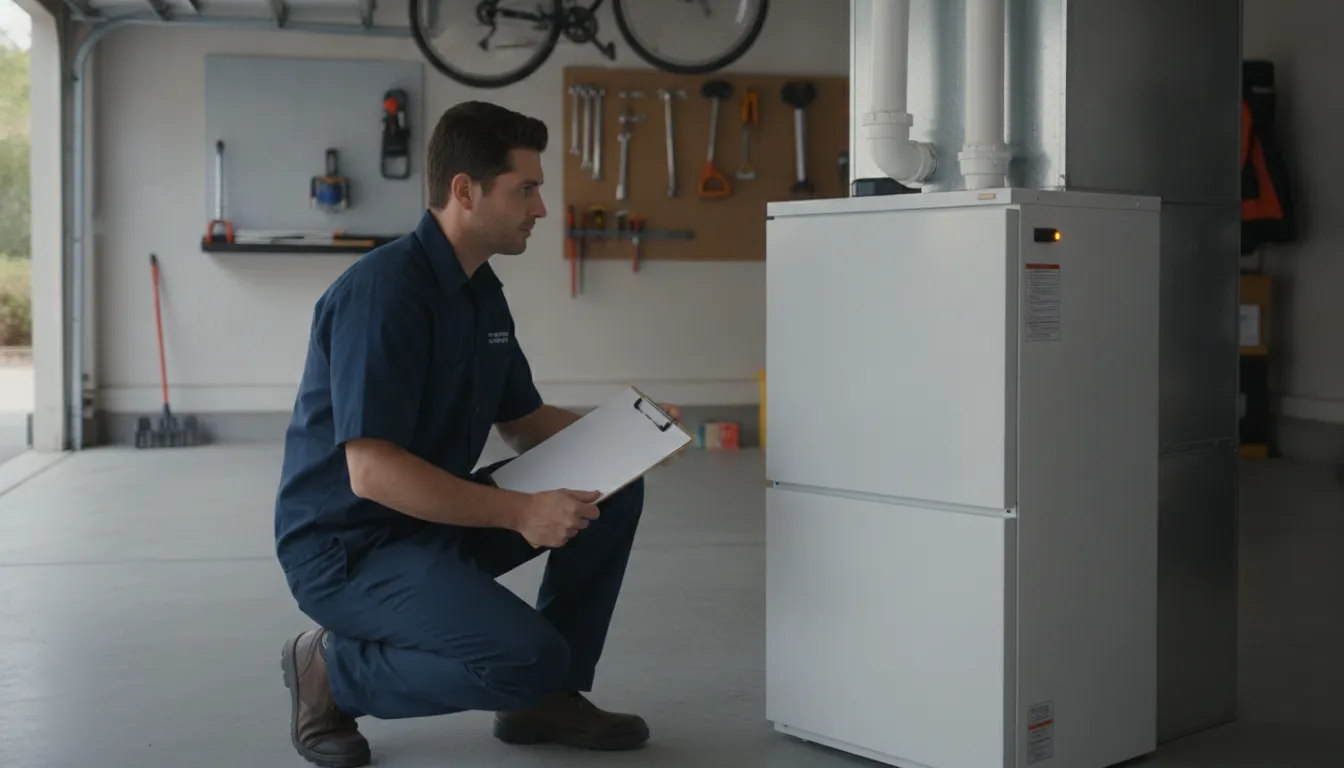
A high efficiency gas furnace is built to pull more heat from the same gas than an older 80 percent model. That extra efficiency is useful in a Northern California winter, but it also means the furnace has a second heat exchanger, a condensate drain, and plastic venting that a standard furnace does not. When one of those parts fails, the right next step is not always a new furnace. Some failures are straightforward repairs. Others, especially a damaged heat exchanger or a furnace that keeps failing after a proper repair, are worth a replacement conversation with the furnace repair team.
Call Airteks at (510) 719-0621
What Makes a High Efficiency Gas Furnace Different
Annual Fuel Utilization Efficiency, or AFUE, is the share of the fuel's energy that heats the house. The rest goes up the flue. The U.S. Department of Energy defines AFUE that way in the federal furnace test method. ENERGY STAR's furnace criteria use that rating on the yellow EnergyGuide label. For gas furnaces installed in the U.S. South, which includes California, ENERGY STAR currently asks for 95 percent AFUE or greater, plus cabinet air leakage of 2 percent or less.
An 80 percent furnace sends about one fifth of the fuel's heat out the metal flue. A 95 percent model keeps most of that heat by cooling the exhaust enough to condense water vapor out of the flue gas. That is why technicians call these units condensing furnaces. The condensate is mildly acidic. The cabinet needs a drain, a trap, and often a small pump if it cannot drain by gravity.
The venting changes with the efficiency. Because the exhaust is cooler, a high efficiency gas furnace typically uses sealed PVC or CPVC pipe rather than a warm metal flue shared with a water heater. Many models also pull combustion air from outdoors through a second pipe. That sealed setup is one reason these furnaces can sit in a tighter closet. A blocked or sagging vent is a service issue, not a filter issue.
Airteks has provided heating and cooling service since 1997, with factory-certified technicians for residential furnace repair, maintenance, and replacement. The furnace repair options start by finding the cause, explaining it, and naming a safe next step. That might be a part, an airflow correction, a control adjustment, or a plan to replace the furnace when it can no longer be repaired safely.
Which High Efficiency Gas Furnace Failures Can Be Repaired
Most no-heat calls on a newer condensing furnace are not a ruined cabinet. They are a part that can be tested and replaced while the heat exchangers, venting, and gas valve are still sound. These are the failures Airteks commonly treats as repairs when the rest of the furnace checks out.
Ignition, flame sensing, and the inducer
A high efficiency gas furnace does not use a standing pilot. An inducer motor starts first, proves that air is moving through the heat exchanger, and only then does the igniter and gas valve open. If the inducer is weak, the pressure switch never closes and the furnace will not light. A dirty flame sensor can also shut the burners down a few seconds after they light. Both are repairable. So is a cracked hot-surface igniter, which is a common wear item and not a reason by itself to replace the furnace.
Condensate drain, trap, and pump
This is the failure mode owners of older furnaces never had. If the drain trap clogs with debris, or the condensate pump fails, a safety switch opens and the burners stop. The house goes cold even though the heat exchanger is fine. Clearing the trap, replacing a pump, or correcting a drain that freezes on a Livermore or Pleasanton night is a repair. Leaving it clogged is how acidic water sits in the secondary heat exchanger longer than it should.
Airflow, filters, and the blower
A high efficiency gas furnace still needs an open return and a filter that matches the cabinet. A packed filter, a failed blower capacitor, or a blower motor that overheats will cause short cycling and weak rooms. Those are repairs. They also protect the heat exchanger, because a furnace that cannot move air runs hotter than it was designed to.
Controls and the thermostat circuit
Limit switches, rollout switches, and the control board stop the furnace when temperature or flame is outside a safe range. A failed board or a stuck limit can be a repair. The technician has to show the original cause, such as a dirty filter or a blocked vent, and correct it on the same visit. A board that keeps failing after the cause is fixed is a different conversation.
High Efficiency Gas Furnace Problems That Point to Replacement
Repair is the default when one part failed and the rest of the furnace is sound. Replacement belongs on the table when the failure is in the heat exchanger, the furnace is already near the end of a normal service life, or the same repair keeps coming back. Airteks does not treat age alone as a verdict. Age plus a major failure is.
A cracked or corroded heat exchanger
The heat exchanger is the metal barrier between combustion gas and the air that blows through your ducts. On a condensing furnace there are two: a primary exchanger and a secondary exchanger that handles the cooler, wetter exhaust. Corrosion from acidic condensate, a rusted secondary cell, or a crack in the primary are safety findings, not comfort findings. Combustion products do not belong in the supply air. If a technician condemns the heat exchanger, do not keep running the furnace while you compare prices. Shut it down and plan the next heating system.
Some manufacturers offer a heat-exchanger warranty that outlasts the parts warranty. A warranty replacement of the exchanger can be the right repair on a younger furnace. It is still a major job, and it only makes sense when the cabinet, inducer, and venting are worth keeping. That is a finding from the visit, not a guess from the model sticker.
Repeated failures after a correct repair
One igniter, one flame sensor, or one condensate pump is ordinary. A second and third major part in a short stretch, on a furnace that already had a proper tune-up, usually means the cabinet is aging as a system. At that point a repair quote and a replacement quote should be looked at together. The furnace repair cost guide covers how Bay Area repair pricing is built. This article does not repeat those price bands. The decision here is whether the furnace still has a sound heat exchanger and a clear repair path.
Venting that cannot be corrected in place.
A high efficiency gas furnace depends on a sloped, sealed plastic vent and a drain that actually leaves the cabinet. A belly in the vent, the wrong cement, or a termination that ices over on cold East Bay nights can block a safe repair. The furnace may work again only after the vent is rebuilt. Sometimes that rebuild is reasonable. Sometimes the furnace is old enough that rebuilding the vent to keep a failing cabinet is the more expensive way to stay cold next winter.
How to Tell Repair from Replacement Before the Visit
You do not need to diagnose the furnace. You do need a few observations so the technician can separate a repair from a replacement conversation faster. Write down what you see, then stop if you smell gas or suspect combustion odor in the living space.
- Note the age and the rating. The rating plate is inside the burner compartment or on the cabinet side. It lists AFUE or a model number a technician can look up. A furnace under about 10 to 12 years with a single failed part is usually a repair. A furnace past 15 years with a heat-exchanger or venting failure is usually a replacement discussion. Service life still depends on maintenance and how hard the furnace runs.
- Watch how it fails. No heat at all, with the inducer silent, points at power, the thermostat, the inducer, or a safety switch. Burners that light and then die point at the flame sensor, the condensate switch, or a limit. A furnace that runs but leaves rooms uneven points at airflow, ducts, or the blower. A furnace that runs with a strong exhaust smell, soot, or moisture inside the cabinet needs to be turned off.
- Check the drain and the vent from a safe distance. A full condensate pump, water under the cabinet, or a vent pipe that sags are useful clues. Do not open the burner compartment and do not disconnect gas or electrical parts.
- Recall the last two service visits. A recent igniter and a recent board, plus a new no-heat call, is different from a first failure after years of quiet operation. Mention both.
- Say whether heat has to be restored tonight. Airteks offers 24/7 emergency availability when a furnace fails during cold weather. An after-hours visit can make the house safe and warm. The repair-or-replace decision can still wait for a daytime look at the heat exchanger if the immediate failure is a drain, igniter, or sensor.
For a furnace that is running but not heating, the furnace not heating causes guide walks through filters, flame sensors, and gas-supply checks. Use that piece for the symptom list. Use this one when the question is whether a high efficiency gas furnace is still worth repairing once the cause is known.
Repair or Replace a High Efficiency Gas Furnace
The table below is a field guide, not a quote. Airteks confirms the row that fits only after the furnace is inspected. Dollar ranges live on the repair-cost article, and installation pricing lives on the new furnace installation guide.
| What you are seeing | Usual path | Why |
|---|---|---|
| An igniter, flame sensor, inducer, or condensate pump failed once. | Repair. | These parts wear out and do not condemn the heat exchanger. |
| The drain trap is clogged or the condensate line froze. | Repair. | The furnace is protecting itself. Clearing the drain restores heat. |
| The filter is packed, the blower is weak, or a capacitor failed. | Repair. | Airflow fixes protect the heat exchanger and even out rooms. |
| The control board failed, and the cause is fixed the same day. | Repair. | A board is replaceable when the furnace is otherwise sound. |
| The heat exchanger is cracked, rusted through, or condemned. | Stop and plan replacement. | Combustion gas must stay out of the supply air. |
| Two or three major parts failed close together on an older furnace. | Compare repair and replacement. | The cabinet is aging as a system, not as one bad part. |
| The vent pipe sags, slopes the wrong way, or ices at the end. | Repair the vent, then decide. | This furnace cannot run safely on a bad vent. |
| The furnace is over 15 years old, with rising bills and uneven heat. | Discuss replacement. | Efficiency and comfort may both be gone even if it still lights. |
If you are also weighing a heat pump instead of another gas furnace, that is a separate decision. The heat pump and gas furnace comparison covers climate and operating cost. It should not be folded into a midnight no-heat call. Get heat back safely first.
Where Airteks Evaluates These Furnaces
Airteks is based in Livermore. The company serves homeowners across the East Bay, the wider Bay Area, the Central Valley, and Sacramento. The same condensing-furnace pattern shows up across that map, with local twists.
In Alameda County, Livermore and Pleasanton furnaces often sit in garages. A high efficiency gas furnace there needs a condensate line that does not freeze on a clear night and a PVC termination that stays clear. Garage installs also pick up dust, so filters and flame sensors fail sooner than they do in a clean interior closet.
Contra Costa County homes in Walnut Creek and the surrounding valleys mix older 80 percent furnaces with newer condensing models added during remodels. A replacement conversation there often includes whether the existing metal flue can stay for the water heater while the new furnace gets its own plastic vent. That is an installation detail, not a repair, and the residential HVAC installation team handles it when repair is no longer the right path.
San Joaquin County and the Central Valley see longer heating runtime on cold mornings and more dust. Condensate pumps in attic furnaces are a frequent repair. So are pressure switches that will not close because the vent is restricted. Sacramento-area homes add a wider swing from mild afternoons to cold nights, which makes short cycling and thermostat setup part of the same visit.
Napa County and the North Bay bring tighter hillside lots, longer vent runs, and furnaces tucked into small closets. A long PVC run has to keep its slope. If it cannot, the repair may be the vent rather than the board. Santa Clara County homes, especially in remodeled ranch houses, often have a high efficiency gas furnace paired with older ducts. Weak rooms in that case can be a duct issue, which is outside the scope of a heat-exchanger decision and should be called out separately on the visit.
Wherever the house is, the evaluation starts the same way. A technician confirms whether the failure is a part, a drain, a vent, or the heat exchanger. Then they say which of those can be repaired.
What to Expect When You Ask for a Repair Evaluation
A useful visit is short on guesses and specific about the part. You should leave knowing which component failed, whether the heat exchanger was inspected, and whether the furnace is safe to run tonight.
Airteks treats the visit as diagnostic first. The technician looks at the thermostat call, the inducer and pressure switch, the igniter and flame sensor, the condensate path, and the condition of both heat exchangers on a condensing model. If the repair is a sensor, an igniter, a pump, or a drain, that work can often be finished on the same visit. If the heat exchanger is condemned, the recommendation is to leave the furnace off and schedule replacement rather than to patch around a safety failure.
Ask for the model and the age to be written on the ticket. Ask whether the failure is likely to repeat. Ask if the vent slope and the drain were checked, because those two items decide a lot of high efficiency gas furnace callbacks. You do not need a brand lecture. Choosing a furnace is its own decision and comes after you know the current furnace cannot be repaired well.
If the furnace is simply due for service and still heats, a tune-up is the better spend. The gas furnace tune-up guide covers what that visit includes. Do not wait for a tune-up if the furnace is off on a safety lockout or if you smell gas. Leave the house and call for emergency service.
Call Airteks at (510) 719-0621
Frequently Asked Questions
What AFUE counts as a high efficiency gas furnace?
In California, ENERGY STAR's current gas furnace criteria call for 95 percent AFUE or greater, because the state is in the U.S. South region for that specification. Many condensing furnaces on the market are rated 90 to 98 percent. An 80 percent furnace is a standard-efficiency model with a metal flue, not a condensing furnace.
Can a clogged condensate line really stop a high efficiency furnace?
Yes. Condensing furnaces make water as they pull heat from the exhaust. If the trap, drain, or pump stops moving that water, a safety switch opens and the burners shut off. The heat exchanger can be fine. Clearing the drain or replacing the pump is a repair, and it should include a check that the secondary exchanger was not left sitting in water.
Is a cracked heat exchanger ever a repair?
Only in the narrow case where the manufacturer warranty covers a heat-exchanger replacement and the rest of a younger furnace is worth keeping. A technician has to confirm the crack or corrosion and the warranty status. If the exchanger is condemned and there is no practical warranty repair, leave the furnace off and plan a replacement. Do not keep running it.
Should I replace a 10-year-old high efficiency furnace that needs one part?
Usually no. One igniter, sensor, inducer, or condensate pump on a 10-year-old furnace is a repair. Replacement makes more sense when the heat exchanger has failed, the venting cannot be corrected, or several major parts have failed close together. Age is context, not the decision by itself.
Who should I call in the Bay Area or Central Valley?
Airteks evaluates high efficiency gas furnaces for homeowners in Livermore, Pleasanton, Walnut Creek, and across Alameda, Contra Costa, San Joaquin, Santa Clara, and Napa counties, plus the wider Bay Area, Central Valley, and Sacramento. Call (510) 719-0621 to request a repair evaluation or a quote if the furnace should be replaced.
Comments