
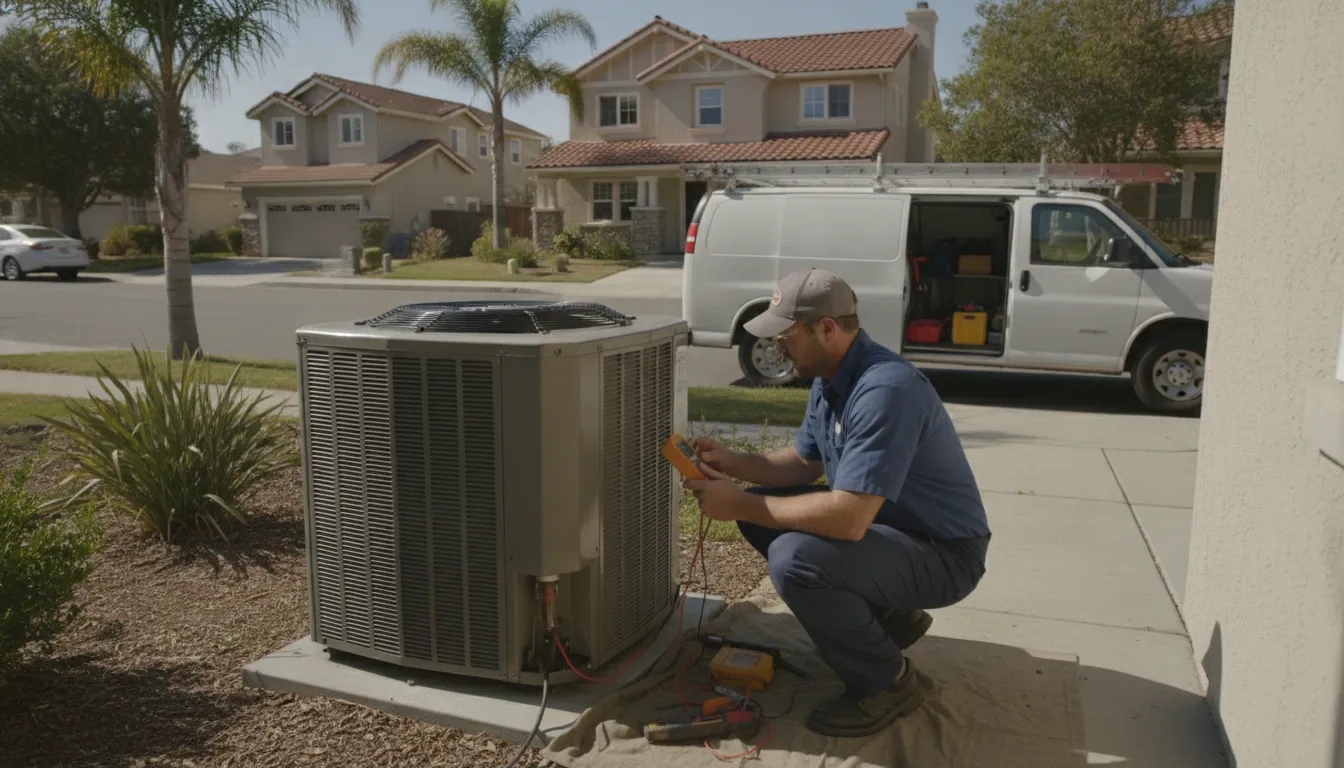
When Bay Area temperatures climb into the 90s, an air conditioner that seemed dependable can suddenly struggle with weak airflow, uneven cooling, or repeated shutoffs. The extra demand often exposes maintenance issues that were easy to overlook during milder weather. A dirty filter is one of the most frequent causes of poor central AC performance, but it is not the only possibility.
The most common air conditioner problems bay area homeowners see include restricted airflow, thermostat issues, electrical faults, refrigerant problems, and clogged drains. Some are simple maintenance concerns, while others can damage the compressor or create a safety risk. Checking the filter and thermostat is reasonable, but persistent symptoms call for a professional diagnosis.
Knowing what each symptom may indicate helps you respond before a minor fault becomes an expensive failure. Start with the most common complaint: an air conditioner that runs but does not cool the home properly.
Common Air Conditioner Problems Bay Area: AC Not Cooling: What Is Usually Wrong?
Answer: When an air conditioner runs but does not cool the home, the most common causes are a restricted filter. An obstructed thermostat sensor, dirty outdoor coils, frozen indoor coils, or inadequate airflow. These are among the most common air conditioner problems Bay Area homeowners face. Especially when summer temperatures reach 90F or higher and place extra demand on an aging or poorly maintained system.
Start with the air filter
Check the filter before assuming the compressor or refrigerant system has failed. Consumer Reports notes that roughly nine out of 10 calls about central air units that are not working well involve a dirty filter. A clogged filter reduces the volume of air moving through the system, makes the equipment work harder, and can contribute to coil icing. If the filter is visibly dusty, replace it with the correct size and rating for your system. Do not continue running the AC for hours while waiting for airflow to improve.
Check the thermostat and airflow
Make sure the thermostat is set to cooling, the setpoint is below the indoor temperature, and the fan is operating as expected. Keep furniture, curtains, and other objects from blocking supply registers or return grilles. The thermostat itself also needs a clear location. The U.S. Department of Energy recommends keeping thermostats away from direct sunlight and obstructions so they can measure temperature accurately. A sensor warmed by sunlight may tell the system to cycle incorrectly.
Look for dirty or frozen coils
Outdoor condenser coils collect dust and debris that restrict heat transfer. Indoor evaporator coils can freeze when airflow is low, the filter is blocked, or another system problem prevents normal operation. Turn the system off and allow visible ice to thaw rather than scraping it away or repeatedly restarting the unit. Our guide to common AC freezing problems explains why ice forms and what to check next. Dirty filters and coils can also cause premature compressor or fan failure, according to the Department of Energy.
If the unit still runs without cooling after the filter and basic airflow checks, the cause may require electrical, refrigerant, fan, or compressor testing. If the system will not start at all, review our guide to common AC unit starting problems. A professional diagnosis can identify the underlying fault instead of treating only the symptom.
Why Is Your Air Conditioner Making Strange Noises?
Unusual sounds are often an early warning that an air conditioner needs attention. In a Bay Area home, note when the noise occurs, whether it changes as the system starts or stops, and whether cooling has also weakened. A quick visual check may be safe, but do not remove electrical panels or reach into the outdoor unit.
Banging or clanking
A banging sound commonly points to a loose, broken, or displaced component. A fan blade, mounting piece, or other internal part may be striking the housing. Turn the system off and look only for obvious debris around the outdoor condenser. If the sound continues, leave the unit off and have a technician inspect it. Continuing to run a system with a loose part can cause additional damage.
Squealing or screeching
Squealing can indicate a failing fan motor, a worn belt on systems that use one, or a component that needs service. Fan motors are especially important because dirty filters and coils can contribute to premature fan or compressor failure, according to the U.S. Department of Energy. Changing an accessible, correctly sized filter is a reasonable maintenance step, but motor and belt repairs require professional diagnosis.
Buzzing, clicking, or repeated clicking
A buzz may come from an electrical problem, a failing component, or debris interfering with the condenser fan. Clicking once as the system starts can be normal, but repeated clicking may signal a relay, contactor, or thermostat problem. Frequent cycling can contribute to electric control failure and corrosion at wires and terminals, the Department of Energy notes. Do not troubleshoot inside the control compartment. Switch the system off at the thermostat and arrange service, particularly if you smell burning, see sparking, or the unit will not start.
Some sounds are minor, but a new or worsening noise should not be ignored. Professional testing can identify whether the cause is mechanical, electrical, or airflow-related before a small repair becomes a larger failure.
Why Your AC Keeps Tripping the Circuit Breaker
A circuit breaker that trips once may be responding to a temporary overload. If it trips repeatedly whenever the air conditioner starts or runs, do not keep resetting it. The pattern indicates an electrical or mechanical problem that can damage the system and create a fire hazard. Turn the system off and arrange a professional diagnosis.
Restricted airflow can overheat the system
A heavily loaded air filter, blocked return, or dirty indoor coil makes the system work harder to move air. That added strain can raise operating temperatures and contribute to compressor or fan failure. The U.S. Department of Energy identifies dirty filters and coils as causes of malfunction and premature compressor or fan failure. Check that the filter is clean and that supply and return vents are open, but do not remove panels or attempt to clean energized equipment.
Electrical and compressor problems need testing
A failing compressor may draw more amperage than the circuit can safely provide, particularly when it tries to start. A weak capacitor can also prevent the motor from starting correctly, while shorted wiring, loose connections, damaged terminals, or an undersized circuit can cause the breaker to trip. These faults are not interchangeable, and replacing a breaker without finding the underlying cause can leave a dangerous condition in place.
Frequent cycling is an important warning sign
An air conditioner that starts and stops too often may be dealing with an incorrect system size, airflow restriction, thermostat issue, or another fault. The Department of Energy notes that frequent on/off cycling can contribute to electrical control failure and corrosion of wires and terminals. Those deteriorating connections can increase heat at the connection point and raise fire risk.
Do not install a larger breaker as a workaround, bypass a safety control, or continue operating the unit after repeated trips. Our Airteks technicians can test voltage, amperage, capacitors, wiring, controls, airflow, and compressor operation to identify the actual cause. Professional diagnosis is the safest next step for this type of electrical symptom.
The risks associated with frequent cycling and corroded connections are outlined in the U.S. Department of Energy's guidance on air conditioner maintenance.
AC Refrigerant Leak: Signs and What to Do
Refrigerant leaks can make an air conditioner appear to be running normally while it gradually loses cooling capacity. One of the clearest signs is warm air coming from the vents, even when the thermostat is set correctly. You may also notice that the system runs much longer than usual, struggles to reach the set temperature, or causes an unexpected increase in energy costs.
Watch for ice, frost, and hissing
Ice or frost on the copper refrigerant lines, indoor coil, or outdoor unit can indicate that the system is operating with too little refrigerant. A hissing sound near the indoor coil or outdoor connections may also point to escaping refrigerant. These symptoms can have other causes, including airflow restrictions, so they should be treated as reasons for diagnosis rather than proof of a leak.
Incorrect refrigerant charge can significantly impair air conditioner efficiency, according to the U.S. Department of Energy. Continued operation with low refrigerant also places extra strain on the compressor. Over time, that stress can contribute to premature compressor failure, turning a leak into a much more expensive repair.
Why adding refrigerant is not enough
Refrigerant is not consumed during normal operation. If the level is low, the system needs a qualified technician to locate and repair the leak, test the system, and restore the correct charge. Simply adding refrigerant may provide temporary cooling, but it leaves the underlying problem in place and can allow the system to lose efficiency again.
If you see ice or frost, turn the system off and allow it to thaw rather than continuing to run it. For more detail, review these common AC freezing problems. Persistent warm air, unusual sounds, or long run times warrant professional service, especially before compressor damage develops.
When to Call a Professional vs DIY Troubleshooting
Some basic checks can help a Bay Area homeowner identify a simple maintenance issue before scheduling service. Turn off the system before inspecting it, and keep troubleshooting limited to steps that do not expose you to electricity, refrigerant, or moving parts.
Checks you can safely make
- Replace the air filter. A dirty filter restricts airflow and can contribute to compressor or fan failure. Install the correct size and follow the replacement interval recommended for your home and equipment.
- Clear the outdoor unit. Remove leaves, grass, and other debris from around the condenser, while keeping your hands and tools away from the fan and internal components.
- Check the thermostat. Confirm the mode is set to cooling, the temperature is set below the indoor temperature, and the batteries are working. Keep the thermostat free from obstructions and direct sunlight so it can read the room accurately.
- Look at the condensate drain. A clogged drain can cause water to back up. The U.S. Department of Energy recommends periodically flushing the line with bleach and water to help prevent mold growth. If water is already pooling or the line is difficult to access, stop and call a technician rather than forcing a repair.
When DIY stops being appropriate
Refrigerant cannot be safely diagnosed or handled without the proper equipment and certification. Call a professional for suspected leaks, ice on the coil, compressor problems, electrical faults, internal component replacement, or a circuit breaker that trips repeatedly.
| Symptom | Safe to DIY? | Best Next Step |
|---|---|---|
| Dirty air filter | Yes | Replace with correct size and rating |
| Debris around outdoor unit | Yes | Clear leaves and debris from condenser area |
| Thermostat not working | Yes | Check batteries and temperature settings |
| Clogged condensate drain | Limited | Flush if accessible; call pro if blocked |
| AC not cooling (filter OK) | No | Schedule professional diagnosis |
| Strange noises from unit | No | Turn off system, call technician |
| Circuit breaker keeps tripping | No | Leave system off, call technician immediately |
| Suspected refrigerant leak | No | Requires EPA-certified technician |
Strange noises coming from inside the unit also deserve professional evaluation. Repeatedly resetting a breaker can create a safety risk and may worsen damage to the system.
If you are unsure whether the problem calls for repair or replacement, review these signs your AC system needs repair before making a decision. Our guide to professional air conditioner repair costs can also help you prepare useful questions for a technician. For broader maintenance guidance, keep The Homeowner's Complete Guide to Residential HVAC in Northern California as a reference.
Airteks provides same-day response in the Bay Area and 24/7 emergency availability when an AC failure cannot wait. Call (925) 292-0148 for an honest diagnosis and practical next step.
Frequently Asked Questions
What are the most common air conditioner problems in the Bay Area?
Homeowners commonly report weak or warm airflow, uneven cooling, unusual sounds, short cycling, water near the indoor unit, and systems that will not start. Dirty filters and coils can restrict performance and contribute to premature compressor or fan failure, according to the U.S. Department of Energy.
Why is my central air running but not blowing cold air?
Check that the thermostat is set to cooling, the filter is not blocked, and the outdoor unit has clear airflow around it. A dirty coil, airflow restriction, or incorrect refrigerant charge can also reduce cooling. If basic checks do not restore cold air, professional testing can identify the actual cause without guessing.
What should I do if my AC fan will not start?
Turn the system off and check the thermostat setting and circuit breaker once. Do not repeatedly reset a breaker or attempt to reach moving parts and electrical components. A failed capacitor, motor, wiring problem, or control issue requires qualified diagnosis, especially if you hear humming or smell overheated wiring.
Why will my central air not turn on?
Confirm the thermostat has power and is set below the indoor temperature, then check the dedicated breaker. If the breaker trips again, leave the system off. Repeated cycling can contribute to electrical control failure and wire or terminal corrosion, the U.S. Department of Energy explains in its guidance on common air conditioner problems.
How do I check my air conditioner drain line?
Look for standing water near the indoor unit or a backed-up drain pan, and inspect the visible drain outlet for water flow while the system runs. Do not pour chemicals into an inaccessible line. A clogged condensate drain can cause water damage and mold concerns. So have a technician clear and inspect it when the line is blocked or the pan is filling.
Ready to Get Your AC Back on Track?
When an air conditioner problem keeps returning or affects comfort in your home, a professional diagnosis can help identify the underlying issue and the right repair. Our team can talk through what you are experiencing and recommend a practical next step. Call Airteks at (925) 292-0148 to schedule professional AC repair service in the Bay Area, including help with urgent problems.
Comments