
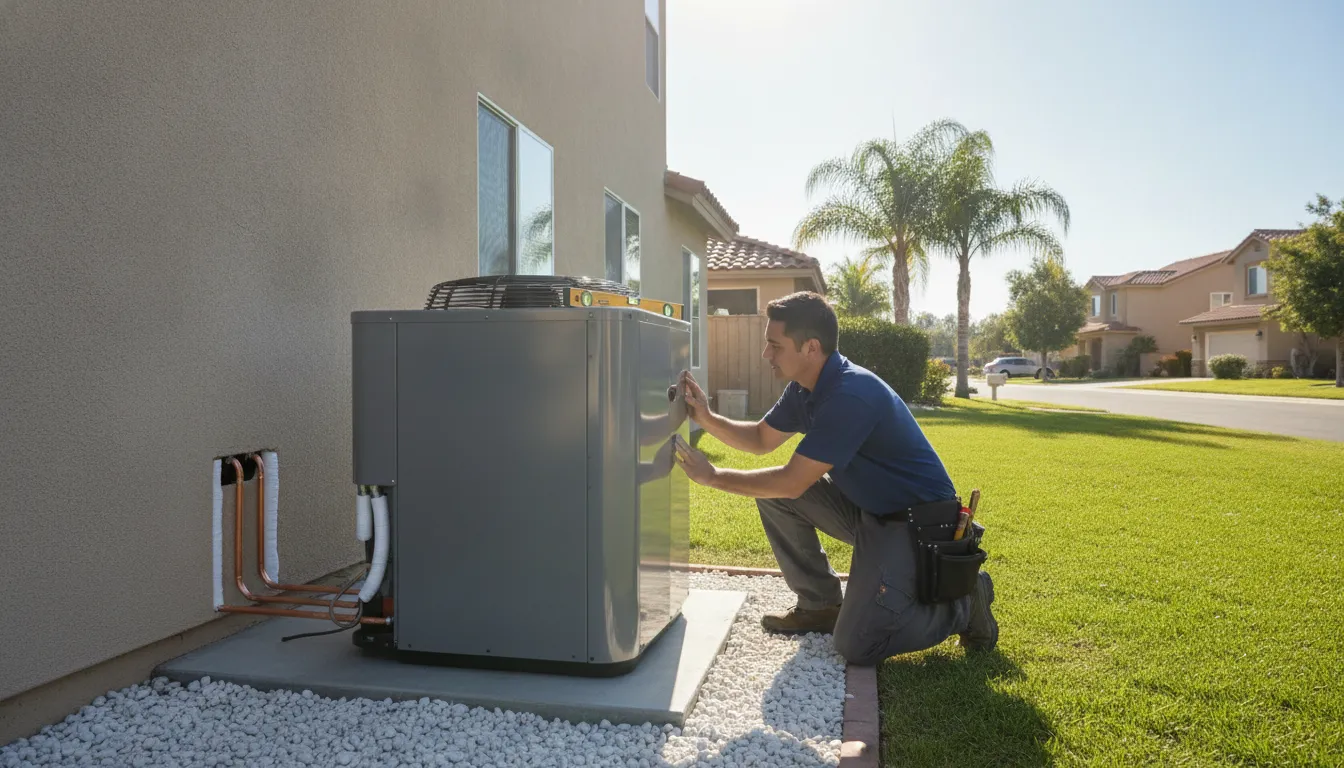
Replacing an aging heating and cooling system is a major home investment, and the number on an initial estimate rarely tells the whole story. Equipment size, efficiency, ductwork, and installation complexity can all change what you ultimately pay.
In California, heat pump installation cost california projects commonly fall between $4,000 and $12,000. But your home's square footage, existing duct condition, equipment efficiency, and labor requirements determine the appropriate quote. Federal tax credits and California incentives may reduce the net cost for eligible homeowners, so compare qualified bids after incentives rather than relying on a broad range.
A careful evaluation should also consider how a heat pump provides both heating and cooling, potential electrical or ductwork work, and long-term operating costs. The sections below break down typical system pricing first, then explain the project details and rebates that can move your total up or down. For broader planning context, review our guide to HVAC installation costs.
Heat Pump Installation Cost California: Average Heat Pump Installation Cost in California by System Type
California heat pump installation pricing can vary substantially by system design and home conditions. A broad statewide range is approximately $4,000 to $12,000, but Bay Area projects may run from $8,000 to $20,000 when equipment, labor, and site requirements are more demanding. National estimates also reach $17,000 to $23,000 for a whole-home system in a 1,500- to 2,500-square-foot home. These figures are useful budgeting references, not a substitute for a property-specific quote.
| System type | Typical range | What most affects the price |
|---|---|---|
| Ductless mini-split | $8,000-$14,000 | Number of indoor zones, electrical work, and line-set routing |
| Ducted heat pump | $12,000-$18,000 | Duct condition, access, system size, and any duct repairs or replacement |
| Air-source heat pump | $10,000-$20,000 | Equipment capacity, efficiency level, installation complexity, and existing HVAC configuration |
The ranges above reflect published market references, including Bay Area estimates from FuseService, whole-home pricing data from Rewiring America, and broader national estimates from SolarReviews. The categories can overlap: an air-source heat pump describes the heat source, while ducted and ductless describe how conditioned air reaches the rooms.
Why two similar homes can receive different estimates
Equipment price changes with brand, capacity, and efficiency. Higher SEER performance can increase upfront cost, although it may reduce operating costs over time. Home square footage, insulation, existing ductwork, electrical capacity, and labor complexity also affect the final scope. A replacement that uses sound existing infrastructure may cost less than a new installation requiring upgrades.
Airteks does not publish standardized system prices because a responsible recommendation requires an on-site evaluation. For broader planning, see our guide to HVAC installation costs. Airteks will assess the property, explain the available options, and provide a custom quote for the system that fits the home and the customer's priorities.
Factors That Affect Heat Pump Installation Price
A reliable quote starts with the home, not a one-size-fits-all price. These five evaluation steps help determine the equipment, preparation, and labor your project requires.
Start with home size and a load calculation
Square footage provides an initial reference, but it does not determine the correct heat pump size by itself. A contractor should evaluate the home's heating and cooling load, layout, windows, climate zone, and exposure. Oversizing can reduce comfort and efficiency, while an undersized system may run continuously. The required capacity affects equipment cost, installation time, and overall HVAC installation costs.
Inspect the existing ductwork
If you are replacing a central system, the condition and design of the ductwork can change the scope significantly. Leaks, damaged insulation, restricted returns, or poorly sized ducts may need repair or replacement before the new equipment can perform properly. A professional ductwork assessment identifies those issues before they become change orders.
Evaluate the building envelope
Insulation, air leakage, windows, and weatherization affect how much heating and cooling the home needs. A weak building envelope can require a larger system and make it harder to achieve efficient operation. The U.S. Department of Energy recommends addressing cost-effective envelope improvements before mechanical upgrades when appropriate, because weatherization can improve the results of a new heat pump. Read the DOE guidance.
Assess the electrical panel and wiring
Heat pump installation may require electrical work, particularly when the existing panel, circuit capacity, disconnect, or wiring does not meet equipment requirements. A safety assessment confirms whether upgrades are needed and helps account for that labor in the initial proposal instead of discovering it after installation begins.
Choose equipment by performance, not price alone
Efficiency ratings, including SEER for cooling and HSPF for heating, influence equipment cost and expected operating performance. Brand features, controls, sound levels, and cold-weather capability may also affect the recommendation. The right selection balances upfront equipment and labor costs with the home's load, comfort goals, and long-term energy use.
California Rebates and Federal Tax Credits for Heat Pumps in 2024
In 2024, incentives can reduce the upfront amount you need to budget for a heat pump installation. The exact benefit depends on the equipment, household income, utility territory, project timing, and whether the work includes related efficiency improvements. Treat the incentive amount as part of a verified project plan, not as an automatic deduction from every quote.
Federal tax credit: up to $2,000
Eligible heat pump installations may qualify for a federal tax credit equal to 30% of qualifying project costs, up to a maximum of $2,000. Eligibility depends on the equipment meeting applicable efficiency requirements and on the taxpayer's situation. Confirm the current requirements with a tax professional and review the applicable federal guidance before filing. This credit is separate from state and utility programs, so homeowners may be able to combine incentives when the rules allow.
California rebates can be larger for income-qualified households
California programs may provide rebates of roughly $4,000 to $8,000 for qualifying heat pump projects, with higher amounts generally tied to household income and program requirements. Homeowners may also encounter state-specific or utility-administered offerings, including programs associated with TECH Clean California. Funding, eligible equipment, approved contractors, and application procedures can change, so check the current program administrator before purchasing equipment or signing a contract.
These programs are part of a broader policy effort to decarbonize building energy use. The Inflation Reduction Act gives states flexibility in how they structure Home Energy Rebates. Including higher support for approaches that address the building envelope before or alongside mechanical upgrades. Federal guidance also describes potential contractor bonuses for projects that achieve 20% or more whole-home energy savings through envelope improvements. That means insulation and air-sealing may affect both comfort and the incentives available for a larger electrification project.
Look beyond the rebate when comparing project value
The best way to evaluate your heat pump installation cost california estimate is to compare the net project scope, not just the equipment price. Ask whether the quote identifies the selected efficiency rating, electrical work, ductwork needs, permit costs, and the incentive assumptions used to calculate the expected net cost. A professional assessment helps prevent a rebate from encouraging an undersized system or an installation that needs expensive corrections later.
Airteks can also pair energy-efficient HVAC equipment with Pelican Wireless controls. Airteks reports potential energy savings of 20% to 35% from these smart control systems, although actual results depend on the home, equipment, and operating habits. For a broader breakdown, review these available rebates and tax credits, then ask which programs and equipment qualify for your property.
Heat Pump vs AC + Furnace: Total Cost of Ownership Comparison
Upfront price is only one part of a heating and cooling decision. For the broader replacement context, review our guide to HVAC installation costs, then compare how each system affects energy use, maintenance, and future replacement planning. A heat pump can provide both heating and cooling in one system, while an AC and furnace setup relies on separate equipment.
| Cost factor | Heat pump | AC plus furnace |
|---|---|---|
| Initial equipment and installation | May carry a higher upfront cost, depending on equipment efficiency, home size, ductwork, and installation complexity. | Requires separate cooling and heating equipment. Replacement timing and installation requirements depend on the condition of each system. |
| Heating and cooling functions | Provides both functions through one heat pump system, which can simplify equipment planning and maintenance. | Uses an air conditioner for cooling and a furnace for heating, creating two major mechanical systems to maintain. |
| Fuel and utility exposure | Uses electricity for heating and cooling. Long-term operating costs still depend on local electric rates, usage, and system performance. | May expose the household to natural gas price changes. The U.S. Department of Energy notes that fossil fuel prices can be more volatile than electric rates and that gas infrastructure costs could be spread across fewer customers as electrification expands. |
| Potential bill impact | Converting from oil or propane to an efficient heat pump can lower long-term utility bills in many situations. | Operating costs vary by fuel type, equipment efficiency, seasonal demand, and utility pricing. |
| Policy and incentive outlook | State programs and incentive structures increasingly encourage replacing fossil-fuel furnaces with electric heat pumps. | Like-for-like fossil-fuel replacements may receive less policy support as states pursue electrification and energy-efficiency goals. |
Why fuel uncertainty belongs in the calculation
A lower installation quote does not automatically produce the lower lifetime cost. Natural gas prices and infrastructure charges may change over time, while electricity costs and rate structures also require review. The DOE identifies long-term fuel cost uncertainty as a factor homeowners should consider when choosing between gas heating and electric heat pumps. Your contractor should compare expected usage, equipment efficiency, maintenance needs, and available incentives rather than relying on a generic payback estimate.
When a heat pump may have the stronger value
The case is often more favorable when a property is replacing an aging air conditioner and furnace. Converting from oil or propane, or qualifying for incentives that reduce the net project cost. A professional assessment should also account for duct condition, electrical capacity, and the building envelope. For a more focused technical discussion, read our heat pump vs gas furnace comparison. Homeowners planning broader efficiency work can also review these energy-efficient HVAC upgrades before requesting a custom quote.
There is no universal winner. The right choice depends on the home's current equipment, comfort requirements, utility rates, and expected time in the property.
How to Get a Heat Pump Installation Quote From Airteks
The most reliable way to understand what a heat pump installation may cost is to request a property-specific assessment rather than rely on a generic price list. Airteks begins with a free on-site consultation, so the recommendation reflects your home, existing system, and comfort goals.
What happens during the consultation?
A licensed technician evaluates the home and the current HVAC setup, including the equipment needs, ductwork, and installation conditions that can affect the project. This custom review helps determine whether a heat pump is a sound long-term investment and what configuration fits the property. Airteks serves single-family homeowners throughout Northern California, including the Bay Area, Central Valley, and Sacramento region.
With more than 25 years of experience, Airteks brings practical knowledge to the assessment. Factory-certified technicians explain the available options and provide honest recommendations without pushing equipment or upgrades the home does not need. Airteks specializes in energy-efficient heat pump installations and can also discuss Pelican Wireless smart controls, which may provide energy savings of 20% to 35% depending on the application. Learn more about Airteks HVAC services.
Review the quote before work begins
Your quote should clearly outline the recommended system, scope of work, and total project price before installation starts. Airteks uses custom quotes rather than standardized pricing because every home has different requirements. If an urgent heating or cooling problem requires immediate attention, 24/7 emergency service is also available across the service area. To discuss your home and schedule a free consultation, call Airteks at (925) 292-0148.
Frequently Asked Questions
How much does it cost to install a heat pump in California?
A typical California heat pump installation may range from $4,000 to $12,000, depending on equipment size, efficiency, and the home requirements. That range is a starting point, not a guaranteed quote. A contractor must evaluate the property, existing system, ductwork, electrical service, and installation complexity before pricing the work. See the underlying cost range.
What factors influence the cost of a heat pump installation?
The biggest factors are the home's square footage, required system capacity, equipment efficiency, brand, ductwork condition, and labor complexity. Insulation and the building envelope also affect the heating and cooling load, which can change the equipment size. Older electrical components may require an electrical assessment or upgrade before installation. DOE guidance explains the role of envelope improvements.
Are rebates or tax credits available for heat pumps in California?
Potentially. Homeowners may qualify for federal tax credits and California programs such as TECH Clean California, but eligibility, equipment requirements, income rules, and program funding can change. Confirm current requirements before selecting equipment, and ask your contractor which incentives can be included in the project estimate. The Inflation Reduction Act gives states flexibility in how home-electrification incentives are structured. Review the DOE incentive guidance.
Do I need to replace my ductwork when installing a heat pump?
Not necessarily. Existing ductwork may work well if it is properly sized, sealed, and in good condition. Older or damaged ducts can reduce comfort and system performance, so a professional ductwork assessment should be part of the installation review. Repairs or replacement may add to the project cost, but they can help the new system deliver its intended heating and cooling performance.
Ready to Plan Your Heat Pump Installation?
A site-specific consultation can help you understand which heat pump setup fits your home, priorities, and budget. Airteks provides straightforward guidance so you can compare your options before making a major HVAC decision. To schedule a free heat pump installation consultation, call (925) 292-0148 and speak with the Airteks team about your project.
Comments