
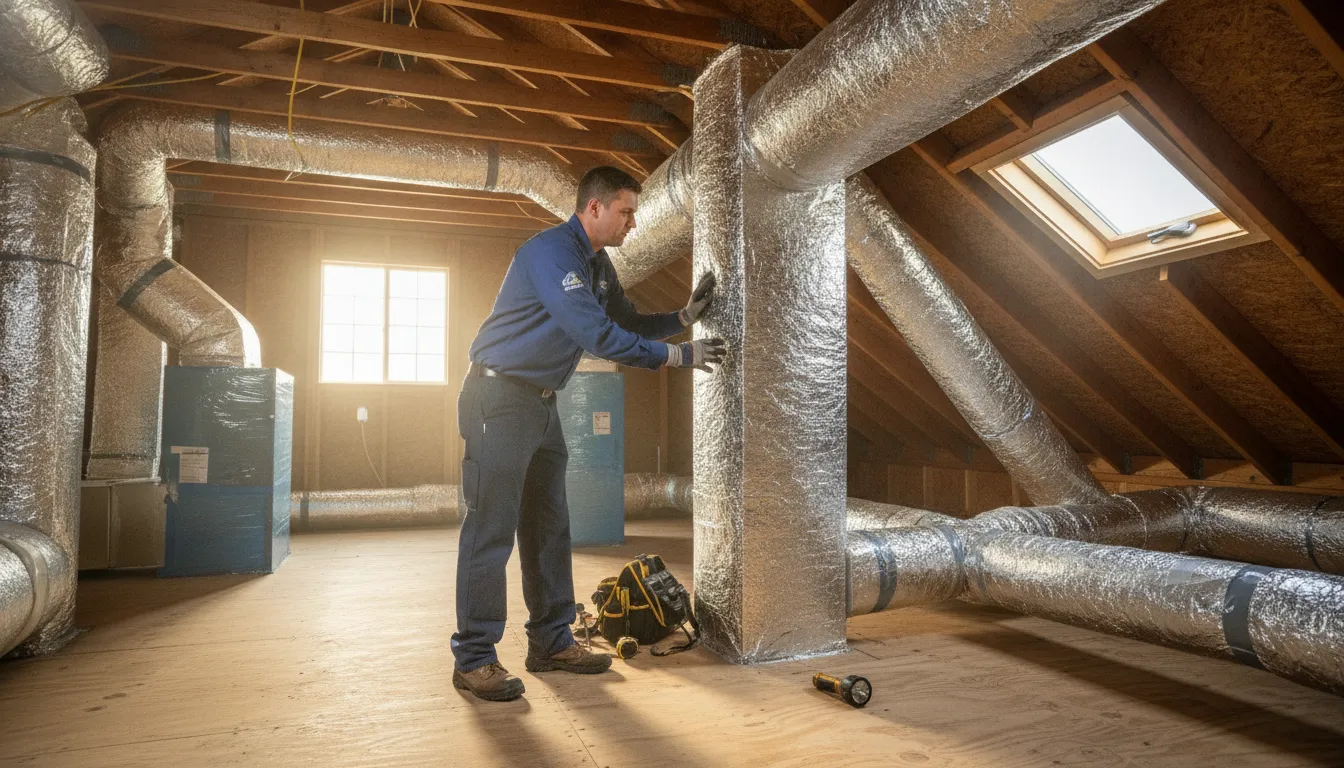
A ductwork problem rarely comes with a simple price tag. A technician may find damaged sections, difficult access, poor sealing, an outdated layout, or an opportunity to improve how air moves through the home. In Northern California, the right scope also depends on the home itself and the goals you have for comfort and efficiency.
There is no reliable statewide price for ductwork replacement cost california. Every project is shaped by inspection findings, available workspace, material choices, duct length and layout, and the level of sealing or efficiency work needed. The U.S. Department of Energy notes that improving HVAC distribution efficiency can support energy performance, while the California Energy Commission explains that proper air sealing can reduce energy used for heating and cooling. Those principles help explain why a thoughtful evaluation matters more than a generic online range.
The most useful estimate starts by separating the conditions that drive the work from the choices that shape the finished system. Understanding those variables will help you compare recommendations and request a quote that reflects your home rather than an assumed standard project.
What Does Ductwork Replacement Cost California Actually Depend On?
A single statewide number is rarely useful because ductwork projects are shaped by the home and the condition of the existing system. A small repair or partial replacement has a different scope from a full redesign. The quote may also change based on how much ductwork is involved, how many supply and return connections need attention, and whether the installer can reach the work area without removing or rebuilding surrounding materials.
What a custom quote should account for
A careful estimate starts with an inspection rather than a price sheet. The contractor should identify damaged or disconnected sections, evaluate the duct layout, note insulation and sealing concerns, and clarify whether the recommended work is repair, targeted replacement, or a broader project. Access matters too. Ducts routed through an accessible attic, crawlspace, or finished area can require different preparation and labor assumptions.
Material selection is another project-specific decision. Flexible, sheet-metal, and other duct configurations may each be appropriate in different locations, depending on the layout, available space, durability goals, and installation requirements. A sound proposal should explain what is being replaced, what remains, how connections will be sealed, and how the completed system will be checked for airflow and leakage.
Efficiency should be considered alongside the installation scope, not treated as an automatic savings promise. The U.S. Department of Energy notes that improving the distribution efficiency of heating and cooling systems may provide meaningful benefits. Read the DOE HVAC guide for that broader distribution principle.
For Northern California homeowners, the practical next step is an individualized evaluation. A written quote should connect the recommended work to the observed condition of the ducts, the home's access limitations, and the comfort or airflow concerns being addressed. That approach gives you something useful to compare without pretending every California home has the same project.
What Should a California Ductwork Inspection Cover?
A useful inspection looks beyond the most visible section of ductwork. The technician should consider the condition of accessible ducts, connections, insulation, registers, returns, and transitions between different parts of the system. Loose joints, damaged insulation, crushed flexible duct, disconnected runs, or visible moisture concerns can affect airflow and comfort, but the right recommendation depends on what is actually found in the home.
Airflow symptoms also provide important context. Rooms that stay warmer or cooler than others, weak supply airflow, unusual duct noise, excessive dust, or a system that struggles to maintain the thermostat setting may justify a closer evaluation. These signs do not automatically mean that every duct must be replaced. An inspection should distinguish between a localized repair, sealing work, insulation improvements, and a larger redesign or replacement project.
Access is part of the inspection, too. The technician may need to review duct runs in an attic, crawlspace, garage, or other area outside the conditioned living space. The California Energy Commission defines the building envelope as the components separating conditioned space from unconditioned areas such as attics and garages. That distinction matters because duct location, insulation, and sealing can influence how efficiently conditioned air reaches the rooms. California Energy Commission guidance explains that properly sealed buildings have lower air leakage and may use less energy for heating and cooling.
Finally, ask whether the evaluation includes the duct layout, return-air path, equipment connections, and any practical access limitations. A clear written scope should explain what was inspected, what could not be reached, and why each recommendation was made. For related guidance on filtration, ventilation, and duct maintenance, see our article on duct care and indoor air quality.
Which Factors Change a Ductwork Replacement Quote?
A useful quote describes the work your home actually needs rather than applying one statewide figure. The factors below help explain why two projects with similar equipment can still require different scopes, materials, preparation, or labor. Ask the contractor to identify each assumption in writing.
| Quote factor | What it can change | Questions to ask |
|---|---|---|
| Scope | The number of runs, vents, return-air components, connections, and any damaged sections included in the project. | Which sections are being replaced, and which are being retained? |
| Access | Time and preparation needed to reach ductwork in an attic, crawlspace, garage, or other constrained area. | What access conditions did the estimate assume? Is preparation or protection included? |
| Materials | The duct type, insulation, fittings, sealants, fasteners, and other materials needed for the selected design. | Which materials are specified, and where will insulation and sealing be addressed? |
| Layout | Existing routing, building features, vent locations, return-air needs, and structural modifications can affect the installation approach. | Does the proposal keep the current layout, or recommend changes for airflow? |
| Labor | Removal, installation, site preparation, cleanup, and the complexity of working around the home. | Are removal and debris disposal included, or listed as separate items? |
| Testing | Post-installation checks can identify airflow or leakage issues and may lead to adjustments before the work is complete. | What testing is included, and will the results or adjustments be documented? |
| Permits and inspections | Local project requirements may affect preparation, scheduling, documentation, or the closeout process. | Will permits or inspections apply to this project, and who handles those questions? |
The best option is not always the most extensive one. A careful evaluation should connect the proposed scope to comfort, airflow, and system performance. If you are also considering equipment changes, review Airteks' ducted and ductless system options before approving a layout that may limit future choices.
How Do Access, Materials, and Layout Affect the Work?
The path to each duct run can influence the work as much as the duct itself. Ducts routed through an accessible attic may be easier to inspect and replace than runs enclosed behind finished ceilings, tight framing, or other obstacles. A professional evaluation should account for safe access, removal of existing materials, preparation, and any layout changes needed to reach the registers and return-air openings.
Material selection is also project-dependent. Flexible duct can suit some routes, while rigid sheet metal or duct board may make more sense in other parts of a system. The right choice depends on the available space, connections, support, insulation needs, and the intended airflow. No single material is automatically the best fit for every California home, and an estimate should explain where each material is proposed and why.
Sealing and insulation deserve attention alongside the replacement material. The California Energy Commission describes the building envelope as the boundary separating conditioned space from areas such as attics, garages, and the outdoors. Its guidance also explains that proper air sealing can reduce air leakage and the energy used to heat or cool a building. See the California Energy Commission air-sealing guidance for context.
Finally, layout affects whether conditioned air reaches rooms as intended. The number and position of supply registers, return-air pathways, transitions, and bends can change system performance. For more context, review airflow and duct system performance and compare broader HVAC efficiency choices for California homes. A clear estimate should connect these design decisions to comfort and performance rather than treating duct replacement as a one-size-fits-all task.
Can Duct Repair or Sealing Be Enough?
Not every ductwork problem requires a complete replacement. If an inspection finds a limited disconnected joint, damaged section, or accessible leak, targeted repair or professional sealing may address the immediate airflow problem. The right choice depends on how much of the system is affected, whether the ducts can be reached, and whether the existing layout and materials remain suitable for the home.
When repair or sealing may fit
Repair can be reasonable when damage is localized and the surrounding ductwork is in usable condition. Sealing may also help when leakage is the main concern and the ducts are otherwise intact. The California Energy Commission explains that the building envelope separates conditioned areas from unconditioned spaces such as attics and garages, where air-sealing decisions can affect how conditioned air is retained. The CEC air-sealing guidance provides useful context, but it does not replace an inspection of the duct system itself.
When replacement deserves closer consideration
Replacement may be worth evaluating when damage is widespread, insulation has deteriorated, access makes repeated repairs impractical, or the current layout creates persistent comfort and airflow issues. A contractor should look at the full distribution system, including supply runs, returns, connections, insulation, and routing, rather than recommend replacement based on one visible defect. The U.S. Department of Energy likewise treats the distribution system as part of overall HVAC performance; its HVAC guide supports addressing distribution efficiency as part of a complete evaluation.
If the inspection also reveals broader equipment concerns, review when to plan an HVAC replacement before deciding how to scope the project. For a California home, a useful estimate should explain what will be repaired, sealed, or replaced and why, instead of assuming that the most extensive option is automatically best.
How Should You Compare Ductwork Replacement Estimates?
A useful estimate should help you understand what will happen in your home, not just present a total. Compare the work behind each proposal so you can identify missing steps and ask the same questions of every contractor.
- Confirm the scope. Ask whether the estimate covers the full duct system or only selected runs. It should identify removal, installation, connections, insulation, sealing, and any return-air or vent changes that may be needed.
- Review access assumptions. Attics, crawlspaces, garages, and tight chases can change preparation and labor. Make sure the contractor has documented where the crew expects to work and whether opening or restoring finished surfaces is excluded.
- Compare materials and layout. The proposal should name the planned duct materials and explain why they fit the home. It should also show whether the existing layout remains or whether routing, sizing, or structural modifications are part of the design.
- Ask how performance will be checked. Testing or inspection after installation can help confirm that connections are sealed and the system is distributing air as intended. The U.S. Department of Energy notes that duct-system performance affects both heating and cooling effectiveness and cost. Read the DOE duct-system guidance.
- Clarify preparation and cleanup. Ask who protects the work area, removes old ductwork and debris, and leaves accessible areas clean. These details should not be left to assumption.
- Ask about permits and inspections. Requirements can depend on the project and local jurisdiction. Have the contractor explain which permit or inspection questions apply, rather than assuming every estimate includes them.
- Read warranty language and exclusions. Look for coverage of workmanship and materials, along with exclusions for inaccessible areas, unrelated equipment, repairs to surrounding structures, or future service.
- Get the details in writing. Compare the equipment or duct specifications, expected sequence, payment terms, responsibilities, and change-order process. If financing would help you plan the work, review financing options for HVAC projects separately from the installation scope.
When Is It Time to Ask for a Ductwork Evaluation?
You do not need to decide on replacement before asking questions. An evaluation can help clarify whether the duct system needs repair, sealing, insulation work, reconfiguration, or more extensive replacement. That distinction matters when you are researching ductwork replacement cost california and want an estimate based on your home rather than a generic statewide figure.
Consider requesting an evaluation if rooms remain noticeably warmer or cooler than others, airflow seems weak at several registers, or the system struggles to maintain comfort after maintenance. Visible damage, disconnected sections, unusual rattling, recurring dust concerns, or signs of moisture around accessible ductwork also deserve attention. These observations do not prove that replacement is necessary, but they give a technician useful starting points.
Northern California homes can have very different layouts and conditions. An attic installation in the Bay Area, a home with difficult access in the Central Valley, and a Sacramento property with a different heating and cooling configuration may call for different recommendations. A thorough review should consider the duct layout, connections, insulation, access, equipment, and the comfort symptoms you have noticed.
It is also reasonable to ask what can be preserved. A dependable contractor should explain which findings support repair or sealing and which justify broader work, without treating every concern as a replacement project. Airteks provides residential HVAC services across its Northern California service area, including assessment, repair, installation, replacement, and maintenance.
If the issue appears most strongly during cold weather, the team can also consider the heating side of the system through its residential heating services. The practical next step is simply to describe the symptoms, share any accessible photos, and request individualized guidance. That gives you a clearer basis for planning without committing to work before you understand the options.
Frequently Asked Questions
Why can ductwork replacement be expensive?
The work may involve more than removing and installing ducts. Inspection findings, attic or crawlspace access, the number of branches and vents, material selection, layout changes, sealing, insulation, testing, cleanup, and any local permit or inspection requirements can all affect the project scope. A written estimate should explain which conditions apply to your home.
How often should ductwork be replaced in a home?
There is no reliable replacement schedule that fits every California home. Duct age, material, moisture exposure, physical damage, previous repairs, insulation condition, and airflow performance all matter. Have the system evaluated when you notice persistent uneven comfort, damaged duct sections, excessive dust, unusual airflow, or signs of leakage rather than replacing it based on age alone.
Does homeowners insurance cover ductwork replacement?
Coverage depends on your policy, the cause of the damage, and whether the issue is sudden or related to wear and maintenance. A contractor can document visible conditions, but your insurance company makes the coverage decision. Ask your insurer what documentation and exclusions apply before assuming a replacement will be reimbursed.
Do I need a permit to replace air ducts in California?
Permit and inspection requirements can vary by the project and the local authority having jurisdiction. Ask the contractor which parts of the proposed work may require approval, and confirm the current requirements with your city or county building department. Include permit responsibilities in the written estimate so the scope is clear.
Can I replace air ducts myself in California?
Some minor sealing work may be approachable for a capable homeowner, but full replacement involves system layout, sizing, connections, insulation, access, and performance testing. Mistakes can affect comfort and airflow. A professional evaluation can help determine whether targeted repair is reasonable or whether the project calls for a complete, properly tested replacement.
Ready to Plan Your Ductwork Project?
A home-specific evaluation can clarify what your duct system needs, which options fit the property, and what should be included in an individualized quote. To request an evaluation and HVAC quote from Airteks, call (925) 292-0148 and talk with the team about your California home.
Comments