
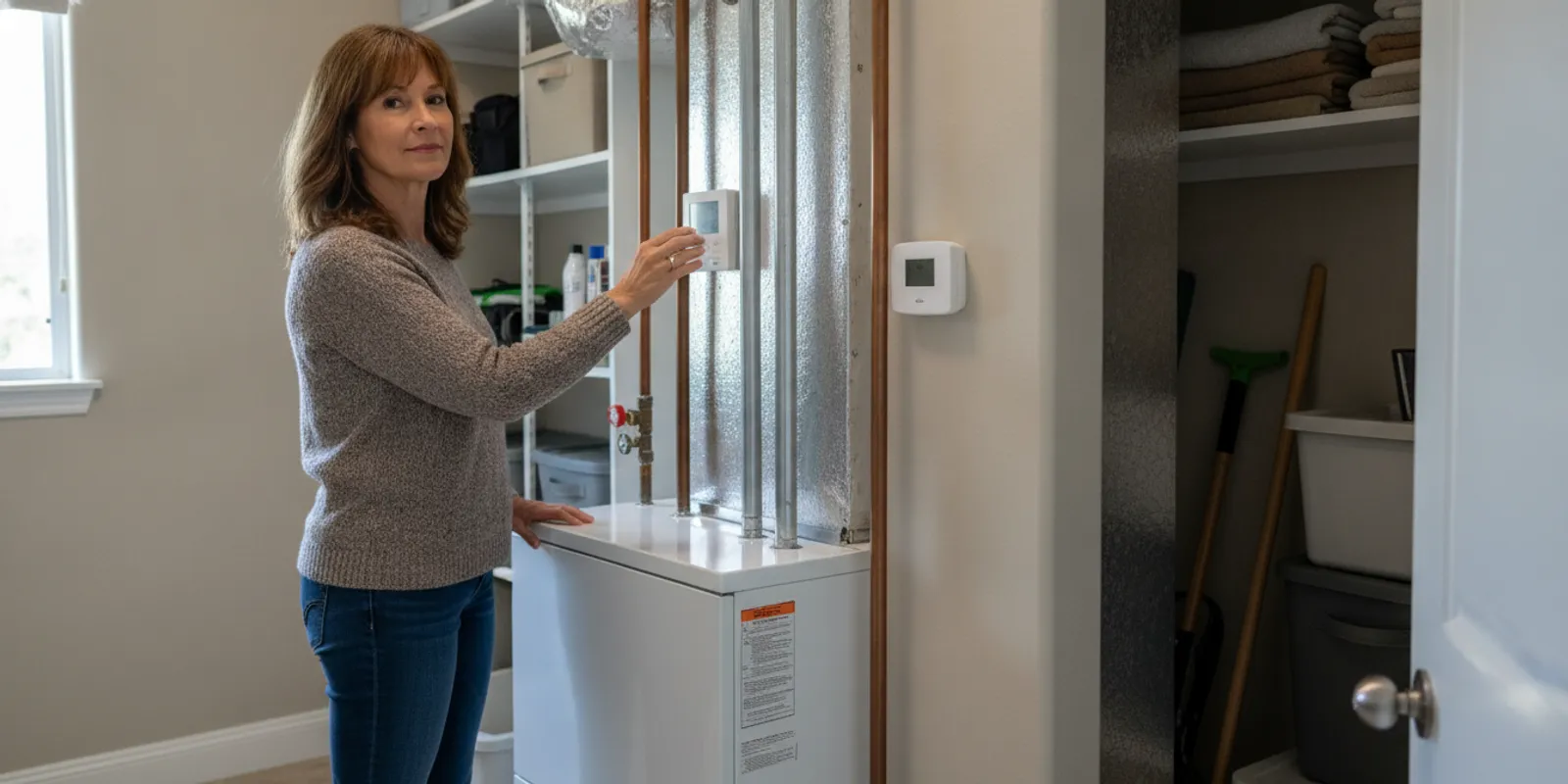
When a furnace is not turning on, the cause may be a thermostat setting, a power interruption, or a safety control that has stopped the system. A few careful checks can help identify a simple issue, but do not open the furnace cabinet or work on gas, electrical, or combustion components. Start with the safe steps below, and stop if you notice a gas smell, a carbon monoxide alarm, or other signs of danger.
Call Airteks for furnace service at (925) 292-0148
What does “furnace not turning on” mean?
A furnace may fail to start in several different ways. The thermostat display might be blank. The display may be on, but the furnace does nothing. You might hear a click or a short sequence of sounds without warm air reaching the rooms. Or the system may start and then shut down before completing a heating cycle.
Those symptoms can point toward different parts of the system, and they do not prove a particular component has failed. For example, a blank thermostat can result from a power issue, while a furnace that tries to start and stops may be responding to a safety control. The goal of homeowner troubleshooting is to check simple settings and conditions, not to diagnose or repair internal equipment.
If the issue involves your home's heating system, Airteks provides residential HVAC services, including residential heating service and residential HVAC repairs.
What should you check for a furnace not turning on?
Keep the checks visual and external. Do not remove access panels, reach into the equipment, or repeatedly reset a furnace that keeps shutting down. If you are unsure whether a step is safe for your setup, skip it and contact a qualified HVAC professional.
- Check the thermostat mode and temperature. Set it to Heat, not Cool or Off, and raise the set temperature a few degrees above the current room temperature. If the thermostat uses a schedule, temporary hold, or other programmed setting, confirm that it is asking for heat now. Allow a few minutes for a normal start-up delay.
- Look at the thermostat display. If it is blank or flashing a low-battery message, replace its batteries if the model uses them and you can do so safely. Some thermostats are powered by the HVAC system, so a blank screen may instead signal a system power interruption. Do not remove thermostat wiring.
- Check the room temperature and airflow expectation. Make sure you are testing a heating call, not expecting immediate warm air after changing a setting. Furnaces can take a short time to begin delivering heat. If the thermostat responds but nothing happens after several minutes, move on to the external checks.
- Check the furnace switch from outside the unit. Many systems have a nearby service switch that resembles a light switch. If it is clearly labeled and accessible, verify that it is on. Do not touch exposed wiring or switches inside the furnace cabinet.
- Check the circuit breaker visually. Find the breaker panel and look for a breaker labeled furnace, heating, or HVAC that is in a tripped position. If you can identify it confidently, follow the panel instructions for resetting it once. If it trips again, leave it off and call a professional. Repeated trips can indicate an electrical fault; do not keep resetting it.
- Check the air filter. If the filter is easy to access without opening the furnace cabinet, check whether it is heavily loaded with dust. Replace it with the correct size and type if needed, following the airflow arrow on the filter frame. A clogged filter can restrict airflow and contribute to safety shutdowns, but changing it will not correct every no-start problem.
- Check supply and return vents. Make sure furniture, rugs, or other objects are not blocking the visible room vents. Do not close most of the vents to force heat into another room. The system needs appropriate airflow to operate normally.
- Look for a visible obstruction around an outdoor intake or exhaust termination. Only inspect from a safe place at ground level. If snow, leaves, or debris appear to block an opening, do not climb, insert tools, or dismantle the vent. If it cannot be cleared easily and safely without touching the equipment, call for service.
These steps are not a substitute for the manufacturer's instructions. If a specific check conflicts with the furnace or thermostat manual, follow the manual. For a broader overview of routine homeowner care, see Airteks' HVAC maintenance information.
Which symptoms help narrow down the problem?
Pay attention to what happens when the thermostat calls for heat. You do not need to interpret internal furnace sounds or open the equipment. A concise description of the symptom can help a technician decide what to inspect.
| What you notice | Safe observation | What to do next |
|---|---|---|
| Thermostat screen is blank | Check for a low-battery message or a simple battery compartment accessible from the front. | Replace batteries if appropriate. If the screen stays blank, arrange service rather than working on wiring. |
| Thermostat is on, but furnace is silent | Confirm Heat mode, set temperature, and the visible service switch and breaker. | After one safe reset attempt if clearly tripped, call for service if there is still no response or the breaker trips again. |
| Furnace starts, then stops | Note how long it runs and whether the problem repeats. Check the filter and visible vents. | Do not keep restarting it. A technician can inspect the cause of the shutdown. |
| Furnace runs but rooms remain cold | Check whether air comes from the vents and whether the thermostat setting is above room temperature. | Describe the airflow and any unusual noises when requesting HVAC repair. |
| Gas odor, carbon monoxide alarm, or illness symptoms | Do not troubleshoot or operate equipment. | Leave the building and contact emergency services or the appropriate utility from a safe location. |
When noting what you observe, separate facts from guesses. “The thermostat showed Heat at 72 degrees, the room read 66, and I heard a click but no fan” is more useful than “the igniter is broken.” If you can safely see an error message on the thermostat, write it down exactly rather than trying to interpret it. A short timeline also helps: whether the system stopped during a cycle, failed after a power interruption, or has been silent since you first tried to turn it on.
Patterns across the home can offer context without diagnosing the equipment. If every room is cold, the issue may involve the central system or its controls. If some areas remain comfortable while one room is cold, note that difference and whether its vent is blocked. Do not assume that uneven temperatures explain a furnace that will not start; share the details and let a technician assess the system.
When is it unsafe to troubleshoot?
Stop and get everyone to safety if you smell gas, hear a carbon monoxide alarm, see smoke or flames, or notice symptoms such as headache, dizziness, nausea, confusion, or weakness that could be related to carbon monoxide exposure. Move outside to fresh air. Do not use the furnace, light a flame, or operate electrical switches if you suspect a gas leak. From a safe location, contact emergency services or the gas utility as appropriate. Do not re-enter until authorities say it is safe. For general carbon monoxide and home product safety information, consult the U.S. Consumer Product Safety Commission.
Do not remove furnace panels or attempt to inspect a burner, ignition system, flame sensor, gas valve, wiring, or internal safety controls. Do not bypass a safety switch, use an open flame to test for gas, or repeatedly cycle power to force a start. These actions can create fire, shock, gas, or carbon monoxide hazards, and can make the underlying issue harder to diagnose.
Also stop troubleshooting if water is near electrical equipment, you see damaged wiring, hear loud banging or grinding, notice scorching, or a breaker trips again after one reset. Leave the equipment off if it can be done safely without approaching a hazard, and call for professional help. If a gas or carbon monoxide emergency may be underway, use emergency channels rather than waiting for a routine appointment.
Why might a furnace not turn on?
Common causes range from simple external settings to faults that require a trained technician. A thermostat may not be calling for heat because of its mode, schedule, temperature setting, or power. A tripped breaker or switched-off service switch can interrupt power. Restricted airflow from a neglected filter or blocked return can lead some systems to shut down for protection.
Other possibilities involve internal controls, ignition, fuel supply, a motor, wiring, or a venting problem. A homeowner cannot reliably distinguish these causes just by listening, and different furnace designs behave differently. A repeated start-and-stop cycle or an error indicator should be reported to the technician, not used as a reason to open the unit or replace parts on guesswork.
If your furnace is older or the system has had recurring trouble, that history is useful context, but a no-start symptom alone does not show that replacement is necessary. Ask the technician to explain what they found and what options make sense for the condition of your particular system. This guide is focused on safe checks and escalation, not repair pricing or replacement decisions.
A useful way to think through the possibilities is to distinguish a request for heat from a response to that request. The thermostat setting and schedule determine whether the system is being asked to run. The visible power switch and breaker can tell you whether a basic power interruption may be involved. Filter and vent observations provide airflow context. If those external checks do not explain the symptom, the remaining causes generally require measurements or inspection inside the equipment, which is professional work.
For example, a thermostat that is set below the room temperature may simply have no reason to call for heat. A thermostat that clearly calls for heat while the furnace remains silent presents a different observation, but it still does not identify a failed component. Likewise, a short run followed by a shutdown is not proof that the filter is the only issue. Sharing the sequence of events is safer and more useful than attempting to repair a suspected part.
What information should you have ready when calling?
Before you call, note the furnace type if you know it, the thermostat setting, and what happens after you request heat. Mention whether the system is silent, clicks, starts briefly, or runs without delivering warm air. Tell the service provider what you already checked, whether a breaker tripped, and whether the problem has happened before.
Share any visible thermostat message or error code, but do not remove a panel to find one. Let the service provider know about unusual odors, noises, water, or a carbon monoxide alarm. If any urgent safety sign is present, say so immediately and follow emergency instructions rather than conducting more checks.
Airteks handles HVAC repair for homes and commercial properties. To learn about the company's HVAC repair service or reach out through the contact page, provide a clear description of the symptoms and your location. Airteks serves communities across Northern California; its service map lists service-area information.
How can routine care reduce avoidable shutdowns?
Routine care cannot prevent every breakdown, but it can help catch some maintenance concerns before they become an urgent no-heat situation. Replace or clean filters on the schedule recommended for your equipment and household conditions. Keep the area around the furnace clear, and do not store items against the unit or block its visible air openings. Keep supply and return vents unobstructed.
Arrange professional maintenance according to the equipment manufacturer's guidance and your system's needs. During service, a technician can inspect and maintain components that homeowners should not handle. If the system repeatedly shuts down, do not wait for routine maintenance; report the specific pattern and ask for a diagnosis. Airteks offers HVAC maintenance and services a range of makes and models.
Make filter checks practical by recording the date you replace the filter and keeping the size and type noted where you can find them. Filter life varies with the system, the filter itself, and conditions in the home, so use the equipment guidance rather than relying on a universal calendar. If a filter becomes dirty unusually quickly, or replacing it does not resolve repeated shutdowns, mention that pattern at the service visit instead of installing a denser filter without checking compatibility.
What should you do if the furnace stays off after these checks?
Once you have confirmed the thermostat is asking for heat and checked accessible power and airflow items, stop there if the furnace still does not respond. There is no need to keep switching the thermostat between modes or flipping the breaker. Repeated attempts are unlikely to identify the failed part and can add risk if an electrical or safety problem is present.
Keep the area around the equipment clear so a technician can reach it. If the furnace is in a closet or utility room, move loose items away without touching the unit or its pipes and wiring. Make a note of when the problem began and whether it followed a power outage, a thermostat change, recent maintenance, or another event you observed. Do not assume that timing proves the cause; it is simply useful context.
Consider the effect on people in the building while waiting for service. Use safe, manufacturer-approved alternate heating if available, and keep portable heaters away from curtains, bedding, and other combustible materials. Never use an oven, outdoor grill, or fuel-burning appliance not designed to heat the home as a substitute. Follow the safety instructions supplied with any alternate heater, and do not leave it unattended while operating. If indoor temperatures create an immediate health concern, seek a safe warm location.
For a business, school, or other facility, follow the site's established building and occupant safety procedures. Share affected areas, operating hours, and any critical spaces with the HVAC service provider so the situation can be triaged. Airteks provides commercial HVAC services as well as residential support; the right next step depends on the building and the equipment involved.
While arranging service, make access straightforward and keep children and pets away from the equipment. If you have system paperwork, a model number written on an exterior label, or a record of prior maintenance already at hand, set it aside for the technician; do not move heavy equipment or remove a panel to locate details. If you rent or manage a property, notify the responsible property contact as well as arranging the next step under your normal process. Keep any alarm or emergency event information available to share.
Need furnace service? Call Airteks at (925) 292-0148.
Frequently Asked Questions
Should I reset the furnace if it will not turn on?
Start with the thermostat and visible power checks. If a clearly identified HVAC breaker is tripped, you may follow the panel instructions and reset it once. If it trips again, or the furnace continues to stop, do not repeat resets. Contact an HVAC professional.
How long should I wait after raising the thermostat?
Give the system several minutes to respond, since some equipment has a normal start-up delay. If the thermostat is calling for heat and nothing happens after that, check only the safe external items in this guide. Avoid changing settings repeatedly in an attempt to force a start.
Can a dirty filter keep a furnace from starting?
A severely restricted filter can affect airflow and may contribute to a shutdown on some systems. Check and replace an accessible filter if it is dirty and you know the correct size and direction. If the furnace still will not run, or shuts down again, it needs professional diagnosis.
Is it safe to run the furnace if it starts and stops?
Repeated short starts and shutdowns are not a reason to keep testing the furnace. Turn off the call for heat if the cycle continues and arrange service. If you notice gas odor, a carbon monoxide alarm, smoke, or symptoms that could indicate carbon monoxide exposure, leave immediately and seek emergency help.
Contact Airteks for furnace service at (925) 292-0148
A few safe checks can rule out a thermostat setting or obvious power interruption, but persistent or unusual furnace behavior needs a professional diagnosis. If there is any sign of gas or carbon monoxide danger, leave first and get emergency help from a safe location.
Comments