
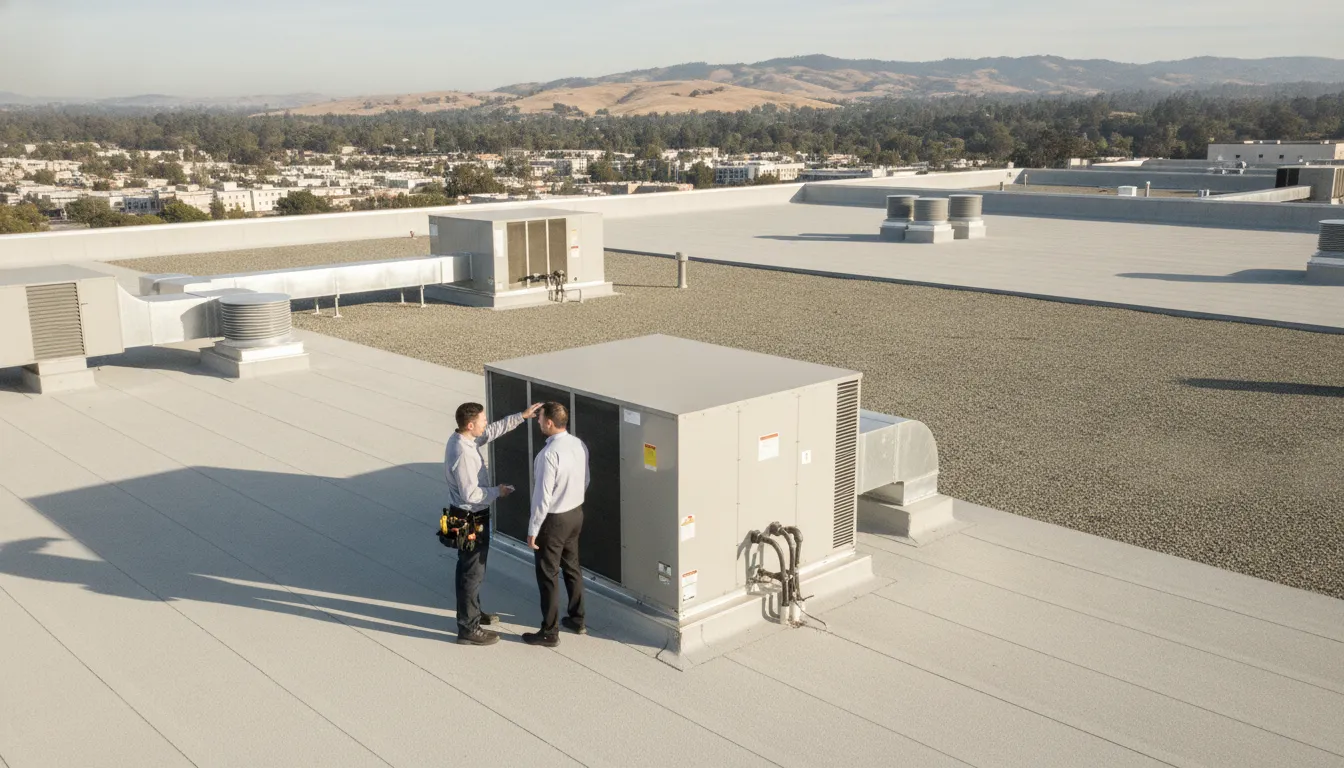
Commercial HVAC repair is not a one-size-fits-all expense. A rooftop unit serving a small office has different diagnostic needs from a VRF system, boiler, or chilled water system supporting a larger facility. Access, equipment condition, parts, urgency, and the scope of the fault all shape the final decision.
For a practical answer to how much does commercial hvac repair cost, start with a professional diagnosis rather than a generic price list. Airteks evaluates the system on site, explains the findings, and provides upfront pricing before work begins.
Call Airteks at (925) 292-0148 for commercial HVAC services.
That process gives property owners and facility teams a clearer basis for protecting comfort, uptime, and operating budgets. The next step is understanding which conditions most often change an estimate and what questions to ask before approving work.
How Much Does Commercial HVAC Repair Cost?
There is no universal answer to how much commercial HVAC repair cost should be. A commercial system may serve an office, warehouse, retail space, restaurant, clinic, or industrial facility, and each building presents different operating demands. The equipment type, reported fault, access conditions, required parts, and overall repair scope must be evaluated before a responsible estimate can be prepared.
A tailored estimate establishes what is failing, what work is necessary, and which options make sense for the property. A minor control issue may call for a different approach than a problem involving a rooftop unit, VRF system, chilled water system, boiler, air handler, exhaust fan, or building automation system. Diagnosis also helps distinguish a repairable component issue from a broader reliability or equipment condition concern.
Airteks' commercial process begins with an assessment of the service need and scheduling, followed by an on-site evaluation by a certified technician. The team then provides upfront pricing before work begins. That sequence gives the property owner or facility manager a clear basis for approving the recommended work rather than relying on a generic price list. Commercial HVAC services can also support larger site assessments, custom proposals, and ongoing service planning when a building or portfolio needs more than a single repair.
When requesting an estimate, share the equipment type, symptoms, affected areas, operating constraints, and any recent service records. These details help the technician understand the situation, but an on-site evaluation remains the best way to define the actual repair scope and present an honest recommendation.
What Factors Change a Commercial HVAC Repair Estimate?
Commercial repair estimates are shaped by the system that failed, the condition that caused the failure, and the work required to restore dependable operation. A rooftop unit, VRF system, chilled water system, boiler, air handler, exhaust fan, or building automation system can require a different diagnostic approach and different parts. The needs of an office, warehouse, clinic, restaurant, or industrial facility also affect how the work is planned.
These variables explain why a universal answer to how much does commercial hvac repair cost is not reliable. An on-site evaluation can separate a straightforward component repair from a larger issue involving controls, airflow, refrigerant, electrical connections, or multiple pieces of equipment. For air conditioning problems, Airteks provides commercial air conditioning repair as part of its commercial HVAC support.
| Factor. | Why it changes scope. | What to ask. |
|---|---|---|
| Equipment type | System design, controls, capacity, and service procedures vary across rooftop, VRF, chilled water, boiler, and air-handler equipment. | Which equipment and components require attention? |
| Fault and diagnosis | A symptom such as weak cooling may involve airflow, electrical, refrigerant, controls, or a deeper system fault. | What failed, and what evidence supports that finding? |
| Access and site conditions | Roof access, occupied spaces, safety requirements, and multiple affected zones can change the work plan. | What access, shutdown, or coordination will be needed? |
| Parts and availability | The required component, compatibility, and availability can affect scheduling and whether temporary measures are appropriate. | Which parts are recommended, and are alternatives available? |
| Urgency and scope | An active failure affecting comfort, operations, or safety may require priority planning, while broader corrective work may need a separate proposal. | What must be addressed now, and what can be planned? |
A clear estimate should identify the diagnosed problem, recommended work, assumptions, and exclusions before approval. That gives property owners and facility teams a practical basis for balancing uptime, comfort, and long-term reliability without relying on a generic price list.
What Should a Commercial HVAC Diagnosis and Quote Include?
A useful commercial HVAC quote should help a property manager understand what failed, what work is recommended, and what decision comes next. It should be based on the building and equipment rather than a generic price list. A clear process also gives your team a practical record for approval, budgeting, and future maintenance.
- Service need and site context: The contractor should document the reported symptoms, affected areas, operating concerns, and the building's use. A warehouse, office, restaurant, or clinic may have different comfort and scheduling needs. For a multi-building property, the assessment should identify which locations and systems are included.
- On-site equipment evaluation: Airteks documents a service-need assessment, scheduling, and an on-site evaluation by a certified technician before upfront pricing is provided. The diagnosis should identify the equipment involved, the observed fault, and any conditions that affect safe access or the repair scope.
- Findings and recommended work: The quote should explain the diagnosed condition in plain language, then connect it to the proposed repair. It should distinguish confirmed findings from items that need additional investigation. If more than one path is reasonable, the proposal should describe the available options and the operational tradeoffs of each.
- Scope, exclusions, and assumptions: Look for a written description of included labor, parts, testing, cleanup, permits or coordination where applicable, and areas that are not included. Access limitations, concealed conditions, controls, or related equipment may change the final scope. Asking these questions early helps prevent surprises.
- Upfront pricing and approval path: The estimate should state the proposed cost for the defined work before work begins, along with assumptions and approval requirements. For larger properties, a site assessment or custom proposal may support portfolio pricing or a long-term service agreement. Airteks describes these commercial planning options as part of its broader process. You can also compare commercial HVAC bid factors when reviewing providers.
A professional diagnosis does not need to promise a universal answer to how much commercial HVAC repair cost. It should give decision-makers enough evidence to compare the repair scope, understand uncertainty, and authorize the right next step.
How Do Equipment and Building Conditions Affect Repair Scope?
Commercial HVAC repair scope depends on more than the failed component. A rooftop unit may be reachable from a roof hatch, while a chilled water system may involve pumps, valves, controls, and distribution throughout a building. VRF systems, boilers, air handlers, exhaust fans, and building automation systems each require a different diagnostic approach. Airteks works with these system types as part of its commercial HVAC services.
The equipment's design and the building's operating requirements also matter. A repair affecting one office has a different operational impact from a fault serving a restaurant, clinic, warehouse, or multi-tenant facility. Airteks' commercial HVAC system design resource provides additional context on sizing, system selection, and building conditions that can influence long-term performance.
Access and controls can change the work involved
Technicians may need roof access, lift equipment, secured mechanical-room access, or coordination with a property manager. Limited clearance, occupied spaces, tenant schedules, and safety requirements can affect how the work is sequenced. Controls add another layer: a mechanical component may be operating correctly while a sensor, wiring connection, programmed setting, or building automation sequence is causing the complaint. The diagnosis should identify whether the issue is isolated or connected to a larger system.
Maintenance findings help define the next step
A maintenance inspection can document conditions such as loaded filters, worn belts, dirty coils, refrigerant-circuit concerns, or loose electrical connections. These examples describe possible inspection and reporting scope, not a guaranteed repair list. A detailed report can help separate an immediate repair from a condition to monitor, schedule, or include in a broader service plan.
For an occupied commercial facility, the practical concern is business disruption as well as the component itself. A clear assessment should explain the affected equipment, access assumptions, work sequence, operating risks, and any recommended options before approval. That is why equipment type, building conditions, and the required scope must be evaluated before a tailored estimate is prepared.
Should You Repair a Commercial HVAC System or Replace It?
The right choice depends on more than the immediate fault. A repair may be appropriate when the system is otherwise dependable, the failure is isolated, and replacement parts remain available. Replacement deserves closer consideration when several warning signs appear together, especially if the equipment is aging, breakdowns recur, or the same issue keeps disrupting occupants and operations.
Start with the system's condition
Ask whether the current problem is a single component failure or evidence of broader deterioration. A failed motor, control, or electrical connection may be a contained repair. Repeated refrigerant issues, failing compressors, deteriorated coils, or multiple unrelated breakdowns suggest that the system may be approaching the end of its useful service life. Your technician should explain the failure, identify related risks, and distinguish a temporary fix from a durable solution.
Consider reliability and operational risk
Facility managers should weigh the consequence of another failure, not just the work required today. A repair may make sense for a lower-risk area with backup capacity. The decision changes when a failure could affect tenant comfort, inventory, production, food service, patient areas, or business continuity. Parts availability also matters. If a manufacturer has discontinued key components or delivery is uncertain, continued repair can leave the building exposed to longer outages.
Replacement does not always require a single all-at-once project. A phased plan can prioritize the least reliable equipment, coordinate work with occupancy and capital cycles, and reduce disruption across a portfolio. Airteks' commercial HVAC replacement planning guidance covers assessment, project phasing, code review, and tenant comfort considerations.
Before approving either path, request a written explanation of the recommended repair, expected operating risks, available alternatives, and any equipment that should be planned for replacement next. That information gives owners and facility teams a practical basis for protecting uptime while aligning HVAC work with long-term building needs.
How Can Maintenance Help Control Future HVAC Repair Costs?
Planned maintenance helps a commercial HVAC budget become more predictable. It does not guarantee that a system will avoid every breakdown or that total costs will fall by a fixed amount. Its value is in identifying developing issues, organizing necessary work, and reducing the chance that a manageable problem becomes an urgent disruption.
Airteks can build customized planned-maintenance schedules around the equipment, building use, and operational priorities of a commercial customer. The service may include system inspections, predictive maintenance planning, and priority emergency response. That approach gives property owners and facility teams a documented basis for deciding what needs attention now, what can be planned, and what may require capital planning. Learn more about commercial HVAC maintenance planning.
Use inspections to find budget risks earlier
A maintenance visit can uncover conditions that affect reliability and operating performance, such as restricted airflow, coil fouling, belt wear, refrigerant concerns, or electrical issues. The specific inspection scope should match the equipment and building. A rooftop unit serving an office, for example, may need a different schedule from a larger system serving a warehouse, clinic, or multi-building portfolio.
Good records matter as much as the inspection itself. Findings, recommended actions, and equipment history help a team prioritize work instead of reacting to the next failure without context. A maintenance agreement can also define the equipment covered, planned tasks, and payment terms. Review Airteks' guidance on commercial HVAC maintenance contracts when comparing service structures.
Connect maintenance to energy and building performance
The U.S. Department of Energy estimates that organizations can save 5-20% annually on energy bills by following operations and maintenance best practices. That is an estimate, not a promise for every building, and actual results depend on system condition, controls, occupancy, and other factors. The DOE also links maintenance with reliable comfort and indoor environmental performance.
ANSI/ASHRAE/ACCA Standard 180 establishes minimum commercial HVAC inspection and maintenance requirements intended to preserve thermal comfort, energy efficiency, and indoor air quality. Used as a planning reference, it can help facility teams structure responsibilities and reduce overlooked maintenance tasks. The goal is not to eliminate repair costs, but to manage risk with better information, planned work, and a clearer view of future needs.
How Should a Northern California Business Budget for HVAC Repairs?
A useful repair budget starts with better information, not a generic price assumption. Whether your facility is in the Bay Area, Central Valley, or Sacramento region, prepare the details a commercial HVAC professional needs to evaluate the issue and define the work.
Gather equipment and site records
Collect model and serial numbers, installation or replacement dates, prior invoices, warranty information, maintenance reports, and any recurring service notes. Identify which equipment serves each area. Airteks works with commercial systems such as rooftop units, VRF systems, chilled water systems, boilers, air handlers, exhaust fans, and building automation systems, so the equipment type matters when planning the assessment.
Document symptoms and operating conditions
Record when the problem began, which zones are affected, and whether the issue involves temperature, airflow, noise, odors, water, controls, or a complete loss of operation. Note whether the symptoms change with weather, occupancy, production schedules, or operating hours. Photos and clear observations can help the technician focus the initial evaluation.
Plan for access, occupancy, and urgency
Tell the service provider about roof access, locked mechanical rooms, lifts, security procedures, tenant schedules, sensitive areas, and blackout or shutdown restrictions. Also explain the operational impact. A comfort complaint in an occupied office may require a different plan than a failure affecting refrigeration, a production area, or a clinical space. Airteks documents 24/7 after-hours emergency service for urgent commercial needs, but availability does not guarantee a particular completion time.
Request a clear scope and approval path
Ask what the evaluation includes, which repairs are recommended, what is excluded, and whether the proposal separates immediate work from follow-up improvements. Confirm who can approve the work, what documentation your accounting team needs, and whether your organization uses purchase orders or site-specific requirements. Airteks documents on-site evaluation and upfront pricing before work begins. Its commercial HVAC services can support repair, installation, maintenance, and building controls across Northern California.
Finally, keep the diagnosis, approved scope, completed work, and follow-up recommendations with the equipment records. A consistent history gives future budgeting decisions a stronger foundation and helps distinguish a one-time fault from a recurring system concern.
Call Airteks at (925) 292-0148 to discuss your commercial HVAC repair needs.
Frequently Asked Questions
How much does commercial HVAC repair cost?
There is no dependable universal price for commercial HVAC repair. Equipment type, the specific fault, site access, required parts, urgency, and overall scope all affect the estimate. A professional diagnosis establishes what failed and which repair options fit the building. Airteks documents an on-site evaluation followed by upfront pricing before work begins. Source: Airteks commercial services.
What factors affect the cost of commercial HVAC repairs?
The system and the problem are the starting points. A rooftop unit, VRF system, boiler, chilled water system, air handler, or building automation issue may require different testing, parts, labor, and access arrangements. Occupancy, equipment location, and the need to protect business operations can also affect the repair scope. Ask for a quote that explains the diagnosis, recommended work, exclusions, and approval point.
What should a commercial HVAC diagnosis and quote include?
Expect the process to identify the service need, document the on-site findings, explain the recommended repair, and show the price before work starts. For a larger facility, the proposal may also address site conditions, multiple buildings, portfolio needs, or a longer-term service agreement. A clear quote should distinguish urgent corrective work from optional improvements so your team can make an informed decision.
Should I repair or replace a commercial HVAC system?
Compare the repair severity with the system's age, reliability, recurring faults, parts availability, and operational risk. A repair may be sensible when the fault is defined and the equipment remains dependable. Replacement planning deserves closer attention when failures repeat, critical parts are difficult to source, or downtime risk is becoming harder to manage. Request options that explain both the immediate repair and the longer-term path.
How can maintenance help control future HVAC repair costs?
Planned maintenance helps your team identify developing problems before they become disruptive failures. Airteks offers customized maintenance schedules, system inspections, predictive maintenance planning, and priority emergency response. The U.S. Department of Energy estimates that organizations can save 5-20% annually on energy bills through operations and maintenance best practices. Source: U.S. Department of Energy.
Get Started With a Commercial HVAC Assessment
A professional assessment can help clarify the source of a problem, the work involved, and the options available for your facility before you approve a repair. For commercial HVAC support in Northern California, call Airteks at (925) 292-0148 to request an assessment and tailored estimate. Sharing equipment details, symptoms, access considerations, and any operational concerns can help the technician prepare for a more useful evaluation.
Comments